

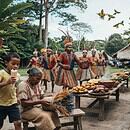
Image generated with Ai
Central America is rapidly emerging as one of the world’s most dynamic backpacker travel regions, offering a powerful combination of affordability, cultural depth, volcanic landscapes, and coastal adventure routes stretching from Guatemala to Panama. According to regional tourism frameworks supported by national tourism boards such as the Guatemala Tourism Institute, Costa Rica Tourism Board (ICT), and Panama Tourism Authority, the region continues to experience steady growth in international visitor arrivals driven by budget travellers, digital nomads, and long-term backpackers. The latest travel trends highlight Central America as a connected multi-country circuit where travellers can move easily across borders while experiencing diverse ecosystems, colonial cities, rainforests, beaches, and archaeological sites. This growing popularity reflects a broader global shift toward experiential travel, where affordability and authentic cultural immersion are now key decision-making factors for international tourists.
Central America’s rise as a backpacker hub is driven by its affordability, accessibility, and geographic diversity within a compact travel corridor. Countries such as Guatemala, Nicaragua, and El Salvador offer low daily travel costs, while Costa Rica and Panama provide more developed tourism infrastructure with eco-tourism experiences. Government tourism bodies across the region consistently highlight the importance of sustainable tourism development, especially in protected natural areas such as Costa Rica’s national parks and Guatemala’s UNESCO-listed heritage zones like Tikal. These destinations provide travellers with rainforest trekking, volcano hiking, wildlife observation, and cultural immersion at significantly lower costs compared to North America or Europe. The ability to travel across multiple countries in a single trip also enhances the region’s appeal, with overland bus networks and budget accommodation options supporting long-term travel itineraries.
Advertisement
Guatemala serves as one of the primary gateways into Central America’s backpacking circuit due to its strong cultural heritage and natural landscapes. The colonial city of Antigua, Lake Atitlán, and the ancient Mayan ruins of Tikal are among the most visited sites, attracting both cultural and adventure-focused travellers. According to Guatemala’s national tourism institute, the country has been actively promoting heritage tourism and eco-tourism experiences to support local economies and preserve archaeological sites. Backpackers are drawn to its volcanic landscapes, indigenous markets, and affordable travel infrastructure, making it one of the most important starting points for regional exploration. Its proximity to Mexico and Belize also strengthens its position as a strategic entry hub for overland travel routes.
Costa Rica stands out as the region’s most developed eco-tourism destination, supported by strong environmental protection policies and extensive national park systems. According to the Costa Rica Tourism Board (ICT), nearly a quarter of the country’s land is protected through national parks and reserves, making it a global leader in sustainable tourism. Popular destinations such as Monteverde Cloud Forest, Arenal Volcano, and Manuel Antonio National Park attract backpackers seeking biodiversity-rich travel experiences. The country’s stable infrastructure, safety reputation, and well-established tourism services make it a central hub for both first-time and experienced travellers in the region. Costa Rica also supports a growing digital nomad community, adding to its modern backpacking appeal.
Advertisement
Advertisement
Nicaragua and El Salvador are increasingly attracting budget travellers due to their low-cost travel environment and improving tourism infrastructure. Nicaragua offers volcano boarding in León, colonial architecture in Granada, and island escapes in Ometepe, while El Salvador is gaining attention for its Pacific coastline surf destinations such as El Tunco. National tourism development programs in both countries have focused on improving safety perception, infrastructure, and international connectivity, which has contributed to rising visitor numbers in recent years. Backpackers often highlight these destinations as some of the most affordable in Central America, offering strong value for long-term travel.
Panama acts as a natural endpoint for most Central American backpacking circuits due to its modern infrastructure and global connectivity. The Panama Tourism Authority has positioned the country as a bridge between Central and South America, with Panama City offering a major international transit hub. Key attractions include the Panama Canal, San Blas Islands, and Bocas del Toro archipelago, which provide a mix of cultural, historical, and beach tourism experiences. The country’s advanced transport systems and strong aviation links make it a convenient exit point for travellers completing regional circuits.
The rise of Central America as a backpacker destination is linked to global travel trends prioritising affordability, sustainability, and authentic cultural experiences. Tourism boards across the region have increasingly invested in eco-tourism, community-based travel, and heritage conservation projects to attract international visitors. The region also benefits from its geographic compactness, allowing travellers to experience multiple ecosystems—from Caribbean coastlines to volcanic highlands—within short travel distances. This diversity is a major factor driving repeat tourism and long-stay travel.
Central America is no longer just a regional travel corridor but a fast-growing global backpacking destination shaped by affordability, biodiversity, and cultural richness. With Guatemala’s heritage routes, Costa Rica’s eco-tourism leadership, Nicaragua’s budget travel appeal, and Panama’s global connectivity, the region offers one of the most diverse and accessible travel circuits in the world. As international travel continues to shift toward experience-driven journeys, Central America’s position as a leading backpacker destination is expected to strengthen further, attracting a new generation of global travellers seeking adventure, culture, and value-driven exploration.
Advertisement
Advertisement
Advertisement
Tags: Belize, central america, Costa Rica, el salvador, guatemala
Advertisement
Advertisement













Saturday, September 5, 2026

Friday, September 4, 2026

Saturday, September 5, 2026
Saturday, September 5, 2026

Thursday, September 3, 2026

Wednesday, September 2, 2026

Saturday, September 5, 2026

Saturday, September 5, 2026


