 Akash Nath Akash Nath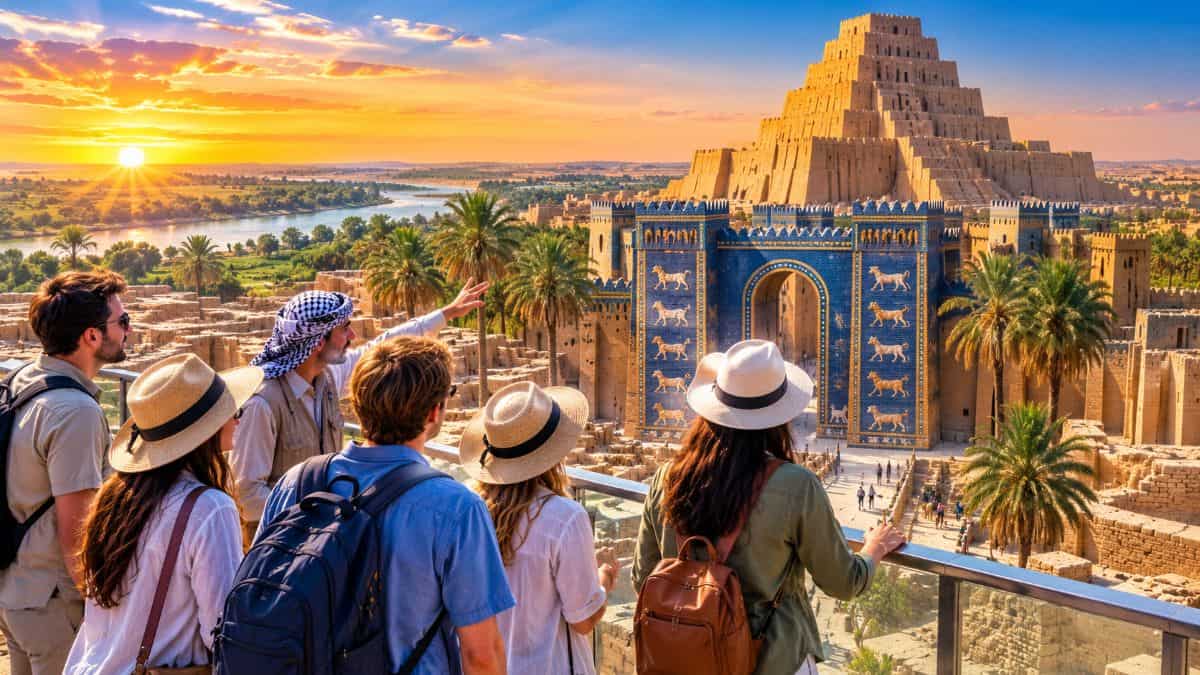
Image generated with Ai
The ancient city of Babylon in Iraq is once again attracting worldwide attention after renewed discussions surrounding the historical inspiration behind the biblical Tower of Babel. As archaeological discoveries continue to deepen understanding of Mesopotamia’s remarkable civilization, travelers interested in history, religion, archaeology, and culture are increasingly looking toward Iraq and neighboring countries including Israel, Jordan, Türkiye, and Egypt. Together, these destinations represent some of humanity’s oldest civilizations, offering visitors an extraordinary opportunity to explore the origins of urban society, monumental architecture, and religious traditions that continue to shape the modern world.
The renewed focus on Babylon’s Etemenanki ziggurat—widely considered by many historians to be the strongest archaeological candidate for the Tower of Babel described in the Book of Genesis—highlights the growing importance of heritage tourism across the Middle East. While archaeologists emphasize that no definitive evidence confirms the biblical account as a literal historical event, the intersection of archaeology, faith, and cultural storytelling continues to inspire educational travel. This renewed interest supports responsible tourism, encourages preservation of ancient sites, and strengthens international appreciation for one of the world’s most influential civilizations.
Advertisement
Babylon remains one of the world’s most significant archaeological destinations. Located south of modern Baghdad, the UNESCO World Heritage Site represents the political, cultural, and religious center of the ancient Babylonian Empire.
For centuries, Babylon has captured the imagination of historians, religious scholars, archaeologists, and travelers. Monumental structures, royal palaces, defensive walls, and temple complexes demonstrate the remarkable engineering achievements of Mesopotamian civilization.
Advertisement
Recent discussions surrounding the Tower of Babel have renewed international curiosity about Babylon, encouraging travelers to explore the archaeological landscape while learning about one of history’s greatest urban civilizations.Babylon Heritage Overview Details Country Iraq UNESCO Status World Heritage Site Historical Civilization Babylonian Empire Major Attraction Ancient Babylon archaeological site Religious Connection Tower of Babel narrative in Genesis Tourism Appeal Archaeology, biblical history, cultural heritage
The biblical Book of Genesis describes humanity constructing a tower intended to reach the heavens before languages were confused, resulting in the dispersal of people across the Earth.
Although no archaeological evidence confirms the biblical narrative as a historical event, many scholars identify the ancient Babylonian ziggurat known as Etemenanki as the most plausible inspiration behind the story.
Dedicated to the Babylonian god Marduk, Etemenanki stood at the heart of Babylon and represented one of the most ambitious architectural projects of the ancient world.
Ancient historical records suggest the temple tower may have reached approximately 90 meters in height, making it among the tallest structures of its era. While the upper sections disappeared centuries ago due to destruction, reconstruction, and natural deterioration, archaeological excavations continue to provide valuable insight into its original scale and importance.Etemenanki Facts Information Ancient Name Etemenanki Location Babylon, Iraq Civilization Babylonian Primary Deity Marduk Structure Type Ziggurat Historical Importance Possible inspiration for Tower of Babel
Archaeological research continues to transform global understanding of Mesopotamian civilization. Excavations, inscriptions, ancient tablets, and architectural remains reveal sophisticated urban planning, religious institutions, legal systems, mathematics, astronomy, and literature that flourished thousands of years ago.
For international travelers, archaeological tourism provides opportunities to engage directly with humanity’s earliest civilizations. Museums, excavation sites, and heritage preservation projects allow visitors to experience authentic historical landscapes rather than fictional recreations.
Educational tourism has become increasingly important as universities, researchers, documentary filmmakers, and heritage organizations collaborate to promote responsible exploration of Iraq’s archaeological treasures.
Countries across the Middle East collectively preserve some of humanity’s oldest archaeological landscapes. Travelers frequently combine multiple destinations to better understand interconnected civilizations that developed across Mesopotamia, the Levant, Anatolia, and the Nile Valley.
Iraq offers Babylon and numerous Mesopotamian sites.
Israel preserves significant biblical locations connected with Judaism and Christianity.
Jordan features Petra, biblical landscapes, Roman cities, and desert heritage.
Türkiye showcases ancient Anatolian civilizations, Byzantine monuments, and early Christian history.
Egypt continues to attract visitors with its pyramids, temples, royal tombs, and extensive archaeological discoveries.Destination Heritage Attraction Iraq Babylon and Mesopotamian archaeology Israel Biblical heritage sites Jordan Petra and ancient civilizations Türkiye Anatolian and Byzantine heritage Egypt Pyramids and Pharaonic monuments
Growing international interest in archaeological destinations contributes to heritage conservation when tourism is managed responsibly.
Visitor spending supports museums, archaeological research, restoration projects, local businesses, certified guides, hotels, transportation providers, and cultural education initiatives.
International cooperation between governments, UNESCO, archaeologists, and tourism authorities continues to strengthen preservation strategies while improving visitor experiences.
Responsible tourism also raises public awareness about protecting fragile archaeological remains from environmental damage, conflict, and illegal excavation.
Modern archaeology neither seeks to prove nor disprove religious beliefs. Instead, archaeological research focuses on recovering evidence from ancient civilizations through excavation, scientific analysis, inscriptions, architecture, and historical records.
Many biblical narratives contain references to real places, kingdoms, rulers, and cities that archaeology has helped identify over the past century.
The Tower of Babel remains an important example where archaeological evidence and religious tradition intersect without reaching absolute historical certainty.
For many travelers, this combination of faith, history, and scientific research creates a deeply enriching cultural experience.
As regional stability improves and heritage restoration progresses, Iraq is gradually reintroducing itself as a destination for cultural tourism.
Government initiatives, international partnerships, and UNESCO-supported conservation efforts continue improving access to historical landmarks while protecting archaeological integrity.
Growing global media attention surrounding Babylon encourages travelers to discover lesser-known destinations beyond traditional tourism markets.
Cultural travelers increasingly prioritize authentic historical experiences, making Iraq’s archaeological heritage an important component of future Middle East tourism development.
International travelers planning archaeological journeys should consult official government travel advisories, verify visa requirements, and arrange tours through licensed operators familiar with local regulations.
Visiting heritage sites responsibly includes respecting preservation guidelines, avoiding restricted excavation areas, supporting local communities, and learning about the historical significance of each destination through qualified guides.
Travel insurance, seasonal weather planning, and cultural awareness further enhance safe and meaningful travel experiences throughout the region.
Renewed global conversations about Babylon and the possible historical inspiration behind the Tower of Babel demonstrate how archaeology continues to shape modern tourism.
While scholars acknowledge that the Genesis narrative cannot be confirmed archaeologically, Etemenanki remains one of the ancient world’s most compelling monuments. Its enduring legacy encourages visitors to explore Iraq’s remarkable cultural heritage through evidence-based historical interpretation rather than myth alone.
As archaeological research advances, Mesopotamia is likely to remain a major destination for heritage tourism, educational travel, religious exploration, and cultural exchange. By preserving these ancient landscapes, Iraq and its regional neighbors continue offering travelers a unique opportunity to experience the foundations of civilization while supporting responsible, sustainable tourism.
1. Where is the ancient city of Babylon located?
Babylon is located in present-day Iraq, south of Baghdad, and is recognized as a UNESCO World Heritage Site.
2. What is Etemenanki?
Etemenanki was an ancient Babylonian ziggurat dedicated to the god Marduk and is widely regarded by many scholars as the strongest archaeological candidate for the Tower of Babel.
3. Has the Tower of Babel been found?
No. Archaeologists have not found definitive evidence proving the biblical Tower of Babel existed exactly as described in Genesis.
4. Why is Babylon important to travelers?
Babylon offers exceptional archaeological, historical, cultural, and educational experiences that showcase one of the world’s earliest civilizations.
5. Is Babylon a UNESCO World Heritage Site?
Yes. Babylon is officially listed as a UNESCO World Heritage Site.
6. Why are travelers interested in the Tower of Babel?
The story combines biblical tradition, archaeology, ancient history, and cultural heritage, making it an important destination for educational tourism.
7. Which countries complement an Iraq heritage itinerary?
Israel, Jordan, Türkiye, and Egypt are frequently combined with Iraq for broader Middle Eastern cultural and archaeological travel.
8. What type of tourism does Babylon attract?
Babylon primarily attracts heritage tourism, archaeological tourism, educational travel, cultural tourism, and religious history enthusiasts.
9. Can visitors tour Babylon today?
Yes. Subject to local regulations and travel conditions, visitors can explore the archaeological site through authorized tourism arrangements.
10. How does archaeology contribute to tourism?
Archaeology enhances tourism by preserving historical sites, supporting museums, promoting education, encouraging responsible travel, and stren
Advertisement
Advertisement
Advertisement













Saturday, September 5, 2026

Friday, September 4, 2026

Saturday, September 5, 2026

Saturday, September 5, 2026

Thursday, September 3, 2026

Wednesday, September 2, 2026

Saturday, September 5, 2026

Saturday, September 5, 2026


