
Germany and Switzerland Expand Japan Flight Choices as Lufthansa Group Plans Up to 50 Weekly Services for Summer 2027

Published
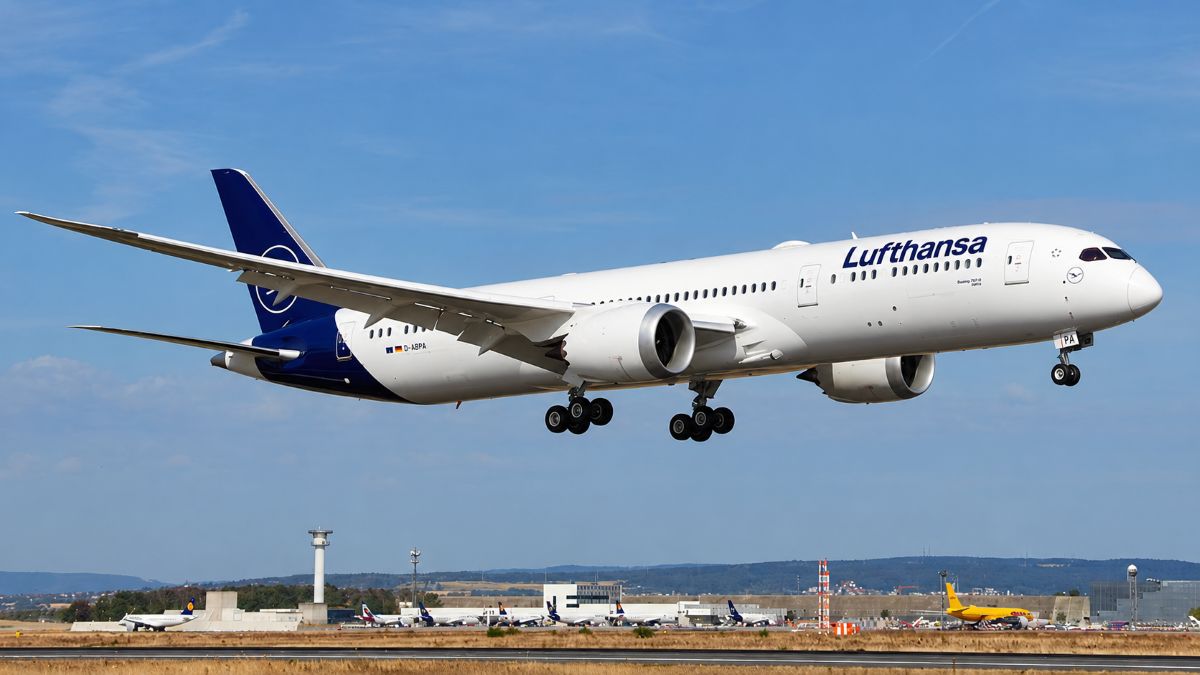
Germany and Switzerland expand Japan flight choices as Lufthansa Group plans up to 50 weekly services for summer 2027, restoring Frankfurt–Nagoya flights and adding more Tokyo connections from Frankfurt and Zurich to give travellers greater flexibility. Bookings are open for Frankfurt–Nagoya, Frankfurt–Tokyo Narita and an expanded SWISS programme from Zurich. This is the group-wide total, not 50 additional flights. For travellers, the opportunity is to design the holiday around the places they actually want to visit. Start with the first and last hotel, then compare airports. That approach keeps the focus on useful connections rather than a tempting fare that creates an awkward journey.
Japan Flights 2027: Routes, Start Dates and Departure Times
| Route | Planned start | Frequency from Europe | Outbound flight, local times |
|---|---|---|---|
| Frankfurt–Nagoya | 29 March 2027 | Monday, Wednesday, Saturday | LH736: 14:10–09:35 next day |
| Frankfurt–Tokyo Narita | 28 March 2027 | Daily | LH710: 13:45–09:30 next day |
| Zurich–Tokyo Narita | Summer 2027 | Up to seven weekly | Not specified |
Both Frankfurt routes are seasonal. Daily Frankfurt–Haneda and Munich–Haneda services continue. Austrian Airlines and ITA Airways also contribute to the wider programme.
Advertisement
Advertisement
Keep the overnight arrival in mind when booking accommodation. Check the Japanese arrival date before reserving the first hotel night. Arrange early check-in separately rather than assuming a morning landing guarantees immediate room access.
Boeing 787-9 Allegris: The Capacity Gain Goes Beyond Business Class
Lufthansa schedules Allegris-equipped Boeing 787-9 aircraft on both Frankfurt services. Its published configuration provides the basis for this calculation:
Advertisement
Advertisement
| Cabin | Seats per flight | Calculated weekly seats towards Japan across both routes |
|---|---|---|
| Business Class | 28 | 280 |
| Premium Economy | 28 | 280 |
| Economy | 231 | 2,310 |
| Total | 287 | 2,870 |
The weekly figures multiply the aircraft layout by ten departures and assume a complete operating week. Economy accounts for about 80.5% of these seats. The expansion therefore reaches well beyond premium travellers: most planned capacity sits in Economy.
These are scheduled seats, not sales figures. Aircraft substitutions could change the totals.
Advertisement
Advertisement
SWISS Zurich–Tokyo Flights: Why the Existing Schedule Matters
The Swiss expansion needs a proper comparison. SWISS’s published summer 2026 plan already included daily Narita flights in April, May and October, with five weekly services during the remaining summer timetable.
Consequently, describing the 2027 programme as Zurich’s first daily Tokyo connection would be misleading. Nor does its peak frequency establish a uniform increase throughout the season.
The practical question is whether the schedule improves the particular week you need. For a fixed-date holiday, an extra operating day can be more useful than a broad seasonal capacity claim.
Check both directions before choosing non-refundable hotels.
Germany–Japan Tourism Demand: Growth With an Important Qualification
Japan National Tourism Organization estimates show 281,500 arrivals from Germany during January–August 2026, up 5.6% year on year. Across all source markets, arrivals totalled 27,626,300, down 2.7%. Yet Germany’s August arrivals declined 5.5% to 33,700.
The positive eight-month result therefore does not describe uninterrupted growth. Germany performed better than the overall market across the period, but the latest month was weaker. Nationality-based arrival statistics also do not identify the airline or European departure airport used.
Advertisement
Advertisement
For travel businesses, the lesson is to track booking periods and individual markets rather than assume every Japan itinerary faces identical demand.
Japan Visitor Spending: Hotels and Meals Reveal the Bigger Opportunity
Japan Tourism Agency’s second preliminary estimate for April–June 2026 places German visitors’ average trip spending at ¥411,580, compared with ¥244,733 across markets, excluding cruise visitors. Average stays were 14 nights and 8.6 nights, respectively.
A closer calculation reveals where much of the German spending went. Accommodation averaged ¥211,098, while food and drink accounted for ¥83,298. Together, these categories represented approximately 71.5% of total trip expenditure.
This suggests an opportunity broader than luxury shopping. Hotels, restaurants and longer itineraries could benefit from accessible long-haul travel. Longer stays also matter when interpreting the spending gap. These averages cover different travel purposes—not passengers on the announced flights.
They are market indicators, not a suggested holiday budget.
ANA and ITA Airways: More Network Choice Needs Careful Comparison
ANA’s June 2026 announcement set out a phased expansion of its Lufthansa Group Europe–Japan joint venture to include ITA Airways from autumn 2026. The arrangement covers Rome Fiumicino–Tokyo Haneda and connecting services.
Advertisement
Advertisement
The planned integration adds another option for itinerary building, especially when the European journey starts or ends outside Germany or Switzerland. However, the announcement specifies a sequential rollout, not immediate availability of every flight combination. Participating airlines can also coordinate schedules, so more airline names should not automatically be read as more independent competition.
Compare the operating carrier, ticket conditions and connection times. Partnership membership alone does not prove that a particular fare offers the best value.
Frankfurt Airport Rail Connections: A Baggage Change to Plan Around
Lufthansa’s AiRail Terminal closes from 26 October 2026. Departing passengers then use regular terminal baggage-drop facilities. Arriving passengers collect bags in Terminal 1.
The change does not close Frankfurt Airport’s railway station. Lufthansa Express Rail retains integrated bookings and its connection guarantee under the product’s conditions.
For a summer 2027 rail-and-flight journey, allow for the move from the station to the terminal before checking luggage. Do not rely on baggage instructions from an older trip.
Also distinguish an integrated Express Rail booking from independently purchased train and flight tickets. Confirm the protection included in the actual product before deciding how tight a connection to accept.
Advertisement
Advertisement
Airport Transfers: Compare the Journey After Landing
Existing rail links provide useful reference points:
- Nagoya: Centrair’s fastest μ-SKY connection takes 28 minutes to Nagoya.
- Tokyo: JR East advertises a fastest Narita Express journey of 53 minutes to Tokyo Station.
- Zurich: Airport trains reach the main station in 15 minutes, with departures every ten minutes.
These are rail journey times, not touchdown-to-hotel estimates. Add immigration, baggage collection, waiting and the final local connection. Recheck transport schedules for 2027.
For a trip ending in a different city, compare a multi-city flight booking with a return to the original airport. Include any extra train journey and hotel night in the calculation.
The best use of more flight choice is a better-fitting itinerary—not simply the lowest price on the first search screen
Germany and Switzerland expand Japan flight choices as Lufthansa Group plans up to 50 weekly services for summer 2027, adding Tokyo and Nagoya links.
In conclusion, Germany and Switzerland expand Japan flight choices as Lufthansa Group plans up to 50 weekly services for summer 2027, giving travellers more direct access to Tokyo and Nagoya. The wider network improves flexibility, strengthens Europe–Japan connectivity, and makes it easier to build smoother itineraries through Frankfurt and Zurich.
Advertisement
