
Central Europe Unites To Expand Cross-Border Tourism

Published
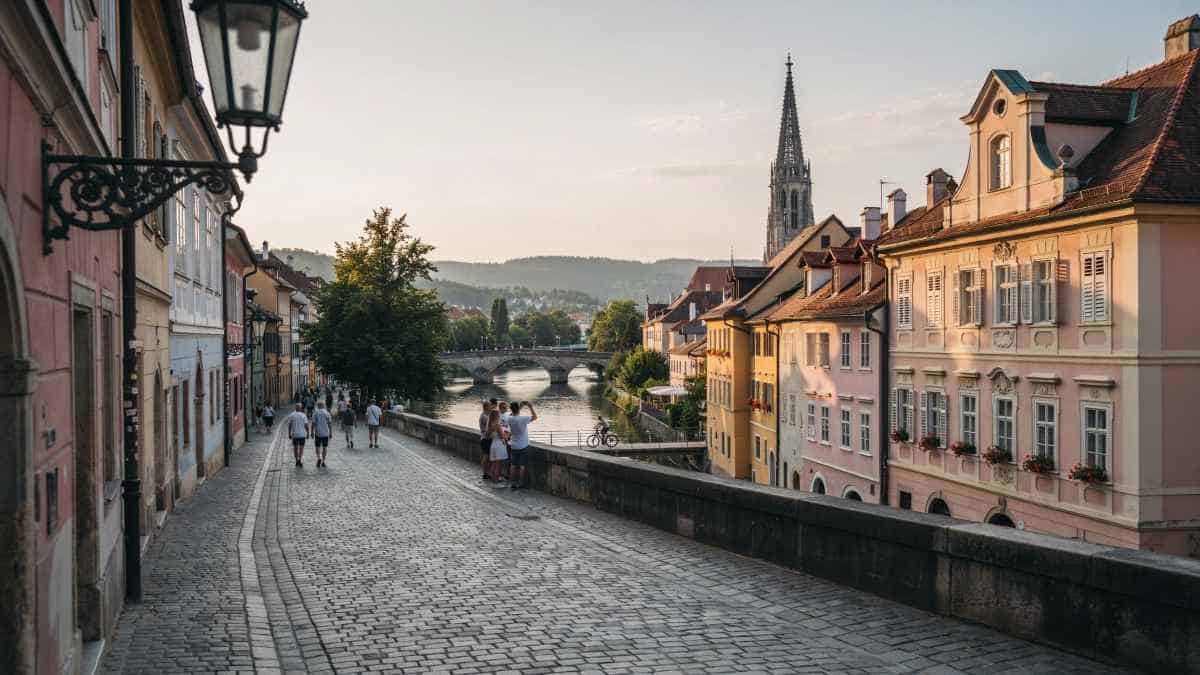
Czech Republic, Hungary, Poland, and Slovakia have opted to increase their cooperation with regard to developing their tourism in the name of the Central Europe Marketplace. The four countries have decided that in September 2026, they will start their tourism markets with the help of the brand name Discover Central Europe. This is done in order to develop vacation programs that cross borders and are specifically designed for tourists from other countries. The vacation program is intended for international tour operators and buyers who are interested in vacation packages that include more than one destination rather than one destination country.
A wider Central European itinerary
The Visegrád Four, commonly known as the V4, brings together Czechia, Hungary, Poland and Slovakia.
Advertisement
Advertisement
The four countries have distinct tourism identities but share geographical proximity and extensive transport connections.
Budapest offers thermal baths, historic architecture and the Danube, while Kraków is known for its historic centre, museums and proximity to important heritage attractions.
Advertisement
Advertisement
Prague remains one of Central Europe’s best-known city destinations, while Bratislava provides a compact historic capital experience close to Austria and Hungary.
Brno adds another dimension through Moravian culture, architecture, food and wine tourism.
Advertisement
Advertisement
The new joint approach packages these destinations as parts of connected journeys rather than isolated city breaks.
Budapest and Piešťany create a wellness route
One of the proposed concepts links Budapest in Hungary with Piešťany in Slovakia, creating a cross-border thermal and wellness itinerary.
Budapest is internationally recognised for its thermal bathing culture, with historic bathhouses forming an important part of the city’s tourism identity.
Piešťany is one of Slovakia’s best-known spa destinations, with thermal mineral waters and a long-established wellness tradition.
Combining the two allows travellers to experience different Central European spa environments during one holiday.
The itinerary can also include cultural sightseeing between spa stays, making it possible to balance wellness with architecture, food and local experiences.
Advertisement
Advertisement
Kraków and Brno build a cultural corridor
Another proposed route connects Kraków in Poland with Brno in Czechia.
Kraków’s historic centre is a major attraction, with medieval architecture, churches, museums and the former royal district around Wawel.
Brno offers a different urban experience, with historic squares, cafés, cultural venues and modern architecture alongside its Moravian heritage.
The cities can form part of a longer Central European road or rail itinerary, allowing visitors to explore smaller destinations between major stops.
For international travellers, this format creates more flexibility than booking separate holidays in each country.
Rail supports slower travel
Rail travel is particularly relevant to the Central Europe Marketplace concept.
Advertisement
Advertisement
The four countries are connected by international railway services, allowing visitors to travel between major cities without relying entirely on flights.
Budapest, Bratislava, Prague, Brno, Kraków and other regional centres can be linked through a combination of international and domestic rail journeys.
For travellers interested in slower tourism, this provides an opportunity to treat transportation as part of the holiday.
Rail journeys can also reduce the number of airport transfers required during a multi-country itinerary, particularly when destinations are relatively close to one another.
Tourism buyers get packaged products
The marketplace is aimed primarily at the business-to-business tourism sector.
National tourism boards and tourism companies can present combined itineraries to international tour operators, travel agencies and other buyers searching for multi-destination European products.
Advertisement
Advertisement
Instead of a tour operator negotiating separately with tourism suppliers in four countries, bundled routes can provide a more structured way to build regional holidays.
Potential products can combine hotels, rail journeys, cultural attractions, wellness experiences, local food and guided tours.
The approach is particularly relevant to long-haul travellers, for whom visiting several nearby countries during one extended European journey can provide greater geographical variety.
Beyond the major capitals
Although Prague, Budapest, Kraków and Bratislava are major tourism anchors, the regional model also creates opportunities for smaller destinations.
Travellers can add Brno, Piešťany and other towns to their itineraries rather than concentrating exclusively on national capitals.
This can distribute visitor activity more widely across Central Europe and introduce international tourists to places that may not feature prominently in conventional European holiday packages.
Advertisement
Advertisement
Smaller towns can offer local gastronomy, thermal facilities, cultural attractions, vineyards and countryside experiences.
Gastronomy becomes part of the journey
Food provides another connection between the four countries.
Hungarian cuisine brings dishes such as goulash and regional wines, while Slovakia has its own mountain and Central European culinary traditions.
Poland offers a broad range of regional dishes, from pierogi to smoked and fermented specialities, while Czech cuisine and Moravian wine provide another distinct gastronomic experience.
A cross-border itinerary can therefore become a culinary journey as well as a cultural one.
Food markets, traditional restaurants, wine regions and local producers can be incorporated alongside sightseeing and wellness stops.
A new way to sell Central Europe
With the help of Central Europe Marketplace, the V4 countries receive a common ground for promoting multi-country tourism. For the tourists, this means the availability of more choices in terms of itineraries that can incorporate cities, spa destinations, culture and rail travel in one vacation. One can start with the thermal baths in Budapest, go on towards Slovakia, to Piešťany, further on to the Czech Republic and end up with the cultural experience in Poland. Thus, the tourism product in question becomes based on proximity and diversity. As the cooperation between the four countries becomes deeper in September 2026, Central Europe appears as something other than four separate national destinations. Instead, it is promoted as an international destination where wellness, culture, cuisine and rail travel are combined.
Advertisement
