
Discover Oman’s Best-Kept Secret: The Newly Unveiled Shaat Viewpoint in Rakhyout

Published
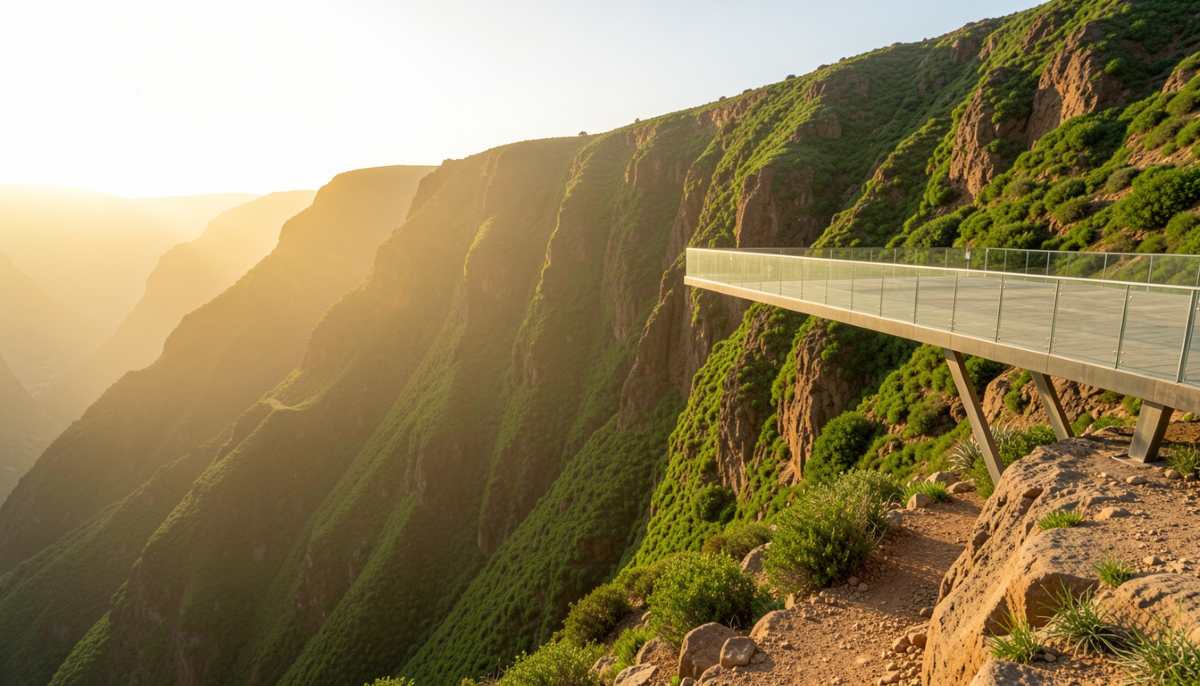
Image generated with Ai
For travel enthusiasts and adventure seekers, the quest for untouched landscapes that challenge the limits of conventional tourism never ends. The beautiful Shaat viewpoint in Rakhyout has recently been revealed as a new tourism destination in Dhofar, attracting the attention of global explorers seeking authentic experiences. Local tourism authorities have finished a major infrastructure development, and this stunning cliffside viewpoint in the southernmost governorate of the Sultanate of Oman is now officially open to the public. This destination is an escape for travellers who want to see nature at its rawest, unbridled and majestic form, far away from the conventional tourist corridors.
To understand the relevance of this place in today’s world, we need to look at how current travel is evolving away from bustling commercial hubs to remote beautiful locations. The regional development plans have created a safe, structured way to access the dramatic edge of the Dhofar mountain range, bridging the gap between raw wilderness and secure exploration. This is the ultimate handbook that will tell you everything you need to know to navigate your way through this newly accessible wonder and ensure you have an unforgettable journey through some of the most dramatic terrain in the south of Oman. It is a masterclass in natural geography from every angle, from sheer limestone drops to sweeping ocean vistas.
Frequently Asked Questions
- Where is the Shaat viewpoint located in Dhofar? The Shaat viewpoint is perched dramatically along the coastal mountain ranges of the Rakhyout wilayah within the Dhofar Governorate of Oman, overlooking the vast and powerful expanse of the Arabian Sea.
- How do you get to the Shaat viewpoint in Rakhyout? Access is typically achieved via well-paved coastal and winding mountain roadways leading from Salalah toward Rakhyout, culminating in newly constructed parking zones and carefully paved pedestrian pathways at the summit.
- What is the best time of year to visit Dhofar’s viewpoints? While accessible year-round, the destination is exceptionally vibrant during the Khareef (monsoon) season from June to September, when the surrounding arid mountains transform into lush, mist-covered green carpets.
Architectural Harmony and Environmental Preservation
The design and development of the viewing platform at Shaat were executed with meticulous attention to environmental preservation and ecological sensitivity. According to official reports released by the Ministry of Heritage and Tourism in Oman, infrastructure investments were carefully managed to ensure that modern amenities enhance, rather than detract from, the natural topography. Safety railings, informative visitor plaques, and designated parking zones have been integrated seamlessly into the sheer rock face, minimizing any disruption to the local ecosystem.
The structural engineering involved in this project reflects a growing, nationwide commitment to sustainable tourism across the region. Rather than altering the landscape with heavy concrete structures, pathways were sculpted to follow the natural contours of the cliffs. Visitors traversing these walkways are provided with unobstructed, panoramic vistas plunging thousands of feet directly into the crashing waves below. Such careful planning ensures that the ecological integrity of the Rakhyout wilayah remains fully protected while accommodating the influx of curious travelers from across the globe.
Advertisement
Advertisement
Experiencing the Dramatic Scenery of Rakhyout’s Coastline
A journey to the western reaches of the Dhofar Governorate invariably reveals a landscape vastly different from the golden dunes associated with northern Oman. Here, towering green escarpments collide directly with deep blue marine waters, creating a striking visual contrast. At the Shaat viewpoint, this geographical juxtaposition is observed at its absolute finest. Fog frequently rolls over the mountain peaks during the early morning hours, creating a surreal, ethereal atmosphere where travelers feel as though they are standing completely above the clouds.
Advertisement
Advertisement
Beyond the immediate viewing platform, the surrounding region offers rich opportunities for landscape photography, quiet contemplation, and coastal exploration. The local atmosphere remains remarkably serene, undisturbed by the hurried pace of urban life. Visitors are encouraged to spend hours observing the shifting light patterns across the Arabian Sea, where dramatic cloud formations, deep shadows, and ocean spray combine to produce mesmerizing visual spectacles that change by the minute.
Official Initiatives and Regional Economic Impact in Southern Oman
The formal inauguration of the Shaat tourist site forms a cornerstone of Oman’s broader strategic vision to diversify its national economy through high-value tourism under Vision initiatives. Government data emphasizes that regional authorities in Dhofar have prioritized infrastructural upgrades in remote wilayahs like Rakhyout to distribute economic benefits more evenly across local communities. By transforming dramatic natural assets into accessible attractions, regional councils stimulate local hospitality, transport, and artisanal sectors, creating sustainable livelihoods for residents.
Furthermore, municipal authorities have implemented comprehensive safety protocols and directional signage to guide international visitors safely through the winding mountain passes. These measures guarantee that tourism growth aligns with rigorous standards of traveller security and environmental stewardship. As more global travelers discover these hidden pockets of southern Arabia, sites like the Shaat viewpoint serve as exemplary models of modern, sustainable destination management that balances ecological conservation with economic progress.
Advertisement
Advertisement
Essential Travel Tips for Your Journey to Rakhyout
As for any successful excursion to the remote cliffs of Rakhyout, it calls for meticulous planning and logistical foresight. Visitors are advised to check local weather forecasts before departure, as mountainous weather can be unpredictable, especially during the transitional seasons. We highly recommend renting a reliable four-wheel-drive vehicle to travel the steep grades and explore the nearby off-beaten-path mountain trails that branch off the main highway.
Tourists also need to stock up with enough water, food and sun protection – the remote coastal lookouts have limited commercial amenities on site. Observing local customs, remaining within designated walking boundaries, and practising strict The Leave No Trace principles help ensure these pristine settings remain that way for future generations of explorers. With the adoption of these guidelines, every visit to southern Oman will contribute positively to sustainable development of tourism in the region.
Advertisement
