
Norway Follows Iceland as Europe Ignites Autumn Aurora Rush With Northern Lights Escapes Surging

Published
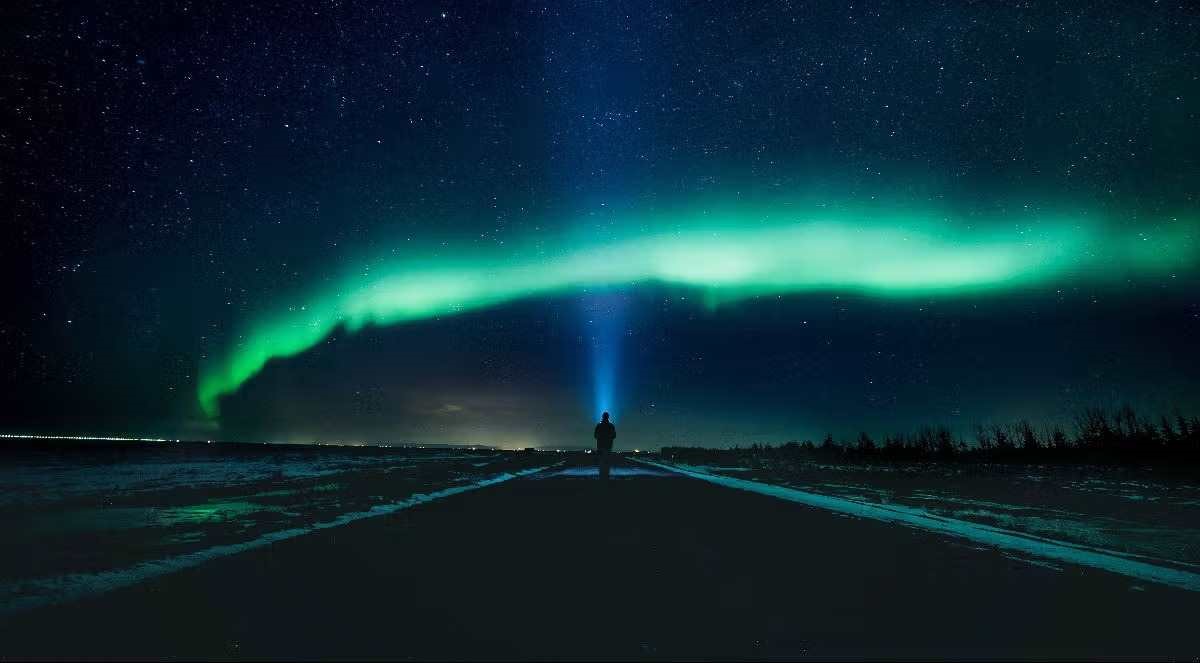
Following Iceland, it is now time for Norway to witness a powerful rush of auroras, and the Northern Lights are proving to be a strong pull factor for visitors this fall season. There is growing interest in Nordic countries that offer dark skies amid breathtaking scenery, colorful forests, and memorable outdoor activities. But this is not another story about winter travel. Rather, autumn provides an opportunity for visitors to experience the Northern Lights without having to wait until winter. Growing interest in Norway, Iceland, and other northern countries is changing the perception of the shoulder season in a big way. Visitors are able to go on mountain, fjord, forest, and even community adventures during the day, and hunt for auroras in the evening. Travel And Tour World takes an in-depth look into the dynamics of the Northern Lights rush, popular destinations, and things to consider when planning to see the Northern Lights in autumn.
Europe’s Autumn Aurora Escape Gains Momentum as Northern Lights Travel Moves Beyond Winter
The Northern Lights have long been associated with snow-covered landscapes, frozen lakes and long winter nights. That picture is beginning to change. Across northern Europe, autumn is emerging as an increasingly attractive season for travellers hoping to see the aurora borealis while also enjoying colourful landscapes, outdoor activities and quieter conditions.
New travel data from Airbnb shows just how quickly interest is moving in this direction. Searches among UK travellers for Tromsdalen in Norway for autumn 2026 are up by more than 200% year on year. Searches for Lofoten in Norway have increased by 69%, while Hornafjörður in Iceland has recorded a 31% rise. The figures compare searches and bookings for autumn 2026 stays with the equivalent period in 2025. The figures do not mean that every traveller is suddenly replacing a winter holiday with an autumn one. They do, however, point to a broader change in the way people are approaching seasonal travel. Instead of waiting for the deepest winter, more visitors are looking north earlier in the year, when the landscape can offer a very different experience.
“Autumn is opening a fresh chapter for Northern Lights tourism in Europe. Travellers are looking beyond the traditional winter season for darker skies, colourful landscapes and immersive nature experiences. The growing interest in destinations across Norway, Iceland and Finland shows how shoulder-season travel can create new opportunities for destinations and tourism businesses.” – comment from Anup Kumar Keshan, Founder and Editor-in-Chief, Travel And Tour World.
Advertisement
Advertisement
Autumn brings a different Northern Lights experience
The appeal of autumn aurora travel is partly scientific. The Northern Lights can occur throughout the year, but people need sufficiently dark skies to see them. As summer daylight fades across northern Europe, the viewing season begins to open.
Advertisement
Advertisement
Finland’s official tourism organisation places its aurora season from late August to early April, with September and October among the months that statistically record strong activity. It also describes autumn and spring as particularly active aurora seasons because of the relationship between solar activity and the Earth’s magnetic field.
Norway’s official tourism guide similarly identifies September and October as months with high levels of auroral activity. It describes autumn as a useful period for visitors because the Northern Lights return while the region can still offer outdoor experiences before the full arrival of winter.
That creates an interesting middle ground. Travellers can pursue an astronomical spectacle at night without necessarily spending the entire trip in a frozen winter environment. For some visitors, that balance may be the main attraction.
European Aurora Destinations Record Strong Tourism Activity in 2026
| Country | Q2 2026 tourist accommodation nights | Change from Q2 2025 |
|---|---|---|
| Sweden | 17,348,513 | +2.7% |
| Norway | 10,609,423 | +0.4% |
| Finland | 5,286,717 | -2.1% |
| Iceland | 2,358,757 | -2.1% |
Tromsdalen becomes the standout autumn aurora destination
Tromsdalen’s rise is the clearest signal in Airbnb’s latest figures.
Searches among UK travellers for autumn 2026 are up by more than 200% year on year. Airbnb attributes the increase to growing interest in Northern Lights trips.
Advertisement
Advertisement
Tromsdalen sits across the water from Tromsø in northern Norway and forms part of a region that has become closely associated with aurora tourism. Tromsø itself is one of the best-known bases for Northern Lights trips and has extensive transport connections.
Norway’s official tourism organisation now actively encourages visitors to consider autumn travel because winter can be particularly busy. It also points towards destinations around Tromsø, including Alta, Lyngen and Senja, for travellers seeking Arctic landscapes beyond the main hub.
The timing matters. Autumn allows visitors to combine dark skies with a landscape that has not yet become completely dominated by snow and ice.
That changes the rhythm of a trip.
During the daytime, travellers can explore mountains, fjords, villages and coastal scenery. After sunset, attention turns towards the sky. The journey becomes less about a single attraction and more about moving between two very different experiences within the same day.
Advertisement
Advertisement
Lofoten adds mountains, fishing villages and dark skies
Lofoten is another major beneficiary of the trend. Airbnb reports a 69% year-on-year increase in searches for autumn 2026 among UK travellers.
The archipelago has a very different character from an urban Northern Lights base. Its landscape is defined by dramatic mountains, fishing villages, beaches and waterways. That makes it particularly attractive to travellers who want the journey itself to be part of the experience.
Norway’s official tourism guide lists Lofoten among the country’s established aurora destinations. It also notes that the same Northern Lights can be seen across different parts of northern Norway, although the experience and viewing angle will vary depending on location.
For photographers, autumn can offer another advantage. The landscape provides a more varied foreground than a completely snow-covered winter scene. Mountains, water, vegetation, and traditional settlements can all become part of the composition when the aurora appears overhead.
The important caveat is that the lights are never guaranteed.
Advertisement
Advertisement
Aurora travel requires darkness and clear skies, alongside suitable solar activity. Norway’s tourism guidance stresses that patience is part of the experience. A trip can improve the chances of seeing the lights, but no destination can promise a display on a particular night.
Iceland joins the autumn aurora movement
Iceland is also appearing in the data.
Airbnb recorded a 31% increase in searches for Hornafjörður for autumn 2026 among UK travellers.
The location sits in southeast Iceland, an area known for dramatic natural scenery. The wider Icelandic experience gives travellers an opportunity to combine aurora hunting with landscapes shaped by glaciers, volcanoes, waterfalls and geothermal activity.
That combination is important when considering why autumn aurora travel is gaining attention.
Advertisement
Advertisement
A Northern Lights holiday always carries an element of uncertainty. Cloud cover can interfere with viewing, and solar activity cannot be scheduled around a traveller’s itinerary. Building a trip around several natural experiences therefore makes the journey more rewarding even if the lights remain hidden on one particular evening.
This is one reason Iceland works well for the shoulder season. The Northern Lights can become one part of a broader nature-focused itinerary rather than the sole reason for travelling.
Finland offers a particularly distinctive autumn combination
Finland provides perhaps the clearest example of why autumn can stand on its own as an aurora season.
According to Visit Finland, the Northern Lights season runs from late August to early April, while September and October are among the peak months for auroral activity.
The timing also overlaps with Finland’s famous autumn colours, known locally as ruska.
Advertisement
Advertisement
This creates a landscape very different from the familiar winter images associated with Lapland. Lakes may still be unfrozen, forests can carry intense autumn colour, and the nights are becoming sufficiently dark for aurora viewing.
Visit Finland highlights the possibility of seeing the lights reflected across still water, creating what is sometimes called a double or mirror aurora.
For travellers, that offers something winter cannot always provide.
Instead of photographing green lights above a landscape covered entirely in snow, an autumn visitor may see an aurora reflected on a dark lake surrounded by colourful woodland.
It is a different visual story.
Advertisement
Advertisement
The same source also notes that winter remains the most popular period for visiting Finland. Longer and darker nights give travellers more hours in which to look for the lights. Autumn, therefore, should not be presented as a replacement for winter. It is better understood as another option, with its own advantages and limitations.
Why travellers are looking beyond the traditional winter season
The growing interest is part of a wider change in European autumn travel.
Airbnb’s September 2026 Autumn Travel Trend Forecast shows stronger demand for outdoor destinations, mountain regions and nature-based escapes. Searches among UK travellers rose by 134% for Bovec in Slovenia, 104% for Bohinj and 93% for Trentino-Alto Adige in Italy for autumn 2026. Searches also increased for Ortisei and Cortina d’Ampezzo in the Dolomites.
The common thread is clear: travellers are showing greater interest in landscapes and experiences outside the traditional peak summer and winter seasons.
The aurora fits neatly into that movement.
Advertisement
Advertisement
Autumn offers a reason to travel north before the Christmas and winter holiday rush. It also creates opportunities to combine several interests in one trip: nature, photography, hiking, local food, scenic drives and night-sky experiences.
This is especially relevant as travellers become more comfortable with shorter trips.
Airbnb’s research found that almost one-third of Gen Z stays across EMEA lasted only one night between April and June 2026. That was the highest share among the generations measured in the dataset.
A short aurora break can therefore fit into a wider pattern of bite-sized travel. Instead of taking one long annual holiday, some travellers are spreading experiences across several shorter breaks.
Autumn also changes the daytime experience
The Northern Lights only appear after dark, but an aurora holiday is not really about the night alone.
Advertisement
Advertisement
That distinction matters when choosing the season.
Winter can offer snow-based activities and long hours of darkness. Autumn, by contrast, can provide easier access to hiking and landscapes that are still visible in their natural colours.
Norway’s tourism organisation specifically recommends autumn as a period for Northern Lights travel and highlights the possibility of combining aurora viewing with other outdoor experiences.
In northern Finland, the overlap with ruska creates another layer. Forests become part of the experience rather than simply a backdrop to snow-based activities.
The result is a more varied itinerary.
Advertisement
Advertisement
A traveller might spend the afternoon walking through an autumn landscape, return for dinner, wait for darkness and then head outside again to search the sky. The contrast between warm autumn colours and the cold, dark night can become one of the defining features of the trip.
The science still sets the limits
The growing popularity of autumn aurora travel should not create unrealistic expectations.
The Northern Lights are produced when charged particles associated with solar activity interact with Earth’s magnetic environment. Visibility depends on several conditions coming together.
Darkness is essential. Clear skies are also crucial. Location matters because areas closer to the auroral oval generally offer stronger opportunities. Solar and geomagnetic activity then determine whether a visible display develops.
This means an itinerary should allow some flexibility.
Advertisement
Advertisement
A traveller booking only one night in an aurora destination is taking a very different approach from someone staying for several nights. More nights provide more opportunities to encounter suitable conditions, although they still cannot guarantee a display.
Norway’s official guidance emphasises patience and points to the late evening and early morning hours as useful viewing periods.
Finland’s tourism authority similarly recommends dark, clear conditions and points travellers towards official space-weather information when planning aurora viewing.
The lesson is simple: the Northern Lights remain a natural phenomenon, not a scheduled attraction.
A new kind of shoulder-season tourism
The rise in autumn aurora searches is significant because it challenges one of the strongest assumptions around Arctic tourism: that the experience begins when winter arrives.
Advertisement
Advertisement
The latest data suggests a more nuanced pattern.
Travellers are looking north earlier. They are interested in the sky, but they are also interested in everything beneath it. They want mountains, fjords, forests, lakes, villages and outdoor experiences. The aurora becomes the dramatic finale rather than the entire itinerary.
That distinction could matter for destinations trying to spread visitor demand beyond the busiest months.
Norway’s official tourism organisation already notes that Tromsø can become particularly busy during winter and encourages visitors to consider autumn or nearby destinations.
If demand continues to move into September and October, the benefits could extend beyond the Northern Lights operators themselves. Accommodation providers, restaurants, guides, transport companies and outdoor businesses could all benefit from visitors arriving outside the traditional winter peak.
Advertisement
Advertisement
At the same time, growth needs to be managed carefully. Natural landscapes and Arctic communities are not limitless resources. More visitors require responsible tourism practices, particularly in fragile environments where weather, wildlife and local infrastructure can influence the quality of the experience.
What travellers should expect from an autumn aurora trip
An autumn trip should be planned differently from a conventional winter holiday.
Travellers should expect colder nights but not necessarily deep snow. Weather can change quickly, particularly in coastal northern Europe. Clear skies matter, so flexibility is valuable.
Warm clothing remains essential, especially when waiting outdoors for long periods. A tripod and night-capable camera can also help photographers capture the lights, although modern smartphones can produce surprisingly good results in suitable conditions.
Most importantly, travellers should avoid treating the aurora as a guaranteed performance.
Advertisement
Advertisement
The strongest trips build in other experiences. Hiking, sightseeing, food, cultural encounters and scenic excursions can keep the itinerary worthwhile regardless of what happens in the sky.
That approach also reflects the wider autumn travel movement identified by Airbnb. The company’s latest forecast shows travellers seeking mountains, rural landscapes, outdoor adventures and shorter escapes alongside the growing interest in celestial travel.
Europe’s northern skies are becoming an autumn attraction
The rise of Tromsdalen, Lofoten and Hornafjörður in Airbnb’s latest data provides a useful snapshot of where autumn travel is heading.
Tromsdalen has seen searches rise by more than 200%. Lofoten has recorded a 69% increase, while Hornafjörður is up 31%.
Those figures are based on Airbnb’s internal search and booking data among UK travellers, so they should not be treated as a measurement of all European or global travel demand. But they provide a clear indication of growing interest within that particular market.
Advertisement
Advertisement
Official tourism bodies reinforce the underlying seasonal logic. Norway identifies autumn as a strong period for auroral activity, while Finland highlights September and October as peak months and pairs the Northern Lights with its autumn foliage season.
The result is a new interpretation of the Arctic escape.
It does not have to begin with a snowstorm or end with a Christmas market. It can start with golden forests, mountain trails and unfrozen lakes, then continue into the darkness as travellers wait for the first green glow to appear overhead.
For Europe, that could make autumn more than a shoulder season. It could become the moment when travellers look north, long before winter officially takes over.
Advertisement
