
Uzbekistan Tourism is on the Rise as New Data Show 20.4% More Arrivals and 73% From Three Neighbours

Published
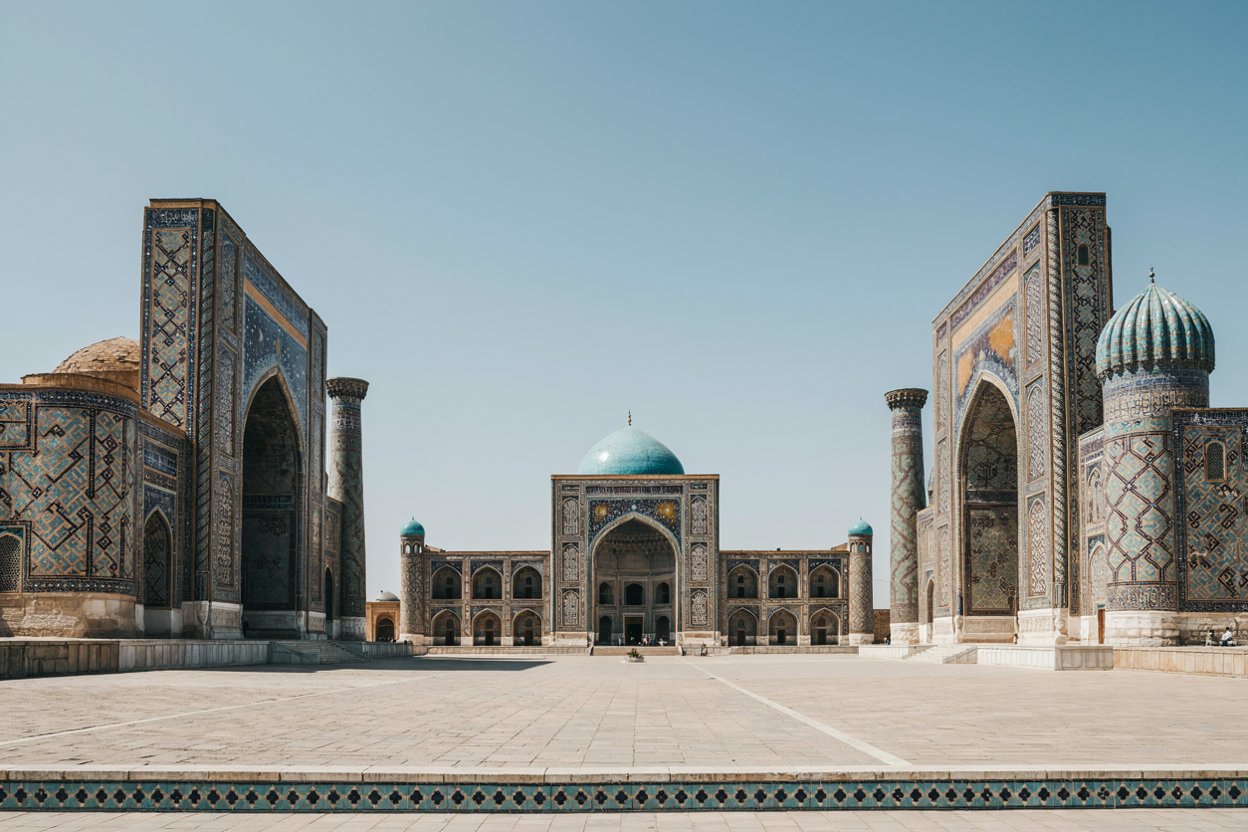
Uzbekistan Tourism recorded 10,306,786 foreign arrivals during January–September 2026, up 20.4% from the same period in 2025. Official national statistics show that Kyrgyzstan, Kazakhstan and Tajikistan supplied nearly three quarters of arrivals. Separate government data put tourism-services exports at US$5.3 billion, up 51.2%. The figures matter for travellers and businesses assessing demand, although the announcements introduce no new entry requirements. They confirm increased travel and earnings without identifying one cause or proving that every tourism business benefited.
The Evidence Behind Uzbekistan Tourism Growth 2026
The main development is stronger inbound activity, supported by arrival counts and export earnings. The percentages below are an editorial assessment of the story’s emphasis, totalling 100%. They are not official statistics or measured contributions to growth. Arrival and earnings figures cover January–September 2026, while the policy and infrastructure entries identify separate developments during the year.
| News Component | Share of Story | Officially Verified Finding | Relevance to Travellers | Official Source |
|---|---|---|---|---|
| Arrivals and source markets | 45% | 10,306,786 arrivals; three neighbours supplied 72.99%. | Regional markets dominate recorded arrivals. | National statistics release, 16 October 2026 |
| Entry arrangements | 10% | July protocol provides a 15-day bilateral registration exemption. | Registration and visa eligibility remain separate. | Registration notice, 31 July 2026 |
| Visitor infrastructure | 15% | Samarkand plans include 13 pedestrian streets and a wider 20,000-bed target. | Development targets are not completed facilities. | Development update, 10 June 2026 |
| Earnings and wider demand | 30% | US$5.3 billion in tourism-services exports, up 51.2%. | Higher earnings do not prove individual business gains. | Official tourism update. gov.uz |
The evidence establishes national growth and a concentrated regional market. It does not establish higher hotel occupancy, rising prices or a change in travel permissions. The chronology separates the announcements: tourism-development measures appeared on 10 June 2026; a registration protocol followed on 30 July, with details published the next day. The nine-month performance update appeared on 7 October, the nationality breakdown on 16 October, and a Samarkand bridge-construction update on 18 October.
Understanding the Context Behind the Development
The immediate news trigger was publication of the nine-month results. The releases document Uzbekistan Tourism Growth 2026, but establish no single cause. Existing visa-free arrangements provide relevant background, while the strong regional share describes the market’s structure. Neither proves that a particular policy generated the additional arrivals. The published figures also lack a monthly comparison showing whether growth accelerated towards September.
Advertisement
Advertisement
The clearest interpretation is that regional travel anchors the market while several more distant countries show expanding demand. This combination matters for businesses deciding which languages, itineraries and visitor services to prioritise. However, the nationality totals do not identify transport choices, so they cannot demonstrate increased use of any particular airline, railway or border crossing.
Regional Arrivals Anchor Uzbekistan Tourism Growth 2026
Kyrgyzstan supplied 2,844,201 arrivals, Kazakhstan 2,404,638 and Tajikistan 2,274,288. Their combined 7,523,127 arrivals represented 72.99% of the national total, calculated from the official figures. That means approximately 73 of every 100 arrivals came from these neighbours. Russia followed with 983,407, ahead of Afghanistan’s 380,190, China’s 373,778 and Turkmenistan’s 256,546. Türkiye contributed 148,772, India 53,778 and Germany 42,973. Together, the leading ten markets supplied 94.72% of arrivals; other markets contributed 544,215.
Advertisement
Advertisement
The national increase amounted to approximately 1.7 million additional arrivals, with around 1.2 million recorded in September. However, arrivals should not be read as leisure holidays alone. An official breakdown published in August 2025 included family visits, service and commercial trips, treatment and study alongside tourism. Those categories explain the measure without establishing their current proportions. For accommodation providers and excursion businesses, this distinction matters because different travel purposes can create different needs. A family visit, for example, does not automatically generate a hotel booking. Assessing commercial demand therefore requires evidence about accommodation use and activities, beyond the national arrival total.
Export Earnings Rise Faster Than Arrival Numbers
The economic importance of Uzbekistan Tourism Growth 2026 includes export earnings rising faster than visitor volumes. The 51.2% increase in tourism-services exports exceeded arrivals growth by 30.8 percentage points, using the same January–September comparison. This indicates stronger reported receipts from services sold to overseas visitors. It does not establish an equivalent rise in profits or average spending. The release provides no regional earnings breakdown, trip-length analysis or explanation separating price changes from other influences.
Demand also broadened geographically. China reached 2.1 times its previous arrival level, meaning approximately 110% growth. Malaysia reached 1.9 times; Egypt and Romania 1.8 times; Indonesia 1.7 times; Japan 1.5 times; the United States 1.4 times; and Russia 1.3 times. Germany and the UK each increased 25%, France 21% and Türkiye 15%. These figures justify examining additional source markets, but the business opportunity remains an analytical implication. The releases do not measure extra bookings for individual hotels, guides or transport services. Growth rates also need scale: China’s faster expansion leaves its total below each of the three leading neighbours. Strong percentage gains and the largest visitor volumes describe different aspects of demand.
What Travellers Should Check and What Comes Next
The growth figures alone require no change to travel plans. Existing visa-free arrangements cover eligible citizens of Kyrgyzstan, Kazakhstan and Tajikistan. Separately, the July protocol provides 15 days without registration requirements for Uzbek and Kyrgyz citizens visiting each other’s countries. It concerns registration during a stay, rather than creating a new visa exemption. The announcement gives no separate commencement date, so travellers should confirm how the provision applies before relying on it.
- Kyrgyz citizens: Check the published visa-free allowance of up to 60 days.
- Tajik citizens: Check the published visa-free allowance of up to 30 days.
- Kazakh citizens: Visa-free access has no listed duration limit; registration obligations remain separate.
- Registration: Confirm applicable requirements with the relevant authorities before departure.
- Future journeys: Treat infrastructure benefits as prospective until completion and operating arrangements are confirmed.
The longer-term context for Uzbekistan Tourism Growth 2026 includes announced investment targets. June plans support 13 pedestrian streets in central Samarkand and targets of 850 hotels, 20,000 beds and US$750 million in tourism services across Samarkand city and the Nurabad and Samarkand districts. National ambitions include 20 million foreign tourists and US$10 billion in tourism-service exports. These remain targets. The June announcement did not specify a completion deadline for reaching these national tourism and export targets. The bridge under construction across the Karadarya River is intended to connect Shirin with Samarkand and its international airport. Plans specify four traffic lanes and capacity for 25,000 vehicles daily. The October update projects a Shirin–city-centre journey reduction from 23 kilometres to four, saving 30 minutes after commissioning. No opening date was announced.
A Larger Market With Benefits Still to Measure
Uzbekistan Tourism has grown through higher arrivals and stronger reported export earnings, with neighbouring countries supplying most visits. More distant markets are also expanding, creating reasons for businesses to reassess the services they offer. For travellers, existing entry requirements remain more relevant than the headline growth rate. Registration provisions need careful checking, while infrastructure targets should remain separate from completed improvements. The available evidence does not establish higher profits, longer stays or equal gains across destinations. Further official data will be needed to assess those outcomes. Travellers and businesses should follow confirmed updates before making decisions about future international journeys.
Advertisement
