
Vienna Joins Prague and Budapest in a Christmas Market City Break Race as Jet2 Unveils 800,000 Winter Seats Across Europe

Updated
Published
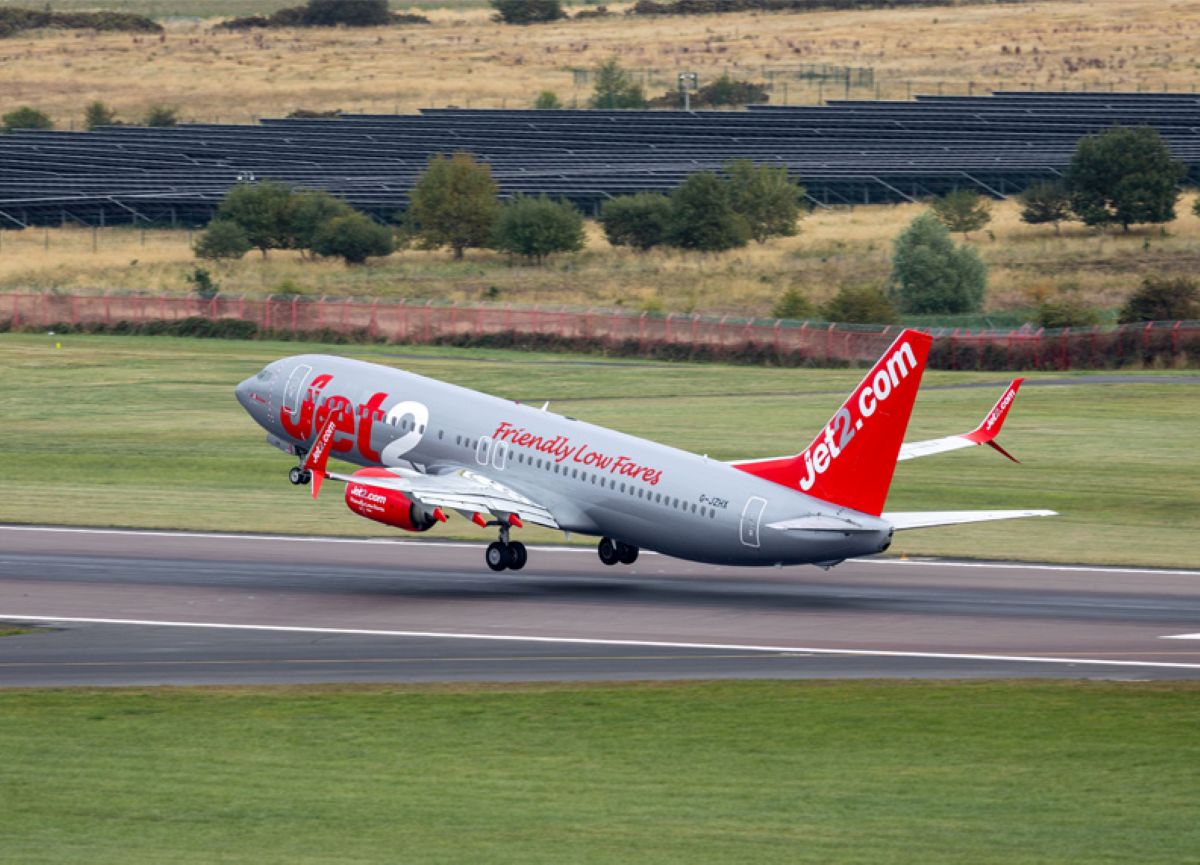
Vienna, Prague, Cologne and Budapest are emerging as important contenders for travellers planning short European Christmas-market breaks, as Jet2 puts more than 800,000 seats on sale across 15 European cities for Winter 2027/28. The programme includes 82 routes from 13 UK airport bases, with 48 routes specifically timed for Christmas-market visits. The announcement, made on 2 October 2026, puts festive travel planning firmly on the industry’s forward-booking agenda. However, the most convenient destination will depend on more than flight availability. Airport transfers, market opening dates, hotel rates and usable sightseeing time will determine which city offers the strongest proposition for a two- or three-night escape.
Jet2’s Winter Expansion Signals a Longer Festive Booking Window
Jet2’s latest programme gives travellers and independent travel agents an earlier opportunity to plan Christmas-market holidays. The airline has included Vienna, Prague, Cologne and Budapest alongside Strasbourg, Tallinn, Gdansk and other European city-break destinations. Its announcement also confirms that scheduled winter city-break services will operate alongside dedicated Christmas-market trips. This creates more options for travellers seeking either a quick weekend visit or a longer festive itinerary.
The scale of the programme offers a useful indicator of how airlines are positioning seasonal travel. Of the 82 announced routes, 48 are specifically timed around Christmas-market visits. That represents approximately 58.5% of the programme’s routes, although it does not mean the same proportion of seats is exclusively allocated to market tourism. Nor does additional capacity automatically translate into lower fares. Actual prices will depend on departure dates, remaining inventory, competition and booking patterns.
| Jet2 Winter 2027/28 indicator | Announced figure |
|---|---|
| European city destinations | 15 |
| Seats on sale | More than 800,000 |
| Routes across the programme | 82 |
| Routes timed for Christmas markets | 48 |
| UK airport bases | 13 |
| Market-timed share of announced routes | Approximately 58.5% |
For the wider travel trade, the announcement creates an opportunity to examine how seasonal air connectivity shapes destination choice. Nevertheless, the airline’s network is only one part of the picture. Travellers also need convenient arrival times, affordable accommodation and markets that remain open throughout their stay.
Advertisement
Advertisement
Four Cities Offer Four Distinct Festive Experiences
The appeal of these destinations lies in their contrasting itineraries rather than a single shared Christmas-market formula. Vienna offers several markets spread across palaces, squares and historic neighbourhoods. Prague concentrates much of its appeal around its historic centre, while Cologne places its cathedral market at the heart of a wider seasonal programme. Budapest combines central festive squares with architecture, riverside attractions and thermal bathing.
These differences matter when travellers have limited time. A visitor seeking several markets may favour Vienna, while someone prioritising a compact historic centre may prefer Prague. Cologne suits travellers who want a signature market within a focused weekend, whereas Budapest allows festive sightseeing to be combined with other urban experiences. The most suitable destination therefore depends on the traveller’s priorities, budget and available nights.
Advertisement
Advertisement
| Destination | Principal festive draw | Suggested stay | Strongest itinerary angle |
|---|---|---|---|
| Vienna | Multiple markets and palace settings | 3–4 nights | Several markets and cultural attractions |
| Prague | Historic squares and compact sightseeing | 2–3 nights | Old Town and festive walks |
| Cologne | Cathedral market and other city markets | 2 nights | A focused festive weekend |
| Budapest | Central markets, architecture and thermal baths | 3 nights | Festive experiences beyond the market stalls |
These suggested stays are planning recommendations, not guarantees that every attraction can be covered. Flight timings, hotel location and individual mobility will affect the time available.
Airport Transfers Can Change the Weekend Equation
The airport-to-centre journey is a crucial part of any short-break comparison. A direct flight may look attractive on a booking screen, yet a late arrival or lengthy onward transfer can consume a substantial share of a two-night stay. Travellers should therefore compare the complete journey rather than flight duration alone.
Vienna has a particularly useful rail option, with Railjet and Intercity Express services connecting Vienna Airport with Wien Hauptbahnhof in approximately 15 minutes. Prague’s trolleybus 59 links the airport with Nádraží Veleslavín, where passengers can transfer to Metro Line A. Budapest’s 100E Airport Express runs directly to central Deák Ferenc tér, providing a convenient connection for visitors staying near the centre.
Cologne should be assessed using the train or public-transport service that matches the traveller’s actual arrival time. The final comparison should record the journey to Cologne Central Station, the onward walk to the cathedral area and the cost of the chosen transfer. All four cities require the same practical calculation: landing time, baggage collection, transfer, hotel check-in and the time remaining for sightseeing.
| City | Airport transfer option | Published journey indicator | Practical consideration |
|---|---|---|---|
| Vienna | Railjet or Intercity Express | About 15 minutes to Wien Hauptbahnhof | Check onward travel from the station to the hotel |
| Prague | Trolleybus 59 and Metro A | Approximately 35 minutes to the centre | Allow for the interchange and final walk |
| Cologne | Rail and public transport | Verify against the selected itinerary | Match the transfer to arrival and departure times |
| Budapest | 100E Airport Express | About 40 minutes to the centre | Check the stop nearest the accommodation |
Journey times are indicative rather than door-to-door guarantees. Waiting times, luggage, service changes and the hotel’s location can all alter the total transfer time.
Direct Flights Matter More Than Headline Fares
Jet2’s announced departure-airport coverage provides a useful starting point for assessing access from the UK. Vienna features in the programme from 13 listed bases, compared with 11 for Prague and six each for Cologne and Budapest. These figures describe Jet2’s announced network, not the total number of direct routes available across all airlines. They also do not establish flight frequency or guarantee that every route operates on the dates a traveller prefers.
Advertisement
Advertisement
For an evidence-led comparison, the next step is to select a common departure airport served by all four destinations, where possible. The analysis should compare return flights over identical Thursday-to-Sunday or Friday-to-Monday windows. It should also record baggage allowances, departure times and arrival times, rather than relying on the lowest advertised fare.
This approach would expose an important distinction between nominal affordability and practical accessibility. A flight that costs less but arrives after the main market hours may deliver poorer value than a slightly more expensive service. Similarly, an early return departure can leave travellers paying for a hotel night they barely use.
The same methodology should apply to the 2027/28 programme. The announcement establishes that flights are on sale, but the exact schedule and fare for each proposed itinerary must be checked before publication. Readers should never interpret network coverage as proof of a convenient departure on their chosen weekend.
Market Calendars Could Decide the Winning Destination
The festive calendar creates another significant difference between these cities. Vienna’s Rathausplatz market is scheduled to run from 13 November to 26 December 2026, while its Schönbrunn Palace market opens earlier, on 6 November, and continues until 6 January 2027. Several other Viennese markets follow their own schedules, giving visitors opportunities to build a multi-location itinerary.
Prague’s Old Town Square and Wenceslas Square markets are scheduled from 28 November 2026 to 6 January 2027. The later opening makes the precise travel date particularly important for November visitors. However, their January closing dates provide flexibility for travellers planning a post-Christmas break.
Cologne’s cathedral market is provisionally scheduled for 16 November to 23 December 2026. Other markets offer different windows, including the harbour market, which is scheduled to continue until 3 January 2027. Travellers visiting after Christmas should therefore investigate the wider market calendar rather than assume every attraction closes simultaneously.
Advertisement
Advertisement
Budapest’s Advent Basilica market is scheduled from 13 November 2026 to 1 January 2027. Its published hours also demonstrate why checking holiday schedules matters: the market has shorter hours on 24 December and different arrangements for Christmas Day, Boxing Day and New Year’s Eve.
| City or market | Published 2026 dates | What travellers should consider |
|---|---|---|
| Vienna, Rathausplatz | 13 November–26 December | Suitable for a broad pre-Christmas window |
| Vienna, Schönbrunn Palace | 6 November–6 January | Extends into the post-Christmas period |
| Prague, Old Town Square | 28 November–6 January | Better suited to later November and December visits |
| Cologne, Cathedral market | Provisionally 16 November–23 December | Check final dates before non-refundable bookings |
| Cologne, Harbour market | 13 November–3 January | Offers a potential post-Christmas alternative |
| Budapest, Advent Basilica | 13 November–1 January | Check special holiday opening hours |
The dates above apply to the 2026 festive season, not Winter 2027/28. Organisers must confirm the later season’s schedules before travellers book around specific markets. The comparison also demonstrates why a city’s earliest opening date does not necessarily make it the best destination: the location, number of markets and visitor’s preferred travel period remain equally important.
Hotel Rates Need a Like-for-Like Test
Accommodation may ultimately separate the cheapest-looking destination from the best-value break. However, quoting one average nightly rate for each city would risk misleading readers, particularly during the festive peak. Prices can change sharply between November weekdays, December weekends and the final days before Christmas.
A credible comparison should use identical dates, a consistent room type and hotels within comparable distances of the main markets. Three-star and four-star properties should be assessed separately, with breakfast, cancellation terms and mandatory charges recorded consistently. The research should also capture the time and cost of travelling between each hotel and the principal festive locations.
| Cost measure | Required comparison |
|---|---|
| Return flights | Same departure airport and travel dates |
| Accommodation | Two-night and three-night totals |
| Room conditions | Two adults sharing one room |
| Airport transfers | Return journey, including relevant public transport |
| Local transport | Comparable sightseeing allowance |
| Food and market spending | Consistent daily budget assumptions |
| Total trip cost | Combined transport, accommodation and spending |
Live, date-specific quotations have not been established for this report. Consequently, numerical hotel averages and trip totals would create false precision rather than genuine reader value.
The finished investigation should publish the actual search dates, currencies and booking conditions alongside its figures. It should also distinguish the lowest available fare from a realistic checkout price, including baggage and other mandatory costs. Repeating the checks on another date would help establish whether an apparent price advantage persists or reflects a temporary promotion.
Advertisement
Advertisement
Cost Per Day Reveals Better Value
The total bill is only part of the equation. Travellers also need to know how much destination time they receive for their spending, particularly when choosing between two-night and three-night itineraries.
A simple calculation can make the comparison more meaningful: divide the complete trip cost by the number of usable sightseeing days. A late Friday arrival followed by an early Sunday departure may offer less practical value than an itinerary with similar costs but more time in the city. The calculation should use consistent assumptions and clearly explain what counts as a usable day.
For example, a three-night stay may deliver an additional full day without requiring another flight. However, the extra hotel cost could outweigh that benefit if the traveller only wants to visit one market. Conversely, Vienna’s multiple markets may justify a longer visit for someone who values variety and cultural attractions.
This measure would make the article more useful than a conventional destination ranking. Instead of declaring one city universally cheapest, it would show which itinerary provides the best balance of expenditure and experience for different travel priorities.
Rail Can Extend the Festive Itinerary
Rail connections create a possible alternative for travellers who want to combine destinations. Vienna, Prague and Budapest are connected through Central Europe’s international rail network, making multi-city journeys worth investigating. Nevertheless, a train journey introduces additional costs, station transfers and potential reductions in sightseeing time.
The analysis should compare a single-city weekend with a carefully planned multi-city itinerary. For the latter, researchers should verify journey times, ticket availability, departure frequency and the location of each station relative to the hotel. They should also examine open-jaw flights, which allow travellers to arrive in one city and depart from another.
Advertisement
Advertisement
For a two-night break, however, adding a second destination may create unnecessary complexity. A three- or four-night itinerary offers more flexibility, particularly if the cities are linked by convenient daytime services. Travellers should compare the complete journey cost before deciding whether a second market destination genuinely improves the experience.
Airlines Are Selling More Than Winter Seats
Jet2’s programme provides a useful case study in how airlines organise seasonal city-break capacity around identifiable travel occasions. By placing winter flights on sale early, the company gives customers and travel agents more time to plan. It also creates opportunities to match flight schedules with market opening periods and weekend demand.
However, the announcement does not establish that Christmas-market tourism is growing at a particular rate across Europe. Nor does it demonstrate that every destination will receive more visitors or lower fares. Those claims would require independent passenger statistics, historical route-capacity comparisons and evidence of hotel occupancy or visitor spending.
For destination marketing organisations and hospitality businesses, the more immediate implication is operational. Market dates, flight schedules and hotel inventory need to work together if a destination is to convert seasonal interest into overnight stays. Convenient arrivals can support short breaks, while extended market schedules may help sustain visits beyond the busiest pre-Christmas weekends.
The comparison also illustrates why airlines and tourism authorities should not assess success through seat capacity alone. Passenger volumes, average length of stay, visitor expenditure and seasonal occupancy would provide a more complete picture of the economic effect.
A Smarter Booking Strategy for Travellers
The most practical advice is to begin with the dates, not the destination ranking. Travellers should first identify which markets will be open, then compare flight schedules and accommodation for the same period. This avoids choosing an attractive airfare before discovering that the intended market closes too early or requires an extra night.
Advertisement
Advertisement
Those seeking several distinct festive settings should investigate Vienna’s broader market calendar. Prague may suit travellers who prioritise historic squares and compact sightseeing, while Cologne offers a focused cathedral-market experience. Budapest is worth considering for visitors who want to combine festive stalls with thermal baths and other urban attractions.
Before paying for a non-refundable hotel, travellers should verify the official market calendar, the airline’s current timetable and the airport transfer serving their arrival time. They should also check whether Christmas Eve, Christmas Day or New Year’s Eve brings reduced opening hours. These small checks can prevent an otherwise well-planned weekend from losing valuable sightseeing time.
Which City Deserves the Short Break?
Vienna, Prague, Cologne and Budapest each offer a different proposition, so a universal winner would oversimplify the decision. Vienna stands out for travellers seeking multiple markets, Prague for a concentrated historic-centre itinerary, Cologne for a focused festive weekend and Budapest for a broader mix of seasonal and cultural experiences. Jet2’s Winter 2027/28 announcement adds a timely airline-capacity dimension, but actual convenience and value will depend on individual routes, fares and dates. The strongest booking decision comes from comparing the entire journey, not just the flight price. Once verified hotel quotations and matched flight schedules are added, this comparison can become a practical guide to choosing the right festive break.
Advertisement
