
Alaska Airlines Seattle Flights Unlock Historic Nonstop Links to Athens and Paris in 2027

Published
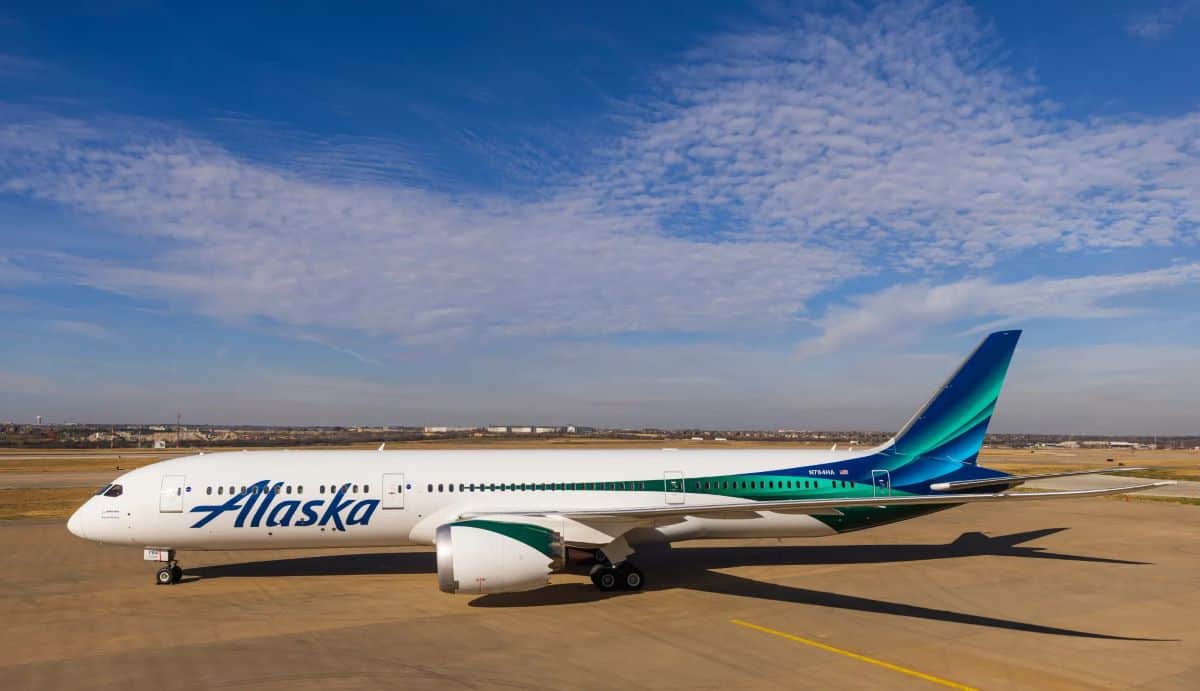
Alaska Airlines has some news for people who fly out of Seattle. This is a deal because it will be easier for people who live on the West Coast to get to these two big cities in Europe.
The flights will start in May. They will use big planes called Boeing 787-9 Dreamliners. Alaska Airlines will fly to Athens three times a week. To Paris five times a week. The flights to Athens are special because they will be the time people can fly directly from Seattle to Greece.
Advertisement
Advertisement
Alaska Airlines is adding these flights to the ones they already have. This means they will now fly to seven places from Seattle. This is good for people who like to travel and for businesses because it will be easier to get. It will also help more people visit the Pacific Northwest.
Alaska Airlines Seattle flights will make it easier for people to get to Athens and Paris. The new flights to Athens and Paris will be a help, to people who live on the West Coast. Alaska Airlines is making it easier to get to Europe from Seattle.
Advertisement
Advertisement
Alaska Airlines Seattle Flights Mark a Major European Expansion
The Seattle–Athens nonstop flight will begin on 12 May 2027 and operate three times each week through October. The Seattle–Paris nonstop service will launch on 25 May 2027, with five weekly flights planned through October. Return services will begin from Athens on 13 May and from Paris on 26 May.
Both routes will be operated with Boeing 787-9 Dreamliner aircraft. Tickets went on sale when Alaska Airlines released its announcement on 20 August 2026. Schedules remain subject to adjustment before operations begin.
Advertisement
Advertisement
The expansion matters because it is not simply adding two leisure destinations to an established timetable. It forms part of Alaska Airlines’ wider plan to turn Seattle into a stronger long-haul international hub connecting the Pacific Northwest with Europe and Asia.
The official Alaska Airlines announcement states that Athens and Paris were among the destinations most frequently requested by members of its rewards programme. The additions will take the airline’s intercontinental network from Seattle to seven destinations by summer 2027.
Advertisement
Advertisement
Those destinations will comprise Athens, Paris, London, Reykjavík, Rome, Seoul and Tokyo Narita. Alaska Airlines also plans to introduce at least five more intercontinental destinations from Seattle by 2030.
Confirmed Seattle to Athens and Paris Flight Schedules
The schedules have been designed around overnight eastbound journeys and daytime westbound services. This pattern is common on transatlantic routes because it allows passengers to arrive in Europe during the afternoon and return to Seattle during the same calendar day.
Seattle to Athens flight schedule
The outbound flight from Seattle to Athens is scheduled to depart at 4.30pm and arrive at 2.20pm the following day. The return service will depart Athens at 4.20pm and reach Seattle at 6.55pm.
Flights will operate three times weekly from 12 May until October 2027. Alaska Airlines has designated the service as flight AS196.
Advertisement
Advertisement
| Route | Launch date | Frequency | Departure | Arrival | Aircraft |
|---|---|---|---|---|---|
| Seattle to Athens | 12 May 2027 | Three weekly | 4.30pm | 2.20pm next day | Boeing 787-9 |
| Athens to Seattle | 13 May 2027 | Three weekly | 4.20pm | 6.55pm | Boeing 787-9 |
The service will become Alaska Airlines’ longest route when launched. More importantly for passengers, it will remove the need for a connecting flight between Seattle and the Greek capital.
Seattle to Paris flight schedule
The Seattle–Paris flight is scheduled to leave at 5.25pm and arrive at Charles de Gaulle Airport at 12.25pm the following day. The return journey will depart Paris at 2.25pm and arrive in Seattle at 3.50pm.
| Route | Launch date | Frequency | Departure | Arrival | Aircraft |
|---|---|---|---|---|---|
| Seattle to Paris | 25 May 2027 | Five weekly | 5.25pm | 12.25pm next day | Boeing 787-9 |
| Paris to Seattle | 26 May 2027 | Five weekly | 2.25pm | 3.50pm | Boeing 787-9 |
The service is expected to operate until October 2027. Paris is already a significant transatlantic destination, but Alaska Airlines’ entry will give Pacific Northwest travellers another nonstop choice.
According to Alaska Airlines, it will become the first member of the oneworld alliance to operate directly between the West Coast and Paris. However, travellers should distinguish that alliance-specific claim from the wider market, because other airlines may operate West Coast–Paris services.
Seattle Secures Its First Nonstop Connection With Athens
The Seattle to Athens route represents the more historically distinctive element of the announcement. No airline has previously operated a nonstop scheduled service between the Pacific Northwest city and the Greek capital.
It will also be the only nonstop connection between the US West Coast and Athens when it launches, according to the airline and the Port of Seattle. This gives the route importance beyond the Seattle metropolitan area.
Advertisement
Advertisement
Passengers from Alaska, Oregon, California, Hawaii and other points in the airline’s network may be able to connect through Seattle rather than routing through another American or European hub. Removing an intermediate stop can reduce overall journey time and limit the number of airport transfers involved.
The route will also create a new channel for passengers travelling in the opposite direction. Visitors from Greece will gain direct access to Seattle and onward connections across Alaska Airlines’ domestic and regional network.
Athens International Airport described the route as a new bridge for tourism, business, investment and trade between Greece and the US West Coast. That assessment reflects the broad economic function of nonstop aviation. Direct routes can support holiday demand, corporate travel, educational exchanges and visits to friends and relatives.
The service is scheduled for the main European summer period, when demand for Greece is generally strongest. Its three-times-weekly frequency also indicates a measured seasonal launch rather than an immediate daily commitment.
For tour operators, the new connection could support itineraries combining Athens with the Greek islands, mainland heritage destinations and other parts of southeastern Europe. However, the airline has not announced individual package arrangements, and travellers should verify any onward transport separately.
Paris Gains Another Direct Link With the Pacific Northwest
Paris has a different market profile from Athens. It is an established year-round global gateway, a leading destination for international tourism and a major connecting point for travel across France and Europe.
Advertisement
Advertisement
Alaska Airlines said Paris was among the most searched destinations on its booking website. The planned five-times-weekly frequency is higher than the Athens schedule, suggesting a broader combination of leisure, business and connecting demand.
The route will also support direct movement between two significant technology and innovation regions. Seattle and the wider Puget Sound area host major global companies, while Paris is an important centre for business, culture, research, events and international organisations.
Tourism demand provides another substantial foundation. France’s national tourism development agency, Atout France, reported that France received an estimated 102 million international arrivals in 2025, compared with 100 million in 2024.
International tourism receipts reached a record €77.5 billion in 2025, increasing by approximately 9% from the previous year. Those official figures underline the scale of the destination market that Alaska Airlines will enter.
France’s National Institute of Statistics and Economic Studies reported that non-resident attendance in metropolitan France’s holiday and other short-stay accommodation increased by 8.5% during the first quarter of 2026, even though total attendance in that category declined by 1.7%.
That rise in international accommodation demand does not guarantee the commercial performance of a specific route. It does, however, demonstrate continuing foreign interest in France at a time when airlines are evaluating additional transatlantic capacity.
Advertisement
Advertisement
Boeing 787-9 Aircraft Will Support the Long-Haul Strategy
Alaska Airlines will use the Boeing 787-9 Dreamliner on both new European services. The widebody aircraft is central to the carrier’s long-haul growth strategy from Seattle.
The airline inherited access to long-range aircraft and international operational capabilities through its combination with Hawaiian Airlines. It has since been developing an Alaska-branded long-haul product for routes based in Seattle.
The 787-9 is designed for long-distance operations and can accommodate several cabin categories. Alaska Airlines says its international business-class section will feature suites with lie-flat seating. The airline also plans premium amenities across its cabins.
Passengers should consult the final seat map and operating details when booking because aircraft assignments, onboard products and individual amenities can change before departure.
Alaska Airlines has also said that complimentary Starlink Wi-Fi will be available to eligible rewards members as installation progresses across the Alaska and Hawaiian fleets through 2027. Because the rollout will occur over time, travellers should not assume connectivity will be available on every aircraft until the airline confirms it for a particular service.
The use of a consistent aircraft type on Athens and Paris could support operational efficiency. A shared fleet allows the airline to manage cockpit crews, cabin training, maintenance requirements and passenger products across its expanding intercontinental schedule.
Advertisement
Advertisement
Widebody deployment also reflects the distance and projected traffic of the routes. Narrow-body aircraft have expanded into some transatlantic markets, but Seattle’s location makes Athens an especially long sector. The 787-9 provides the range required while offering passenger and cargo capacity.
Seattle Is Becoming a Larger International Gateway
The Athens and Paris services are part of a deliberate transformation at Seattle-Tacoma International Airport rather than isolated route experiments.
The Port of Seattle confirmed that the two additions will take SEA’s overall number of international nonstop services to 66. The airport reported 63 international nonstop services to 37 overseas destinations on 29 airlines at the time of the announcement.
Six new intercontinental services began at SEA during 2026. These included Cathay Pacific’s Hong Kong route, Alaska Airlines services to Rome, London and Reykjavík, and Delta Air Lines connections to Rome and Barcelona.
The Port of Seattle’s airport statistics show that SEA handled a record of more than 52.7 million passengers in 2025. The airport generates approximately US$33 billion in economic activity and provides essential transport access for the wider Pacific Northwest.
Official airport information also lists 37 airlines serving 96 domestic and 36 international destinations, including seasonal operations. Those destination totals and the separate service count measure different things: one city may have more than one airline service, while seasonal routes may appear alongside year-round connections.
Advertisement
Advertisement
The planned additions strengthen SEA’s role as an origin, destination and connecting airport. Alaska Airlines says it offers more than 360 departures on peak days and connects the Seattle area with 110 nonstop destinations.
A larger feeder network can help sustain long-haul routes. Passengers originating outside Seattle can travel to SEA on domestic services and connect to Europe, widening the potential customer base beyond the local population.
How Alaska Airlines Built Its Seattle Global Network
Alaska Airlines has traditionally been associated with domestic and short-to-medium international travel along the West Coast, Alaska, Canada and Mexico. Its development into a long-haul operator therefore represents a significant strategic change.
The airline’s Seattle-based international plan accelerated following its combination with Hawaiian Airlines. Hawaiian brought experience operating long-haul aircraft and services across the Pacific.
The first stage involved transpacific growth. Daily Seattle–Tokyo Narita flights began in May 2025, initially operated by Hawaiian Airlines using Airbus A330 aircraft. Seoul Incheon followed as another core Asian destination.
The airline then turned towards Europe. Rome became its first announced European destination from Seattle, followed by London Heathrow and Reykjavík. These routes established a wider portfolio containing large business markets, major tourism centres and strategically differentiated seasonal destinations.
Advertisement
Advertisement
Athens and Paris extend that approach. Paris adds another high-volume European capital, while Athens opens an unserved city pair with strong seasonal tourism potential.
The carrier’s official goal is to operate at least 12 long-haul international routes from Seattle by 2030. With seven destinations identified for summer 2027, at least five additional routes would be required to reach that target.
No destinations beyond those already announced should be treated as confirmed. Future routes will depend on aircraft availability, regulatory approvals, airport capacity, traffic rights, commercial demand and the airline’s wider financial and operational priorities.
Economic Implications for Seattle and Washington State
New international routes can create effects throughout a regional economy. Direct aviation capacity supports passenger spending, airport operations, tourism supply chains and connections between businesses.
The Port of Seattle reported that airport activity supported nearly 175,000 jobs in 2023, alongside US$20.5 billion in wages and benefits and more than US$53 billion in sales and services. These figures cover the wider economic footprint of SEA rather than the impact of the two routes individually.
No official economic-impact estimate has been published specifically for the Athens and Paris services. It would therefore be misleading to assign a precise employment, visitor-spending or revenue figure to them before operations begin.
Advertisement
Advertisement
Nevertheless, additional international passengers can support hotels, restaurants, ground transport, attractions, retail and meeting venues. Travellers connecting through Seattle may also extend their journey with a stay in the city or wider Washington State.
The services may be particularly relevant to companies with commercial interests in Europe. Nonstop flights reduce itinerary complexity and can make short business journeys more practical. They also create additional cargo capacity in the belly holds of passenger aircraft, although Alaska Airlines has not published a cargo forecast for either route.
Seattle’s cruise sector may benefit from wider international access as well. The Port of Seattle reported that its 2025 cruise activity generated more than US$1.2 billion in local business revenue. European passengers using direct services may combine Seattle stays with Alaska cruises, though no official forecast links the new flights with cruise demand.
Tourism Implications for Greece
The Athens service will strengthen Greece’s aviation access from a part of the United States that previously lacked a direct connection.
Official accommodation data from the Hellenic Statistical Authority demonstrate the importance and seasonality of Greek tourism. In July 2025, accommodation establishments recorded approximately 6.39 million arrivals and 31.04 million overnight stays.
Those totals represented annual increases of 1.6% in arrivals and 1.8% in overnight stays. In September 2025, Greece registered nearly 5.09 million arrivals and 23.31 million nights, showing that substantial demand continued beyond the peak of July and August.
Advertisement
Advertisement
The planned May-to-October operating window therefore aligns with Greece’s main visitor season. It begins before the busiest summer weeks and continues into the early autumn shoulder period.
Direct access may help distribute travel demand through packaged tours and independent itineraries. Athens acts both as a destination and as a gateway to mainland Greece and island connections.
Tourism businesses could gain access to a new catchment extending across the Pacific Northwest, Alaska and Hawaii. The same route could make Seattle and surrounding destinations more accessible to Greek travellers.
Yet the economic outcome will depend on more than seat capacity. Fare levels, schedule convenience, onward connectivity, currency movements, traveller confidence and accommodation prices will all influence demand.
Paris Route Could Strengthen Two-Way Tourism and Business Travel
Paris already attracts an exceptionally broad visitor market. Its museums, heritage districts, events, retail, transport links and business economy generate demand throughout much of the year.
The Alaska Airlines route will be seasonal, but its five-weekly schedule gives travellers greater flexibility than a lower-frequency service. It may appeal to passengers who want to avoid connections through other US or European airports.
Advertisement
Advertisement
The arrival at Charles de Gaulle Airport will also place passengers at one of Europe’s principal aviation gateways. Travellers may be able to connect onward through Alaska Airlines’ oneworld relationships and other partners, depending on ticketing arrangements and schedules.
Alaska Airlines specifically highlights its alliance and global partnerships as a way for passengers to reach hundreds of destinations beyond its own network. Travellers should nevertheless confirm whether onward flights appear on one itinerary, whether baggage will be checked through, and which carrier is responsible during disruption.
Same-day connectivity through Seattle could also widen the Paris route’s reach. The airline has specifically identified Honolulu–Paris journeys through Seattle as one potential connection.
This creates an unusual link between Hawaii and continental Europe through the Pacific Northwest. However, its practicality will depend on minimum connection times, schedule coordination and seasonal availability.
What Travellers Should Know Before Booking
Passengers considering the Alaska Airlines Seattle flights should understand that both services remain several months from launch. Published schedules may change before May 2027.
The airline’s introductory fares were time-limited and subject to conditions. Travellers should compare the complete cost of the booking, including baggage, seat selection, changes and connections, rather than focusing only on the advertised base fare.
Advertisement
Advertisement
International passengers must also meet the entry requirements of France or Greece. Passport validity, visa rules and border procedures depend on nationality and personal circumstances.
American travellers should consult the US Department of State’s Greece travel information and France travel information before departure. European border and travel-authorisation requirements should be checked again close to travel because implementation dates and procedures can change.
SEA Airport advises international passengers to arrive at least three hours before departure. The airport also recommends checking the airline’s application or website for boarding passes, baggage arrangements and operational updates.
Passengers with accessibility requirements should contact the airline in advance. They should also verify which company operates every segment of a codeshare or connecting itinerary.
Passenger Rights Will Depend on the Journey and Disruption
Passenger protections on these routes may involve both US and European rules. The applicable framework can depend on the direction of travel, operating carrier and circumstances of a cancellation or delay.
The US Department of Transportation requires airlines to provide refunds when they cancel a flight or make a significant change and the passenger chooses not to accept the alternative offered. Optional-service fees may also become refundable when the purchased service is not delivered.
Advertisement
Advertisement
European passenger-rights legislation may apply to certain flights departing from the European Union. However, eligibility for compensation or assistance depends on the facts of each disruption, including its cause and the carrier involved.
Travellers should retain booking confirmations, receipts and written communication. They should first contact the operating airline and use official regulatory complaint channels if the issue remains unresolved.
Travel insurance may cover circumstances outside statutory protections, but policy exclusions and claim requirements vary. Passengers should read the wording before purchase and should not assume every delay, missed connection or cancellation is covered.
Airport Infrastructure Must Keep Pace With Growth
SEA’s expanding international network creates opportunities, but it also places pressure on terminal capacity, baggage systems, security processing, gates and border facilities.
The Port of Seattle is undertaking long-term planning and airport improvements to handle growing demand. Its planning material records 52.7 million passengers in 2025 and more than 24,000 people employed at the airport by over 350 companies.
New routes alone do not determine airport congestion. Passenger peaks, staffing, construction, weather and security conditions can all affect the experience.
Advertisement
Advertisement
The arrival and departure times of long-haul flights require careful gate planning because widebody aircraft occupy more space and may remain on the ground longer than domestic aircraft.
For passengers, the practical lesson is straightforward. Allow enough time, monitor construction notices, check the correct concourse and confirm live information with the airline.
International-to-domestic connections may require immigration, customs procedures and baggage rechecking. Travellers should avoid assuming that a technically valid short connection will always provide a comfortable transfer.
Industry Impact Extends Beyond Two New Routes
The announcement signals a wider competitive change in West Coast aviation. Alaska Airlines is positioning itself as a carrier capable of combining a dense regional network with direct long-haul services.
That model allows the company to feed European and Asian flights with passengers from smaller cities that may not support their own intercontinental routes.
It also increases competition for established long-haul carriers serving Seattle. More competition can give travellers additional choices in schedules, fares, rewards programmes and cabin products. It does not automatically guarantee lower prices, especially during periods of strong seasonal demand.
Advertisement
Advertisement
The strategy also places greater importance on operational reliability. Long-haul disruptions are harder to recover from because replacement aircraft, crews and alternative frequencies may be limited.
Seasonal services operating three or five times weekly require passengers to consider recovery options carefully. A cancellation may not always be followed by another same-route departure the next day.
Travel agencies and corporate buyers should review rebooking arrangements, alliance options and minimum connecting times before recommending itineraries. They should also distinguish between routes that have been announced and those already operating.
Environmental Considerations Remain Part of Aviation Growth
Long-haul aviation supports mobility and economic activity, but it also produces significant greenhouse-gas emissions. Adding nonstop flights does not remove that challenge.
A direct journey may avoid the additional take-off and landing associated with a connecting itinerary. Nevertheless, environmental performance depends on aircraft efficiency, passenger load, routing, fuel use and operational conditions.
The Boeing 787 family was designed to use less fuel than older widebody aircraft of comparable roles. However, efficiency gains per passenger do not necessarily reduce total emissions if overall flying increases.
Advertisement
Advertisement
The Port of Seattle and participating airlines face growing expectations to improve airport energy use, ground operations and access to lower-carbon aviation fuels. Any claims about route-level environmental benefits should be supported by transparent, comparable data.
Travellers who consider environmental impact can favour nonstop itineraries where practical, use public transport to reach airports and evaluate credible emissions information. They should remain cautious about broad sustainability claims that do not explain how reductions were measured.
Future Outlook for Alaska Airlines’ Global Ambition
The Athens and Paris announcement advances Alaska Airlines towards its target of at least 12 long-haul international destinations from Seattle by 2030.
Its progress will depend on the successful operation of the routes already announced. Load factors, yields, seasonal demand and connecting traffic will influence whether existing services are expanded, reduced or converted to year-round operations.
Aircraft availability will be another decisive factor. Long-haul network growth requires sufficient 787-9 capacity as well as trained crews, maintenance support, spare-aircraft resilience and airport infrastructure.
Athens could test the strength of seasonal leisure demand from the Pacific Northwest. Paris may provide a broader measure of Alaska Airlines’ ability to compete in a major, established transatlantic market.
Advertisement
Advertisement
If both routes perform well, they could strengthen Seattle’s standing as an alternative West Coast gateway for Europe-bound passengers. They could also encourage more destination marketing and commercial collaboration between Washington State, France and Greece.
Claims about further routes, frequencies or year-round expansion would remain speculative until formally announced.
Conclusion
Paris will get five flights every week. The Boeing 787-9 planes and flights within the country and partnerships with airlines will help make these new flights work.
These new flights to Athens and Paris and Seattle will be good for tourism and business in all three cities.
People who want to fly on these Alaska Airlines Seattle flights should check the schedules and prices and rules, for entering the countries and other details before they travel. This is because the schedules and the planes they use might change before the flights start.
[Source:- Safari India]
Advertisement
Advertisement
Image Credit:- Alaska Airlines
Advertisement
