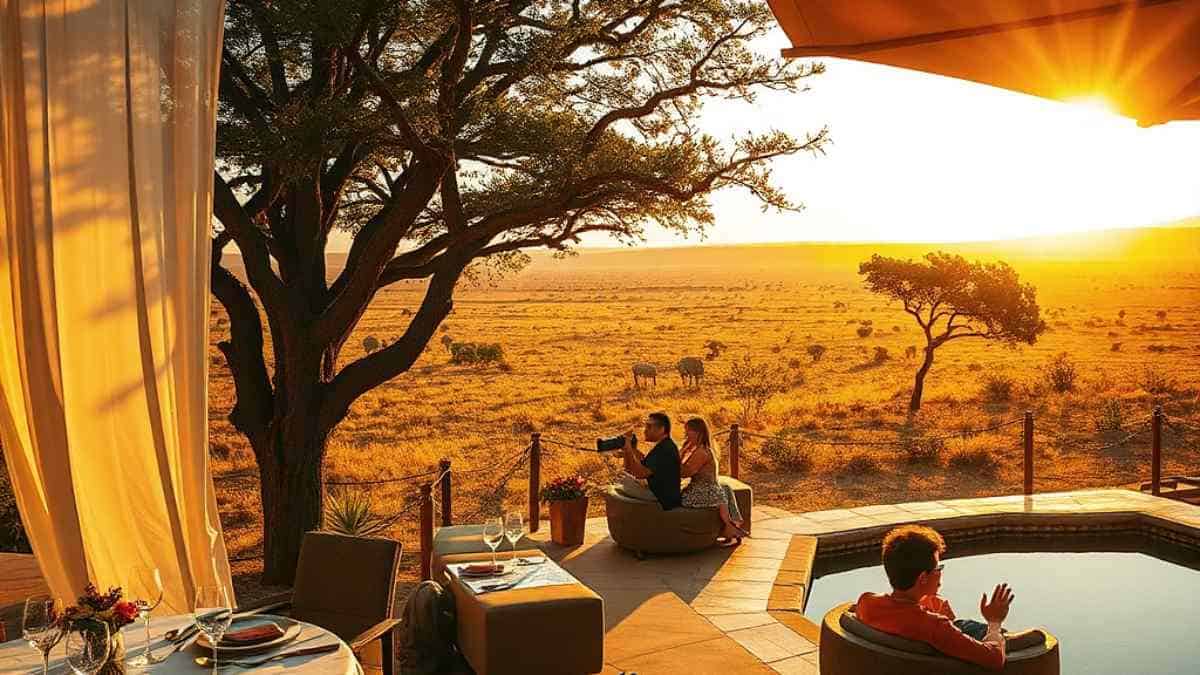
Image generated with Ai
In every leading tourism destination in Africa, the economic framework of the hospitality sector is confronted with an exceptional cap. Hotels and lodges in Africa have seen a decline in their room rates due to the limiting effect of companies’ budgets and astute consumers on demand for accommodation. Therefore, tourist premises such as resorts, lodges, and hotels have resorted to the use of TRevPAR as the main operational tool to overcome stagnation and, therefore, earn incremental income. The transformation of business focus from individual accommodation revenues to total visitor spending has helped to protect profits from inflation.
The post-pandemic recovery across international travel corridors provided African luxury hospitality operators with unprecedented room pricing leverage, propelling the Average Daily Rate (ADR) across prime safari circuits and coastal archipelagos to historic peaks. However, comprehensive performance data confirms that the era of relying solely on base lodging price increases to fuel balance sheet growth has reached an undeniable inflection point. Corporate travel procurement teams continue to mandate strict budget caps, while high-net-worth international leisure travellers are demonstrating heightened price sensitivity in response to elevated long-haul aviation fares and shifting macroeconomic realities.
The United Nations Tourism Organisation (UN Tourism) documented in its official World Tourism Barometer that while international tourist arrivals reached 1.52 billion globally in 2025—generating an unprecedented 2.2 trillion US dollars in total export revenues—the consumer mindset has pivoted toward demanding demonstrable experiential value. Travellers are no longer willing to absorb open-ended accommodation rate increases without commensurate expansions in personalised, high-touch services. For hospitality asset managers operating across Sub-Saharan and North Africa, continuing to force room-only rate hikes introduces immediate commercial risks, including compressed booking windows, elevated cancellation velocities, and channel displacement toward alternative global destinations.
At the same time, the baseline cost of hotel operations has continued to expand. Escalating food supply chain expenses, elevated intercontinental logistics costs, and rising hospitality labour expenses—which now represent between 43% and 60% of total hotel operating expenses across global operating environments—continue to erode gross operating margins. Consequently, relying exclusively on room RevPAR (Revenue per Available Room) as the core diagnostic metric provides an incomplete and increasingly distorted evaluation of commercial performance.
Advertisement
Forward-looking hotel asset managers, management companies, and independent lodge owners are transitioning toward Total Revenue per Available Room (TRevPAR) and Revenue per Available Guest (RevPAG) as their primary operational metrics. In destination resorts, private safari reserves, and luxury urban hotels, the bedroom is no longer the sole engine of the business model. Instead, the overnight room functions as the foundational platform that unlocks multi-outlet expenditure across culinary programmes, conservation experiences, clinical wellness treatments, and private aviation transfers.Legacy Lodging Model Commercial Friction Institutionalised TRevPAR Room-only RevPAR targeting ADR hits consumer ceiling Holistic guest spend models Siloed outlet accounting Margin erosion via opex RevPAG & GOPPAR tracking Static compsets & OTA reliance Destructive rate discounting Fluid intent compsets & GEO
To achieve sustainable margin expansion in an era of constrained room rate growth, commercial teams are fundamentally restructuring their revenue management systems. This transformation is driven by four structural developments that separate forward-looking operators from legacy competitors.Strategic Domain Commercial Focus and Market Driver Unique Value Proposition Impact on Operating Margins Institutionalising TRevPAR Underwriting non-room revenue streams (F&B, wellness, conservation, curated day-use) as the core hedge against flat room rates. Moves commercial focus from room occupancy toward net guest lifetime yield and total asset utilisation. Expands gross operating profit per available room (GOPPAR) while buffering against room rate resistance. Generative Engine Optimisation (GEO) Conversational artificial intelligence replacing standard metasearch and organic web search queries. Audits unstructured brand citations across large language models rather than bidding on pay-per-click search terms. Reduces third-party online travel agency (OTA) commission leakage and secures high-margin direct bookings. Fluid Compset Architecture Dynamic demand clustering based on intent, travel personas, and cross-category accommodation. Replaces static geographical competitor sets with intent-based comparison sets spanning villas, safari camps, and resorts. Prevents mispriced inventory by benchmarking against what target guests actually consider across Africa. Autonomous Commercial Workflows Embedded algorithmic decision intelligence engines replacing siloed dashboard stacks. Automates complex inventory pricing, displacement analysis, and group RFP evaluation without added administrative overhead. Reduces commercial labour overhead while executing real-time pricing across multiple ancillary outlets.
Historically, hotel revenue management systems focused disproportionate analytical resources on optimizing room inventory, treating food, beverage, spas, and recreational activities as secondary cost centres designed merely to support resident guests. The contemporary operating environment renders this siloed approach financially unsustainable. By institutionalising TRevPAR, hospitality enterprises mathematically underwrite non-room spending during the initial underwriting, annual budgeting, and day-to-day revenue forecasting cycles.
This structural pivot requires finance teams to evaluate outlet contribution margins alongside traditional room margins. When base room rates hit market resistance, an asset’s incremental net operating income (NOI) must be unlocked through high-margin ancillary programming. By designing bespoke experiences that capture a larger share of the guest’s overall travel budget—ranging from private wildlife tracking sessions to sommelier-led wine tastings—operators build a resilient financial buffer that protects the bottom line against stagnant overnight rates.
The consumer discovery and booking pathway has shifted permanently away from traditional search engine result pages and metasearch aggregators toward conversational artificial intelligence models. Affluent global travellers increasingly utilise generative AI assistants to plan complex, multi-destination African itineraries, querying conversational agents on specific ethical parameters, conservation track records, culinary provenance, and private wellness facilities.
Consequently, leading luxury hospitality brands are establishing dedicated line items for Generative Engine Optimisation (GEO). Rather than deploying substantial capital into conventional pay-per-click digital advertising campaigns, properties conduct algorithmic discovery audits to ensure large language models ingest and accurately cite their property data. By maintaining structured, machine-readable digital footprints across sustainability accreditations, private naturalist credentials, and verified guest reviews, luxury lodges protect their visibility in automated travel curation engines.
Static competitive sets—traditionally formed by selecting four or five properties within the immediate geographical vicinity—no longer reflect how luxury consumers make purchasing decisions. Ultra-high-net-worth travellers evaluating an African journey assess options across entirely different accommodation categories and regional boundaries. An exclusive-use safari villa in the Greater Kruger or Serengeti competes directly with private beachfront villas in Zanzibar, heritage wine estates in Franschhoek, and mountain gorilla retreats in Rwanda.
Fluid compset architecture solves this analytical limitation through dynamic demand clustering. By evaluating real-time traveller intent, feeder market demographics, length of stay, and experiential preferences, modern revenue management engines construct fluid comparison clusters. A property’s dynamic competitor set shifts automatically depending on whether incoming demand is driven by multi-generational families seeking private conservation education or luxury couples seeking secluded wellness retreats.
Commercial teams in hospitality are frequently encumbered by fragmented technology stacks consisting of independent property management systems, customer relationship databases, central reservation engines, rate shopping dashboards, and point-of-sale platforms. The resulting analytical fragmentation slows decision-making, leads to cognitive fatigue, and leaves commercial managers reacting to historic demand patterns rather than shaping future pace.
The industry’s strategic response is the rapid adoption of autonomous commercial workflows. Advanced hospitality decision platforms operate as continuous intelligence layers that integrate data across all property outlets in real time. Rather than requiring revenue managers to spend hours extracting data and reconciling spreadsheets, autonomous engines automatically evaluate group booking displacement across total guest spend, execute rate adjustments across all channels, and flag high-value guest arrival profiles to on-site operations teams.
The economic structure of African luxury hospitality makes the continent exceptionally reliant on total revenue optimisation. Across Africa’s safari circuits, conservation reserves, and destination island archipelagos, base lodging typically accounts for less than 45% to 50% of total guest spend. The remaining 50% to 55% of guest expenditure is generated entirely across non-room ancillaries, including private vehicle charters, specialist conservation excursions, bespoke culinary setups, and indigenous botanical spa therapies.
In African luxury and upper-upscale lodging, Average Daily Rates face natural price-resistance thresholds. High-net-worth international guests already face elevated intercontinental flight expenditures, volatile regional currency conversions, and complex regional air logistics. Attempting to offset local inflation by continuously pushing base room rates past psychological thresholds results in immediate booking resistance. Consequently, hotel asset managers across Sub-Saharan and North Africa are prioritizing TRevPAR and RevPAG over isolated room RevPAR.Market Dimension / Indicator Continental Valuation and Projection Strategic Commercial Application for TRevPAR African Wellness Tourism Market Valued at $14.28 billion, projected to expand to $19.16 billion at a 6.05% CAGR; digital detox retreats growing at 12.14% annually. Monetises longevity therapies, thermal hydrotherapy, and indigenous botanical wellness rituals as high-margin add-ons. African Safari Tourism Market Valued at $17.3 billion in 2025, expanding toward $25.7 billion by 2032 at a 5.8% CAGR. Bundles conservation fees, dedicated naturalist tracking, and exclusive game drives directly into contribution margins. Domestic and Regional African Wealth Sustained disposable income expansion across major metropolitan hubs like Nairobi, Johannesburg, and Lagos. Generates off-season culinary, wellness, and weekend corporate retreat revenue to counteract seasonal long-haul dips. Direct Booking Channel Share Direct reservations capture over 60% of specialised luxury bookings in premium African lodges. Engages guests via pre-arrival curation systems to secure non-room spend prior to arrival, preventing OTA fee leakage.
Official arrival data released by UN Tourism demonstrates the expanding appetite for African destinations. In 2025, international tourist arrivals across Africa grew by 8% year-on-year to reach 81 million, with North Africa recording an 11% expansion. This growth continued into the first quarter of 2026, with both North Africa and Sub-Saharan Africa recording a 4% increase in international arrivals despite broader global geopolitical friction.
Concurrently, international tourism receipts reached historic levels, with destinations such as Morocco recording a 24% increase in receipts and Egypt achieving an 8% increase in early 2026. These figures confirm that while absolute traveller volumes remain resilient, revenue growth is heavily concentrated in on-ground experiential spending rather than room-rate inflation.
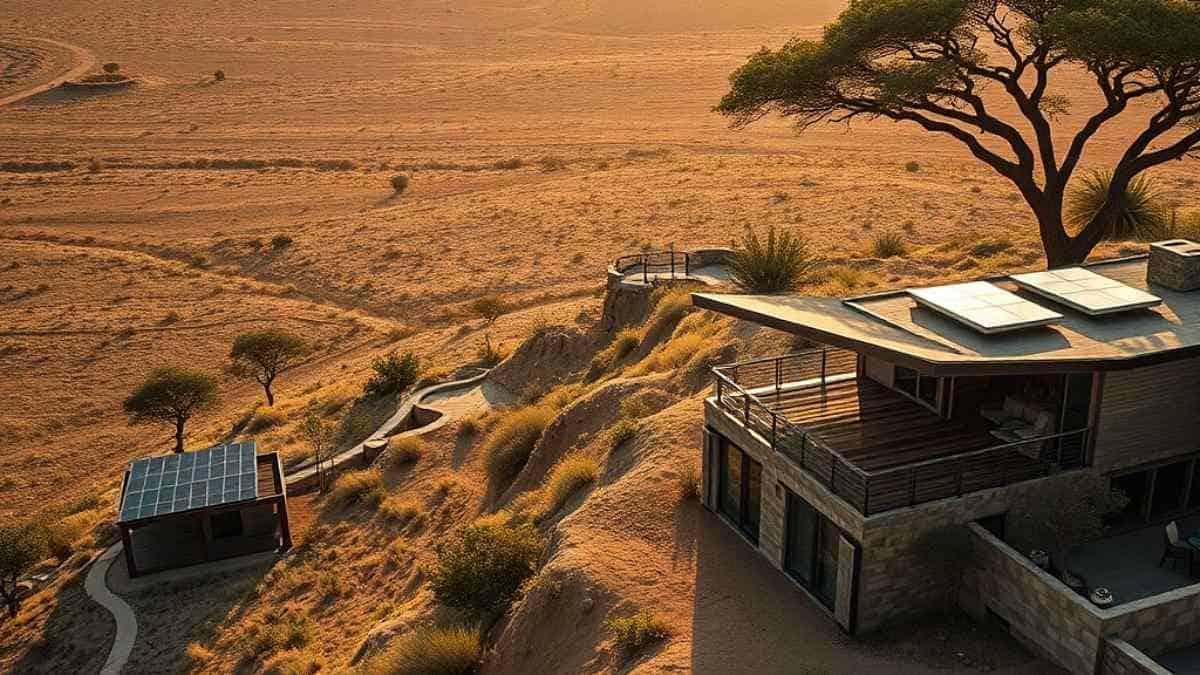
Image generated with Ai
The operational execution of TRevPAR institutionalisation was formally showcased at the World Travel Awards Africa Gala Ceremony 2026, held at Diamonds Bijoux Zanzibar on 28 August 2026. The landmark gathering convened tourism ministers, investment authorities, and hospitality chief executives to honour the properties setting the continental standard for operational excellence, experiential luxury, and yield management.
Addressing the international delegation, H.E. Dr Hussein Ali Mwinyi, President of Zanzibar and Chairman of the Revolutionary Council, underscored the central role of high-yield hospitality in driving national economic growth:
“This prestigious occasion reflects the growing stature of Zanzibar as one of Africa’s leading tourism destinations celebrated for its pristine beaches, rich cultural heritage, fascinating history, warm hospitality and the dedication of its people”.
Graham Cooke, Founder of the World Travel Awards, highlighted the exceptional operational standards demonstrated across the continent:
“Diamonds Bijoux provided a spectacular setting for an unforgettable evening, reflecting the elegance, warmth and vibrant spirit that make Zanzibar such a compelling destination. Our winners represent the very best of the travel and tourism sector, and we congratulate them on their achievements in helping to shape its future”.
Gianni Mannai, General Manager of Diamonds Bijoux Zanzibar, reflected on the operational milestone:
“Hosting the World Travel Awards Africa Gala Ceremony 2026 has been a proud and defining moment for Diamonds Bijoux Zanzibar. This prestigious occasion has provided an exceptional platform to showcase the beauty, warmth and distinctive hospitality of Zanzibar to travel industry leaders from across Africa and beyond. We extend our heartfelt congratulations to all this year’s winners on their outstanding achievements”.
Emphasising the broader socio-economic impact of experiential tourism, Arif Abbas Manji, Executive Secretary of the Zanzibar Commission for Tourism, stated:
“These awards belong to all Zanzibaris. Behind every visitor there is a farmer, fisherman, driver, tour guide, hotel worker, artist, trader and many others whose livelihoods are connected to tourism. We see these awards not simply as trophies, but as a responsibility and motivation to achieve even more”.
Mudrik Ramadhan Soraga, Zanzibar’s Acting Minister for Tourism and Heritage, reiterated the government’s shift toward high-value visitor spending:
“Our objective is not only to increase visitor numbers, but to develop tourism that creates jobs, attracts investment, supports local businesses and protects our environment”.
The properties honoured at the 2026 gala embody the diverse operational playbooks required to maximise total revenue across varied African geographies.
Awarded the prestigious title of Africa’s Leading Hotel 2026, Fairmont Mount Kenya Safari Club in Nanyuki, Kenya, stands as a prime model of non-room yield optimisation. Straddling the geographic equator on the slopes of Mount Kenya, the historic estate has systematically decoupled its revenue performance from standard room rack rates. Commercial returns are underpinned by the on-site Mount Kenya Wildlife Conservancy, where guests directly fund and participate in the breeding and rehabilitation of the critically endangered Mountain Bongo antelope.
The property generates substantial non-room yields by offering equine riding safaris through indigenous forests, guided high-altitude botanical walks, and private dining setups positioned directly across the equator line. By turning its unique environmental location and conservation work into premium bookable activities, the resort achieves exceptional total guest spend that significantly exceeds regional lodging averages.
Selected as Africa’s Leading New Resort 2026 and Zanzibar’s Leading Villa Resort 2026, Diamonds Bijoux Zanzibar opened on Zanzibar’s south-east coast as a masterclass in villa-centric yield design. Rather than viewing its private pool villas solely as overnight lodging inventory, the resort’s operational model treats each villa as an independent revenue ecosystem.
The property captures significant ancillary revenue by providing in-villa longevity and wellness treatments, bespoke spice-island gastronomy led by private chefs, and personalised culinary masterclasses. Furthermore, the resort captures high-margin off-property spend by organising private marine safaris, sandbank excursions, and heritage spice tours across the archipelago. This approach insulates the resort’s net operating margins from the seasonal room-rate discounting common along the East African coast.
Named Africa’s Leading Luxury Safari Lodge 2026, Chem Chem Lodge—situated within northern Tanzania’s Burunge Wildlife Management Area—pioneered the “Slow Safari” ethos. Positioned directly within a critical 20,000-hectare wildlife migration corridor connecting Tarangire National Park and Lake Manyara National Park, the lodge deliberately uncouples guest spend from standard vehicle-based game viewing.
Chem Chem translates ecological stewardship directly into high-margin commercial yield. Ancillary spend is driven by private walking safaris guided by Maasai trackers, anti-poaching patrol experiences alongside dedicated community scouts, and private bush dinners set beneath centuries-old baobabs. By controlling an exclusive-use concession, Chem Chem delivers deep wilderness immersion that conventional national parks cannot offer, allowing the property to command industry-leading RevPAG figures while funding long-term wildlife protection.
Recognised as Africa’s Leading Luxury Hotel 2026, the Waldorf Astoria Cairo Heliopolis demonstrates how urban luxury hotels can institutionalise TRevPAR within competitive gateway cities. Serving as Egypt’s premier corporate and diplomatic transit hub, the hotel overcomes the constraints of negotiated corporate room rates by focusing aggressively on non-room spend.
The property drives ancillary revenue through a luxury destination spa offering advanced clinical and restorative treatments, signature fine-dining establishments that attract affluent local residents alongside hotel guests, and flexible event spaces designed for high-yield corporate MICE gatherings. By capturing elevated catering, banqueting, and non-resident leisure spend, the hotel maintains robust gross operating profit per available room regardless of seasonal corporate room-demand fluctuations.
To understand the financial mechanics of institutionalising TRevPAR, commercial models must be evaluated at the unit economic level. When a property relies exclusively on room rates, its earning potential is strictly limited by room count and occupancy. In contrast, an experiential revenue framework significantly broadens the spending opportunities for each occupied room.Revenue Line Item Conventional Room-Centric Model (USD) Fully Realised TRevPAR Model (USD) Variance and Commercial Rationale Base Overnight Lodging $600 $650 Modest +8.3% adjustment; preserves market competitiveness across wholesale channels. Private Field Naturalist / Guide Exclusivity Included in base lodging ($0) $250 High-margin fee for dedicated specialist tracker and private vehicle exclusivity. Bespoke Wellness & Botanical Spa Therapy $30 (incidental utilisation) $180 Pre-booked multi-day longevity journeys and indigenous herbal treatments. Culinary Upgrades & Private Bush Dining $50 (standard beverage package) $160 Sommelier cellar selections, private baobab dinners, and culinary masterclasses. Scenic Aviation & Charter Transfers $0 (booked via third party) $160 Captured gross margin on direct lodge airstrip transfers and helicopter excursions. Total Daily Spend Per Guest $680 $1,400 +105.9% Increase in Daily Yield Per Guest
Under an experiential spend model, the property more than doubles its daily gross yield per guest while raising the base room rate by only $50. By distributing revenue across specialised, high-margin ancillary products, the lodge insulates itself against price resistance in primary distribution channels while delivering a far more memorable guest experience.Expenditure Category Share of Total Guest Spend Base Lodging & Accommodation Unit 40% – 48% Curated Wilderness Guiding & Private Conservation 20% – 25% Premium Food, Beverage & Dining Programming 15% – 18% Longevity Treatments, Spa & Indigenous Wellness 8% – 12% Scenic Aviation & Dedicated Private Transfers 5% – 8%
A key commercial insight within the African luxury travel segment is the near-zero price elasticity displayed by ultra-high-net-worth travellers toward verified ecological and community impact. When conservation fees, anti-poaching levies, and community development contributions are structured transparently and tied to measurable outcomes, guests accept premium price points without hesitation.
This consumer behaviour aligns directly with modern regulatory policy frameworks across the continent. In Kenya, the Kenya Wildlife Service (KWS) officially overhauled its national park and reserve fee structures under Legal Notice No. 160 of 2025, modernising conservation tariffs across urban, scenic, and wilderness reserves.
The KWS framework introduced tiered pricing structures categorising visitors into East African Citizens, Kenya Residents, African Citizens, and Non-Resident International Visitors. This pricing revision was implemented to close an operational funding deficit—where KWS generated 7.92 billion Kenyan shillings against an operational requirement of 19.79 billion shillings—securing vital capital for anti-poaching operations, ranger welfare, and modern wildlife surveillance systems.
Private conservancies and luxury lodges have mirrored this approach. At Chem Chem Lodge, guests contribute dedicated conservation and community fees per night, which directly fund the management of the Kwakuchinja Wildlife Corridor and the return of long-absent elephant populations. Because these contributions are ring-fenced for measurable ecological restoration, they face zero consumer pushback, enabling lodges to support conservation while improving overall net operating income.
Legacy Property Management Systems (PMS) were originally engineered to manage physical room keys, process front-desk check-ins, and generate room-revenue reports. In an era where non-room ancillary spending accounts for the majority of guest value, this room-centric architecture represents a major commercial bottleneck.
Traditional revenue management platforms frequently make flawed pricing decisions because they measure booking value solely through room rates. Consider a practical booking evaluation scenario involving two prospective guests:
Under legacy PMS logic, Guest B is prioritised, and dynamic pricing algorithms might even restrict or cancel Guest A’s reservation during high-occupancy periods to preserve rack-rate inventory. This results in direct profit loss. Modern Revenue Management Systems (RMS) eliminate this flaw by calculating the comprehensive net contribution margin per guest segment:
By evaluating prospective bookings through this unified spend equation, commercial teams optimise room occupancy to maximise aggregate property net operating income rather than chasing vanity ADR figures.
The booking window for ancillary spend has undergone a fundamental transformation. Historically, luxury resorts relied on on-property guest relations staff to upsell dining, spa, and excursions after arrival. This reactive approach frequently caused operational bottlenecks, left high-margin amenities under-utilised, and capped overall spend.
Forward-looking operators now deploy automated pre-arrival curation systems that engage confirmed guests between 14 and 30 days prior to their arrival date. By providing interactive digital itineraries that allow guests to secure private naturalist guides, schedule wellness therapies, and tailor culinary programmes in advance, properties routinely capture between 30% and 40% of their total non-room revenues before check-in. Securing ancillary commitments well in advance produces guaranteed, non-refundable revenue streams and improves on-site labour and inventory forecasting.
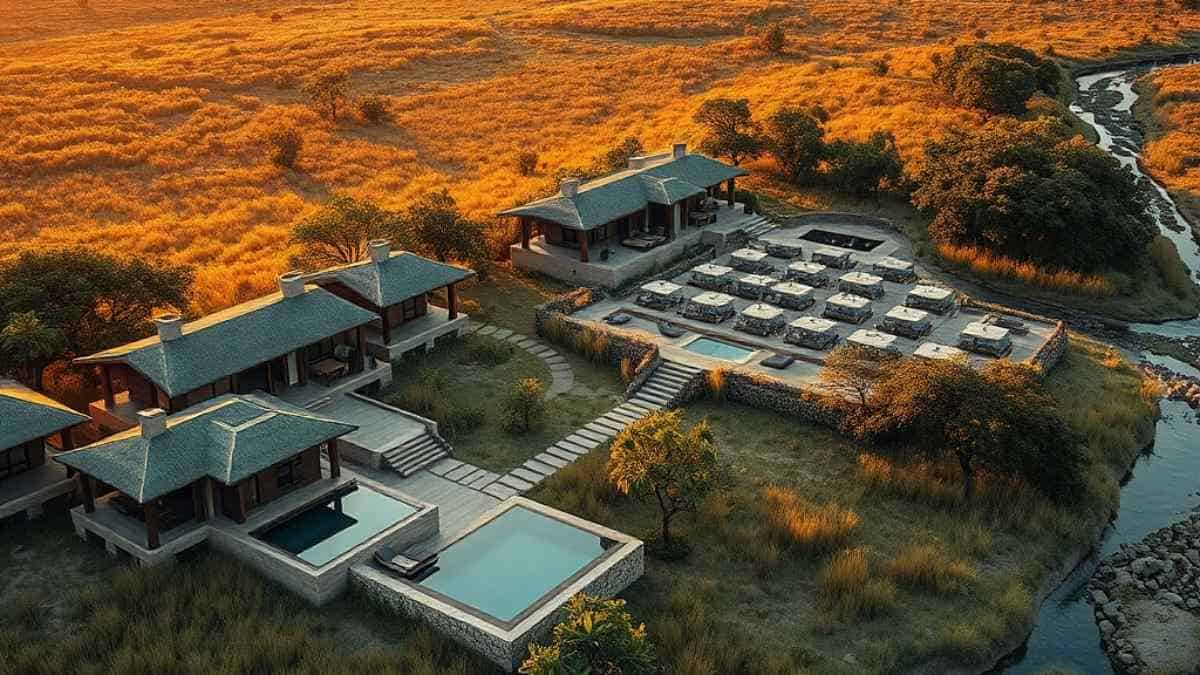
Image generated with Ai
Operating remote luxury safari lodges and island resorts across Africa presents significant operational and financial challenges. In many off-grid locations, properties must function as self-contained utilities, financing and maintaining solar photovoltaic microgrids, industrial battery energy storage systems (BESS), deep-water boreholes, reverse-osmosis desalination units, and satellite communications backhauls.Off-Grid Infrastructure Cost Absorption Model Components / Revenue Flow Mechanism Capital Expenditure & Overhead Solar Photovoltaic & Battery Microgrid Maintenance Deep-Water Borehole Extraction & Reverse-Osmosis Desalination Satellite Telecommunications & Off-Grid Waste Processing Absorbed via Diversified Non-Room Margin Flow-Through Specialist Field Naturalist & Private Tracker Fees High-Margin Botanical Wellness & Longevity Spa Packages Curated Bush Dinners, Cellar Tastings & Culinary Masterclasses Ring-Fenced Conservation Levies & Community Impact Charges
The capital expenditure (capex) and ongoing operational maintenance required for off-grid infrastructure are substantial. If an eco-lodge attempts to fund these utility costs solely by increasing base room rates, it risks pricing its inventory above regional competitors.
Institutionalising TRevPAR enables operators to distribute infrastructure overhead across high-margin non-room activities. The robust profit margins generated by private wilderness guiding, wellness rituals, and exclusive dining offset utility capital depreciation. By expanding its non-room revenue streams, a property can maintain competitive base room rates while continuing to invest in sustainable, off-grid infrastructure.
A recurring challenge for African luxury hospitality is seasonal demand volatility. Lodges and coastal resorts frequently experience significant occupancy declines during regional rainy seasons or periods of reduced long-haul travel from traditional European and North American source markets.
To stabilize year-round revenue, forward-looking operators in Kenya, South Africa, and Tanzania are actively marketing ancillary facilities to affluent domestic and regional feeder markets. High-net-worth residents in urban centres such as Nairobi, Johannesburg, and Dar es Salaam are targeted with wellness day-passes, weekend culinary retreats, and executive conference packages. By welcoming non-resident domestic guests to spa, golf, and dining outlets during low-occupancy periods, properties generate steady food, beverage, and wellness yields that protect cash flow and keep staff employed year-round.
The institutional shift toward total guest spend aligns closely with forward-looking national tourism policies across Africa. Tourism ministries are moving away from measuring success solely by arrival numbers, focusing instead on total foreign exchange receipts, local job creation, and sustainable conservation funding.
During national Jamhuri Day celebrations, Kenyan President William Ruto set out a refreshed strategic vision for the tourism sector, linking wildlife conservation, environmental sustainability, and business travel directly to long-term economic growth. The government introduced the Magical Kenya Souvenir Passport, an initiative designed to encourage visitors to travel beyond standard tourist hubs into diverse counties, spreading economic benefits to local communities and private conservancies.
In Tanzania, the Revolutionary Government of Zanzibar has positioned high-yield, sustainable tourism as a cornerstone of its long-term development agenda. Tourism accounts for approximately 30% of Zanzibar’s gross domestic product, making visitor spend vital to the local economy. Official government data indicates that international arrivals to Zanzibar reached 917,167 in 2025 and continued to set records in 2026, with July recording 107,801 visitors—the highest monthly total in the island’s history. By structuring tourism to generate broader ancillary spend, the destination ensures economic benefits flow directly to local agricultural suppliers, fishermen, artisanal craftsmen, and excursion operators.
In South Africa, the Department of Tourism has expanded visa-waiver programmes and introduced the Trusted Tour Operator Scheme to stimulate arrivals from key regional African and Asian markets. Official data illustrates the divergent performance within the national accommodation sector: while luxury hotels in Cape Town achieved room rates 41% above 2019 levels, properties in financial hubs like Sandton experienced RevPAR declines of 20% in real terms. This divergence highlights the operational necessity for properties outside primary leisure hotspots to diversify revenues into domestic MICE events, wellness memberships, and culinary experiences.
As the hospitality sector moves toward 2030, the institutionalisation of TRevPAR will serve as a clear line between resilient, profitable assets and financially vulnerable properties. As Average Daily Rates face continued pressure from consumer price sensitivity and global destination competition, long-term commercial success will depend on an operator’s ability to capture total guest spend.
To remain competitive, hospitality asset managers, hotel brands, and independent operators should focus on three strategic priorities:
Properties that execute this commercial strategy will insulate their operating margins against inflation, fund their infrastructure requirements, and deliver sustainable economic value to local communities across Africa’s luxury travel sector.
It is certain that the time when the only means of ensuring profitability in Africa was increasing hotel room rates is now over. In a reality of currency fluctuations, high costs of remote operations and extraordinary price sensitivity of travellers, commercial strategy must undergo major revamping. The institutionalization of TRevPAR through advanced revenue management systems, automated direct booking systems and ecologically verified pricing mechanisms allows hospitality businesses to maintain profitability while maximizing value of guest experience. The examples of leading hotels in countries like Kenya, Tanzania and Egypt suggest that the future viability of a hotel depends on how well it can capture the experience-related spending.
Advertisement
Tags: African hospitality, Average Daily Rate, Chem Chem Lodge, Diamonds Bijoux Zanzibar, Fairmont Mount Kenya
Advertisement
Advertisement













Friday, September 4, 2026

Friday, September 4, 2026
Friday, September 4, 2026

Thursday, September 3, 2026

Wednesday, September 2, 2026
Friday, September 4, 2026

Friday, September 4, 2026