
Saudi Arabia Supercharges Makkah Pilgrimage Tourism as Grand Mosque Handles 107,000 Tawaf Performers an Hour
Published
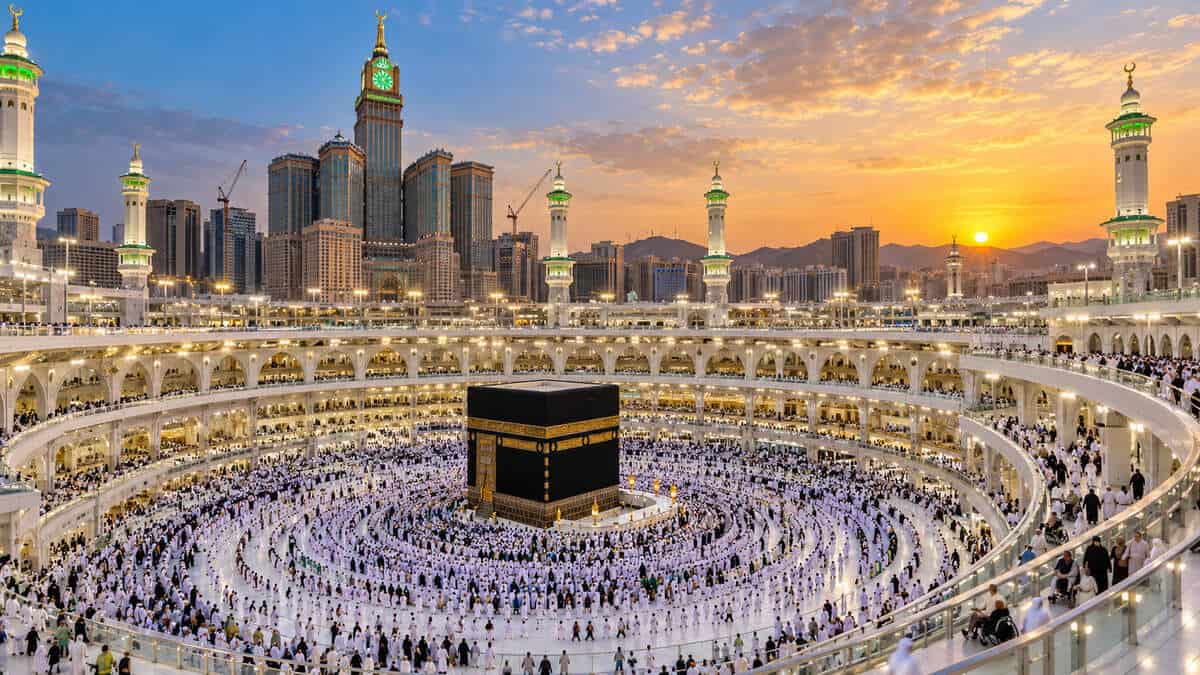
Image generated with Ai
Saudi Arabia is evolving pilgrimage tourism in Makkah as the Grand Mosque can now process over 107,000 Tawaf performers per hour, thanks to new infrastructure and digital systems for crowd management and visitor services. The systems will be critical in 2026 as the Kingdom prepares for the anticipated increase in international Umrah demand as part of its Vision 2030 to attract 30 million foreign Umrah pilgrims annually by 2030.
Makkah Builds Capacity for Enormous Pilgrim Flows
At the heart of the transformation is the Mataf, where pilgrims complete seven circuits around the Kaaba. Unlike conventional pedestrian movement, Tawaf involves thousands of people continuously circulating within the same area while other pilgrims enter and leave. The expanded Saudi Riwaq covers around 210,000 square metres and can support more than 107,000 Tawaf performers per hour. It can also accommodate more than 278,000 worshippers for prayers.
Multi-level infrastructure allows visitor flows to be spread vertically. The ground-level Mataf remains central to pilgrims performing Tawaf on foot, while upper floors and surrounding circulation areas provide additional capacity and improve movement for visitors requiring mobility assistance.
| Key Indicator | Official Data |
|---|---|
| Tawaf capacity | 107,000+ per hour |
| Saudi Riwaq area | 210,000 sq metres |
| Prayer capacity | 278,000+ worshippers |
| Nusuk users in 2026 | 51 million+ |
| Nusuk services | 100+ |
| Smart-map locations | 950+ |
| Dynamic routes | 100,000+ |
| Foreign Umrah pilgrims in 2025 | 18.03 million |
| 2030 target | 30 million annually |
Real-Time Technology Changes Crowd Management
Saudi Arabia is increasingly combining this physical capacity with real-time digital monitoring. Smart counting sensors at Grand Mosque entrances can monitor people entering and leaving, giving operational teams a clearer picture of crowd conditions. Smart readers connected with Nusuk Cards also strengthen the ability to manage pilgrim movements.
Advertisement
Advertisement
Visitors can access live information showing crowd density around the Mataf and Masaa, where Sa’i is performed. Electronic guidance systems can direct pilgrims towards suitable entrances and less congested areas. This is important for travel management because congestion can increasingly be addressed before large numbers accumulate at individual access points.
Nusuk Becomes Central to the Pilgrimage Journey
The Nusuk ecosystem has developed into one of Saudi Arabia’s most important pilgrimage technology platforms. By May 2026, Nusuk had surpassed 51 million users worldwide and offered more than 100 digital services. Around 60% of users were outside Saudi Arabia, demonstrating its importance to international visitors before they reach Makkah.
Advertisement
Advertisement
The system supports different stages of the pilgrimage journey, while artificial intelligence is increasingly being used to analyse crowd patterns, anticipate busy periods and improve movement. The Digital Mutawwif service provides additional guidance during Tawaf and Sa’i. It can help pilgrims navigate ritual stages and digitally track their progress. For international travellers unfamiliar with the vast Grand Mosque complex, these services can make movement considerably easier.
Smart Maps Generate More Than 100,000 Routes
Navigation has also become part of Makkah’s crowd-management strategy. A smart interactive mapping system covering the Grand Mosque and Prophet’s Mosque contains more than 950 points of interest across 13 categories. More than 650 QR codes support access to digital information.
Advertisement
Advertisement
The system can generate over 100,000 dynamic routes, allowing directions to change according to operational circumstances and crowd conditions. This creates a practical link between digital navigation and physical crowd management. Instead of every visitor following the same route, pilgrims can be directed towards alternative pathways and entrances.
Cooling Systems Protect Pilgrims From Makkah Heat
Makkah’s extreme temperatures make environmental engineering another essential element of pilgrimage infrastructure. The Grand Mosque’s Thassos marble, sourced from Greece, is particularly important. Its light-coloured surface reflects solar radiation and absorbs relatively little heat, helping the flooring remain cooler for barefoot pilgrims.
Large cooling and ventilation systems support covered areas. The Shamiyah cooling station has a production capacity of 120,000 tonnes of cooling, while the Ajyad station provides another 35,000 tonnes. The cooling network covers approximately 1.5 million square metres, with indoor temperatures maintained at roughly 22°C to 24°C. These systems become increasingly important as larger numbers of visitors travel to Makkah throughout the year.
Accessibility Supports Greater Pilgrimage Capacity
Accessibility is another critical part of managing enormous visitor numbers. Wheelchairs, electric mobility services and upper-level circulation areas help elderly pilgrims and travellers with limited mobility perform religious rituals while reducing conflicts between different pedestrian speeds.
Advertisement
Advertisement
Digital guidance can also direct visitors towards appropriate floors and access points. The result is not simply greater physical capacity. It is a more segmented movement system designed around the different needs of millions of pilgrims.
Umrah Growth Puts Makkah’s Infrastructure Under the Spotlight
The transformation is occurring as international pilgrimage volumes rise rapidly. Saudi Vision 2030 data shows foreign Umrah pilgrims increased from a revised 6.2 million baseline in 2016 to 16.92 million in 2024. The number climbed further to 18.03 million in 2025.
Saudi Arabia’s long-term objective is 30 million foreign Umrah pilgrims annually by 2030. Such growth affects the entire tourism supply chain. Airports, hotels, railways, buses, roads, restaurants, tour operators and digital platforms must accommodate increasingly large international flows. The Haramain High-Speed Railway and wider transport infrastructure consequently play an important role in connecting pilgrims with Makkah, Madinah and gateway areas including Jeddah.
Makkah Emerges as a Model for High-Capacity Religious Tourism
Makkah’s transformation shows how Saudi Arabia is combining civil engineering, smart technology, accessibility and environmental controls to manage one of the world’s largest recurring international travel movements. The ability to accommodate more than 107,000 Tawaf performers every hour is only one element. Live crowd monitoring, Nusuk services, smart navigation, cooling infrastructure and multi-level circulation increasingly work as one connected system.
As Saudi Arabia moves towards 30 million foreign Umrah pilgrims annually by 2030, Makkah’s evolving infrastructure will remain central to supporting safer, more efficient and more accessible pilgrimage travel at an extraordinary global scale.
Advertisement
