
Denmark Opens a New Chapter for Bornholm Travel on Rønne–Ystad Route as Greener Ferry Tender Takes Shape

Published
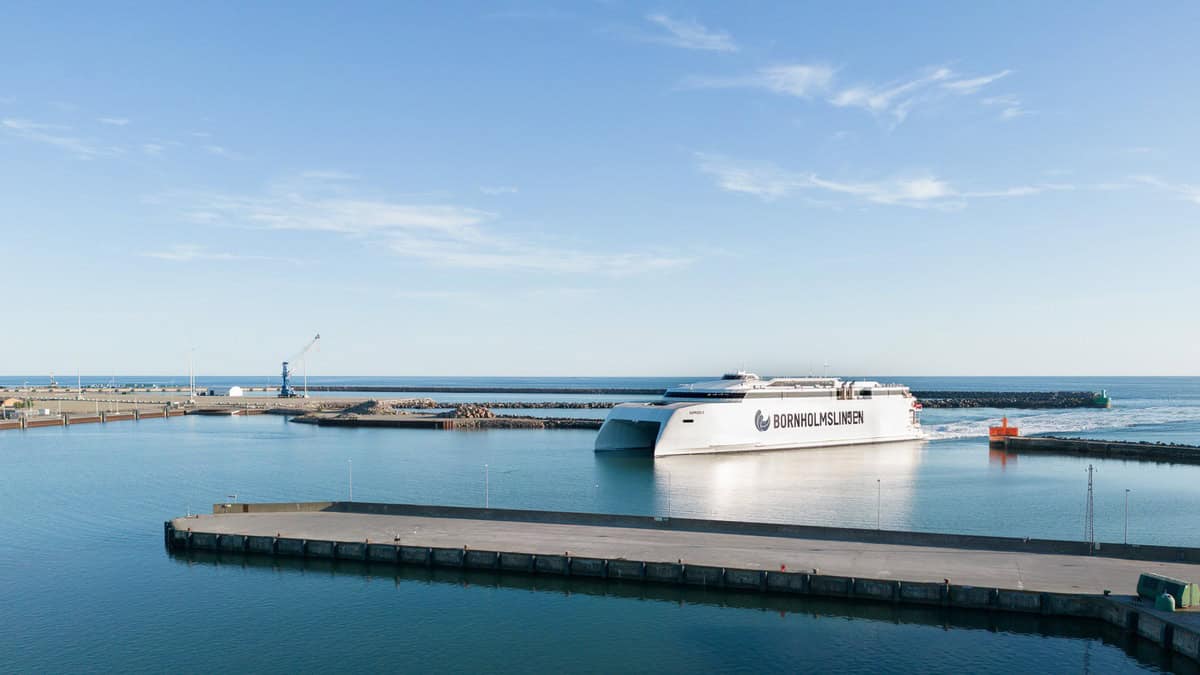
Denmark’s next Bornholm ferry contract is emerging as much more than a decision about ships. The 2030 tender could influence how tourists reach the island, whether they bring cars, what foot passengers pay and how ferry arrivals connect with Bornholm buses. Bornholm authorities formally opened their recommendation process in September, covering frequency, environmental performance, low fares, freight and bus integration. A separate 2026 state agreement allocating DKK 62.3 million for additional ferry fuel costs now gives the sustainability question fresh economic urgency.
Bornholm’s 2030 Ferry Tender Could Quietly Become a Tourism Demand-Management Policy
The most important travel story behind Denmark’s forthcoming Bornholm ferry tender is not simply whether the next vessels become greener.
It is whether Denmark uses the contract to change how visitors travel.
According to Bornholms Regionskommune, the island’s Transport Contact Council has begun a substantial process of developing recommendations for the next ferry agreement, which is scheduled to take effect in 2030. The subjects under examination include additional departures, environmental considerations, low prices, commuter arrangements, freight capacity and the relationship between ferry services and the island’s buses.
Advertisement
Advertisement
That combination creates a significant tourism-policy opportunity.
A ferry contract can establish vessel capacity and environmental requirements. But fare structures can also determine whether visitors drive onto a vessel or arrive as foot passengers. Timetables can decide whether buses offer realistic onward connections. Capacity requirements can determine whether Bornholm accommodates summer tourism by adding sailings, expanding vehicle space or encouraging travellers to leave cars behind.
Advertisement
Advertisement
For the travel industry, those choices can eventually influence holiday cost, itinerary design, coach operations, rental-car demand and the practicality of selling car-free Bornholm holidays.
That is the underexamined travel angle.
Advertisement
Advertisement
Denmark Has Until September 2030 Before the Current Bornholm Ferry Contract Ends
The present state-backed ferry contract entered into force on 1 September 2018. It originally covered ten years to 31 August 2028, with an option for a two-year extension. Denmark exercised that option in 2019, extending the contract through 31 August 2030.
The existing procurement also demonstrates how powerful fare policy can be. Molslinjen won the previous tender with a proposed 51.15 per cent ticket-price reduction, according to the official Bornholmeranalysen prepared for the Danish transport authorities.
The next contract therefore starts from a system in which price has already been used as a strategic policy lever.
What happens next could be more sophisticated. Denmark must reconcile affordability with tourism growth, vehicle capacity, emissions, service frequency and increasingly complex infrastructure requirements.
Advertisement
Advertisement
| 2030 tender issue | Official policy basis | Potential traveller effect |
|---|---|---|
| Ferry fares | Low prices are explicitly part of Bornholm’s consultation | Changes holiday transport costs |
| Foot-passenger pricing | Transport analysis recommends examining cheaper pedestrian and bicycle fares | Could make car-free holidays more attractive |
| Sailing frequency | Additional departures are under consideration | Could improve flexibility but affect emissions and operating costs |
| Vehicle capacity | Official analysis identifies pressure on vehicle decks | Peak-season motorists may face capacity constraints |
| Bus integration | Interaction with Bornholm buses is explicitly being considered | Could make ferry-to-destination journeys easier |
| Environmental requirements | CO2 and emissions requirements can be included in the tender | Could alter vessel technology and operating economics |
| Freight | Freight capacity is part of the consultation | Important for hotels, restaurants and tourism supply chains |
The official September 2026 consultation and Danish transport analysis support all seven issues.
Rønne and Ystad Reveal Why Vehicle Capacity Has Become a Tourism Issue
Rønne–Ystad is the critical passenger gateway in this story.
Bornholm’s 2030 transport strategy describes it as by far the island’s largest ferry connection for passengers and cars. Between 2017 and 2024, passenger traffic increased 23 per cent, while passenger-car movements increased 47 per cent.
That difference matters.
It means car traffic expanded considerably faster than overall passenger traffic during the period covered by the official strategy. For an island destination where summer travel can concentrate intensely around particular dates, the scarce resource is not always a passenger seat. It can be space on the vehicle deck.
Rønne–Ystad traffic growth documented by Bornholm authorities
| Measure | 2017 | 2024 | Official change |
|---|---|---|---|
| Passengers | 1,448,000 | 1,780,000 | +23% |
| Passenger cars | 348,371 | 513,975 | +47% |
| Buses | 2,153 | 4,069 | Nearly doubled |
| Trucks | 4,905 | 5,163 | About +5% |
Source: Bornholm Transport Contact Council 2030 Strategy, using Statistics Denmark data.
Advertisement
Advertisement
This makes the seemingly technical discussion over pedestrian fares highly relevant to tourism.
If more holidaymakers can be persuaded to reach Ystad by public transport, board the ferry without a private vehicle and continue from Rønne by bus or bicycle, Bornholm could carry more visitors without requiring a proportional increase in vehicle-deck capacity.
That is both a tourism-capacity strategy and a carbon strategy.
The Overlooked Carbon Question Is Not Only Which Ferry Sails but What Tourists Bring Aboard
Denmark’s official Bornholmeranalysen offers unusually detailed evidence about the relationship between traveller behaviour and ferry emissions.
Its historical 2019 baseline recorded 86,000 tonnes of CO2 from the two state-backed Bornholm ferry routes. Rønne–Ystad accounted for 68,000 tonnes and Rønne–Køge for 18,000 tonnes. All land transport on Bornholm generated 75,000 tonnes in the same baseline year.
Those figures should not be mistaken for current 2026 emissions. They are historical benchmarks used by the state analysis.
Advertisement
Advertisement
However, they show why maritime access occupies an outsized position in Bornholm’s tourism-carbon equation.
The same government study modelled average CO2 attributed to different passenger journeys between Zealand and Bornholm. The figures are particularly important because they reveal how dramatically the outcome changes depending on whether a tourist takes a vehicle aboard.
| Travel configuration in official model | CO2 per passenger |
|---|---|
| Train to Ystad, then ferry as foot passenger | 4 kg |
| Long-distance bus to Ystad, then walk aboard | 6 kg |
| Long-distance bus driven aboard ferry | 23 kg |
| Private car with five occupants | 24 kg |
| Private car with one occupant | 101 kg |
| ATR-72 Rønne–Copenhagen flight at modelled average load | 22 kg |
These are modelling estimates from the Bornholmeranalysen rather than present-day individual journey guarantees. The report uses 2021 ferry-emission data and average 2022 passenger and vehicle loading to examine capacity utilisation.
The policy implication is significant. A sustainable ferry tender need not depend entirely on an expensive technological breakthrough. Fare design can also influence the carbon intensity and capacity requirements of tourism before a new generation of vessels arrives.
Cheaper Foot-Passenger Tickets Could Solve Three Problems at Once
The Danish transport analysis specifically recommends considering lower ferry prices for pedestrians and cyclists.
The reason is unusually practical. Moving travellers out of private vehicles could free space on vehicle decks, encourage active mobility and increase use of Bornholm’s public transport network.
Advertisement
Advertisement
There is already evidence from a real intervention.
During summer 2021, free ferry travel was made available to pedestrians and cyclists on participating Danish ferry routes, including Rønne–Ystad. The subsequent Bornholm analysis found a marked increase in public-transport use on the island during the period when foot-passenger ferry tickets were free.
The 2030 contract could therefore face a fundamentally different question from a conventional capacity tender.
Instead of asking only how many cars a ferry can carry, policymakers can ask how many car journeys they can avoid needing to carry.
For destination managers, that distinction is substantial. Vehicle capacity is expensive. Extra sailings consume fuel. Larger ships require capital. By contrast, carefully designed foot-passenger pricing paired with usable onward transport can change demand before additional physical capacity becomes necessary.
Rønne Already Has the Transport Architecture Needed for Car-Free Tourism
The ferry-to-bus connection is not theoretical.
Advertisement
Advertisement
According to Denmark’s Bornholmeranalysen, Rønne ferry port functions as a hub where all of Bornholm’s bus routes meet, while ferry sailing times and bus running times are already coordinated. The analysis also identifies tourists as an important component of the island’s public-transport passenger base.
That gives the forthcoming tender a ready-made mobility network to work with.
The government analysis has examined extending combined-ticket arrangements and making it easier to purchase a single product covering more of the complete journey. It also concluded that making ferry travel more attractive for foot passengers would strengthen demand for local public transport.
Bornholm is simultaneously simplifying its bus fare structure.
Bornholms Regionskommune confirmed in June 2026 that the island’s existing 17 bus zones are planned to become a single zone in 2027, while several older ticket products are being phased out.
No final integrated ferry-and-bus product for the 2030 contract has yet been announced in the official material reviewed for this report.
Advertisement
Advertisement
Nevertheless, the combination of a one-zone bus network, coordinated Rønne connections and a ferry tender that explicitly includes bus interaction gives Denmark a clear opportunity to make the complete visitor journey simpler.
A DKK 62.3 Million Fuel Shock Adds a New 2026 Dimension
One of the most important developments for understanding the 2030 tender appeared in the current contract rather than in a tourism strategy.
Denmark’s 2026 Finance Act allocated DKK 62.3 million in 2025 prices for additional fuel consumption associated with the expansion of Rønne Harbour.
According to Addendum 11 to the ferry contract, extension of Rønne Harbour’s outer breakwater changed the permitted route used by the fast ferry between Rønne and Ystad. The sailing route became longer, increasing fuel consumption.
The compensation increases the annual contract subsidy by DKK 13.1 million in each year from 2026 through 2029, followed by DKK 9.9 million covering January to August 2030. It compensates additional fuel consumption incurred from 1 January 2025 through the end of the existing contract.
This matters well beyond public finance.
Advertisement
Advertisement
It demonstrates that ferry emissions, infrastructure configuration, sailing distance and contract economics are interconnected. Even a harbour development can change fuel consumption sufficiently to require a multimillion-krone adjustment.
For the 2030 procurement, environmental performance therefore cannot be treated as an isolated sustainability label. It affects the economics of the service itself.
Future Ferries Can Face CO2 Requirements Without Denmark Picking One Propulsion Technology
Denmark already has the legal and procurement framework to make the new contract greener.
The national transport analysis concludes that the future Bornholm tender can include requirements covering ferry CO2 emissions and other emissions. However, it also identifies uncertainty over which technology will become the preferred solution for climate-friendly high-speed ferries.
The analysis consequently recommends a technology-neutral approach, allowing bidding operators to determine how required environmental outcomes should be achieved. It also notes that purpose-built vessels can require roughly four years from ordering to entry into service, while another part of the analysis gives a four-to-five-year range depending on technology maturity. trm.dk
That lead time is critical now.
Advertisement
Advertisement
The new contract is intended to start in September 2030. Decisions made during the approaching procurement phase could therefore shape Bornholm access well into the next decade.
The critical variables will not simply be battery versus alternative fuel. Capacity, frequency, journey time, reliability and environmental performance all interact.
A greener ferry that requires materially different capacity or operating characteristics could affect tourism just as directly as its propulsion system.
Rønne–Køge Shows Why Simply Adding Capacity Is Not a Free Solution
Capacity pressure is not limited to Ystad.
The official state analysis projects substantially greater pressure on the Rønne–Køge route towards 2030. It estimates that the share of departures exceeding 98 per cent vehicle-deck utilisation could rise from around 12 per cent to 23 per cent without sufficient additional capacity.
Rønne–Køge is primarily a freight route, while Rønne–Ystad dominates passenger traffic. Bornholm’s own strategy recorded only about 75,000 passengers on Rønne–Køge in 2024 compared with 1.78 million on Rønne–Ystad.
Advertisement
Advertisement
Yet freight capacity still affects tourism.
Hotels, restaurants, attractions and holiday accommodation all depend on island supply chains. A ferry contract that underestimates freight demand can indirectly raise operational pressure across the visitor economy.
That is why the September 2026 consultation specifically places freight capacity alongside fares, frequency, environmental considerations and bus integration.
Bornholm Tourism Is Large Enough for Ferry Policy to Matter Beyond Transport
Bornholm is not a marginal visitor market.
VisitDenmark recorded 1,711,916 commercial overnight stays in Destination Bornholm during 2024. Danish visitors generated 989,017 nights, while international visitors accounted for 722,899. Germany alone generated 565,729 overnight stays.
That scale makes access policy tourism policy.
Advertisement
Advertisement
A change affecting ferry price, available car space or onward transport potentially reaches far beyond ferry passengers themselves. It can affect accommodation demand, holiday-home arrivals, cycling itineraries, coach programmes and the geographic spread of tourists around the island.
It also matters because Bornholm’s tourism patterns remain heavily seasonal. Peak-period transport capacity cannot be assessed only through annual averages.
For tour operators, the final contract design could determine whether future growth requires more vehicle inventory or whether Bornholm increasingly becomes a destination packaged around ferry-plus-public-transport journeys.
The Information-Gain Angle Is Fare Architecture Rather Than Another Green-Ferry Story
The critical analytical conclusion from the official evidence is that Bornholm’s decarbonisation challenge has two layers.
The first is technological: reduce emissions from the ferry itself.
The second is behavioural: carry tourists more efficiently.
Advertisement
Advertisement
The second layer has received much less attention, yet the Danish government analysis provides unusually strong evidence for it. Lower pedestrian and cyclist fares can relieve car-deck pressure. Car-free passengers can support local buses. Better utilisation can postpone the need for additional sailings. Avoiding extra sailings can prevent additional emissions. Simpler bus fares can make the onward journey more practical.
This creates a chain linking ticket price → traveller choice → vehicle capacity → bus demand → sailing requirements → emissions.
The fresh 2026 Rønne Harbour fuel compensation strengthens that conclusion. Carbon, capacity and cost are not separate policy categories. They are parts of the same transport system.
For travel businesses, the tender should therefore be followed as a destination-access decision, not merely a shipping procurement exercise.
What Travel Agents and Tour Operators Should Watch Before 2030
- Track the final pedestrian and cyclist fare structure. A significant price advantage for travellers without cars could change package economics.
- Watch vehicle-deck capacity commitments. Peak summer availability will remain important for self-drive holidays and motorhome travel.
- Monitor Rønne–Ystad frequency requirements. More departures improve flexibility but may carry environmental and cost trade-offs.
- Follow ferry-to-BAT ticket integration. A genuinely simple combined journey could make car-free Bornholm packages easier to sell.
- Reassess coach operating models. Official carbon modelling assigns substantially different emissions depending on whether a long-distance coach boards the ferry or passengers walk aboard.
- Plan around 2027 bus-ticket reform. Bornholm intends to replace its 17-zone structure with one zone, potentially simplifying visitor mobility.
- Do not assume a specific green-ferry technology. Denmark’s existing analysis favours environmental requirements with technological neutrality.
- Protect peak-season inventory early. Historical traffic growth shows much faster expansion in passenger cars than in passengers on Rønne–Ystad.
- Include freight resilience in supplier planning. Accommodation and hospitality businesses depend on reliable island logistics.
- Treat 2030 as a structural change rather than a routine contract renewal. Pricing, capacity and sustainability requirements could materially alter the visitor journey.
Bornholm’s Next Ferry Deal Could Become a Model for Sustainable Island Access
The next phase of Denmark’s Bornholm ferry planning will determine far more than which company operates vessels after August 2030.
It presents a chance to build a transport contract around the entire tourism journey.
Advertisement
Advertisement
Rønne is already connected to an island-wide bus network. Ystad provides the principal ferry gateway. Car traffic has grown rapidly. Government modelling identifies substantial carbon differences between travel modes. Officials have already established that emissions requirements can form part of the next tender. Meanwhile, the 2026 Rønne Harbour compensation has demonstrated how quickly infrastructure decisions can translate into fuel costs.
The strongest policy opportunity may therefore lie in combining cleaner vessels with smarter demand.
If Denmark can make foot travel cheaper, ferry-bus connections simpler and capacity requirements more efficient while preserving frequency and affordability, Bornholm could become an important European case study in how island destinations decarbonise access without making themselves harder to visit.
For travellers, the eventual result could be deceptively simple: reaching Bornholm without a car may become cheaper, easier and more practical.
For Denmark’s tourism industry, achieving that simplicity will require some of the most consequential transport-contract decisions the island has faced in years.
Advertisement
