
France Challenges Hollywood in Global Film Heritage Tourism Race as Festival Lumière 2026 Boosts Lyon Hotels

Published
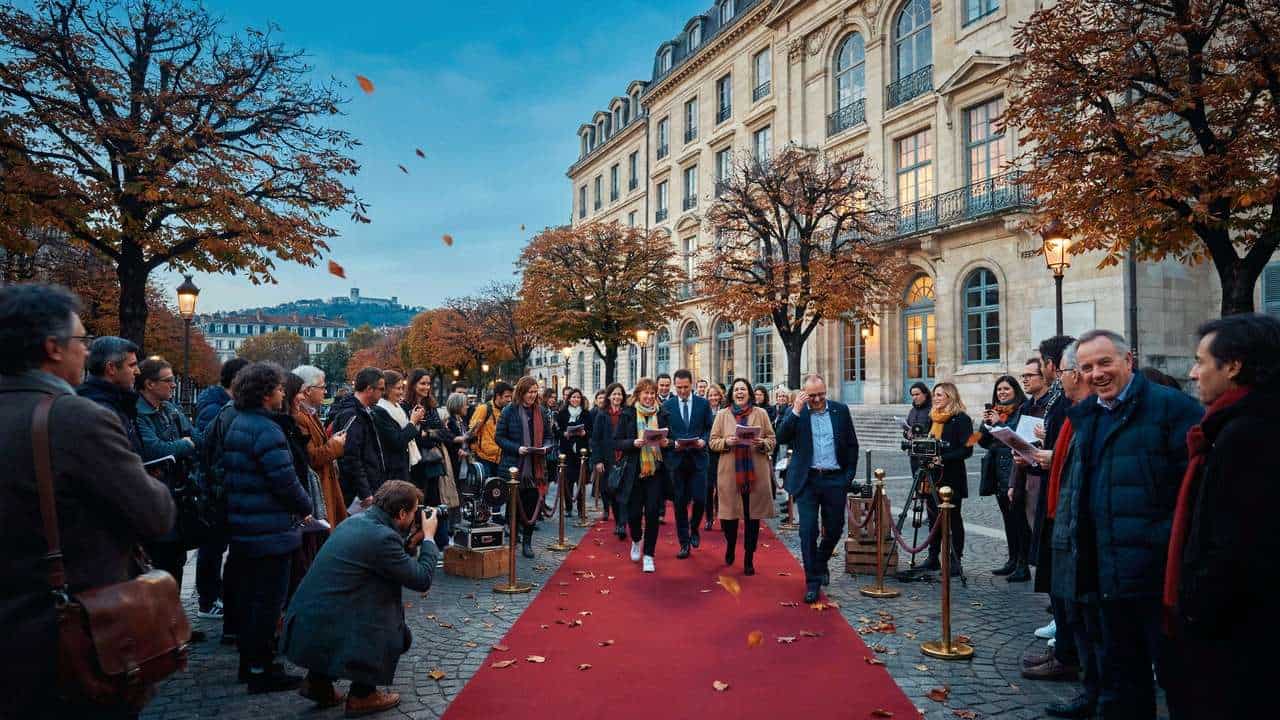
France Challenges Hollywood in Global Film Heritage Tourism Race as Festival Lumière 2026 Boosts Lyon Hotels.Grand screening palaces, neighborhood arthouses, and historic open plazas across the Métropole de Lyon are operating at peak capacity this week as the 18th edition of the Festival Lumière (Grand Lyon Film Festival) unfolds from 10 to 18 October 2026. Established in 2009 by the Institut Lumière under the direction of Thierry Frémaux, the nine-day international celebration honors cinema heritage, archival restoration, and master retrospectives directly in the birthplace of the cinematograph.
Beyond its artistic prestige, the showcase acts as a vital economic engine, driving international cinephiles, accredited distributors, and cultural travelers into the Rhône Valley during the autumn shoulder season.
Advertisement
Advertisement
Where Does Festival Lumière Take Place and Who Is Participating?
Rather than isolating screenings behind a single convention barrier, Festival Lumière integrates dozens of historic screening rooms and public hubs across Lyon’s urban landscape:
- Flagship Screening Hubs: Major marquee galas and cine-concerts anchor the Halle Tony Garnier in the Gerland district (hosting 5,000-seat public screenings and the opening night presentation of Ettore Scola’s A Special Day), the Amphithéâtre 3000 at the Lyon Convention Centre (hosting the headline Prix Lumière ceremony), the Auditorium de Lyon, and the historic Théâtre des Célestins.
- The Historic Heart & Village Cinéma: The Institut Lumière on the Rue du Premier-Film in Monplaisir (8th arrondissement)—where Auguste and Louis Lumière shot Workers Leaving the Lumière Factory in 1895—serves as the emotional and archival anchor. Meanwhile, the public Village Cinéma activates the courtyards of the restored Grand Hôtel-Dieu on the Presqu’île (2nd arrondissement).
- Participating Talent and Honorees: The 18th edition awards the prestigious Prix Lumière to visionary American filmmakers Joel and Ethan Coen, honored with an expansive 16-film retrospective, a public masterclass, and an all-night marathon attended by Oscar winner Frances McDormand. The 2026 guest roster features master retrospectives and in-person discussions with international luminaries including Zhang Ziyi, Tsui Hark, Todd Haynes, Robert Eggers, Nadine Labaki, and Agnès Jaoui. Concurrently, the 14th International Classic Film Market (MIFC) convenes over 1,000 international delegates across theatrical exhibition, physical media publishing, and digital 4K restoration.
How Has In-Person Attendance Tracked Over the Last Five Years?
Official attendance telemetry compiled from Institut Lumière box-office reconciliations and Ministère de la Culture (Culture.gouv.fr) heritage audits illustrates steady post-pandemic turnstile expansion, culminating in consecutive physical attendance records:
Advertisement
Advertisement
| Year | Operational Model & Staging Framework | Aggregate Ticketed & Public Footfall | Average Venue Occupancy Rate | Audited Dynamics & Policy Catalysts |
| 2021 | 13th Edition (Post-Lockdown Recovery) | ~145,000 | 78.5% | Resumption of physical screenings with health passes; tribute to Paolo Sorrentino. |
| 2022 | 14th Edition (Unrestricted Slate) | ~162,000 | 84.0% | Return of full international delegations; Tim Burton awarded the Prix Lumière. |
| 2023 | 15th Edition (Wim Wenders Retrospective) | ~175,000 | 88.5% | Heavy cross-border European rail uptake; sold-out public masterclasses. |
| 2024 | 16th Edition (Isabelle Huppert Tribute) | ~181,000 | 91.2% | Milestone attendance; surging youth access passes and expanded MIFC market days. |
| 2025 | 17th Edition (Michael Mann Laureate) | ~185,000 | 93.8% | All-time box-office record; 137,000 paid tickets and over 10,000 accredited badges. |
Which Other Countries Host Similar Premier Heritage Film Gatherings?
While Festival Lumière is singular to the historic home of cinema, several sovereign nations operate culturally and structurally equivalent classic cinema and archive-restoration festivals:
- Italy (Il Cinema Ritrovato, Bologna): Staged every summer by the Cineteca di Bologna in Piazza Maggiore, operating as Southern Europe’s benchmark open-air showcase for restored silent films and world cinema rarities.
- United States (TCM Classic Film Festival, Hollywood): An annual spring celebration hosted in Los Angeles across historic movie palaces on Hollywood Boulevard, uniting classic Hollywood aficionados, preservationists, and living stars.
- United Kingdom (BFI London Film Festival Treasures & Pordenone Silent UK): The British Film Institute stages major archival restoration strands, preserving global screen heritage alongside contemporary releases.
- Germany (Berlinale Classics / Retrospective, Berlin): Operating within the Berlin International Film Festival, showcasing 4K digital restorations in collaboration with the Deutsche Kinemathek.
Which Region of Travellers Come to Festival Lumière Most?
Mobility analytics and hotel guest origin telemetry monitored in coordination with INSEE / Atout France and the OnlyLyon Tourism Bureau identify three distinct feeder pipelines:
Advertisement
Advertisement
- Western & Central European Rail Corridors (France, Switzerland, Italy, Belgium): Accounts for over 52% of non-local attendees. Lyon’s position as a high-speed TGV rail crossroads enables rapid 2-hour transit from Paris, Geneva, Brussels, and Turin, attracting weekend cultural travelers and arthouse cinema programmers.
- Long-Haul Transatlantic & East Asian Corridors (United States, Canada, Japan): Comprises roughly 28% of international visitors, consisting of institutional archivists, studio executives, classic Hollywood researchers, and high-spending cultural tourists combining film screenings with Rhône-Alpes gastronomic tours.
- Domestic French Regional Feeders: Represents approximately 20% of inbound footfall, drawing film society networks and university film students from Auvergne-Rhône-Alpes, Marseille, Lille, and Bordeaux.
Which Country Benefits Most and How Are Tourism and the Economy Impacted?
France—and specifically the Métropole de Lyon and the Auvergne-Rhône-Alpes region—stands as the direct macroeconomic and commercial beneficiary:
- Shoulder-Season Hospitality Windfall: According to tourism impact frameworks published by INSEE / Atout France, cultural event visitors spend on average 26% to 32% more per day than mass leisure tourists. Over its nine-day run, the festival injects an estimated €32 million to €38 million in direct and indirect consumer transactions into local hotels, traditional bouchon restaurants, boutique wine bars, and city transport networks.
- Hotel Occupancy and ADR Elevation: Accommodation providers across the Presqu’île, Part-Dieu, and Gerland districts achieve occupancy rates between 86% and 91%, bolstering Average Daily Rates (ADR) during an October period that historically experiences a lull between summer holidays and winter ski travel.
- Screen Industry and Archival Export Capital: Beyond direct tourism receipts, the International Classic Film Market (MIFC) functions as a commercial export engine. Rights sales, theatrical catalog re-releases, and technical restoration contracts negotiated in Lyon contribute millions in ongoing revenue to French and European film laboratories, securing France’s status as a preeminent global guardian of cinematic culture.
Festival Lumière 2026: How Lyon’s Cinema Heritage Strengthens France’s Tourism Economy
France Challenges Hollywood in Global Film Heritage Tourism Race as Festival Lumière 2026 Boosts Lyon Hotels.Festival Lumière 2026 demonstrates how France can transform cinematic heritage into a powerful driver of cultural tourism, hospitality revenue and international visibility. According to the figures presented in the festival analysis, attendance increased from approximately 145,000 in 2021 to 185,000 in 2025, representing growth of nearly 27.6% over four years. The estimated €32 million to €38 million in economic activity associated with the 2026 festival highlights its potential significance for Lyon’s hotels, restaurants, transport operators and cultural businesses. Reported hotel occupancy estimates of 86% to 91% further suggest substantial demand during the October travel season. Beyond visitor spending, the festival strengthens Lyon’s position in international film preservation, attracting industry professionals and supporting restoration and distribution opportunities. The wider economic lesson is that heritage-led events can help destinations diversify tourism demand beyond conventional peak seasons. However, the attendance, occupancy and economic-impact estimates require independent verification before being presented as official statistics.
Advertisement
