
Dubai Airport And Emirates Advance Collaborative Destination Framework To Accelerate Travel Links Ahead Of Winter Surge

Updated
Published
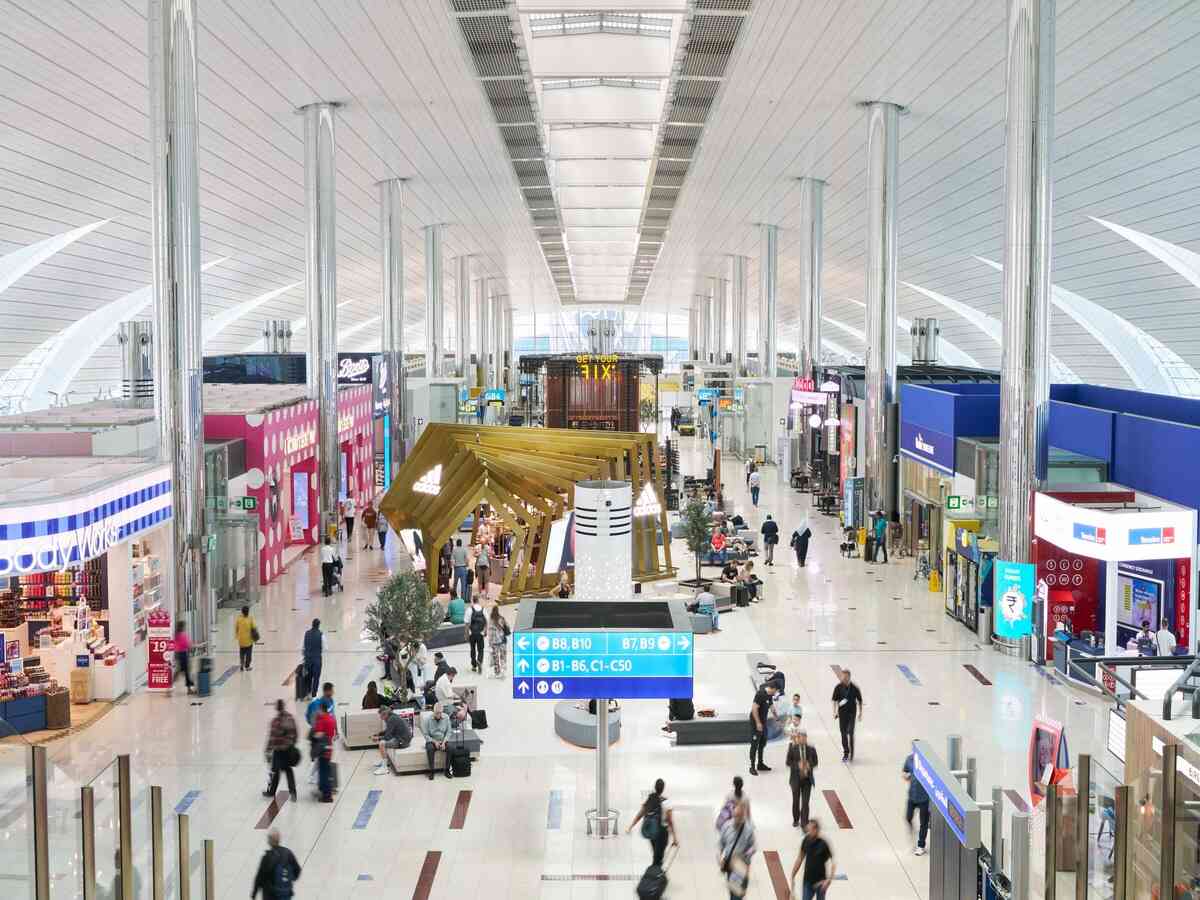
Dubai and Emirates connect air routes, improving the connections and the capacity of travel before the winter season. The creation of each air corridor through international airspace triggers a wave of realizable possibilities, creating new channels of international business, generating more travel opportunities, and attracting foreign direct investments. In Dubai, the maintenance of connectivity of the network is more than a mere measurement of transport but is rather the economic driver of its metropolis dreams.
As global airline executives, network planners, and airport operators gathered at Messe Frankfurt for the prestigious 29th Routes World Conference, Dubai mounted a formidable joint front. Dubai Airports joined forces with the Dubai Department of Economy and Tourism (DubaiDET) to engage with key international airline partners, dissect evolving traveler behavior, and strategically widen the emirate’s air corridors.
Anchored by home carrier Emirates restoring the overwhelming majority of its operational scale, this coordinated destination framework ensures that Dubai International (DXB) and the future megahub at Al Maktoum International (DWC) are completely aligned to capture high-yield traffic ahead of the critical winter rush.
Unified Route Diplomacy at Routes World Frankfurt
Air route planning has historically occurred in silos, with airports negotiating physical slot capacity while municipal tourism bodies market attractions separately. Dubai has dismantled this fragmented model in favor of an integrated commercial pitch:
Advertisement
Advertisement
- The Frankfurt Roundtables: At the 29th Routes World forum, the combined delegation from Dubai Airports and DubaiDET presented foreign carriers with an all-inclusive business proposition encompassing route profitability modeling, slot allocations, ground handling support, and direct promotional backing across global source markets.
- Capitalizing on Dynamic Market Demand: Shifting post-pandemic booking patterns, flexible remote-work holidays, and a surge in premium economy travel have altered traditional route economics. The joint delegation utilized real-time traveler data to demonstrate unmet inbound and transit demand across secondary European, African, and Central Asian markets.
- Expanding Bilateral Horizons: Discussions centered on removing commercial frictions for incoming foreign carriers, incentivizing non-stop connections, and deepening interline and codeshare partnerships that route passengers seamlessly into the city’s broader hospitality ecosystem.
By synchronizing terminal operations directly with hotel inventory and municipal marketing campaigns, Dubai provides international airlines with lower launch risks and faster load-factor maturation than competing regional hubs.
DXB Mid-Year Resilience: Decoding the Summer Traffic Surge
The collaborative destination strategy is underpinned by concrete operational momentum at Dubai International (DXB). Despite navigating a challenging global operating landscape marked by regional airspace restrictions and volatile international flight paths earlier in the year, DXB demonstrated extraordinary operational resilience.
Advertisement
Advertisement
The airport recorded a total of 31.5 million guests throughout the first half of the year (H1), showcasing steady quarter-over-quarter acceleration:
- April: Handled 3.5 million passengers as operational networks stabilized.
- June: Surged to 5.0 million passengers as summer holiday departures and inbound transit ramped up.
- July & August: Delivered peak performance, welcoming over 6.0 million guests in both consecutive months.
By the close of the first half, nearly 50 scheduled international airlines were operating out of DXB, linking the emirate directly to 217 destinations spread across 99 countries. This vast footprint reasserts Dubai’s position as one of the most interconnected aviation transit points on the planet, serving as an indispensable conduit between East and West.
Advertisement
Advertisement
Comparative Hub Infrastructure: DXB Today vs. DWC Tomorrow
To accommodate unrelenting traffic increases without degrading passenger experience, Dubai is executing a phased master plan. While DXB optimizes every square meter of its dual-runway layout, the ongoing development of Al Maktoum International Airport (DWC) prepares the emirate for unprecedented aviation volumes over the coming decades.
| Infrastructure Benchmark | Dubai International (DXB) — Current Hub | Al Maktoum International (DWC) — Future Megahub | Strategic Impact on Global Connectivity |
| Annual Passenger Capacity | ~90 to 100 Million Guests | 260 Million Guests (Ultimate Phase) | Eliminates slot caps, allowing unlimited foreign airline route expansion. |
| Airfield Configuration | 2 Parallel Runways (Urban Enclosure) | 5 Parallel Runways (4 Active, 1 Standby) | Enables simultaneous multiple takeoffs and landings without airspace queuing. |
| Aircraft Contact Gates | Over 150 Dedicated Gates | 400+ Contact Gates with Multi-Node Hub | Drastically minimizes remote apron stands and shortens aircraft turnaround cycles. |
| Annual Cargo Throughput | ~2.5 Million Tonnes | 12 Million Tonnes per Year | Integrates sea-air multimodal logistics via Jebel Ali Port corridor. |
| Urban Transit Integration | Dubai Metro Red Line (Terminals 1 & 3) | Integrated Express Rail & Metro Linkages | Connects high-density business districts directly to long-haul departure lobbies. |
The Emirates Flagship Engine and Fleet Restoration
A hub airport is only as formidable as its primary anchor carrier. The engine propelling DXB’s summer rebound into the upcoming winter season is Emirates, which has successfully restored 91% of its pre-disruption network capacity.
The carrier’s restoration strategy delivers several critical operational benefits:
- Re-establishing High-Frequency Feeder Banks: Emirates operates coordinated arrival and departure waves that funnel passengers smoothly between six continents within tight two- to four-hour transit windows.
- Capacity Injection Ahead of Peak Winter: As cold weather arrives in the Northern Hemisphere, demand for winter sun travel surges. Restoring wide-body capacity across key trunk routes ensures immediate seat availability for inbound holidaymakers heading to the UAE.
- Coordinated flydubai Connectivity: The deep strategic partnership between Emirates and sister carrier flydubai unlocks seamless single-ticket itineraries to emerging, secondary destinations across Eastern Europe, Central Asia, and Africa, feeding high-margin regional feeder traffic directly into DXB’s wide-body departures.
With international carriers steadily returning and boosting frequencies to match Emirates’ lead, DXB’s overall slot utilization is trending toward full pre-disruption capacity.
Advertisement
Advertisement
Frictionless Processing: The Architecture of Passenger Flow
Attracting millions of travelers is ineffective if terminal bottlenecks leave guests stranded in security or immigration queues. Dubai Airports has deployed an operational blueprint heavily focused on automation and biometric speed:
- ✦ Contactless Smart Gate Infrastructure: Registered travelers and UAE residents glide through passport control in under ten seconds utilizing advanced biometric facial and iris recognition scanners, virtually eliminating immigration bottlenecks.
- ✦ Strict Service-Level Benchmarks: Operational parameters at DXB ensure that more than 98% of departing guests clear passport control in under 10 minutes, while over 99% process through security checkpoints in less than 5 minutes.
- ✦ Automated High-Velocity Baggage Systems: Below the passenger concourses, DXB’s high-speed baggage handling network delivers over 90% of terminating luggage to terminal carousels within 45 minutes of aircraft touchdown.
- ✦ Balanced Traffic Dynamics: Traffic through the airport maintains a healthy 50/50 balance between point-to-point visitors and transit guests, ensuring high hotel occupancy across the city while maintaining the scale required for ultra-long-haul intercontinental routes.
Future Horizons: Unlocking Decades of Aviation Leadership
As airline network planners finalize winter schedules and look ahead to future fleet commitments, Dubai’s message from Frankfurt is unmistakable: the city’s infrastructure will consistently expand ahead of global demand curve requirements.
By connecting their flight routes together, Dubai Airport and Emirates work towards scaling the global network of flights before the crucial winter season arrives.
Working on strengthening partnerships between commercial airlines, ensuring maximum safety and efficiency of operations at DXB airport, and advancing the move towards DWC airport are all part of the same strategy. With a vision of designing an airport system that can scale to 260 million passengers per year, Dubai is creating the necessary runway infrastructure for global trade, tourism, and economic growth for years to come.
Advertisement
