
Ras Al Khaimah Beach Closures Hit UAE Coastal Getaways as Oil Spill Prompts Restrictions in Three Emirates

Published
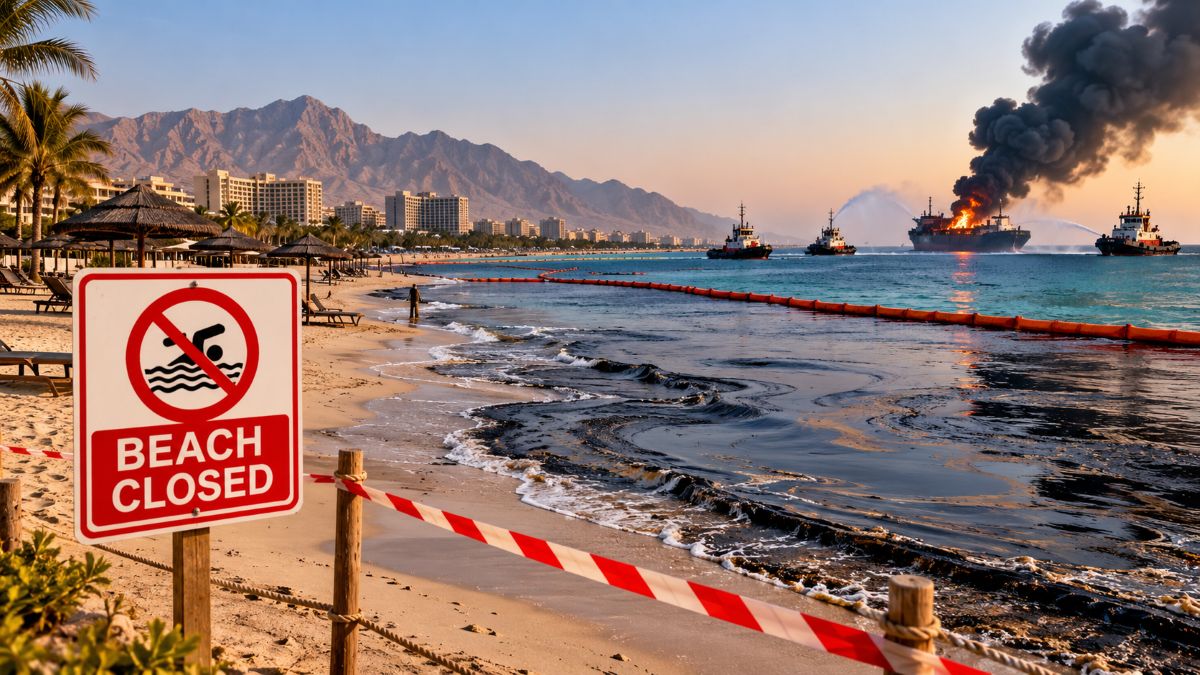
The Ras Al Khaimah beach closures mark a significant development for visitors planning coastal holidays in the northern United Arab Emirates. On 24 October 2026, authorities announced that all beaches in the emirate would remain closed until further notice. The decision followed an offshore oil leak that had already prompted temporary beach closures in neighbouring Umm Al Quwain and Sharjah. Although officials did not specify the reason for Ras Al Khaimah’s order, the wider incident has prompted environmental assessments and precautionary measures. Travellers should therefore check official advisories before visiting beaches, arranging water-based activities or changing resort plans. The immediate priority is understanding which coastal areas remain accessible and when authorities may permit their reopening.
A Coastal Holiday Disrupted by an Uncertain Timeline
The announcement has immediate implications for travellers whose itineraries depend on swimming, sunbathing and waterfront recreation. Ras Al Khaimah attracts visitors with its beach resorts, island developments, mountain adventures and desert experiences. However, the blanket closure changes the practical value of a coastal holiday, particularly for families and travellers who have paid for beachfront accommodation.
Advertisement
Advertisement
The Public Services Department issued its announcement through Ras Al Khaimah Police General Headquarters. Officials have not announced a reopening date, leaving visitors without a confirmed timeline. The closure follows measures in two neighbouring emirates, although Ras Al Khaimah’s authorities did not explicitly attribute their decision to the spill.
For now, travellers should distinguish between beach access restrictions and wider travel disruption. The available reports confirm beach closures, not a general shutdown of hotels, airports or the emirate’s attractions. Visitors should therefore verify individual bookings before cancelling an entire trip.
Advertisement
Advertisement
Three Northern Emirates Face Coastal Restrictions
The incident has prompted different coastal restrictions across three neighbouring emirates. Their announcements offer travellers a clearer picture of where authorities have imposed restrictions and why visitors should monitor local updates.
| Emirate | Location or area affected | Reported action | What travellers should know |
|---|---|---|---|
| Ras Al Khaimah | All beaches across the emirate | Closed until further notice | Do not plan beach activities until authorities confirm reopening. |
| Umm Al Quwain | All beaches and coastal areas around the emirate’s main urban area | Temporarily closed for technical assessments and safety measures | Avoid affected coastal areas and follow official instructions. |
| Sharjah | Al Hamriyah Beach | Temporarily closed as a precaution | Check local notices before travelling to the northern coastline. |
| Ajman | Coastal areas where residents reported unusual odours | No blanket beach closure established in the cited reports | Do not assume either unrestricted beach access or a formal closure without checking local guidance. |
The restrictions reflect different official announcements rather than one uniform closure order across the northern UAE. Umm Al Quwain’s authorities linked their measures to environmental assessments following the spill. Sharjah closed Al Hamriyah Beach as a precaution, while Ras Al Khaimah did not specify a reason in its announcement.
Advertisement
Advertisement
This distinction matters when planning day trips. A beach closure in one emirate does not automatically establish the status of every coastal attraction elsewhere. Equally, travellers should not assume that a beach remains safe simply because it has not appeared in a published closure notice.
What Authorities Have Confirmed About the Spill
The UAE’s Ministry of Climate Change and Environment confirmed on 23 October that an offshore oil leak had affected coastal areas around Umm Al Quwain. Authorities began containment efforts and environmental assessments to establish the necessary safety and marine protection measures.
Advertisement
Advertisement
Officials also urged fishermen and other sea users to avoid affected areas and follow official instructions. Residents reported unusual odours in parts of Sharjah, Ajman and Umm Al Quwain. The ministry said the reported odours posed no health risks, although the smell remained pungent in Umm Al Quwain on Friday.
Several important details remain unresolved. Authorities have not publicly identified the tanker involved or explained the cause of the leak in the cited reports. Nor have they published a definitive reopening timetable for the affected beaches.
Reuters reported that satellite imagery appeared to show an oil slick covering approximately 160 square kilometres. That figure describes the apparent slick captured in the imagery, not a verified measurement of shoreline contamination or the area requiring beach closures. The distinction is important because offshore pollution does not automatically mean every nearby beach has sustained the same degree of environmental damage.
For travellers, the practical message is straightforward. Official closure notices should determine where visitors can go, while environmental assessments and subsequent announcements should guide decisions about when coastal activities can resume.
Advertisement
Advertisement
How the Closures Could Affect Holiday Plans
Beach access is a central consideration for many visitors choosing a northern UAE resort. Consequently, the restrictions could affect holiday experiences even if accommodation and other services continue operating normally.
The immediate impact will vary according to each booking. Travellers who planned to spend most of their time swimming or relaxing beside the sea face greater uncertainty than those with mountain excursions, cultural visits or desert activities in their itineraries.
| Traveller type | Potential impact | Recommended response |
|---|---|---|
| Families with children | Swimming and sand-based activities may be unavailable. | Ask the hotel about indoor pools, supervised activities and alternative facilities. |
| Couples on beach holidays | Waterfront recreation may no longer match the planned experience. | Confirm which facilities remain accessible before travelling. |
| Visitors on short breaks | Limited time makes replacing activities more difficult. | Reorganise itineraries around confirmed attractions and bookable experiences. |
| Adventure travellers | Mountain and desert plans may remain viable, subject to separate operating notices. | Check activity providers and transport arrangements independently. |
| Business travellers | Leisure plans may change, although the beach closures do not establish a wider travel shutdown. | Confirm accommodation, meetings and transfers directly with providers. |
| Travellers with prepaid packages | Unused services may create refund or amendment questions. | Review package terms and request written clarification from the booking provider. |
These are potential consequences rather than evidence of widespread cancellations. The cited reports do not quantify hotel booking changes, visitor losses or cancellations attributable to the closures.
Nevertheless, the episode highlights a practical weakness in beach-dependent itineraries. When the main attraction becomes unavailable, alternative activities, flexible booking conditions and clear communication become especially valuable.
Why Resort Guests Need Direct Confirmation
Ras Al Khaimah’s tourism offering extends beyond its shoreline. The emirate promotes mountain experiences, desert stays, heritage attractions, outdoor adventures and wellness facilities alongside its beach resorts. Its official tourism portal lists attractions including Jais Flight, Dhayah Fort, the National Museum of Ras Al Khaimah and Suwaidi Pearl Farm.
That range gives visitors options for adjusting their plans. However, the existence of an alternative attraction does not guarantee that it is operating, available or suitable for every traveller on a particular date.
Advertisement
Advertisement
Hotel guests should ask a specific question: Which facilities are currently open and accessible under the latest official instructions? A resort may offer several amenities, but access to its beachfront or sea-based activities could be restricted independently.
Travellers should also clarify the distinction between a private beach area and a property’s other facilities. The emirate’s announcement covers all beaches, but the available reports do not detail how individual resorts are managing their facilities. Visitors should not assume that private resort access overrides public safety restrictions.
The official Visit Ras Al Khaimah tourism website provides a useful starting point for exploring alternative attractions. For the latest safety instructions, however, government and police announcements should take precedence over promotional information.
The Environmental Stakes Extend Beyond Tourism
An offshore oil leak presents challenges beyond the immediate loss of beach access. Depending on the type of oil, weather, currents and distance from shore, marine pollution can affect coastal habitats, wildlife and recreational waters. However, the extent of any damage in this incident remains uncertain.
The northern UAE coastline includes natural creeks, mangroves and other marine habitats. Such environments can be sensitive to pollution, making monitoring and effective containment important during an incident. Environmental teams must assess local conditions before determining whether specific locations can safely reopen.
The UAE has also been developing technologies to strengthen its response to marine pollution. In September 2026, Dubai Police showcased drones, satellite-connected monitoring and sampling equipment designed to help teams locate spills and assess affected waters. These technologies illustrate the wider role of surveillance and rapid assessment in environmental incident management.
Advertisement
Advertisement
However, the availability of such technology does not establish the current status of the cleanup. Travellers should look for specific official updates confirming containment progress, water assessments and the reopening of individual beaches.
The incident also illustrates why environmental monitoring matters to tourism operators. Clean coastlines support recreational activity, protect natural assets and underpin the appeal of waterfront destinations. Clear public communication helps visitors make informed decisions while allowing businesses to manage uncertainty responsibly.
How This Compares With Earlier Closures
Beach restrictions are not unusual responses to potential marine contamination. Authorities may limit access while they investigate pollution, collect samples, assess risks or organise cleanup operations. The duration depends on the incident and the evidence required before access can safely resume.
The current situation differs from an ordinary temporary beach closure because restrictions now affect several neighbouring emirates. Nevertheless, the available evidence does not establish that the entire UAE coastline is contaminated or that all coastal tourism has stopped.
| Issue | Current incident | What determines the next step |
|---|---|---|
| Geographic scope | Restrictions announced in three northern emirates | Further official assessments and local notices |
| Environmental evidence | Containment and assessment work reported | Results from environmental monitoring |
| Public health communication | Ministry says reported odours pose no health risks | Updated official advice if conditions change |
| Beach reopening | No confirmed reopening date for Ras Al Khaimah | Decisions by the relevant authorities |
| Tourism operations | Beach access is restricted; wider shutdown not established | Individual hotel, attraction and transport updates |
The comparison shows why visitors should avoid treating the closure as either a minor inconvenience or proof of a region-wide tourism emergency. The verified position is narrower: several coastal areas face restrictions while authorities respond to an offshore leak and assess environmental conditions.
For travel businesses, the immediate priority is accurate information rather than speculation. Tour operators and accommodation providers can help by communicating facility restrictions, amendment options and alternative experiences clearly.
Advertisement
Advertisement
Practical Checks Before Travelling
Visitors with upcoming bookings should contact their accommodation provider before departure. Ask whether beach access is prohibited, whether swimming pools and other recreational facilities remain open, and whether any planned boat trips or water sports have been suspended.
Travellers should also review cancellation policies before making changes. Refunds, date amendments and package adjustments depend on the terms of the booking and applicable consumer protections. A beach closure does not automatically guarantee a full refund for every hotel or holiday package.
Those already in the emirate should obey closure notices and avoid entering restricted coastal areas. Fishermen, boat operators and other sea users should follow the specific instructions issued by the relevant authorities. Visitors should not enter the water to assess conditions themselves.
The following official channels can help travellers verify developments:
| Information needed | Recommended channel |
|---|---|
| Environmental assessments and marine protection advice | UAE Ministry of Climate Change and Environment |
| Local safety notices and beach restrictions | Ras Al Khaimah Police |
| Alternative attractions and destination planning | Visit Ras Al Khaimah |
| Hotel facilities, booking changes and refunds | Contact the accommodation provider or booking platform directly |
Because the situation can change, travellers should check these channels shortly before visiting a beach or undertaking a water-based activity. Older travel guides, social media posts and resort photographs may not reflect current restrictions.
What Travellers Should Watch Next
The next significant development will be an official update on the restrictions and environmental assessments. A reopening announcement would give visitors a clearer basis for restoring beach activities to their itineraries. Until then, travellers should plan around confirmed alternatives rather than assume that normal coastal access will resume quickly.
Advertisement
Advertisement
Hotel operators and tour companies also have a practical role. Timely updates, transparent amendment policies and realistic descriptions of available facilities can reduce uncertainty for guests. Meanwhile, environmental monitoring will help authorities determine when individual coastal areas can safely reopen.
For visitors, the best approach is to remain flexible without abandoning every travel plan. Ras Al Khaimah offers experiences beyond the beach, but the suitability of each alternative depends on current operating conditions. Verify access, follow official advice and make booking decisions using confirmed information.
Advertisement
