
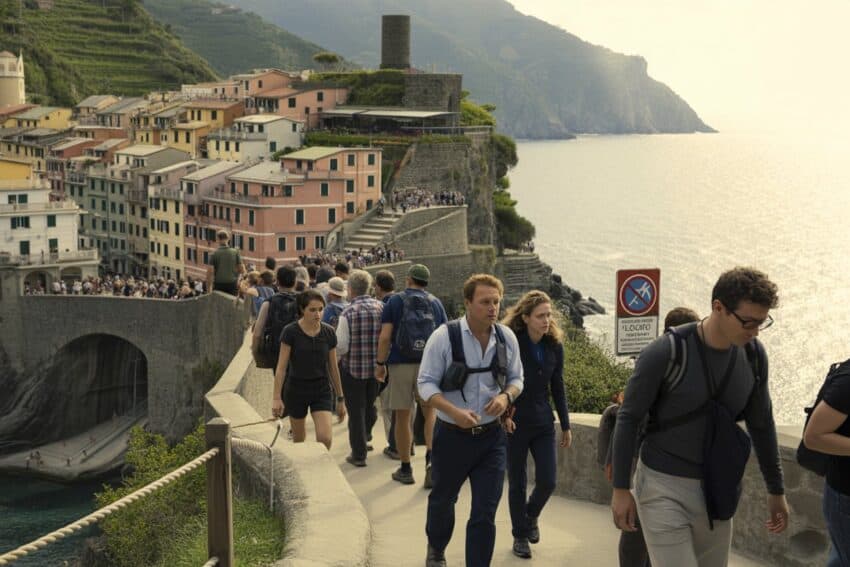
Image generated with Ai
Cinque Terre in Italy is reinforcing its position as one of Europe’s most strictly regulated coastal tourism destinations in 2026, as authorities continue to tighten visitor behaviour rules aimed at protecting fragile landscapes, ensuring public safety, and managing record tourism pressure. According to governance frameworks under the Cinque Terre National Park Authority and Italy’s Ministry of Culture and Tourism policies, the region has been progressively introducing stricter enforcement measures for visitors across its UNESCO-protected coastal trails.
The new wave of tourism regulation reflects growing concerns about environmental degradation, overcrowding on hiking routes, and safety risks linked to inappropriate footwear and irresponsible visitor behaviour in one of Italy’s most sensitive natural heritage zones.
Advertisement
Cinque Terre, a UNESCO World Heritage Site, is globally recognised for its dramatic cliffside villages, steep hiking paths, and fragile Mediterranean ecosystems. With millions of visitors arriving each year, local authorities have intensified control mechanisms to ensure sustainable tourism and reduce accidents on narrow coastal trails.
Cinque Terre’s hiking network, which connects villages such as Monterosso, Vernazza, Corniglia, Manarola, and Riomaggiore, has long been one of Italy’s most popular outdoor tourism attractions. However, increasing visitor numbers have placed significant pressure on these ancient stone pathways.
Advertisement
Authorities under the Cinque Terre National Park management framework have implemented stricter rules to ensure visitor safety and environmental preservation. These regulations include restrictions on unsuitable footwear, overcrowding controls, and enforcement of designated hiking routes.
The terrain is steep, uneven, and often exposed to coastal weather conditions, making proper hiking equipment essential. Local enforcement bodies regularly monitor compliance to reduce injuries and emergency rescue interventions, which have increased during peak summer seasons.
The goal of these regulations is not only safety but also long-term preservation of the landscape, which is highly vulnerable to erosion and structural damage caused by excessive foot traffic.
One of the most widely discussed aspects of Cinque Terre’s tourism management approach is its emphasis on appropriate footwear for hiking trails. Local authorities strongly discourage or prohibit the use of unsuitable footwear such as flip-flops or non-grip sandals on designated hiking routes.
This is primarily due to the high risk of slips, falls, and injuries on narrow, rocky paths that often include steep inclines and uneven stone steps. Emergency rescue operations in the region have increased during high tourist seasons, placing additional strain on local safety services.
Italian park authorities have consistently promoted responsible tourism behaviour through signage, ticketing controls, and on-site inspections. Visitors are encouraged to use sturdy walking shoes or hiking footwear that provides grip and stability.
These rules are part of broader European protected-area tourism governance models, which prioritise safety, conservation, and controlled access in environmentally sensitive regions.
Cinque Terre has experienced sustained overtourism pressure over the past decade, particularly during summer months when daily visitor numbers can significantly exceed the local resident population. This imbalance has led to congestion on hiking trails, strain on public transport systems, and increased environmental stress on fragile ecosystems.
According to governance frameworks aligned with Italy’s Ministry of Tourism and UNESCO site management guidelines, overtourism mitigation has become a central policy priority.
Authorities have introduced measures such as:
These strategies are designed to ensure that tourism remains economically beneficial while preserving the ecological integrity of the Cinque Terre coastline.
To ensure compliance with safety and environmental regulations, Cinque Terre authorities have strengthened enforcement mechanisms that include on-site fines for violations of park rules. These penalties are part of a broader regulatory framework aimed at maintaining order within high-density tourist areas.
The enforcement approach is consistent with Italy’s national heritage protection laws, which allow local authorities to impose fines for behaviour that endangers public safety or damages protected landscapes.Regulation Area Purpose Enforcement Method Footwear compliance Prevent hiking injuries On-site inspection and fines Trail access control Reduce overcrowding Timed entry systems Environmental protection Prevent erosion damage Park ranger monitoring Visitor behaviour Ensure safety compliance Civil penalty system
Such measures reflect a broader shift in European tourism policy toward stricter regulation of visitor conduct in sensitive natural heritage sites.
Cinque Terre’s designation as a UNESCO World Heritage Site places additional responsibility on Italian authorities to preserve its cultural and environmental value. UNESCO guidelines strongly emphasise the importance of sustainable tourism practices that prevent overuse and degradation of protected landscapes.
The Italian government, through coordinated efforts with regional authorities, has implemented long-term conservation strategies that balance tourism access with preservation goals. These include infrastructure upgrades, controlled visitor access, and educational campaigns promoting responsible travel behaviour.
Sustainability remains a core principle in managing the Cinque Terre experience, ensuring that future generations can continue to enjoy its natural and cultural significance.
Despite stricter regulations, Cinque Terre continues to attract strong international tourism demand due to its unique combination of coastal scenery, cultural heritage, and hiking experiences. However, the long-term sustainability of the destination depends on maintaining a careful balance between accessibility and protection.
Authorities are expected to continue refining visitor management strategies, including expanded digital ticketing systems, enhanced trail monitoring, and stronger environmental enforcement policies.
The region’s approach reflects a broader trend across Europe, where iconic destinations are increasingly adopting controlled tourism models to preserve fragile environments while maintaining economic benefits.
Advertisement
Tags: Cinque Terre National Park, Cinque Terre tourism rules, Italian tourism policy, Italy hiking regulations, Italy tourism fines
Advertisement
Advertisement













Friday, September 4, 2026

Thursday, September 3, 2026

Friday, September 4, 2026

Friday, September 4, 2026

Thursday, September 3, 2026

Wednesday, September 2, 2026

Friday, September 4, 2026

Friday, September 4, 2026


