
Portugal, Spain Dominate Europe Travel With Breathtaking Palace Hotels, Historic Icons and Luxury Stays

Published
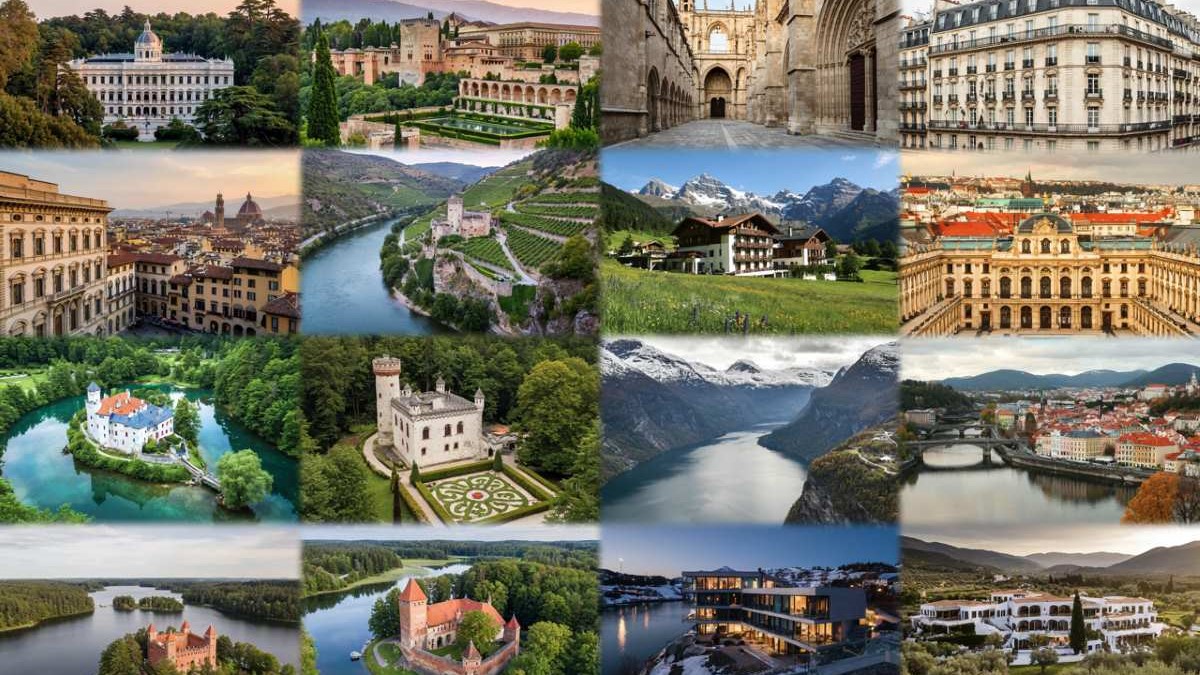
Image generated with Ai
Portugal and Spain are making Europe travel a truly enchanting affair with their stunning palace hotels, iconic landmarks, and unforgettable luxury resorts. These countries are no longer offering just another hotel room and a typical breakfast buffet but grand architecture, rich history, breathtaking scenery, and unforgettable experiences. Firstly, Portugal offers royal excitement. In the Bussaco National Forest, there is an outstanding Palace Hotel do Bussaco, combining historical architecture with an exceptional location. Meanwhile, Spain has some amazing heritage properties such as Parador de Granada in the Alhambra complex and Hostal de los Reyes Católicos next to Santiago de Compostela Cathedral. As you can see, these countries have everything to make Portugal and Spain lead the way in European travel talks on beautiful hotels. However, apart from being luxurious places to stay at, the destinations transform historical places into experiences. People get an opportunity to sleep inside the palaces and historic sites while visiting two of the most interesting countries in Europe. Travel And Tour World encourages readers to dig deeper into the topic. What makes those hotels so unique? What attracts people to heritage properties? And what are the most spectacular places you must visit in Europe? Read the whole story and find out which hotels are pushing luxury to the next level in Portugal and Spain.
Europe’s Most Beautiful Hotels: Portugal, Spain, France, Italy and More Reveal Breathtaking Stays Where History Meets Luxury
Europe has no shortage of beautiful hotels. Yet some places do far more than give travellers a bed for the night. They place guests inside royal palaces, medieval castles, old monasteries and grand historic buildings. Others turn mountains, forests, vineyards and fjords into part of the hotel experience. That searches for the world’s most beautiful hotels in European countries is especially exciting. Beauty here is not only about polished rooms or expensive furniture. It can come from age, architecture, location, art, history, and the landscape outside the window. Official tourism authorities across Europe highlight a striking range of these properties. Portugal presents a fairy-tale palace in an ancient forest. Spain offers hotels inside the Alhambra and beside Santiago Cathedral. Austria opens castle doors to overnight guests, while Norway brings historic hotels to the edge of dramatic fjords.
Advertisement
Advertisement
“Europe’s most beautiful hotels show how luxury can preserve history while creating memorable journeys. From Portugal’s royal palace to Spain’s heritage stays and Norway’s fjord-side retreats, these properties turn accommodation into an experience. As international tourism grows in 2026, travellers increasingly seek hotels that offer character, culture, scenery and stories.” — Anup Kumar Keshan, Founder and Editor-in-Chief, Travel And Tour World
2026 Hotel and Tourism Indicators Behind Europe’s Most Beautiful Stays
| Country | Indicator | 2026 result | Change / share | Strongest article connection |
|---|---|---|---|---|
| Spain | International tourist arrivals, Jan–Jul | 58.1+ million | +4.6% | Alhambra, historic Paradores and heritage stays |
| Spain | International tourist expenditure, Jan–Jun | €63.84 billion | +7.0% | Shows rising economic value of international visitors |
| France | Hotel overnight stays, Q2 | 61.1 million | +1.4% | Palace hotels and premium accommodation |
| France | Four- and five-star overnight stays, winter | — | +6.9% | Strong demand for higher-end hotels |
| Italy | Accommodation overnight stays, Q1 | 71.6 million | +7.5% | Florence’s historic hotel and cultural tourism appeal |
| Italy | Foreign overnight stays, Q1 | — | +12.3% | Strong international interest in Italian destinations |
| Portugal | Overnight stays, Q2 | 23.3 million | +1.2% | Palace Hotel do Bussaco and heritage tourism |
| Portugal | Non-resident share of overnight stays, Q2 | 16.7 million | 71.9% of total | Heavy international dependence supports luxury tourism |
| Austria | Overnight stays, Jan–Jul | 96.46 million | +1.8% | Castle hotels, Alpine retreats and Vienna luxury stays |
| Austria | May–Jul summer season | 41.87 million | +3.2% | Record summer performance |
| Slovenia | Overnight stays, Jan–Jul | 10.54 million | +6.6% | Castle hotels and Lake Bled-area tourism |
| Slovenia | Foreign overnight stays, Jan–Jul | 7.90 million | +7.9% | International demand for scenic heritage stays |
Portugal’s Palace Hotel do Bussaco turns a forest stay into a royal dream
Portugal delivers one of Europe’s strongest examples with Palace Hotel do Bussaco. Visit Portugal describes it as a fairy-tale castle in an enchanted forest and places it among the world’s most beautiful and historic hotels. The palace was built in 1885 for Portugal’s last kings. The setting makes the stay even more striking. The hotel sits inside the 250-acre Bussaco National Forest, a centuries-old walled forest created by the Barefoot Carmelites. Rare plants collected by Portuguese navigators add to the unusual surroundings. Inside, Manueline-Gothic design meets antique furniture, paintings and historic Portuguese azulejos.
Advertisement
Advertisement
Spain’s Parador de Granada lets travellers sleep beside the Alhambra
Few hotel settings can compete with Parador de Granada. Spain’s official tourism portal places the property inside the Alhambra complex. The hotel occupies a former convent built for the Catholic Monarchs on the site of a Nasrid palace, with historic walls still preserved. The experience goes beyond a beautiful building. Guests can wake near the Alhambra’s gardens and enjoy views towards the Generalife. Spain’s tourism authority also points to its historic rooms, furniture and cloister, which create an atmosphere linked to the palace complex. The official hotel listing identifies it as a four-star property housed in a convent.
Santiago de Compostela’s historic hotel carries centuries of pilgrim stories
Spain has another remarkable entry in Hostal de los Reyes Católicos in Santiago de Compostela. Spain’s tourism authority calls it an architectural treasure created to accommodate pilgrims completing the Way of Saint James. It was founded in 1499 and now operates as a Parador hotel. Its Gothic structure immediately catches attention. A Plateresque façade, four interior courtyards and the chapel of Enrique de Egas form its strongest architectural features. Spain’s tourism authority also describes the property as one of the outstanding monuments around Plaza del Obradoiro. Its setting beside Santiago Cathedral gives travellers another powerful reason to stay.
Advertisement
Advertisement
France turns luxury hotels into an official Palace class of their own
France takes hotel beauty to another level through its official Palace distinction. The national tourism authority explains that the distinction identifies exceptional five-star hotels. The system began to recognise establishments with qualities that go beyond standard luxury. The assessment considers several factors. Location matters. So do appearance, history, heritage, the personality of the property, service, gastronomy and environmental policies. The process also includes an evaluation by a qualified panel after an initial eligibility investigation by Atout France. That list includes famous names such as Hôtel de Crillon, Le Bristol, Le Meurice, Plaza Athénée, Four Seasons Hotel George V and Hôtel du Palais in Biarritz. France therefore offers not one beautiful hotel, but a nationally recognised collection of exceptional stays.
Italy’s Grand Hotel Minerva blends Renaissance Florence with modern style
Florence adds an artistic dimension to the Grand Hotel Minerva. Italy’s official tourism portal says the hotel stands close to Santa Maria Novella and traces its history to 1848. It occupies a 14th-century palace that was once part of the Santa Maria Novella monastery. Architecture and art shape the experience. Edoardo Detti and Carlo Scarpa renovated the building in the 1950s. A later restoration brought historic architecture back into focus while adding modern and contemporary works. Suites feature frescoed or coffered ceilings, while the rooftop pool offers views across Florence. The hotel also has a literary connection. Italy’s tourism authority notes that American poet Henry Wadsworth Longfellow translated Dante’s Divine Comedy in rooms there in 1867. That detail gives the property a cultural story as powerful as its architecture.
Advertisement
Advertisement
Austria opens the doors to castle hotels in the Wachau Valley
Austria makes a strong case for castle hotels in Europe. Its official tourism organisation promotes overnight stays in castles and palaces, where historic architecture meets modern comfort. These properties range from aristocratic residences to medieval fortresses. One standout is Hotel Schloss Dürnstein. Austria Tourism says the castle was built in the 17th century and once belonged to aristocratic dynasties. Its location in the Wachau Valley adds vineyards and scenic countryside to the experience. The choice does not stop there. Austria lists properties such as Hotel Schloss Leopoldskron, Schloss Fuschl, Kapfenstein Castle, Heritage Hotel Hallstatt and Schönbrunn Palace among places offering castle or palace stays. This creates a remarkable mix of history, scenery and luxury across the country.
Switzerland makes its historic hotels part of the Alpine landscape
Switzerland brings a different kind of beauty. The country’s official tourism organisation promotes Swiss Historic Hotels and Lodgings, a collection that ranges from simple historic guesthouses to luxurious Grand Hotels. These properties combine heritage with mountain, forest, lake, and village settings. The collection has clear standards. A main building must be more than 30 years old. The business must have operated for a sufficient period, while its architecture and atmosphere must have historic significance. Rooms and furnishings should also retain a strong connection to the original character. Some examples show how varied the category can be. Switzerland Tourism highlights Hotel Waldhaus Sils, Grand Hôtel Bella-Tola and Grand Hotel & Kurhaus in Dollar. Other listed properties include Badrutt’s Palace Hotel and Grandhotel Giessbach.
Norway puts historic hotels beside some of Europe’s greatest fjords
Norway proves that a hotel can be beautiful because of what surrounds it. Visit Norway promotes historic hotels where old buildings, gardens, art and landscapes combine. Many stand in areas shaped by the rise of tourism during the late 19th century. Walaker Hotel in Solvorn is one of the strongest examples. Its history reaches back to 1640, while the Nitter Walaker family has owned and operated it since 1690. That creates an unbroken family tradition spanning more than three centuries. The hotel also sits beside the Sognefjord. Norway also highlights Utne Hotel, which opened in 1722 and remains in operation. With only 17 rooms, the property offers an intimate historic setting. The combination of old wooden architecture and dramatic fjord scenery makes these Norwegian stays especially distinctive.
Czechia gives Prague a palace hotel with a Mozart connection
Prague adds drama through The Mozart Prague, a luxury hotel inside an 18th-century Baroque palace. VisitCzechia places it close to Charles Bridge and the Old Town Square. Its position also offers views across the Vltava River towards Prague Castle. The building itself is part of the attraction. The oldest section is Pachtuv Palace, with two Baroque courtyards and a former chapel dating from 1775. The property also carries a memorable musical story involving Wolfgang Amadeus Mozart. According to VisitCzechia, Count Jan Pachta once jokingly “trapped” Mozart in a room so the composer would complete promised dance pieces. Mozart eventually delivered them. The hotel therefore combines architecture, music and an unusual piece of Prague history in one stay.
Advertisement
Advertisement
Slovenia turns castles into romantic boutique hotel escapes
Slovenia offers another compelling answer for travellers chasing beautiful European hotels. Its official tourism organisation says many castles have been transformed into hotels. Guests can therefore experience historic walls, romantic gardens, local food and stories from earlier centuries. Otočec Castle is perhaps the most visually striking. It is Slovenia’s only castle on water, standing on an island in the Krka River. A green park surrounds the castle, while swans add to the romantic scene. The property operates as a luxury hotel and belongs to Relais & Châteaux. The country offers other choices too. Strmol Castle is among Slovenia’s oldest and best-preserved castles and has become a boutique four-star hotel. Gredič, meanwhile, is a more than 400-year-old building transformed into a romantic hotel in the Brda hills.
Slovenia’s Mokrice Castle adds forests, golf and old-world charm
Another Slovenian option is Mokrice Castle, set among the forests of the Gorjanci Hills. The official tourism authority describes its setting as a mix of mysterious woodland and a carefully maintained English garden. The historic castle now houses a deluxe hotel. The experience extends beyond the building. Guests can use the castle’s restaurant and stylish rooms, while a golf course sits nearby. Wellness facilities and thermal pools at Terme Čatež provide another attraction within easy reach. This is important for modern travellers. A beautiful hotel does not have to be a museum. The best historic stays can preserve their character while giving guests the comfort and activities expected from a contemporary holiday.
Europe’s beauty is strongest when architecture meets nature
Across these countries, one clear pattern appears. The most memorable hotels often sit where human design and natural beauty meet. Portugal combines a palace with an ancient forest. Austria pairs castles with vineyards. Norway places historic buildings beside fjords, while Switzerland surrounds grand hotels with Alpine landscapes. This changes how travellers judge a hotel. A beautiful lobby may impress for an hour. A historic building beside mountains, gardens or a river can shape the entire trip. The location can also become part of the room itself. A window facing the Sognefjord offers a different experience from a window facing a city street. A room inside the Alhambra creates a sense of place that a standard luxury hotel cannot easily copy.
Historic hotels are becoming destinations rather than simple accommodation
The research also shows a bigger shift in European travel. Hotels are increasingly becoming part of the destination story. Spain’s Paradores demonstrate this especially clearly, with the national tourism authority promoting historic accommodation where art, heritage, culture and nature become part of the stay. Switzerland follows a similar model through its Historic Hotels collection. Its properties preserve historic architecture while continuing to welcome modern travellers. Slovenia also turns old castles into boutique stays, while Austria invites guests to sleep inside castles and palaces. This matters because travellers now often want more than a luxury room. They want a story. They want a setting they can remember. They want to feel that the hotel itself could have been one of the reasons for taking the journey.
Palace hotels show how Europe turns heritage into high-end travel
France offers perhaps the clearest example of heritage becoming a formal luxury category. Its Palace distinction does not rely only on room quality. Official assessment also considers history, aesthetics, location, character, gastronomy, service and environmental policies.
That approach helps explain why the most beautiful hotels in Europe cannot be judged only by star ratings. A five-star label tells travellers something about facilities and service. It does not always capture the magic of a medieval courtyard, a royal palace or a Belle Époque façade. France’s Palace system therefore provides a useful benchmark. It recognises hotels where several elements come together to create an exceptional experience.
The strongest European hotel experiences are built around stories
The stories behind these properties make them even more compelling. Mozart’s connection with The Mozart Prague gives the building a musical past. Longfellow’s stay at Grand Hotel Minerva connects the hotel with Dante and 19th-century literature. Santiago’s Hostal de los Reyes Católicos began as accommodation for pilgrims. These details can change how visitors experience a room. The walls are no longer simply walls. The courtyard becomes part of a story. The staircase becomes a reminder of people who walked through the same building long before today’s guests arrived. That is the real strength of historic hotel travel. The past is not behind glass. It becomes part of the stay.
Advertisement
Advertisement
From Portugal to Norway, Europe offers beauty in radically different forms
There is no single formula for a beautiful hotel. Palace Hotel do Bussaco wins through royal architecture and forest. Parador de Granada draws power from the Alhambra. Grand Hotel Minerva uses Florentine art and history. Hotel Schloss Dürnstein combines a castle with vineyards. Walaker Hotel brings heritage to the Sognefjord. Meanwhile, Switzerland proves that historic hotels can become part of an Alpine landscape, while Slovenia turns castles into romantic boutique escapes. France adds another layer through its official Palace distinction. For travellers planning their next European escape, the question may therefore be changing. Instead of asking only where to sleep, ask which hotel could become part of the journey itself?
Europe’s beautiful hotels invite travellers to sleep inside the story
The appeal of these properties reaches far beyond luxury. They offer history, architecture, landscape and a strong sense of place. More importantly, they show how different European countries protect and reuse their heritage while welcoming modern visitors. From Portugal’s forest palace to Spain’s historic pilgrimage hotel, from Austria’s castles to Norway’s fjord-side retreats, every property tells a different story. Switzerland adds Alpine elegance, France offers officially recognised Palace hotels, Italy brings art into historic rooms, and Slovenia turns castles into romantic stays. For travellers searching for the world’s most beautiful hotels in European countries, these destinations provide a powerful starting point. The beauty may be in a carved ceiling, an old courtyard, a mountain view, or simply the feeling of waking up somewhere that has witnessed centuries of European life.
Portugal and Spain Raise the Bar for Unforgettable European Hotel Escapes
These two countries have shown that a hotel is capable of becoming a destination on its own. Their palaces and monuments merge architecture, culture, nature, and luxury in unique combinations. What’s more, the truly exceptional experience at such hotels gives guests a chance to view Europe from another perspective. The former provides royal flair and forest landscapes, whereas the latter offers hundreds of years of history and unique locations. It results in the creation of truly luxurious and storied getaways. According to Travel And Tour World, tourists should not confine themselves to regular accommodations and should discover exceptional hotels. Learn about these unique places from the full story below and choose your favorite one!
Advertisement
