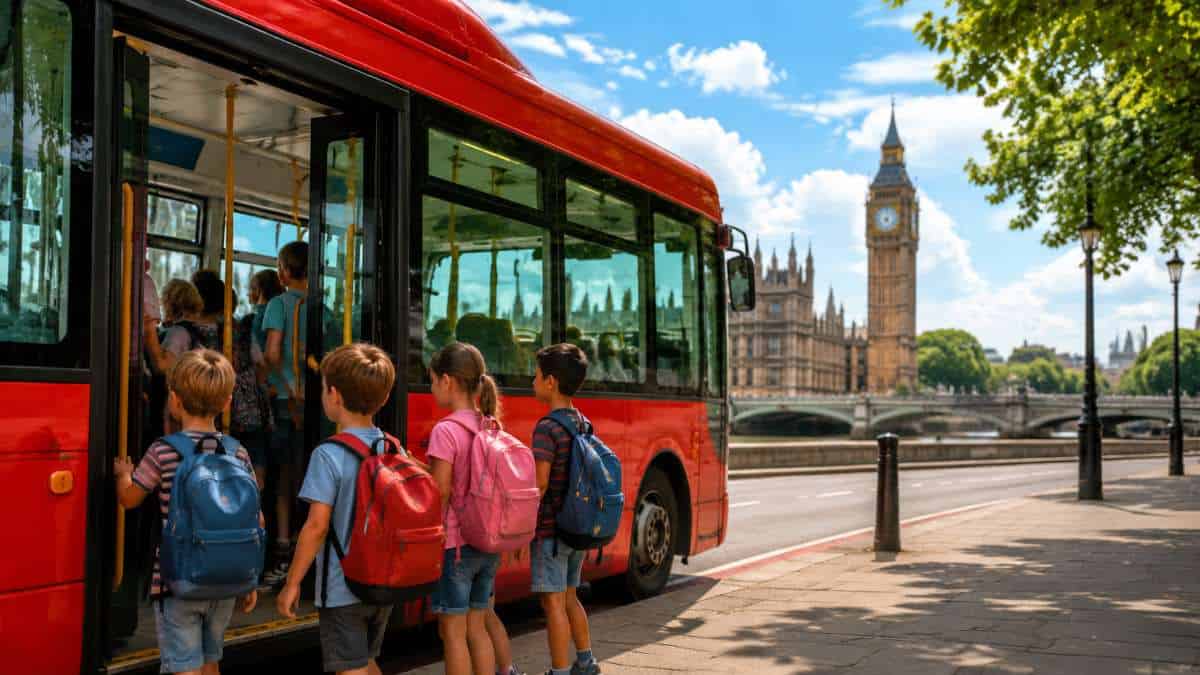
Image generated with Ai
After a successful first month, England is ending its free school bus travel program for students. More than 14 million young people were able to take trips to places and see things and take cheap family vacations during school holiday trips thanks to the program. The Summer Bus Fare Offer, a government program created to help students travel cheaply, ended on September 1, 2026 after helping students travel during August on the participating local bus systems. The program covered local bus travel for children ages five to 15, it allowed students to travel for free and reduced the cost of travel for students to travel to nearby beaches, museums, parks, historic locations, and family-oriented places.
Now that the program is over, students will pay full child fares, youth passes, or regional travel concession programs. The program was one of a series created by the government to help pay for the summer school vacation. The Great British Summer Savings Scheme was a program that offered families in England ways to save money for travel.
The Summer Bus Fare Offer provided free bus journeys from August 1 to August 31, 2026, for children aged five to 15 travelling on participating local bus services across England. The programme was designed as a short-term holiday support measure during the busiest family travel period of the year, when parents often face increased spending on childcare, activities, food and transport. The initiative removed one of the common barriers to domestic leisure travel by allowing children to use eligible buses without paying fares during August. Families could use the scheme for unlimited journeys, helping them reach popular visitor locations and local attractions without adding transport expenses to their holiday budgets.
The government committed more than £100 million to fund the free travel programme, highlighting transport affordability as an important part of its summer cost support strategy. The scheme was aimed not only at helping households financially but also at encouraging greater participation in local tourism and leisure activities. For England’s tourism sector, affordable transport plays a major role in visitor movement. Many attractions, coastal communities and rural destinations depend on local and regional visitors who often rely on buses rather than private vehicles.
Advertisement
Advertisement
| Category | Details |
|---|---|
| Scheme name | Summer Bus Fare Offer under the Great British Summer Savings Scheme |
| Location covered | England |
| Travel period | August 1 to August 31, 2026 |
| Eligible travellers | Children aged 5 to 15 |
| Number affected | Around 14 million young people |
| Funding support | More than £100 million |
| Transport type | Participating local bus services |
| Purpose | Reduce family holiday costs and encourage domestic travel |
| Status | Ended on September 1, 2026 |
With the summer offer now finished, families planning future trips must once again consider normal child bus fares or existing youth travel products available in their region. Fare levels vary depending on local authorities, operators and transport networks, but child journeys outside London commonly cost around £1 to £2 depending on location and ticket type.
The return to regular fares comes as schools reopen and travel patterns shift from holiday journeys to everyday commuting, education and local travel. During August, the free bus offer provided families with greater flexibility, allowing children to visit relatives, explore nearby destinations and participate in summer activities without paying additional transport costs. The scheme did not replace existing statutory concessionary travel arrangements for older passengers or disabled travellers. It also did not change wider bus fare policies operating across England. For tourism businesses, the end of the offer signals a return to normal travel conditions after a period when families had an additional incentive to explore domestic destinations.
The free bus programme demonstrated the growing connection between transport policy and tourism development. While tourism campaigns often focus on attractions, accommodation and events, affordable mobility remains one of the most important factors influencing whether families choose to travel. Local buses provide essential links between communities and visitor destinations. They connect towns with beaches, museums, countryside attractions, heritage locations and entertainment venues that may not always be easily accessible by rail.
During August, children across England were able to travel more freely on thousands of participating bus routes. The initiative supported visits to destinations ranging from seaside towns and national parks to cultural attractions and family entertainment centres. For smaller tourism businesses, increased visitor movement can create wider economic benefits. More day trips can support spending at cafes, restaurants, shops, attractions and local experiences. The scheme also encouraged families to consider public transport as a practical option for leisure travel. By reducing the cost barrier, the initiative helped highlight buses as an affordable and sustainable way to explore England.
The free bus travel offer was part of the wider Great British Summer Savings programme, which combined transport support with other measures designed to reduce the cost of family activities during the school holidays. The broader initiative focused on helping families enjoy more affordable days out, including visits to attractions, cultural venues and entertainment locations. The transport element played a central role because reaching these destinations is often one of the first costs families face when planning trips.
The government’s approach reflected the importance of domestic tourism during periods of financial pressure. By supporting travel access, the scheme aimed to ensure more families could participate in summer activities across England. The programme also aligned with wider efforts to encourage local tourism growth by increasing visitor access to destinations outside major cities.
Although the scheme applied nationally, individual bus operators and local authorities managed certain operational requirements. Conditions could vary depending on the network, including age verification procedures, accepted travel methods and rules for younger children. Some operators required children below certain ages to travel with an accompanying adult, while drivers could request proof of age if eligibility was unclear. Participating operators published specific information about included routes and local conditions.
This flexible approach allowed local transport networks to manage the increased passenger demand while maintaining operational standards. The scheme covered participating services rather than every possible bus journey in England, meaning families were advised to check route availability before travelling.
England’s free bus travel ends, demonstrating the intractable problem of affordability for working families. The August free travel stopped the bleeding but future travel affordability relates to education and employment, and leisure. Public transport costs impact how far families can go to attend events and how openly they can participate in community activities. Regional economies and visitor numbers rely on the tourism sector having affordable and accessible transport.
As travel behavior changes due to the one month free travel program, so did the ability for millions of kids to go on summer travel to England’s attractions. While families revert to the regular transport systems, the Great British Summer Savings program highlighted the essential role of public transport systems in achieving domestic tourism and regional access through England’s visitor destinations.
Advertisement
Tags: child bus fares England, England free bus travel, Great British Summer Savings scheme, local bus services England, summer travel support UK
Advertisement
Advertisement












Wednesday, September 2, 2026

Tuesday, September 1, 2026

Wednesday, September 2, 2026

Wednesday, September 2, 2026

Tuesday, September 1, 2026

Tuesday, September 1, 2026

Tuesday, September 1, 2026

Tuesday, September 1, 2026