
Southwest Airlines Carry-On Rules Face New TSA Scanner Questions as Passengers Warned to Check Bag Sizes Before Flying

Published
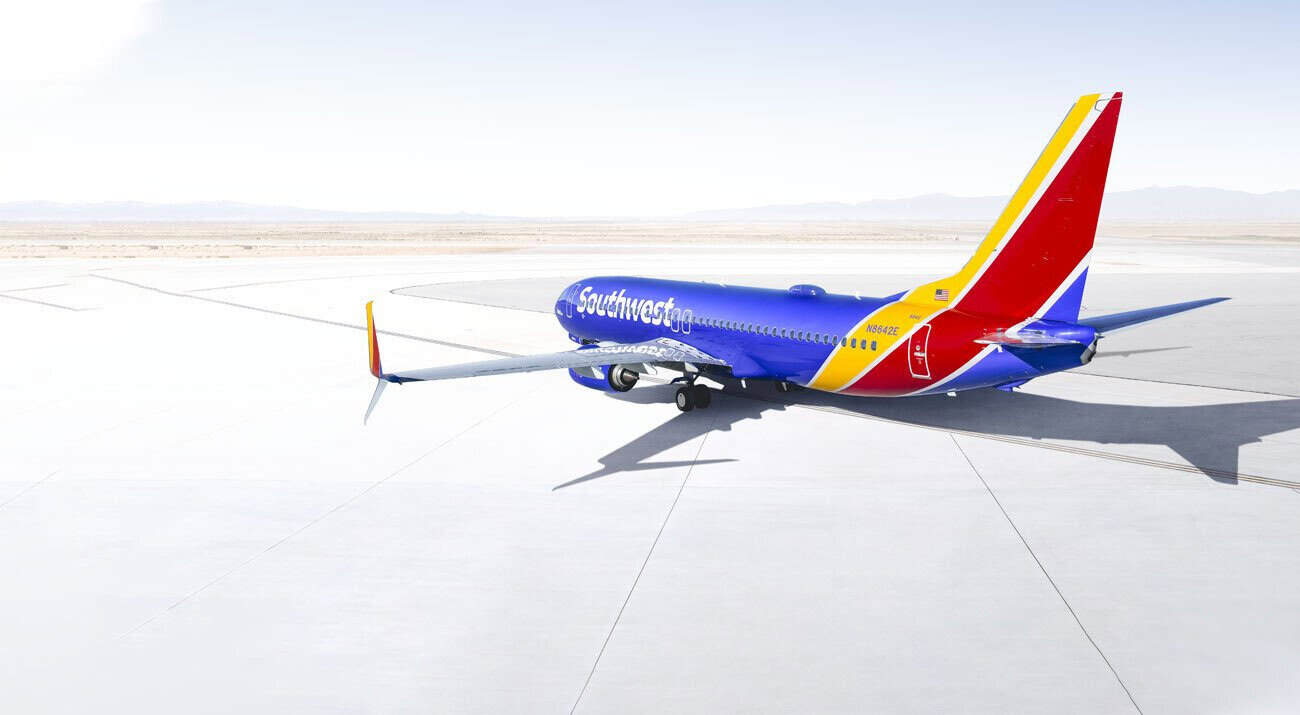
Southwest Airlines passengers travelling across the United States face a potential luggage-screening complication as newer Transportation Security Administration (TSA) scanners raise questions about the airline’s comparatively generous carry-on allowance. As of 15 October 2026, Southwest continues to permit cabin bags measuring up to 24 × 16 × 10 inches, including wheels and handles. However, differences in airport security equipment mean that a suitcase meeting an airline’s size restrictions could still require additional handling at a checkpoint. No nationwide TSA prohibition on Southwest-compliant luggage has been announced, and there is no verified evidence of widespread passengers being refused security screening because of this discrepancy.
Why Are Southwest Airlines Carry-On Rules Raising Questions About TSA Security?
The issue centres on the difference between airline baggage policies and the physical capabilities of airport screening equipment.
Southwest Airlines allows passengers to bring one carry-on suitcase and one smaller personal item aboard its flights without an additional carry-on charge.
Its maximum dimensions are more generous than those adopted by several other major American carriers.
Advertisement
Advertisement
However, airline approval and airport security screening are separate processes.
Southwest determines whether a suitcase is eligible for transport in the aircraft cabin. TSA determines how passenger property must be inspected before entering the airport’s secure departure area.
Advertisement
Advertisement
A bag may therefore comply with an airline’s published allowance while presenting a practical screening challenge if it cannot be accommodated by particular equipment.
The concern received attention after an aviation report published by Simple Flying on 12 October 2026 examined how larger carry-on bags might interact with newer CT scanning systems.
Advertisement
Advertisement
The important distinction is that a potential equipment limitation does not automatically amount to a new baggage restriction.
TSA has not publicly established a nationwide rule reducing Southwest’s permitted cabin luggage dimensions.
Nor is there confirmed evidence that every newer CT scanner has difficulty accommodating bags of the maximum size.
The issue is better understood as a possible operational inconvenience for some travellers rather than a confirmed change to national airport security rules.
Advertisement
Advertisement
What Is Southwest Airlines’ Official Carry-On Size Limit in October 2026?
According to the airline’s official carry-on baggage policy, passengers can bring one standard cabin bag measuring no more than 24 inches in length, 16 inches in width and 10 inches in height.
These measurements apply to the suitcase’s exterior.
Wheels, handles and attachments must be included.
Southwest also permits one personal item, which should fit beneath the seat in front of the passenger.
Examples include a handbag, briefcase, small backpack or laptop case.
Official Southwest Baggage Allowances
| Baggage category | Current Southwest policy |
|---|---|
| Standard carry-on | One per passenger |
| Maximum dimensions | 24 × 16 × 10 inches |
| Approximate metric dimensions | 61 × 41 × 25 cm |
| Wheels and handles | Included in the size limit |
| Personal item | One per passenger |
| Personal item storage | Under the seat in front |
| Carry-on charge | No additional charge |
| Oversized cabin luggage | Must be checked if it cannot be accepted onboard |
| Partner airline connections | Different allowances may apply |
Source: Southwest Airlines’ official carry-on policy and published optional travel charges.
Advertisement
Advertisement
Southwest’s published allowance remains significant for travellers who prefer avoiding checked luggage.
A larger cabin suitcase can provide additional packing flexibility for holidays, business travel and multi-day journeys.
However, an expanded suitcase, overfilled exterior pocket or protruding attachment may push a bag beyond the permitted dimensions.
Passengers should therefore measure their luggage after packing, rather than relying exclusively on the manufacturer’s stated size.
Southwest explicitly advises customers to measure carefully before departure and arrange to check items that exceed its cabin baggage restrictions.
How Do Southwest’s Baggage Dimensions Compare With Other Major US Airlines?
Southwest’s maximum cabin baggage allowance is larger than those published by American Airlines and Delta Air Lines.
Advertisement
Advertisement
Both competitors generally restrict standard carry-on bags to 22 × 14 × 9 inches.
That difference may appear small, but it becomes more noticeable when comparing total luggage capacity.
Carry-On Size Comparison
| Airline | Maximum carry-on dimensions | Total linear dimensions |
|---|---|---|
| Southwest Airlines | 24 × 16 × 10 inches | 50 inches |
| American Airlines | 22 × 14 × 9 inches | 45 inches |
| Delta Air Lines | 22 × 14 × 9 inches | 45 inches |
Sources: Official baggage policies published by Southwest Airlines, American Airlines and Delta Air Lines. Total linear dimensions are calculated by adding the three published measurements.
Southwest’s dimensions provide five additional linear inches compared with these two competitors.
Its maximum rectangular volume is approximately 3,840 cubic inches, compared with 2,772 cubic inches for a 22 × 14 × 9-inch suitcase.
This represents approximately 38.5% more theoretical rectangular volume.
Advertisement
Advertisement
That comparison does not mean every Southwest-approved suitcase provides 38.5% more usable packing space. Actual capacity depends on shell thickness, internal compartments, wheel housings and individual suitcase design.
Nevertheless, the distinction explains why larger carry-on luggage appeals to some Southwest customers.
It also highlights an important consideration for passengers connecting between airlines.
A suitcase permitted on Southwest may exceed another carrier’s cabin baggage limit.
Those travelling on multi-airline itineraries should check each operating airline’s requirements before departure.
How Are TSA’s New CT Scanners Changing the Airport Security Experience?
The Transportation Security Administration has been introducing computed tomography technology to improve the screening of passenger belongings at American airports.
Advertisement
Advertisement
Unlike conventional two-dimensional X-ray equipment, CT scanners create three-dimensional images of luggage contents.
Security officers can rotate and examine these images electronically, helping them identify potentially dangerous objects or materials without necessarily opening every bag.
The technology forms part of TSA’s wider efforts to modernise airport security checkpoints.
According to the agency’s Checkpoint Requirements and Planning Guide, current systems incorporate CT scanners alongside supporting equipment collectively known as Checkpoint Property Screening Systems.
These systems are available in different configurations, including base, mid-sized and full-sized installations.
Equipment arrangements vary depending on the airport, available floor space and checkpoint design.
Advertisement
Advertisement
What Makes CT Screening Different?
Newer screening systems provide several potential operational advantages:
- Three-dimensional luggage imaging allows officers to examine objects from different perspectives.
- Advanced analysis can help security personnel investigate suspicious or obscured items.
- Some checkpoints allow electronics and travel-sized liquids to remain inside cabin luggage.
- Integrated automated screening lanes can support more efficient handling of passenger belongings.
- Different machine configurations enable airports to adapt installations to their infrastructure.
TSA’s official information about its innovation checkpoint at Harry Reid International Airport in Las Vegas confirms that passengers using certain CT systems can leave electronic devices and travel-sized liquids inside their bags.
However, procedures are not identical at every airport or checkpoint.
Travellers should continue following the instructions displayed locally and provided by TSA officers.
The introduction of CT technology does not eliminate the requirement to screen luggage properly. It changes how security personnel inspect the contents.
Can a Southwest-Approved Carry-On Be Too Large for a TSA Scanner?
A suitcase could theoretically meet an airline’s size requirements while exceeding the physical capacity of a particular screening system.
Advertisement
Advertisement
This is the central concern raised in recent aviation reporting.
Some secondary reports describe scanner tunnel openings of approximately 24.5 inches by 16.5 inches, leaving relatively little nominal clearance compared with the 24-inch and 16-inch dimensions of a maximum-sized Southwest suitcase.
However, those figures should not be presented as a universal TSA scanner specification.
The agency’s public planning documentation describes several manufacturers and equipment configurations. The technical dimensions and handling arrangements can differ.
A full assessment would also need to consider whether a bag travels directly through a tunnel, rests inside a screening tray or requires a particular orientation.
For example, a bag measuring exactly 24 × 16 × 10 inches may fit differently depending on which side rests on the conveyor.
Advertisement
Advertisement
A suitcase’s shape, wheels and protruding handles also influence clearance.
Importantly, no verified nationwide TSA announcement establishes that all compliant 24-inch Southwest carry-on bags are unsuitable for CT screening.
The existence of a potential dimensional conflict does not prove that every maximum-sized bag will encounter a problem.
Passengers should also avoid assuming that additional inspection means a suitcase has become prohibited.
Security staff may use an appropriate alternative screening method when equipment or circumstances require it.
The exact procedure depends on the checkpoint and the judgement of security personnel.
Advertisement
Advertisement
What Happens If a Suitcase Cannot Pass Through an Airport Security Scanner?
If luggage cannot be processed through the screening equipment in use, passengers must follow instructions from TSA officers.
The next step depends on the equipment available and the nature of the problem.
An officer may be able to arrange another approved screening procedure, inspect the item separately or direct the passenger towards an alternative handling arrangement.
In some circumstances, a traveller may need to return to the airline’s check-in counter to place the bag in checked baggage.
That should be understood as a possible outcome, not an automatic consequence of travelling with a 24-inch carry-on.
TSA guidance confirms that items can require additional inspection even when generally permitted through security checkpoints.
Advertisement
Advertisement
Possible Outcomes at the Checkpoint
| Situation | Possible handling | What passengers should do |
|---|---|---|
| Bag fits the scanner and meets screening requirements | Standard security screening | Continue towards departure |
| Bag requires further inspection | Additional screening or bag inspection | Follow TSA instructions |
| Bag cannot fit the available equipment | Alternative screening may be considered | Ask the officer how to proceed |
| Bag cannot be screened through an available approved method | Passenger may need to return to the airline counter | Contact Southwest before checking the bag |
| Bag exceeds Southwest’s permitted dimensions | Checked baggage may be required | Review applicable baggage charges and restrictions |
This distinction is especially important for passengers with limited time before departure.
Returning to an airline counter after reaching security could involve additional walking, queuing and another screening attempt.
The resulting inconvenience could be greater at busy airports, although the available evidence does not establish how frequently such situations occur.
Travellers carrying larger suitcases should allow reasonable time for unexpected security procedures.
Does This Mean Southwest Airlines Is Introducing a New Baggage Fee?
No. The concern involving TSA CT scanners is not a newly announced Southwest carry-on baggage fee.
Southwest continues to allow one standard carry-on and one personal item without an additional cabin baggage charge.
Advertisement
Advertisement
However, checked luggage is subject to separate conditions.
The airline’s current published fee policy states that checked baggage charges apply to several fare categories, while eligible premium fares, loyalty members and qualifying credit cardholders may receive checked baggage benefits.
The precise entitlement depends on the passenger’s fare and eligibility.
This distinction matters if a traveller unexpectedly needs to check a suitcase.
A free carry-on allowance does not automatically mean that the same bag can be checked without charge.
Travellers should therefore review their ticket conditions before reaching the airport.
Advertisement
Advertisement
There is also no basis for concluding that TSA has introduced a special charge for bags requiring additional inspection because of CT scanner dimensions.
Any applicable airline baggage charge is a separate matter from the security-screening process.
For passengers choosing a fare partly because of luggage flexibility, understanding these distinctions can prevent unexpected expenses.
Why This Matters
The emerging concern illustrates how different parts of the aviation journey can operate under separate rules.
Airlines determine cabin baggage allowances, airport security authorities establish screening procedures, and airport operators accommodate the infrastructure used at individual terminals.
Passengers generally experience these arrangements as one continuous process.
Advertisement
Advertisement
When policies and equipment differ, even an apparently straightforward activity such as carrying a suitcase through security can become more complicated.
Southwest’s relatively generous baggage allowance remains attractive to travellers who prefer keeping their belongings in the aircraft cabin.
Yet the maximum permitted dimensions do not guarantee that a suitcase will pass through every screening machine without additional handling.
This is particularly relevant to leisure travellers, business passengers and families carrying full-sized cabin bags.
It also raises a broader operational question as US airports modernise security infrastructure: how can checkpoint equipment accommodate the range of luggage dimensions permitted by airlines?
TSA’s use of different scanner configurations means a uniform experience cannot necessarily be assumed.
Advertisement
Advertisement
For now, the practical implication is preparation rather than alarm. There is no confirmed nationwide restriction requiring Southwest passengers to purchase smaller cabin luggage.
What Travellers Should Know
Southwest passengers do not need to assume their existing cabin luggage has become unacceptable simply because airports are installing newer security technology.
The airline’s published maximum dimensions remain 24 × 16 × 10 inches. Travellers should nevertheless verify measurements and be prepared for screening procedures that may differ between airports.
Before Booking or Flying
- Measure the complete suitcase: Include wheels, handles, exterior pockets and attachments.
- Check the packed dimensions: An expandable case may exceed its original measurements when fully loaded.
- Review connecting airlines: Southwest’s larger allowance may not apply to another carrier.
- Understand checked baggage charges: Review the fare’s baggage entitlement in case checking becomes necessary.
- Keep essential items accessible: Medication, important documents and permitted valuables should remain accessible if luggage arrangements change.
- Follow checkpoint instructions: TSA officers determine the appropriate screening process.
- Avoid assuming every CT scanner is identical: Different airports may use different equipment configurations.
Passengers with questions about prohibited items can consult TSA’s official What Can I Bring? guidance before travelling.
Those uncertain about their luggage allowance can consult Southwest’s baggage policy rather than relying on a suitcase manufacturer’s description.
Frequently Asked Questions
1. What is Southwest Airlines’ carry-on luggage size limit in 2026?
Southwest permits one standard carry-on bag measuring up to 24 × 16 × 10 inches, including wheels, handles and attachments. One smaller personal item is also permitted.
Advertisement
Advertisement
2. Has TSA banned 24-inch carry-on bags?
No nationwide TSA ban on 24-inch carry-on bags has been identified. Individual bags must still satisfy security-screening requirements, and equipment limitations may require alternative handling.
3. Can TSA make passengers check a bag that Southwest allows onboard?
A passenger may need to arrange checked baggage if an item cannot be screened through an available approved procedure. However, this is not an automatic requirement for all Southwest-compliant suitcases.
4. Are Southwest passengers being charged a new carry-on fee?
No. Southwest’s published policy continues to permit one standard carry-on and one personal item without an additional carry-on charge. Checked baggage remains subject to separate fare conditions.
5. Should passengers buy smaller luggage because of the new CT scanners?
There is insufficient evidence to recommend replacing an otherwise compliant suitcase solely because of CT scanner installations. Travellers should confirm airline dimensions and follow instructions at their departure airport.
Closing Update: Southwest’s Larger Carry-On Allowance Remains, but Airport Preparation Is Important
Southwest Airlines’ baggage policy remains unchanged as of 15 October 2026, with passengers permitted to bring cabin luggage measuring up to 24 × 16 × 10 inches. The introduction of advanced TSA scanning equipment has nevertheless raised a legitimate question about the compatibility of maximum-sized suitcases with different security systems.
Available official guidance establishes that CT technology uses multiple configurations and that additional screening may sometimes be necessary. It does not establish widespread failures involving Southwest-approved luggage or a new nationwide baggage restriction.
Advertisement
Advertisement
For passengers, the most practical response is straightforward: measure luggage accurately, understand the rules of every airline on the itinerary and follow TSA instructions at the checkpoint.
As airport screening technology continues to develop, coordination between security infrastructure and airline baggage policies will remain important to providing a predictable passenger experience.
Advertisement
