
Sweden Unveils Introvert Travel Agency as Quiet Tourism Gains Momentum Across Berlin, Paris and London

Published
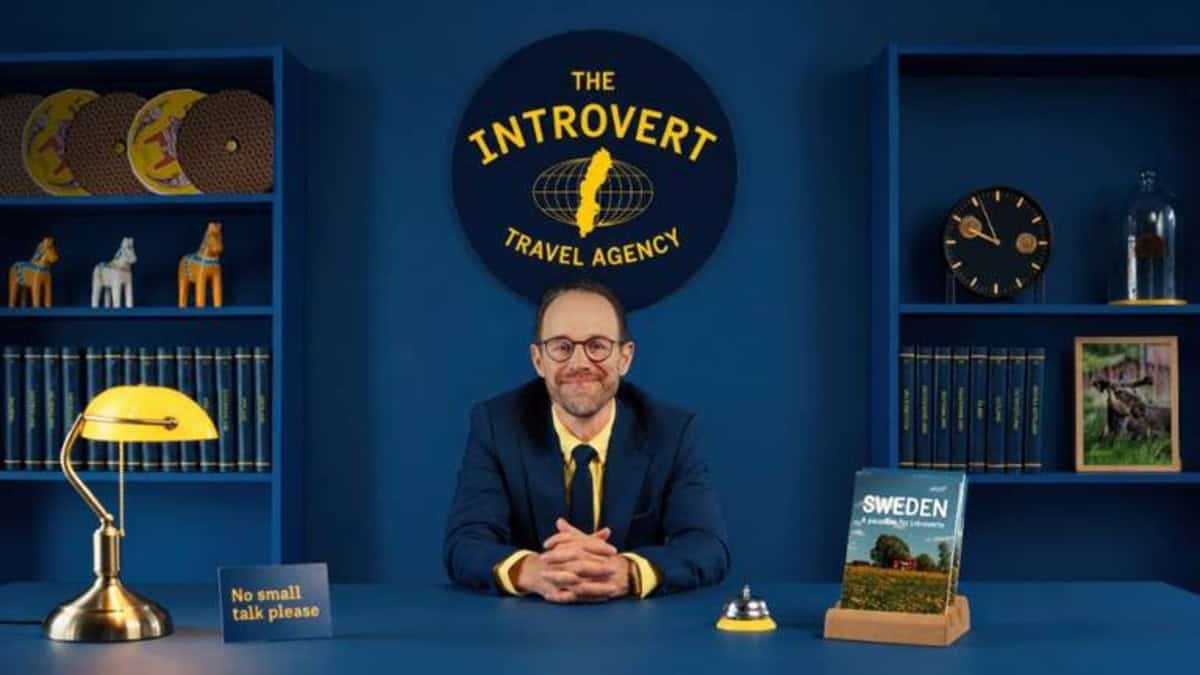
Sweden is putting peace, privacy and personal space at the centre of its latest international tourism push. Visit Sweden launched The Introvert Travel Agency on 29 September 2026, offering personalised Sweden holiday inspiration for travellers who want fewer crowds, less forced social interaction and greater freedom over how they spend their time. The digital initiative will be supported by physical pop-ups in Berlin, Paris and London during October 2026, as Sweden seeks to turn its vast natural spaces, relaxed travel environment and freedom to explore independently into a distinctive reason for international visitors to choose the country.
The campaign moves beyond conventional tourism marketing built around famous attractions, packed itineraries and intensive sightseeing. Instead, Sweden is focusing on a different commodity: space. Travellers are being invited to experience the country at their own pace, choosing when to interact, when to explore and when simply to disconnect. For the international travel industry, the campaign highlights a wider movement towards psychographic tourism segmentation, where destinations target travellers according to personality, preferred pace and emotional needs rather than relying only on age, nationality or spending power.
Advertisement
Advertisement
Sweden Turns Personal Space Into a Powerful Tourism Product
The central idea behind The Introvert Travel Agency is simple. Not every traveller wants a holiday filled with group tours, crowded attractions, communal activities and constant conversation. Visit Sweden is consequently marketing qualities already embedded in the Swedish visitor experience rather than creating an entirely new tourism product. The tourism board identifies accessible nature, wide-open environments, personal space and the ability to explore independently among the characteristics that can appeal to travellers looking for calm and recovery. Sweden’s campaign presents quieter travel not as isolation but as giving visitors greater control over their experience.
That distinction is important for the tourism sector. Introverted travellers may still want culture, adventure and memorable experiences. The difference lies in how those experiences are delivered. Self-guided walks, secluded accommodation, independent nature trips, quieter restaurants, small-scale experiences and flexible itineraries can allow travellers to remain engaged with a destination without making continuous social interaction compulsory. Visit Sweden’s official campaign material describes the initiative as turning personal space into a travel proposition, highlighting fewer crowds, opportunities to recharge and social interaction that can be more voluntary than expected.
Advertisement
Advertisement
Three Questions Help Travellers Find Their Sweden Escape
The Introvert Travel Agency is primarily a personalised digital discovery platform rather than a conventional travel agency. Visitors access an online quiz consisting of three quick questions designed to establish the type of environment and travel experience most suitable for them. The questions explore characteristics including how travellers recharge and the type of personal space and interaction they prefer.
The system then matches users with Swedish travel inspiration. According to Visit Sweden, participants can receive six suggested travel packages together with four inspirational articles designed to help them explore different ways of experiencing the country. However, travellers cannot buy a holiday directly from Visit Sweden. The national tourism organisation does not take bookings, sell trips or process payments through The Introvert Travel Agency. Instead, selected packages are bookable through external tour operators and travel agencies.
Advertisement
Advertisement
Visit Sweden says the packages have been handpicked to present different regions, seasons and ways of experiencing Sweden. Travellers who do not find a suitable option can continue planning through their preferred travel agent or tour operator. This makes the initiative particularly significant from a B2B tourism perspective. It combines destination marketing with personalised lead generation, moving potential visitors from inspiration towards commercial travel products while keeping the actual booking relationship with independent travel suppliers.
Berlin, Paris and London Become Sweden’s Quiet Travel Shopfronts
The online campaign will move into the physical world through a three-city European pop-up programme in October.
Advertisement
Advertisement
| City | Dates | Location | Opening Hours |
|---|---|---|---|
| Berlin | 14–17 October 2026 | Prinzenstraße 84.2 | 11am–7pm |
| Paris | 21–24 October 2026 | 2 bis rue Commines | 10am–7pm |
| London | 28–31 October 2026 | 3 Paddington Street | 10am–6pm |
The temporary locations will allow visitors to discover Sweden and receive help planning trips while maintaining the campaign’s deliberately low-pressure format. Visit Sweden promotes the spaces around the concept that travellers can obtain assistance without being pushed into unnecessary conversation. The city sequence gives the campaign physical exposure across three important European outbound travel centres before the winter season. London is especially relevant because the underlying research found particularly high levels of self-identified introversion among British respondents.
New Data Shows Travellers Are Ready to Pay for Peace
The campaign is backed by research commissioned by Visit Sweden and conducted by YouGov. The official methodology covers 9,212 adults aged 18 and above across nine countries: Denmark, Finland, France, Germany, the Netherlands, Norway, Sweden, the United Kingdom and the United States. The survey was conducted between 26 June and 6 July 2026.
Several findings provide a commercial explanation for Sweden’s campaign.
- 41% of respondents identified themselves as introverted.
- The proportion rose to 48% in the UK.
- 44% of US respondents identified as introverted.
- 67% preferred destinations where social interaction could be optional rather than expected.
- 53% indicated willingness to pay more for greater peace, privacy or fewer crowds.
- Research associated with the campaign also highlights holiday fatigue, with substantial numbers of travellers in the UK and US reporting that intensive trips can leave them needing additional recovery afterwards.
The combination of these findings suggests that quietness is moving beyond a simple travel preference and becoming a potential premium tourism attribute. Visit Sweden’s corporate campaign information specifically points to more than five in ten international travellers being prepared to pay extra for greater calm, privacy and fewer crowds during a holiday. For accommodation operators, tour providers and destination managers, this could expand opportunities around private cabins, smaller groups, low-density experiences, silent wellness environments and independent itineraries.
Advertisement
Advertisement
Sweden Uses Allemansrätten to Unlock Independent Exploration
One of Sweden’s biggest natural advantages in targeting independent travellers is Allemansrätten, commonly translated as the Right of Public Access. The Swedish Environmental Protection Agency explains that the principle allows people substantial freedom to explore the country’s natural environment. Visitors can hike, pick berries, explore forests and pitch tents in appropriate places, among other outdoor activities. The system is based on shared responsibility and requires people to respect wildlife, nature, landowners and other visitors.
That framework gives travellers unusual freedom to design low-pressure outdoor experiences without always requiring organised tours. Walking through forests, exploring trails, spending time beside lakes or travelling through open countryside can therefore become independently managed experiences rather than scheduled group products.
The right applies widely, although it is not unlimited. Travellers must respect private areas near homes, cultivated land, environmental restrictions and protected wildlife zones. The Swedish Environmental Protection Agency also stresses that people should maintain appropriate distance from residences and avoid disturbing the natural environment. For Sweden’s new tourism positioning, Allemansrätten provides more than an attractive cultural story. It supplies practical infrastructure for the type of autonomous, nature-led travel that the campaign is promoting.
Quiet Tourism Could Reshape How Trips Are Designed
The initiative carries implications well beyond Sweden. Tourism has traditionally segmented consumers through broad categories such as families, couples, luxury travellers, adventure tourists, seniors and young travellers. The Introvert Travel Agency takes another approach by focusing on how travellers feel while travelling. That creates opportunities for the industry to design products around social intensity, privacy and personal autonomy.
Possible areas of development include:
- Self-guided itineraries with minimal scheduled interaction.
- Small-group or private excursions instead of large coach tours.
- Cabins and secluded accommodation close to nature.
- Flexible arrival, dining and activity arrangements.
- Low-density outdoor and wellness experiences.
- Digital tools that allow travellers to plan independently.
- Experiences where participation and socialising remain optional.
This does not mean travellers necessarily want to remain alone throughout their holiday. The commercial opportunity lies in offering choice and control. That distinction could become increasingly important as travellers look for holidays that restore energy rather than simply fill every available hour.
Advertisement
Advertisement
Sweden Bets on a Different Definition of a Successful Holiday
The Introvert Travel Agency places Sweden firmly within the growing conversation around slow travel, personalised holidays and lower-density tourism. Instead of competing purely through additional attractions, Sweden is packaging characteristics that already define much of the destination: forests, lakes, coastlines, open landscapes, accessible outdoor recreation and a cultural environment in which personal space can be comfortably maintained.
Visit Sweden’s approach also demonstrates how destination marketing can become increasingly precise. A short digital quiz identifies traveller preferences, tailored inspiration creates relevance, independent operators provide bookable products and physical activations in Berlin, Paris and London take the campaign into key international markets. For travellers, the promise is straightforward: visiting Sweden does not have to mean following a packed itinerary or continuously interacting with strangers.
With 41% of surveyed adults identifying as introverts, 67% preferring optional socialising and 53% prepared to pay more for peace, privacy or fewer crowds, quiet travel is becoming something that destinations and tourism businesses can increasingly treat as a recognisable market segment rather than a niche preference. Sweden’s latest campaign is therefore selling more than forests, lakes or Nordic landscapes. It is positioning the freedom to step away from crowds, choose when to engage and travel at an individual pace as part of the destination itself.
Advertisement
