
Togo Restores ASKY Boeing 737 MAX After Niger Airport Damage as Lomé Hub Expansion Accelerates

Published
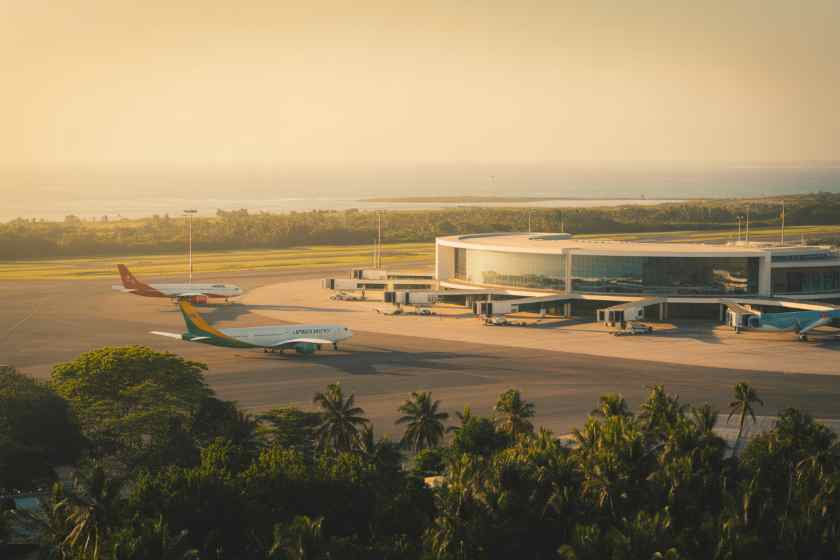
Image generated with Ai
Togo-based ASKY has restored a Boeing 737 MAX 8 damaged during a Niger airport security incident as its Lomé hub expansion accelerates across West Africa, returning important capacity to a carrier that is simultaneously building a much larger fleet. Aircraft ET-BBB returned to Lomé in September 2026 after Ethiopian MRO completed extensive structural repairs and heavy maintenance following damage sustained at Niamey International Airport in January. The recovery comes as ASKY expands its fleet to 17 aircraft and outlines plans for roughly 30 aircraft within five years, strengthening Lomé’s role as an increasingly important connecting point for West and Central African air travel.
ASKY confirms ET-BBB is back
ASKY announced on 23 September that aircraft ET-BBB had returned following months of specialist engineering work.
The Boeing 737 MAX 8 required both structural repair and heavy maintenance after being damaged during the security incident at Niamey International Airport on 29 January.
The airline said Ethiopian MRO completed the repair programme with support from Boeing, original equipment manufacturers and other technical partners.
Advertisement
Advertisement
ASKY Chief Executive Officer Esayas Hailu described the aircraft’s recovery as evidence of the airline’s operational resilience and its commitment to maintaining high safety standards.
Advertisement
Advertisement
| Key development | Verified detail |
|---|---|
| Aircraft | Boeing 737 MAX 8 |
| Registration | ET-BBB |
| Operator | ASKY |
| Original ASKY arrival | March 2025 |
| Niamey incident | 29 January 2026 |
| Repair organisation | Ethiopian MRO |
| Return announced | 23 September 2026 |
| ASKY fleet in 2026 | 17 aircraft |
| Longer-term fleet ambition | Around 30 aircraft |
Aircraft was damaged at Niamey airport
The story began during the night of 28–29 January.
ASKY officially confirmed at the time that a security incident had occurred around Niamey International Airport in Niger.
Two ASKY aircraft parked at the airport overnight sustained what the carrier initially described as minor damage.
Advertisement
Advertisement
Importantly, the airline said no ASKY passengers or crew were present at the airport when the incident occurred.
ASKY’s wider scheduled network continued operating, although services involving Niamey were affected and passengers were offered alternative arrangements.
Advertisement
Advertisement
Subsequent assessment of ET-BBB resulted in a much more extensive technical recovery programme than the initial description might have suggested.
The aircraft eventually required significant structural work before it could return.
Ethiopian MRO undertook the repair programme
Repairing structural damage on a modern commercial aircraft is a specialised process.
ASKY said ET-BBB underwent extensive heavy maintenance and structural repairs carried out by Ethiopian MRO, the maintenance, repair and overhaul division of Ethiopian Airlines Group.
The airline said the programme required engineering precision and compliance with applicable aviation maintenance and safety standards.
Advertisement
Advertisement
ASKY also acknowledged Boeing and other technical partners involved in the aircraft’s recovery.
This relationship is important because ASKY and Ethiopian Airlines are closely connected commercially.
Ethiopian Airlines describes Lomé and ASKY as part of its wider African multi-hub strategy, alongside airline partnerships and hubs in Malawi, Zambia and the Democratic Republic of the Congo.
ET-BBB was almost new when the incident happened
The loss of ET-BBB from normal operations was particularly significant because it was one of ASKY’s newest aircraft.
ASKY introduced the aircraft at Lomé on 18 March 2025.
Advertisement
Advertisement
It was configured with eight Business Class seats and 177 Economy Class seats, giving it capacity for 185 passengers.
The aircraft entered the fleet as part of ASKY’s programme to modernise and rejuvenate its operations.
It replaced an older Boeing 737-700 that had spent about 15 years in ASKY service.
The MAX had therefore been with the airline for less than a year when the Niamey incident temporarily removed it from service.
Returning one aircraft matters to a relatively small fleet
The return of a single aircraft may appear modest when compared with the fleets of global airline groups.
Advertisement
Advertisement
For a smaller regional carrier, however, each aircraft represents a meaningful share of available capacity.
A missing aircraft can reduce operational flexibility when another jet requires scheduled maintenance or encounters an unexpected technical issue.
Returning ET-BBB therefore gives ASKY another aircraft with which to manage its network.
For passengers and travel companies, fleet availability can influence:
- flight frequency;
- seat capacity;
- schedule resilience;
- recovery following disruptions;
- connecting opportunities;
- availability during high-demand periods.
It does not guarantee that fares will fall or that individual routes will receive additional frequencies. Those outcomes depend on demand, schedules and the airline’s commercial decisions.
Advertisement
Advertisement
ASKY has expanded to 17 aircraft
The repaired aircraft is returning during a much larger fleet expansion.
ASKY received two additional Boeing 737 MAX 8 aircraft in July 2026, registered ET-BCJ and ET-BCK.
The first arrived in Lomé on 5 July and the second followed on 16 July.
Those additions took the fleet to 17 aircraft, including eight Boeing 737 MAX 8s and nine Boeing 737-800s according to recent industry reporting.
The expansion builds on earlier growth.
Advertisement
Advertisement
In November 2025, ASKY officially announced the arrival of ET-BBD, which became its sixth Boeing 737 MAX 8 and increased the fleet at that time to 15 aircraft.
The pace of additions shows that ASKY is moving steadily away from its earlier smaller-fleet structure.
Bigger plans are emerging for Lomé
ASKY’s ambition goes considerably further than 17 aircraft.
Chief Executive Esayas Hailu said during Aviation Africa 2026 in Nairobi that the airline is targeting a fleet of around 30 aircraft and 40 destinations within five years.
The carrier expects another aircraft in January 2027, followed by a further addition in February.
Advertisement
Advertisement
ASKY is also preparing for intercontinental growth.
These plans could substantially strengthen the importance of Gnassingbé Eyadéma International Airport in Lomé as a connecting hub.
The model is strategically important because West and Central Africa contain many city pairs where nonstop services remain limited.
A hub allows passengers from different origins to be consolidated onto connecting flights.
ASKY already links a wide African network
Recent industry fleet and network information puts ASKY at around 30 destinations.
Advertisement
Advertisement
Its schedules link Lomé with cities across West, Central and other parts of Africa.
During the 2026 northern summer schedule, for example, the airline increased Lomé–Abidjan services from seven to nine flights weekly while maintaining a mixture of direct and connecting regional routes.
ASKY also deployed the Boeing 737 MAX 8 on sectors including Lomé–Bamako and services involving Conakry and Nouakchott.
That illustrates why MAX availability is important to the carrier.
These aircraft are not simply fleet assets. They form part of the infrastructure supporting ASKY’s regional network.
Advertisement
Advertisement
Ethiopian sees Lomé as part of its African multi-hub strategy
ASKY’s development also fits into Ethiopian Airlines Group’s wider strategy.
Ethiopian officially identifies Lomé with ASKY as one of the hubs in its pan-African multi-hub model.
The group also works through airline partnerships in Lilongwe with Malawi Airlines, Lusaka with Zambia Airways and Kinshasa with Air Congo.
The strategy allows Ethiopian’s wider network to connect with regional traffic flows beyond Addis Ababa.
For Lomé, that gives ASKY’s expansion significance beyond Togo’s domestic aviation market.
Advertisement
Advertisement
A stronger connecting operation can make the airport useful for passengers whose journeys neither begin nor end in Togo.
Training and maintenance are becoming part of the growth story
ASKY’s longer-term strategy is also beginning to include aviation infrastructure.
The airline has outlined plans for a major maintenance, repair and overhaul facility in Lomé as its fleet expands.
Developing more technical capability locally could become strategically important.
African airlines frequently depend on maintenance and training infrastructure located outside their home markets. That can add cost and complexity, particularly during periods of rapid fleet growth.
Advertisement
Advertisement
Local technical capacity can support aircraft availability while developing specialised aviation employment.
The return of ET-BBB itself demonstrates the importance of MRO capability. Without the engineering infrastructure available through Ethiopian MRO and other technical partners, returning a structurally damaged aircraft to operation would have been considerably more complicated.
Niamey incident keeps security in focus
The aircraft’s recovery also carries a less comfortable message for African aviation.
Airport and geopolitical security remain important considerations for airlines operating across parts of the Sahel.
The January incident demonstrated that aircraft can be exposed even while parked overnight.
Advertisement
Advertisement
For airlines, decisions about where aircraft remain overnight involve operational efficiency as well as security considerations.
For passengers, however, it is important not to exaggerate the direct risk from this particular incident.
ASKY specifically stated that there were no passengers or crew at the airport when its aircraft were damaged, and its broader network continued operating.
What the return means for travel agencies
For travel sellers, the most useful development is restored operational capacity.
ASKY’s Lomé network can provide connections between African cities that might otherwise require more complicated routings.
Advertisement
Advertisement
As the fleet expands, agencies should watch for concrete schedule developments rather than assuming every additional aircraft will automatically produce a new destination.
Useful indicators include:
- new routes from Lomé;
- increases in existing frequencies;
- improved connection times;
- additional same-day regional combinations;
- schedule reliability;
- new codeshare and interline opportunities.
For corporate travel in sectors such as energy, mining, finance, development and government, frequency and connection quality can be particularly important.
Fleet size is only one measure of success
ASKY’s growth is substantial, but aircraft numbers alone will not determine whether the strategy succeeds.
Passengers experience an airline through punctuality, schedule consistency, connection handling, baggage delivery and disruption management.
Advertisement
Advertisement
Those measures become even more important at a hub.
A missed connection can undermine the advantage of a convenient regional routing, while reliable onward flights can make a hub attractive even when competing itineraries are available.
The commercial test for ASKY will therefore be how effectively it converts additional aircraft into dependable connectivity.
Conclusion: Togo restores ASKY Boeing 737 MAX after Niger airport damage as Lomé hub expansion accelerates
Togo’s restoration of an ASKY Boeing 737 MAX after Niger airport damage comes as the Lomé hub expansion accelerates, making the return of ET-BBB more significant than the recovery of one aircraft alone.
The Boeing 737 MAX 8 joined ASKY in March 2025, was damaged while parked at Niamey International Airport during the January 2026 security incident and subsequently underwent months of structural repairs and heavy maintenance at Ethiopian MRO.
Advertisement
Advertisement
Its return restores valuable capacity just as ASKY pursues a much bigger strategy. The carrier reached 17 aircraft following additional MAX deliveries in 2026 and is now targeting around 30 aircraft and 40 destinations within five years.
For West African travellers and travel businesses, the important measure will be what happens next. If the larger fleet produces stronger frequencies, reliable schedules and better connections through Lomé, ASKY can strengthen its role in solving one of African aviation’s longstanding problems: travelling efficiently between African cities.
The safe recovery of ET-BBB therefore represents an encouraging operational milestone. But as Togo restores the ASKY Boeing 737 MAX following the Niger airport damage and Lomé hub expansion accelerates, the airline’s schedule performance and network reliability will ultimately determine how much that fleet growth benefits passengers and the wider African travel trade.
Advertisement
