
Beyond Mega Ships, Asia Eco Cruises Unlock Extraordinary Marine Sanctuaries Across Indonesia, Malaysia and Vietnam as Responsible Voyages Become Travel’s New Gold Standard – A Definitive Guide for Eco-Conscious Explorers

Published
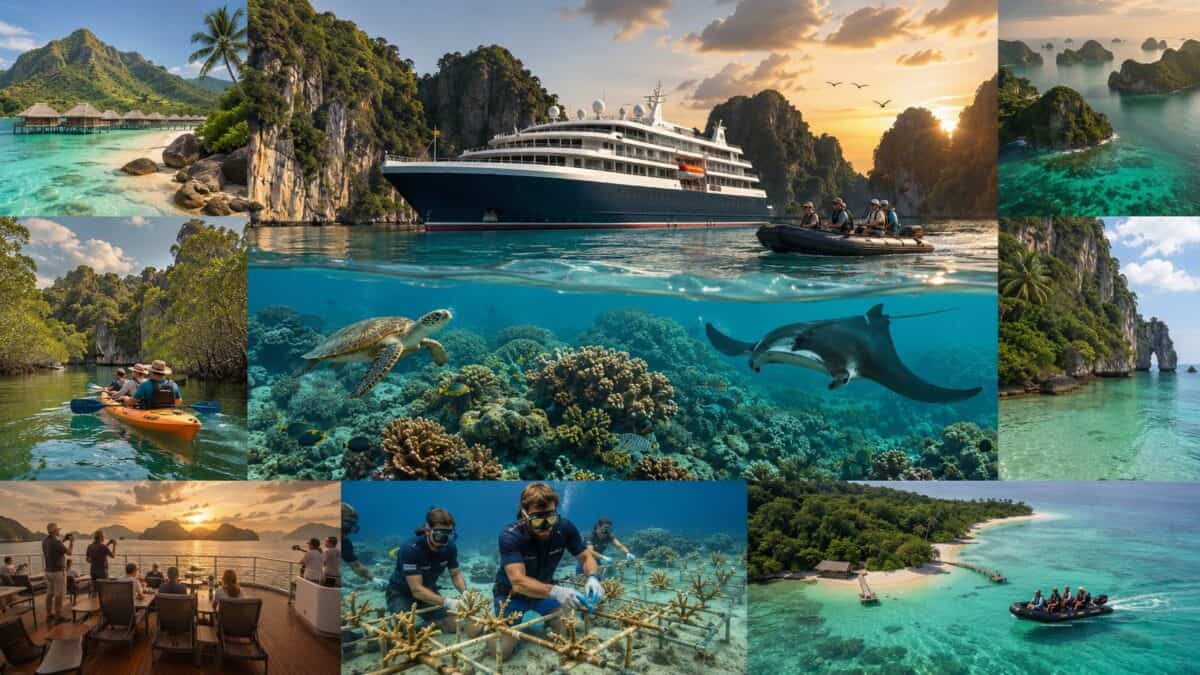
The next chapter of Asia’s cruise industry is no longer being written by bigger vessels or longer itineraries. Instead, it is being shaped by smaller expedition ships, conservation-first sailing routes, biodiversity-rich coastlines and environmentally conscious travel experiences that are steadily redefining the region’s maritime tourism economy. Across Southeast Asia and East Asia, destinations renowned for coral reefs, mangrove forests, marine sanctuaries and remote archipelagos are increasingly attracting travellers seeking meaningful voyages rather than conventional cruise holidays. As governments strengthen marine protection policies and cruise operators invest in cleaner technologies, Asia eco cruises are emerging as one of the fastest-evolving segments within regional tourism.
This transformation is unfolding alongside the continued recovery of the global cruise market. According to Cruise Lines International Association (CLIA), Asia generated approximately 2.6 million cruise passengers in 2024, representing a 13% year-on-year increase, while Southeast Asia alone recorded US$5.6 billion in cruise-linked expenditure, generating an overall economic impact of US$10 billion, contributing US$4.5 billion to regional GDP and supporting nearly 529,000 jobs. Simultaneously, organisations including UN Tourism continue encouraging destinations to adopt sustainability benchmarking, biodiversity conservation and destination management frameworks that balance economic growth with marine ecosystem protection. Rather than competing on passenger volume alone, many Asian destinations are increasingly positioning themselves as high-value, low-impact cruise destinations capable of delivering authentic environmental experiences with measurable conservation benefits.
Advertisement
Advertisement
Asia’s Blue Economy Is Steering Cruise Tourism Towards a New Course
For decades, Asia’s cruise market largely revolved around major gateway ports such as Singapore, Hong Kong, Yokohama and Shanghai. While these hubs remain strategically important, the industry’s newest momentum is increasingly concentrated around nature-based expedition cruising that prioritises ecological integrity over mass visitation.
Industry analysts attribute this shift to multiple structural factors. Travellers are becoming more environmentally aware, governments are investing in marine protected areas, luxury operators are introducing smaller vessels capable of accessing sensitive coastal environments, and cruise companies are embedding sustainability into itinerary planning, waste management and shore excursions. These developments are aligning with broader international efforts to reduce maritime emissions while strengthening coastal resilience. UN Tourism has also developed benchmarking methodologies to help Southeast Asian destinations evaluate sustainable cruise development through measurable environmental and socio-economic indicators.
Advertisement
Advertisement
Asia Eco Cruises at a Glance
| Indicator | Latest Position |
|---|---|
| Cruise passengers generated by Asia (2024) | 2.6 million |
| Annual passenger growth | 13% |
| Southeast Asia cruise-linked spending | US$5.6 billion |
| Total economic impact in Southeast Asia | US$10 billion |
| GDP contribution | US$4.5 billion |
| Employment supported | 529,000 jobs |
| Strategic growth drivers | Expedition cruising, conservation tourism, cleaner vessels, community partnerships |
Source: Cruise Lines International Association (CLIA).
Why Eco Voyages Are Becoming Asia’s Fastest-Evolving Maritime Experience
Unlike traditional cruising, eco cruises focus on destination stewardship rather than destination consumption. Passenger numbers are deliberately limited on many itineraries, allowing operators to minimise environmental pressure while offering richer encounters with biodiversity, indigenous communities and protected landscapes.
Advertisement
Advertisement
Modern eco-cruise programmes increasingly incorporate marine biology lectures, citizen science initiatives, reef monitoring, wildlife observation, local cultural exchanges and responsible kayaking or snorkelling excursions. Several operators have also introduced advanced wastewater treatment systems, reduced single-use plastics, shore-power compatibility where infrastructure permits and itinerary optimisation technologies designed to reduce fuel consumption.
This transition is becoming commercially significant as well. Global cruise demand continues to expand, with the wider cruise sector expected to approach 40 million annual passengers before the end of the decade, prompting destinations to differentiate themselves through sustainability rather than scale. For many Asian coastal economies, eco-cruising represents an opportunity to generate higher visitor spending while reducing pressure on fragile ecosystems.
Advertisement
Advertisement
Where Biodiversity Becomes the Itinerary: Raja Ampat Sets the Benchmark for Asia Eco Cruises
Hidden within Indonesia’s remote Southwest Papua province, Raja Ampat has become the defining symbol of Asia’s conservation-led expedition cruising, where marine biodiversity—not entertainment—forms the centrepiece of every voyage. Rather than accommodating mega cruise liners, the archipelago has cultivated a carefully managed ecosystem of small expedition vessels, liveaboard research cruises and low-capacity eco-yachts that navigate through limestone karsts, protected lagoons and coral-rich channels with minimal ecological disturbance.
The destination occupies a unique position within the Coral Triangle, often described by marine scientists as the world’s richest marine biodiversity region. UNESCO’s Raja Ampat Biosphere Reserve encompasses approximately 610 islands, only 34 of which are inhabited, while covering 13.38 million hectares, including more than 12.56 million hectares of marine ecosystems. The reserve contains over 75% of the world’s known coral species, more than 1,320 coral reef fish species, extensive mangrove forests, seagrass meadows and critical nesting habitats for five endangered sea turtle species. Around 60% of its coral reefs remain in good to excellent condition, making the region one of the healthiest reef systems globally.
Unlike traditional cruise destinations where ships dominate the landscape, Raja Ampat’s visitor economy revolves around marine stewardship. Local Indigenous communities continue practising the traditional Sasi conservation system, which temporarily closes fishing grounds to allow marine resources to regenerate before controlled harvesting resumes. This centuries-old ecological governance model has become an integral component of sustainable tourism and is increasingly highlighted during eco-cruise itineraries alongside reef conservation and cultural interpretation.
Many expedition operators now collaborate with community-owned homestays, certified dive guides and marine conservation programmes, ensuring tourism revenue circulates within coastal villages while supporting reef monitoring and environmental education. Visitors are encouraged to follow strict marine etiquette, including reef-safe snorkelling, controlled anchoring practices and adherence to marine park regulations administered jointly by local authorities and conservation organisations.
Advertisement
Advertisement
Raja Ampat at a Glance
| Eco-Cruise Indicator | Key Information |
|---|---|
| UNESCO designation | Biosphere Reserve (2025); UNESCO Global Geopark (2023) |
| Islands | Approximately 610 |
| Inhabited islands | 34 |
| Total protected area | 13.38 million hectares |
| Marine protected area | 12.56 million hectares |
| Known coral species | More than 75% of global total |
| Coral reef fish | 1,320+ species |
| Signature experiences | Expedition cruising, diving, snorkelling, kayaking, Indigenous cultural encounters |
Although tourism continues to generate conservation funding, Raja Ampat also illustrates why sustainable management remains essential. Authorities are increasingly assessing vessel capacity, mooring infrastructure and waste management systems as international visitation grows, reinforcing the principle that future cruise expansion must remain compatible with ecosystem resilience rather than passenger volume.
Palawan’s Island Passages Showcase How Expedition Cruising Can Strengthen Coastal Conservation
Across the Sulu Sea, the Philippine province of Palawan has evolved into another flagship destination where Asia eco cruises intersect with biodiversity conservation, Indigenous heritage and responsible coastal tourism. Often referred to as the country’s “last ecological frontier”, Palawan offers expedition itineraries that prioritise protected marine landscapes over conventional port-centric cruising.
Recognised by UNESCO as a Biosphere Reserve since 1990, Palawan encompasses more than 1,700 islands and covers approximately 1.44 million hectares. The province contains one of Southeast Asia’s most diverse ecological networks, supporting 379 coral species, 31 mangrove species, 13 seagrass species and approximately 44,500 hectares of mangrove forests—the largest remaining mangrove cover in the Philippines. The reserve also shelters dugongs, whale sharks, marine turtles and numerous endemic terrestrial species found nowhere else on Earth.
Eco-cruise itineraries typically focus on destinations such as Coron, El Nido, Linapacan and the surrounding island clusters, where smaller expedition vessels can safely navigate shallow lagoons, limestone coves and protected marine sanctuaries inaccessible to larger cruise ships. Instead of high-volume shore excursions, visitors increasingly participate in guided mangrove exploration, reef interpretation, community-based fisheries visits, birdwatching and marine wildlife observation, reflecting the province’s emphasis on environmental education alongside leisure travel.
Palawan’s conservation framework also distinguishes it from many coastal destinations. Approximately 105 nationally threatened species occur within the biosphere reserve, including 67 Philippine endemics, while 42 species are unique to Palawan itself. These extraordinary biodiversity figures have encouraged tourism planners to promote lower-impact visitor experiences that distribute economic benefits across local communities rather than concentrating them in heavily developed resort areas.
Cruise operators increasingly integrate sustainability protocols into their Palawan itineraries through reduced onboard plastics, responsible anchoring practices, locally sourced cuisine and partnerships with community tourism enterprises. These measures complement broader efforts by Philippine authorities to preserve fragile coastal ecosystems while maintaining tourism’s contribution to local livelihoods.
Advertisement
Advertisement
Palawan Eco-Cruise Profile
| Sustainability Indicator | Details |
|---|---|
| UNESCO recognition | Biosphere Reserve (1990) |
| Islands | More than 1,700 |
| Protected area | 1.44 million hectares |
| Coral species | 379 |
| Mangrove species | 31 |
| Mangrove coverage | 44,500 hectares |
| Threatened species | 105 |
| Endemic Philippine species | 67 |
| Species unique to Palawan | 42 |
| Signature cruise experiences | Limestone lagoons, reef snorkelling, mangrove exploration, community tourism, wildlife observation |
For travellers, Palawan demonstrates how expedition cruising can extend well beyond scenic coastlines. Every carefully managed landing contributes to a broader narrative of biodiversity protection, Indigenous cultural preservation and marine ecosystem resilience—an approach increasingly defining the future trajectory of Asia eco cruises.
Japan’s Seto Inland Sea Demonstrates That Slow Cruising Can Deliver Greater Environmental Value
While many eco-cruise destinations are defined by tropical reefs, Japan’s Seto Inland Sea has carved out a distinctive identity by blending maritime heritage, island culture, protected coastal ecosystems and low-impact navigation. Stretching between the islands of Honshu, Shikoku and Kyushu, the inland sea represents one of Asia’s finest examples of how tourism, conservation and local communities can coexist through carefully managed marine travel.
At the heart of this network lies Setonaikai National Park, Japan’s oldest national park, established in 1934. Today, it extends across more than 900,000 hectares of land and sea, spanning 11 prefectures and incorporating over 9,000 square kilometres of protected landscapes and coastal waters. The region is characterised by approximately 1,000 islands, historic fishing settlements, tidal channels, sheltered bays and internationally recognised cultural landscapes that have evolved alongside the sea for centuries.
Unlike conventional cruise tourism centred on large ports, eco-voyages through the Seto Inland Sea embrace “slow navigation”, encouraging travellers to spend more time ashore while reducing environmental pressure on individual destinations. Small coastal cruise ships, sailing yachts and expedition vessels connect islands such as Naoshima, Teshima, Miyajima, Shodoshima and Tomonoura, allowing visitors to experience contemporary art, traditional fishing communities, cycling routes, local gastronomy and coastal biodiversity within a single itinerary.
Japan’s National Parks programme increasingly promotes responsible marine tourism, encouraging visitors to travel by sailboat, kayak and bicycle while supporting island businesses, conservation activities and local food producers. Eco-friendly sailing excursions powered primarily by wind energy have become a notable attraction, demonstrating how low-emission marine experiences can enhance rather than compromise the visitor experience.
The destination also illustrates that sustainability extends beyond biodiversity. Coastal communities have successfully integrated tourism with oyster aquaculture, citrus farming, traditional fisheries and internationally acclaimed cultural festivals, creating a diversified visitor economy that distributes tourism income across multiple islands instead of concentrating activity within a handful of urban gateways.
Advertisement
Advertisement
Seto Inland Sea Eco-Cruise Snapshot
| Sustainability Indicator | Details |
|---|---|
| National Park designation | 1934 |
| Protected area | Over 900,000 hectares |
| Land and sea coverage | More than 9,000 sq km |
| Prefectures connected | 11 |
| Islands | Approximately 1,000 |
| Signature experiences | Island-hopping expeditions, sailing, cycling, kayaking, cultural heritage, oyster gastronomy, art tourism |
| Sustainability strengths | Small-ship cruising, community tourism, renewable-powered sailing, protected coastal landscapes |
For cruise operators, the Seto Inland Sea demonstrates that destination quality increasingly outweighs passenger capacity. Its carefully balanced model has become an important reference point for Asian coastal regions seeking to develop premium maritime tourism while preserving fragile marine environments for future generations.
Sabah’s Marine Sanctuaries Position Malaysian Borneo at the Forefront of Community-Based Expedition Cruising
On the northern coast of Borneo, Sabah is quietly emerging as one of Southeast Asia’s most compelling eco-cruise destinations by combining globally significant marine biodiversity with community-led conservation and carefully regulated protected areas. Rather than focusing on mass-market cruise terminals, Sabah’s marine tourism strategy increasingly revolves around expedition cruising, wildlife observation and conservation partnerships that protect some of the Coral Triangle’s richest ecosystems.
Central to this transformation is Tun Mustapha Park, formally gazetted in 2016 and recognised as Malaysia’s largest multi-use marine protected area. Covering 898,762.76 hectares, the park safeguards an extraordinary mosaic of coral reefs, mangrove forests, seagrass meadows and coastal habitats stretching across the districts of Kudat, Kota Marudu and Pitas. The protected area supports at least 715 fish species, 82 coral species, 130 seaweed species, 20 shark species, dugongs, dolphins, whale sharks and endangered marine turtles, making it one of the region’s most biologically diverse marine landscapes.
Eco-cruise itineraries typically explore the waters surrounding Tun Mustapha Park, Sipadan Island Park, Tun Sakaran Marine Park and Turtle Islands Park, where visitor management prioritises ecological integrity over high passenger volumes. Activities include guided snorkelling, marine wildlife interpretation, traditional fishing village visits, mangrove exploration and coral conservation programmes led in collaboration with local communities and Sabah Parks.
An equally important aspect of Sabah’s approach is its emphasis on multi-use zoning, allowing conservation, sustainable fisheries, community livelihoods and tourism to coexist within clearly defined management areas. Preservation zones protect sensitive habitats, while community-use and sustainable fishing zones ensure marine resources continue supporting coastal populations alongside tourism development.
Recent conservation milestones further reinforce Sabah’s credentials. Tun Mustapha Park has entered the assessment process for the IUCN Green List, one of the world’s highest standards for protected area management, while also strengthening its role within the Coral Triangle Marine Protected Area System. These initiatives signal growing international recognition of Sabah’s marine governance and long-term conservation planning.
Advertisement
Advertisement
Visitor demand continues to reflect this momentum. Tun Sakaran Marine Park welcomed more than 100,000 visitors in 2024, highlighting the growing appeal of Sabah’s nature-based marine tourism while underscoring the importance of maintaining strict carrying-capacity management.
Sabah Eco-Cruise Profile
| Sustainability Indicator | Details |
|---|---|
| Flagship marine reserve | Tun Mustapha Park |
| Protected marine area | 898,762.76 hectares |
| Fish species | 715 |
| Coral species | 82 |
| Shark species | 20 |
| Protected marine mammals | Dugongs, dolphins, whale sharks |
| Visitor highlights | Expedition cruising, diving, snorkelling, turtle conservation, island communities |
| Conservation model | Multi-use marine zoning, community partnerships, biodiversity protection |
Sabah’s evolution illustrates how Asia eco cruises are increasingly measured by conservation outcomes rather than vessel size. By integrating marine science, Indigenous coastal livelihoods and carefully managed visitor experiences, Malaysian Borneo is establishing itself as one of the region’s most credible blue-tourism destinations, offering a blueprint for sustainable expedition cruising across the wider Indo-Pacific.
Vietnam’s Lan Ha Bay Is Emerging as the Region’s Low-Impact Alternative to Overtourism
While Ha Long Bay remains one of Asia’s most recognised cruise destinations, neighbouring Lan Ha Bay is increasingly attracting expedition operators seeking quieter waters, lower visitor density and stronger sustainability credentials. Situated around Cat Ba Island, Lan Ha Bay forms part of the UNESCO-listed Ha Long Bay–Cat Ba Archipelago, a globally significant marine karst landscape comprising 1,133 limestone islands and islets across 65,650 hectares. The World Heritage property is protected through strict regulations governing cruise operations, waste management and environmental conservation.
Unlike large sightseeing vessels operating in busier sections of Ha Long Bay, eco-cruises in Lan Ha Bay generally rely on small luxury ships and expedition vessels. These itineraries emphasise kayaking through hidden lagoons, cycling across Cat Ba Island, cave exploration and visits to floating fishing communities while limiting environmental disturbance. Cruise operators increasingly schedule overnight anchorage in less congested areas to reduce pressure on heavily visited locations.
The adjoining Cat Ba Biosphere Reserve, recognised by UNESCO in 2004 and successfully revalidated in 2025, spans 26,419 hectares, including 10,002 hectares of marine ecosystems and 16,417 hectares of terrestrial habitats. Mangrove forests, coral reefs, limestone forests and wetlands support rare wildlife, including the Critically Endangered Cat Ba langur, one of the world’s rarest primates. These ecological assets have encouraged authorities to position Lan Ha Bay as a destination where biodiversity conservation is integrated into tourism planning rather than treated as an afterthought.
Lan Ha Bay Eco-Cruise Profile
| Sustainability Indicator | Details |
|---|---|
| UNESCO World Heritage property | Ha Long Bay–Cat Ba Archipelago |
| Total protected area | 65,650 hectares |
| Islands and islets | 1,133 |
| Cat Ba Biosphere Reserve | 26,419 hectares |
| Marine component | 10,002 hectares |
| Signature experiences | Kayaking, cave exploration, floating villages, cycling, wildlife observation |
| Sustainability strengths | Small-ship cruising, regulated anchorage, protected marine ecosystems |
The Maldives Is Reinventing Luxury Cruising Through Marine Conservation
The Maldives has long been synonymous with luxury tourism, yet its growing eco-cruise sector demonstrates that premium travel and environmental stewardship can progress together. Rather than concentrating solely on resort islands, expedition cruises increasingly explore marine protected areas, UNESCO Biosphere Reserves and coral restoration zones, giving travellers direct exposure to one of the Indian Ocean’s richest ecosystems.
Advertisement
Advertisement
The flagship destination is Baa Atoll UNESCO Biosphere Reserve, designated in 2011. Covering 144,024 hectares, including nearly 143,000 hectares of marine habitats, the reserve supports around 250 coral species, approximately 1,200 reef and reef-associated fish species, manta rays, whale sharks, green turtles and hawksbill turtles. Within the reserve, Hanifaru Bay Marine Protected Area has become internationally recognised for seasonal aggregations of reef manta rays and whale sharks, with visitor access controlled through permits and strict conservation guidelines.
Sustainability has become increasingly central to Maldivian tourism policy. The country now protects 93 marine and terrestrial protected areas covering more than 66,000 hectares, while cruise operators are adopting reef-safe excursion practices, advanced wastewater management and partnerships with marine research organisations. Tourism also remains the backbone of the national economy, with the Maldives recording 2.25 million international tourist arrivals in 2025, reflecting continued demand for nature-based luxury experiences.
Maldives Eco-Cruise Profile
| Sustainability Indicator | Details |
|---|---|
| UNESCO Biosphere Reserve | Baa Atoll |
| Biosphere Reserve area | 144,024 hectares |
| Coral species | Around 250 |
| Reef fish species | Approximately 1,200 |
| Protected areas nationwide | 93 |
| International arrivals (2025) | 2.25 million |
| Signature experiences | Manta ray encounters, whale shark expeditions, coral restoration, marine research cruises |
Thailand’s Andaman Coast Is Elevating Expedition Cruising Beyond Beach Tourism
Thailand’s Andaman coastline is steadily reshaping its maritime tourism identity by expanding beyond traditional island-hopping towards conservation-oriented expedition cruising. National parks such as Mu Ko Similan, Mu Ko Surin, Ao Phang Nga and Mu Ko Tarutao have become focal points for low-impact cruise itineraries that combine marine biodiversity with carefully managed visitor access.
Many protected islands operate under seasonal closures, limiting tourism during ecological recovery periods and reducing pressure on coral reefs during the southwest monsoon. Cruise operators increasingly align itineraries with these conservation calendars while incorporating reef interpretation, marine wildlife observation, sea kayaking and community-based tourism into their programmes.
The Andaman Sea forms part of the wider Coral Triangle influence zone, supporting extensive coral reefs, seagrass meadows, whale sharks, reef sharks, dolphins and endangered sea turtles. Rather than maximising passenger numbers, eco-cruise operators are increasingly marketing smaller-group voyages that prioritise environmental education, certified dive practices and partnerships with marine conservation organisations.
Thailand’s Andaman Eco-Cruise Snapshot
| Sustainability Indicator | Details |
|---|---|
| Flagship protected areas | Similan, Surin, Tarutao and Ao Phang Nga National Parks |
| Primary eco-cruise activities | Snorkelling, diving, kayaking, wildlife observation |
| Conservation measures | Seasonal island closures, visitor limits, reef protection |
| Key marine wildlife | Whale sharks, dolphins, sea turtles, reef fish |
| Emerging tourism trend | Small-vessel expedition cruising with conservation-led shore excursions |
Thailand’s evolving approach reflects a broader regional transition. Increasingly, success is being measured not by the number of ships entering coastal waters but by ecosystem resilience, visitor quality and long-term marine conservation, reinforcing the growing appeal of Asia eco cruises among environmentally conscious travellers.
Advertisement
Advertisement
Cleaner Fleets and Smarter Ports Are Reshaping Asia Eco Cruises
The transformation of Asia eco cruises is extending beyond destinations to the vessels themselves. Cruise operators are accelerating investments in hybrid propulsion systems, LNG-powered expedition ships, battery-assisted navigation, advanced wastewater treatment technology and shore-power compatibility to reduce emissions while operating in environmentally sensitive waters. Although expedition vessels account for only a small share of the global cruise fleet, they are increasingly becoming testing grounds for maritime decarbonisation technologies.
The industry’s transition is also being supported by ports across Asia that are upgrading waste reception facilities, introducing digital vessel traffic management systems and exploring shore-side electricity infrastructure. These improvements are expected to reduce emissions while ships are berthed and strengthen compliance with international environmental regulations established by the International Maritime Organization (IMO). As governments continue investing in greener maritime infrastructure, expedition cruising is likely to benefit from shorter turnaround times and improved environmental performance.
How Asia’s Sustainable Cruise Economy Is Creating New Opportunities
Rather than competing solely on passenger numbers, many Asian destinations are now measuring success through visitor spending, conservation funding and community participation. Eco-cruise travellers typically stay longer, spend more on locally operated experiences and generate greater economic value for coastal communities than conventional day visitors. This shift is encouraging tourism authorities to develop premium, lower-volume visitor models that reduce pressure on fragile marine ecosystems while increasing economic returns.
The wider cruise economy continues to deliver significant regional benefits. According to Cruise Lines International Association, Southeast Asia generates US$10 billion in annual economic impact, contributes US$4.5 billion to regional GDP and supports approximately 529,000 jobs, demonstrating that responsible cruise tourism can remain a major economic driver when aligned with sustainable destination management.
Asia’s Eco-Cruise Transformation at a Glance
| Key Area | Current Trend | Traveller Benefit |
|---|---|---|
| Cruise vessels | Hybrid, LNG and low-emission technologies | Reduced environmental footprint |
| Port infrastructure | Shore power, improved waste management, digital operations | Cleaner ports and smoother embarkation |
| Marine conservation | Expansion of protected areas and biodiversity monitoring | Healthier reefs and richer wildlife experiences |
| Community tourism | Greater involvement of local operators and Indigenous communities | More authentic cultural experiences |
| Cruise experiences | Small-ship expeditions replacing high-volume itineraries | Less crowded destinations and personalised journeys |
What Travellers Should Know Before Booking an Eco-Cruise
Choosing a genuine eco-cruise requires more than selecting a destination. Travellers should look for operators that demonstrate measurable sustainability commitments, including recognised environmental certifications, responsible wildlife viewing practices, advanced waste management systems and partnerships with local conservation organisations. Smaller expedition vessels generally offer greater flexibility to access remote locations while minimising environmental disturbance.
Visitors should also respect local regulations governing marine protected areas, avoid touching coral reefs or marine wildlife, use reef-safe sunscreen where recommended and support locally owned businesses during shore excursions. These simple choices contribute directly to preserving the ecosystems that make Asia’s coastal destinations internationally renowned.
Advertisement
Advertisement
Asia Eco Cruises Are Entering a New Era of Responsible Marine Exploration
The evolution of Asia eco cruises reflects a broader transformation within global tourism, where environmental stewardship is becoming a competitive advantage rather than a regulatory obligation. Across the region, governments, cruise operators and coastal communities are increasingly recognising that long-term tourism growth depends on healthy oceans, resilient ecosystems and meaningful visitor experiences.
As investment flows into cleaner ships, protected marine landscapes and community-centred tourism, Asia is steadily positioning itself as one of the world’s most dynamic regions for sustainable maritime travel. For travellers, the appeal extends well beyond spectacular coastlines. Today’s eco-cruises offer the opportunity to experience some of the planet’s most remarkable marine environments while contributing to their long-term protection, ensuring that the region’s coral reefs, island communities and coastal biodiversity remain as much a part of tomorrow’s voyages as they are today.
Advertisement
