
Shakira Madrid Residency Draws 600,000 Fans as Spain Prepares for a Month of Music Tourism

Published
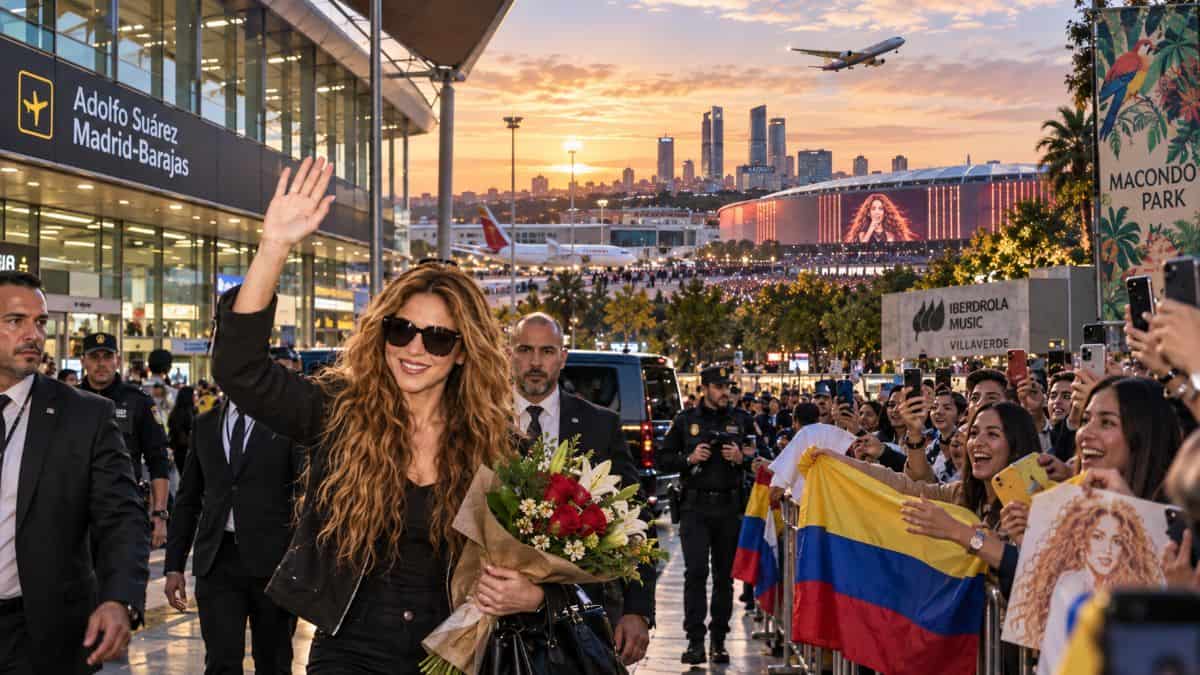
Madrid has become the centre of a major international music and tourism event as Shakira’s 12-concert residency continues at the purpose-built Shakira Stadium in Villaverde. The Colombian superstar arrived in the Spanish capital on 14 September, receiving a lively welcome from fans at Adolfo Suárez Madrid-Barajas Airport. Her concerts run across four weekends from 18 September to 11 October 2026. More than 600,000 attendances are expected across the residency, while Madrid has introduced special transport measures for concert nights. The wider Macondo Park experience also extends the event beyond music, creating a temporary cultural destination around the stadium. The scale is already positioning Madrid as a powerful case study in music-led urban tourism.
Madrid Braces for a New Tourism Wave
The arrival of Shakira has transformed a conventional concert series into a major travel event. Her return to Spain comes eight years after the El Dorado World Tour brought her to the country in 2018. Tourism Madrid describes the new venue as a temporary stadium designed specifically for this residency, with capacity exceeding 50,000 spectators per night.
The scale becomes clearer when the individual dates are considered. Madrid authorities estimate around 57,000 people per concert day, creating an extraordinary concentration of visitors around Villaverde. Across 12 dates, that planning figure represents as many as 684,000 attendances if every date reaches the stated daily level. That figure represents attendances rather than unique visitors, so it should not be treated as 684,000 individual travellers.
The residency is also extending beyond the stadium itself. Macondo Park has turned the wider Iberdrola Music site into a temporary cultural environment, with activities linked to Latin music, literature, art, food and entertainment. Recent reporting describes the site as covering around 220,000 square metres, although earlier descriptions gave smaller figures. The precise footprint has therefore varied by how the event area is defined.
Advertisement
Advertisement
For Madrid, this creates an unusual tourism proposition. Travellers can combine a global concert with dining, cultural experiences and city sightseeing. Consequently, the event has the potential to extend visitor spending beyond tickets and accommodation.
Twelve Dates Create Repeated Travel Demand
Unlike a single stadium concert, the Madrid programme spreads demand across almost one month. The schedule covers four consecutive weekends, giving international visitors multiple opportunities to build longer city breaks around the performances.
Advertisement
Advertisement
| Concert Date | Day | Travel Planning Relevance |
|---|---|---|
| 18 September | Friday | Opening weekend demand |
| 19 September | Saturday | Major weekend crowd |
| 20 September | Sunday | Weekend travel demand |
| 25 September | Friday | Second concert weekend |
| 26 September | Saturday | High leisure demand |
| 27 September | Sunday | Return travel pressure |
| 2 October | Friday | October event demand |
| 3 October | Saturday | Peak weekend pressure |
| 4 October | Sunday | Weekend departure demand |
| 9 October | Friday | Final weekend begins |
| 10 October | Saturday | Major closing-weekend demand |
| 11 October | Sunday | Final concert and departures |
The structure matters for travel businesses. A single sold-out concert can produce a short-lived demand spike, but repeated weekends create several booking windows. Hotels, restaurants, transport operators and attractions can therefore experience successive waves of demand rather than one isolated peak.
Recent event reporting also indicates that around 19% of the expected audience could come from international visitors. If that proportion applies across more than 600,000 attendances, the international component could represent well over 100,000 visitor attendances.
That creates a meaningful opportunity for Madrid’s visitor economy. International concertgoers often combine event travel with accommodation, food, shopping and sightseeing. The wider effect can therefore extend into neighbourhoods well beyond the immediate concert district.
Macondo Park Expands the Visitor Experience
The most distinctive element is the decision to build a temporary cultural environment around the concerts. Macondo Park takes its name from the fictional Colombian town created by Gabriel García Márquez in One Hundred Years of Solitude.
The concept gives the residency a stronger destination identity. Rather than arriving shortly before a concert and leaving afterwards, visitors can spend several hours within the event environment.
Recent reporting describes multiple thematic spaces covering areas such as music, fashion, gastronomy, literature, art and children’s culture. The park operates around the concert schedule and can accommodate tens of thousands of people during event days.
Advertisement
Advertisement
This approach reflects a broader shift in the global live-events industry. Major artists increasingly build experiences around concerts rather than selling performance tickets alone. For tourism planners, that distinction matters because experiences can encourage visitors to arrive earlier and remain longer.
The cultural framing also gives Madrid an additional international marketing dimension. Shakira’s Colombian identity becomes part of the visitor experience, connecting Latin American culture with a European capital.
For international travellers, that can make the event feel closer to a temporary cultural festival. The result is a hybrid tourism product combining entertainment, gastronomy, cultural programming and destination travel.
Madrid’s Transport System Faces Peak Pressure
The strongest immediate challenge is mobility. Madrid estimates that approximately 57,000 people may attend each concert day, creating substantial pedestrian and road pressure around Iberdrola Music in Villaverde. The city has therefore prepared a dedicated mobility plan covering public transport, pedestrian routes, road restrictions and late-night services.
Authorities are encouraging visitors to use public transport rather than private vehicles. Metro services on Lines 3 and 12 receive reinforcement after concerts between midnight and 1.30am.
Cercanías also provides access through Villaverde Alto and San Cristóbal Industrial stations. Several intercity and municipal bus services serve the surrounding area, although some routes can face diversions because of event-related road restrictions.
Advertisement
Advertisement
A particularly important measure for visitors is the special electric-bus shuttle. It operates from Gran Vía de Villaverde towards Atocha, with a stop at Legazpi. The service runs from 11pm until 2am, with intervals of approximately 7.5 to 15 minutes. Journey times are expected to range from about 14 to 35 minutes.
| Transport Option | Key Details | Traveller Consideration |
|---|---|---|
| Metro Line 3 | Villaverde Alto | Reinforced after concerts |
| Metro Line 12 | Los Espartales | Reinforced after concerts |
| Cercanías | Villaverde Alto and San Cristóbal Industrial | Useful for regional connections |
| Special EMT Shuttle | Villaverde to Legazpi and Atocha | Runs 11pm–2am |
| Taxi | Dedicated waiting area | Road access may be controlled |
| Private Car | Traffic restrictions possible | Not recommended by authorities |
The practical lesson is straightforward. Visitors staying in central Madrid should plan the return journey before entering the venue. Relying on a private vehicle can create additional complications when pedestrian and traffic controls are active.
Travellers should also allow extra time for walking between transport stations and venue entrances. Madrid’s official plan specifies different pedestrian routes depending on the transport mode and venue access point.
Barajas Becomes Part of the Story
The impact begins before visitors reach Villaverde. Many international concertgoers will enter Madrid through Adolfo Suárez Madrid-Barajas Airport, one of Europe’s major aviation gateways.
The airport handled 68.18 million passengers in 2025, according to Aena, representing a 3% increase over 2024. It was Spain’s busiest airport that year and also recorded 430,616 aircraft movements.
The latest available 2026 data show continued momentum. Madrid-Barajas processed 6.54 million passengers in August 2026, up 4.8% year on year. International commercial passengers reached nearly 5 million during the month, underlining the airport’s importance for overseas event traffic.
Advertisement
Advertisement
| Madrid-Barajas Indicator | Latest Published Figure |
|---|---|
| 2025 annual passengers | 68.18 million |
| 2025 annual growth | 3.0% |
| 2025 aircraft movements | 430,616 |
| August 2026 passengers | 6.54 million |
| August 2026 annual growth | 4.8% |
| August 2026 international commercial passengers | 4.97 million |
This provides important context for travel planners. The airport is already operating at a substantial scale, so Shakira’s residency is adding event-driven demand to an established international gateway rather than creating traffic from a low-volume base.
For overseas visitors, Madrid’s airport connectivity also makes short-break travel particularly practical. Travellers can arrive for one concert weekend, spend additional days exploring the capital and depart without needing to travel across Spain.
Hotels Stand to Capture Extended Stays
Music tourism can influence accommodation differently from ordinary sightseeing. A concert date creates a fixed travel purpose, while the surrounding city determines how long visitors remain.
Spain’s national tourism data show that hotel demand was already substantial before the residency. In September 2025, Spanish hotels recorded more than 39.4 million overnight stays, up 1.2% year on year. The national Hotel Price Index increased 5.5%, while the average revenue per occupied room reached €131.40.
Madrid’s accommodation market therefore enters the residency from a strong tourism base. The event adds another demand source during a month that already attracts substantial city-break and business travel.
The non-hotel sector also matters. Spain recorded more than 14.4 million overnight stays in non-hotel tourist accommodation in September 2025, representing 4.1% annual growth. The Comunidad de Madrid recorded the country’s highest occupancy rate among these accommodation types, at 57.9% of available bed places.
Advertisement
Advertisement
For travellers, the message is practical. Accommodation near the venue is not the only option. Central Madrid can remain viable because the city’s extensive public transport network connects the capital with Villaverde.
However, travellers attending weekend concerts should compare accommodation prices across several districts. Staying closer to the venue can reduce post-concert travel, while central accommodation may provide easier access to museums, restaurants and other attractions.
Music Tourism Meets Madrid’s Wider Economy
The residency illustrates how entertainment can become a tourism infrastructure driver. A visitor who travels specifically for a concert can generate expenditure across several categories.
Accommodation receives the most obvious benefit. Yet transport, restaurants, retail, attractions and airport services can also participate in the visitor journey.
Spain’s international tourism spending data provide useful context. International visitors spent €13.36 billion in September 2025, up 6% from the previous year. Average spending per visitor reached €1,380, while average daily expenditure stood at €204.
These national figures cannot be attributed directly to Shakira’s residency. They do, however, demonstrate the scale of spending already generated by international tourism in Spain.
Advertisement
Advertisement
The residency also supports Madrid’s position as a destination capable of hosting major cultural events. Its significance lies not simply in the number of tickets sold, but in the way an event can create a temporary tourism ecosystem.
Eight Years After Her Last Spanish Shows
The Madrid dates carry additional significance because they represent Shakira’s return to Spain after the 2018 El Dorado World Tour. Tourism Madrid identifies the current residency as her return to the country after an eight-year gap.
That interval gives the event a strong destination narrative. Visitors are not simply travelling to see another date on a global tour. They are travelling to a concentrated European residency built around a specially constructed venue.
This differs from a conventional touring model. Standard stadium tours move between cities, while a residency concentrates performances in one destination.
For Madrid, concentration creates both advantages and pressure. Visitors can stay longer and explore the city, while authorities can prepare transport measures around known dates. At the same time, each concert produces a substantial local mobility surge.
The model may prove particularly relevant to cities seeking to strengthen shoulder-season tourism. September and October can benefit from major events that provide a clear reason for international travellers to visit.
Advertisement
Advertisement
What Travellers Should Know Before Going
Visitors should treat the concert as a full-day travel experience rather than a standalone evening. Macondo Park opens around midday, while transport measures become particularly important after the performance.
The official mobility plan recommends public transport and provides detailed access routes from Metro and Cercanías stations. Travellers should check the latest information before every concert because road controls and service arrangements can change according to operational requirements.
International visitors should also build additional time into airport transfers. Madrid-Barajas is a large and busy international gateway, while concert weekends can create concentrated passenger movements.
The central point is planning. Visitors who coordinate accommodation, airport transfers, public transport and concert access in advance can reduce unnecessary friction during the busiest hours.
For travellers combining the concert with sightseeing, Madrid offers another advantage. The residency is spread across four weekends, allowing visitors to choose dates that fit longer itineraries rather than compressing the entire trip around one night.
Madrid’s Temporary City Has Wider Lessons
The biggest tourism story may extend beyond Shakira herself. The residency demonstrates how a music event can become a temporary destination with its own cultural identity, transport plan and visitor economy.
Advertisement
Advertisement
Macondo Park adds another layer by linking Colombian cultural references with Madrid’s international visitor proposition. The event therefore operates simultaneously as entertainment, destination marketing and urban tourism infrastructure.
Madrid’s existing tourism strength makes the experiment particularly significant. The capital already possesses a major airport, extensive public transport and a large accommodation market. The residency adds a concentrated cultural demand shock to that established system.
Its longer-term relevance will depend on how much spending remains in the city, how visitors distribute themselves across neighbourhoods and whether international audiences return for future events.
For travel businesses, however, the immediate lesson is already visible. Large-scale music tourism can generate demand far beyond the venue, particularly when performances are distributed across several weekends.
The Residency Keeps Madrid Moving
Shakira’s arrival has turned Madrid into one of Europe’s most prominent music-tourism destinations this autumn. The 12-date programme brings together a purpose-built stadium, a temporary cultural city and a transport operation designed for tens of thousands of people each night.
The event also arrives as Madrid’s aviation and accommodation sectors continue operating at substantial levels. Madrid-Barajas handled 6.54 million passengers in August 2026, while national hotel demand remained strong in the comparable September period.
For travellers, the residency offers more than a concert. It provides a reason to build a city break around music, culture, gastronomy and Madrid’s wider attractions. For the tourism industry, meanwhile, it offers a clear example of how a global artist can temporarily reshape visitor flows without changing the underlying destination infrastructure. The real test will be how effectively Madrid converts this extraordinary burst of demand into lasting international visibility.
Advertisement
