
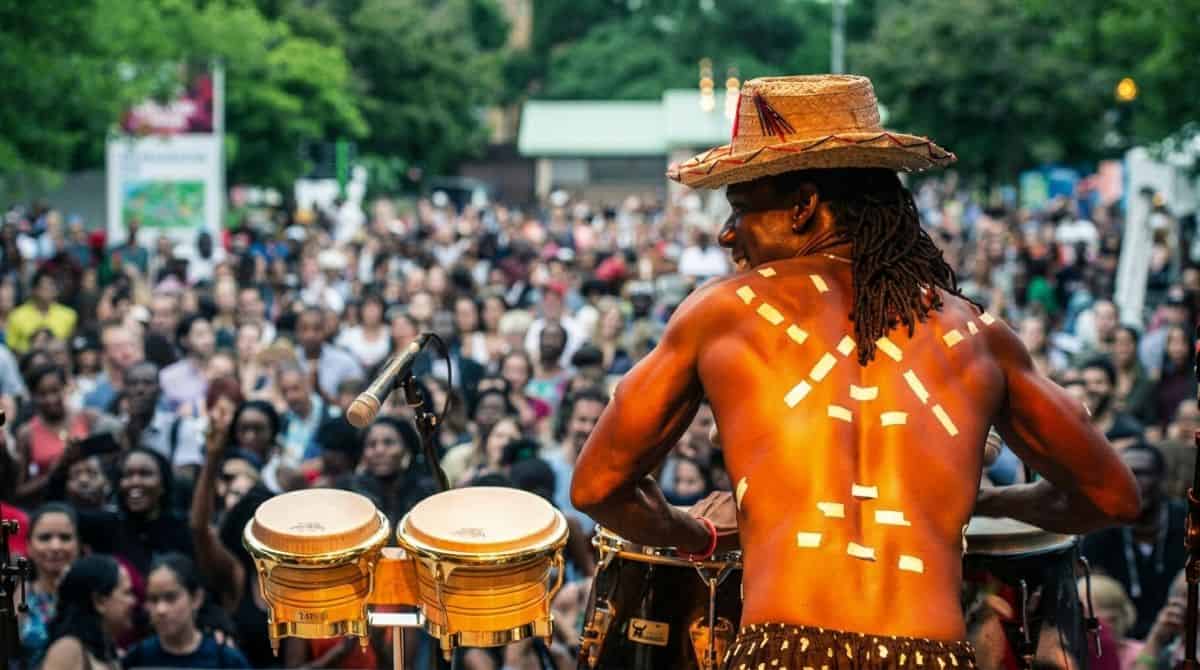
Canada’s support for the AfroMonde Festival 2026 is strengthening Montréal’s position as a major summer cultural destination. Running from 6 to 9 August at Clock Tower Pier in the Old Port, the free four-day festival is expected to attract more than 80,000 visitors, with around 40 artists and more than 160 volunteers involved. The Government of Canada is providing CAD 10,000 through Canadian Heritage, supporting an event that brings music, food, dance, fashion, visual arts and Afro-descendant culture into one of Montréal’s busiest visitor districts.
AfroMonde combines large-scale attendance with free public access, giving travellers an easy way to add a major cultural event to a Montréal summer itinerary.
Advertisement
| Key detail | Verified information |
|---|---|
| Dates | 6–9 August 2026 |
| Location | Clock Tower Pier, Old Port of Montréal |
| Expected visitors | More than 80,000 |
| Federal funding | CAD 10,000 |
| Artists | Around 40 |
| Volunteers | More than 160 |
| Admission | Free |
| Main experiences | Music, food, dance, art, fashion, workshops and family activities |
The attendance figure refers to festival visitors, not necessarily tourists arriving from outside Montréal. Official sources do not currently divide the projected audience between local residents, domestic visitors and international travellers.
That distinction is important because it keeps the tourism impact in perspective while still showing the considerable scale of the event.
Advertisement
Advertisement
The federal contribution comes through Canadian Heritage’s Multiculturalism and Anti-Racism Program, meaning the funding is primarily designed to support cultural participation and intercultural understanding rather than conventional destination marketing.
AfroMonde creates a public platform for Afro-descendant performers, artists, entrepreneurs and creators while allowing wider audiences to experience their work.
Canadian Heritage also makes an important economic connection: the festival contributes to Montréal’s local economy.
That makes AfroMonde particularly relevant to cultural tourism. The public funding supports the cultural experience, while the surrounding visitor economy can benefit from people eating, travelling, shopping and spending time in the Old Port.
Advertisement
Advertisement
The distinction matters. CAD 10,000 is the confirmed federal contribution, not the festival’s entire operating budget, and there is no official figure showing the total economic impact of the 2026 event.
An expected audience above 80,000 gives AfroMonde notable weight within Montréal’s crowded summer festival calendar.
Its location amplifies that significance.
The Old Port of Montréal says the waterfront precinct attracts an average of approximately 6.3 million visitors annually, including around 4.5 million during summer. AfroMonde therefore takes place inside an existing tourism corridor where travellers are already exploring heritage attractions, restaurants, waterfront spaces and entertainment.
Statistics Canada recorded approximately 9.248 million visits to the Montréal tourism region in 2024, illustrating the scale of the destination’s wider visitor market.
These figures should not be combined with AfroMonde attendance, but they reveal something important: the festival does not need to create an entirely new tourism flow to generate value. It can also capture travellers who are already in Montréal and give them another reason to remain in the Old Port longer.
That is one of AfroMonde’s strongest tourism advantages.
Free entry is perhaps the festival’s most effective visitor feature.
Travellers do not need to purchase an expensive event ticket or redesign an entire holiday around AfroMonde. They can visit while exploring Old Montréal, spend a few hours at Clock Tower Pier and continue through the surrounding waterfront district.
That flexibility makes the festival particularly suitable for:
The economic effect can extend beyond admission itself. A traveller who pays nothing to enter can still buy food, visit nearby attractions, use public transport or spend at restaurants and shops.
Canadian Heritage confirms the festival’s contribution to the local economy, although no official estimate has yet quantified its hotel, restaurant or tourism spending impact.
AfroMonde is not simply a concert series.
Its programme blends several experiences under one festival identity, including:
Official visitor information also identifies more than 50 kiosks, giving attendees opportunities to explore food, products and community businesses.
This variety is important from a tourism perspective. Different visitors can engage with the festival in different ways. One person may arrive for music, another for food, another with children, while others may discover AfroMonde simply by walking through the Old Port.
That diversity gives the festival stronger staying power than an event built around a single headline performance.
Clock Tower Pier places AfroMonde beside the St Lawrence River and within walking distance of Old Montréal.
The Old Port extends for roughly 2.5 kilometres, creating a concentrated leisure zone where culture, history, restaurants and waterfront attractions sit close together.
For visitors, this means AfroMonde can become part of a wider day rather than an isolated destination.
A traveller might explore Old Montréal in the morning, spend the afternoon at the festival, dine nearby and remain in the waterfront district into the evening.
That ability to connect several experiences within one walkable area is particularly valuable in urban tourism, where visitors increasingly look for convenience and variety rather than spending long periods travelling between attractions.
AfroMonde encourages visitors to use public transport, cycling or walking because there is no parking directly on the festival grounds.
Square-Victoria–OACI metro station is approximately a ten-minute walk away, while BIXI bicycle facilities and cycling routes provide additional options.
The site is described as accessible for people with reduced mobility and includes adapted toilets, first-aid facilities and family-oriented services.
Festival hours are also generous:Day Opening hours Thursday, 6 August 17:00–00:00 Friday, 7 August 11:00–00:00 Saturday, 8 August 11:00–00:00 Sunday, 9 August 11:00–20:00
These long opening periods give visitors flexibility to combine daytime sightseeing with afternoon or evening festival experiences.
There is one inconsistency across otherwise credible sources.
Canadian Heritage describes the 2026 event as the 21st edition, while Tourisme Montréal and the Old Port identify it as the 18th edition.
Until that discrepancy is formally clarified, the safest editorial approach is to avoid presenting either edition number as definitive.
The principal facts remain consistent across official sources: the festival runs from 6 to 9 August, takes place at Clock Tower Pier, is free to attend, expects more than 80,000 visitors, involves around 40 artists and more than 160 volunteers, and has received CAD 10,000 in federal support.
AfroMonde’s strength comes from the combination of scale, accessibility and location.
More than 80,000 expected visitors give the event reach. Free admission reduces barriers. Its Old Port setting connects the festival directly with one of Montréal’s strongest tourism districts. And its mixture of food, music, fashion, art and family experiences gives visitors several reasons to stay.
The wider lesson is equally important. Cultural tourism does not depend only on museums, monuments or expensive ticketed attractions. Festivals such as AfroMonde can turn public spaces into temporary cultural destinations while encouraging visitors to explore the businesses and neighbourhoods around them.
In conclusion, Canada’s CAD 10,000 contribution is modest when viewed against the festival’s projected audience, but that is precisely what makes the story interesting. The federal funding is one part of a much larger cultural ecosystem. AfroMonde’s real tourism value comes from converting Montréal’s summer footfall into deeper cultural engagement while giving travellers a vivid experience of the communities that help shape the city.
Image Credit – Old Port of Montreal
Advertisement
Advertisement
Advertisement













Friday, September 4, 2026

Friday, September 4, 2026

Friday, September 4, 2026

Thursday, September 3, 2026

Wednesday, September 2, 2026

Friday, September 4, 2026

Friday, September 4, 2026