

Suva and More Cities Turn Pacific Festivals Into Artisan Goldmines, Boosting Local Trade Tourism Across Oceania

Published
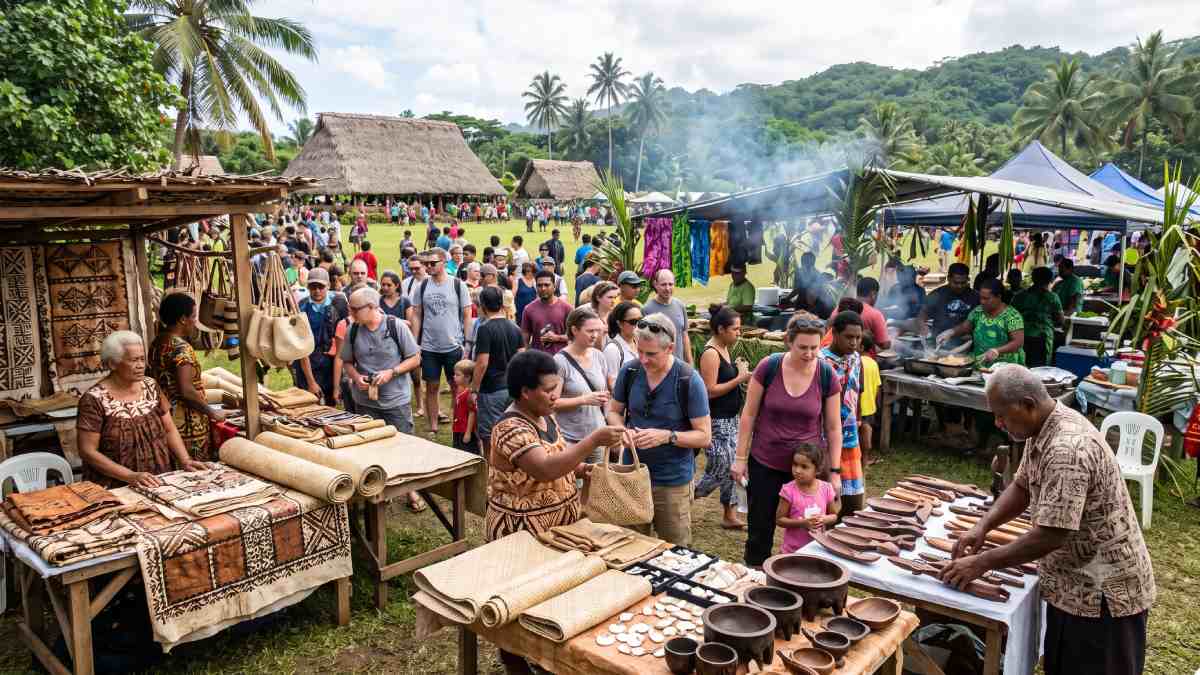
Through effective throughput management, slow-moving inventories are disposed of through micro-sellers, debts owed to suppliers of raw materials are repaid, and sizable amounts of disposable cash are built up due to increased throughput. A substantial amount of the yearly cash income of an artisan group can be attributed to the main financial bonanza created during these short periods of trading. The festival, therefore, is not only seen as a seasonal carnival but as an essential stabilizer for the family, education fees, and capital formation in Oceania.
High-Volume Cultural Gatherings and Micro-Merchant Revenue Dynamics
The commercial scale of cultural event surges is evidenced across Oceania’s premier festival hubs. How temporary micro-economies function on the ground is demonstrated through an examination of the operational realities of flagship gatherings across Fiji, Samoa, Papua New Guinea, and the New Zealand diaspora.
Visitor Influx and Regional Hospitality Saturation
These localized micro-economies are primarily catalyzed by the sudden arrival of travellers by whom host city hospitality infrastructure is completely absorbed. Commercial hotel, motel, and guesthouse occupancy rates are driven to near-complete saturation in administrative and regional centres such as Suva, Apia, and Goroka during festival periods. When capacity is reached by formal accommodation, visitor demand is absorbed by suburban homestays, church halls, and village residential billets.
Immediate positive spillovers throughout secondary urban service industries are generated by this high visitor density:
Advertisement
Advertisement
- Urban and Rural Transport Networks: Capacity operation is maintained by Public Motor Vehicles (PMVs) in Papua New Guinea, licensed route taxis and mini-buses in Fiji, and private transport vans in Samoa, with rural visitors and performers being transported between suburban lodgings and central festival grounds.
- Informal Food Concessions: Heavy daytime and evening trade is captured by street food vendors, family-run barbecue stalls, and pop-up refreshment stands, from which rapid cash transactions are generated and circulated directly to urban agricultural produce suppliers.
- Ancillary Retail Services: Elevated turnover from festival attendees and official delegations is experienced by local telecom kiosks selling pre-paid mobile data cards, traditional costume suppliers, fabric merchants, and local retail outlets.
Annual Sales Windows
The commercial significance of festival week is acknowledged as profound for indigenous craft cooperatives. It has been confirmed through surveys of Pacific craft guilds that a major share of total annual sales is routinely secured by traditional producers within these multi-day trading windows. Prolonged periods of sluggish domestic demand during the rainy season and non-holiday periods are frequently endured by indigenous artisans producing labour-intensive items, including hand-woven masi or bark cloth, carved timber tanoa (kava) bowls, mother-of-pearl ornaments, and Polynesian black pearl jewellery.
A unique environment where high purchasing power and cultural affinity are possessed by buyers is created by the festival market. Purchases are made directly by international tourists seeking genuine cultural artefacts alongside diaspora islanders seeking ceremonial regalia for weddings, funerals, and community celebrations. Unprecedented sales volumes are generated by the convergence of these distinct customer groups, whereby accumulated stock is liquidated by rural craftspeople and the working capital required for family obligations and upcoming raw material procurements is secured.
Advertisement
Advertisement
Regional Flagship Surges: Suva, Apia, Goroka, and Auckland
The diversity and economic impact of regional festival commerce are illustrated across four major urban cultural events in the Pacific:
- Suva, Fiji (The Vodafone Hibiscus Festival): Staged initially in the mid-twentieth century, one of the longest-running urban community festivals in the South Pacific is represented by the Vodafone Hibiscus Festival in Fiji’s capital of Suva. Hosted traditionally across public spaces like Albert Park and the Suva Civic Foreshore, civic pageantry, youth talent showcases, and retail commerce are blended. Substantial economic activity, vendor receipts, concession fees, and urban business turnover are generated across its multi-day run. The festival perimeter is lined by dozens of temporary food stalls, traditional craft booths, and amusement operations. Food hygiene standards are enforced, accurate pricing disclosures are verified, and the issuance of receipts is ensured through joint market surveillance operations conducted by the Consumer Council of Fiji, under the leadership of Chief Executive Seema Shandil, alongside the Suva City Council Health Unit.
- Apia, Samoa (The Teuila Festival): Established under the direction of the Samoa Tourism Authority (STA), the Apia Waterfront is transformed into a showcase of Polynesian performance, arts, and competitive sports by the annual Teuila Festival. National siva afi (fire-knife dance) championships, outrigger canoe regattas, and choral exhibitions are featured, establishing the festival as Samoa’s primary cultural tourism event. Extensive economic impact and extended tourist stays are reflected in findings from the Samoa International Visitor Survey. Commercial activity is concentrated along the harbour foreshore through the Waterfront Markets and the Samoa Tourism Cultural Village, organized in partnership with the Samoa Hotel Association. Authentic siapo (bark cloth), intricate woodcarvings, woven pandanus mats, and traditional elei print garments are sold by micro-vendors. A vital sales platform is also provided for social programmes, including the Prison Rehabilitation Craft Stall, where certified woodcrafts and woven items produced by inmates are sold to fund vocational training initiatives.
- Goroka, Papua New Guinea (The Goroka Show): Held annually in the Eastern Highlands Province, the oldest and largest tribal gathering in Papua New Guinea is represented by the Goroka Show. Over a hundred distinct cultural groups and tribes from across the Highlands and coastal provinces are drawn together, attracting hundreds of international cultural tourists and thousands of domestic highland visitors. Official backing is received from the national government, including direct sponsorship from the Papua New Guinea Tourism Promotion Authority (PNGTPA) under Chief Executive Jerry, alongside cultural development grants from the National Cultural Commission (NCC). An active marketplace for highland craftspeople is created by this institutional support. The informal trade in hand-looped bilum weaving, traditional clay masks produced by the Asaro Mudmen, and ceremonial Highland timber carvings forms the commercial centrepiece. Direct consumer access is provided to female weavers affiliated with organizations such as the PNG Bilum Export and Promotion Association (BEPA)—which unites over a thousand weavers nationwide—allowing commercial middlemen to be bypassed and the full retail value of intricate work to be captured.
- Auckland, New Zealand (The Pasifika Festival): The thriving nature of Pacific event micro-economies within a major diaspora setting is demonstrated by Auckland’s Pasifika Festival at Western Springs Lakeside Park. Delivered by Tātaki Auckland Unlimited on behalf of the Auckland Council, a premier showcase of pan-Pacific cultural identity is presented. The festival’s spatial layout is arranged into distinct cultural villages representing multiple Pacific Island nations, including Samoa, Tonga, the Cook Islands, Fiji, Niue, Tokelau, Tuvalu, Kiribati, and Aotearoa Māori. Over a hundred independent food, craft, and retail stalls are accommodated. Traditional culinary staples—such as umu, hāngī, and lovo cooking pit meals—are sold under the guidance of the Pasifika Festival Villages Charitable Trust alongside high-value cultural goods such as Cook Islands tivaevae (quilts), fine Tongan taʻovala mats, and traditional jewellery. Substantial capital is injected into diaspora community trusts, church guilds, and family enterprises, with significant portions of profits subsequently remitted back to rural artisans in the home islands.
Municipal Governance, Stall Allocation Systems, and Permit Ballots
Acute pressure is placed upon public spaces and municipal administrative capacities by the intense foot traffic generated by Pacific festivals. Because substantial daily cash sales are generated by stall spaces in high-traffic festival zones, physical space is routinely exceeded by the demand for vendor spots. To ensure trading locations are allocated fairly and market abuses are prevented, sophisticated spatial governance frameworks have been established by municipal authorities.
Advertisement
Advertisement
Preventing Monopolies Through Municipal Lotteries
If stall allocation were determined purely by unregulated market bidding, prime commercial spaces would quickly be dominated by established urban merchants, fast-food franchises, and well-capitalised import traders. Rural and outer-island craftspeople lacking substantial capital reserves or formal commercial connections would be displaced by such corporate monopolisation.
Equitable access is ensured through municipal permit lotteries and competitive ballot systems utilized by local government bodies—such as the Suva City Council in Fiji, the Apia Waterfront Development Board in Samoa, and Auckland Council in New Zealand. Applications categorised by product classification are submitted by prospective vendors, separating high-margin commercial food operators from traditional handicraft producers. Permit quotas are explicitly allocated to rural craft guilds, women’s island committees, and youth micro-enterprises. Cultural authenticity and operational readiness are vetted by Tātaki Auckland Unlimited and the Pasifika Festival Villages Charitable Trust before entry into the ballot is permitted. The democratic character of public festival spaces is preserved and access to lucrative holiday footfall by vulnerable grassroots producers is ensured through the replacement of discretionary allocations with transparent lotteries.
Pop-Up Zoning and Dedicated Heritage Villages
Because strict physical boundaries are faced by primary festival arenas, spatial overflow zones are designed by municipal event planners to accommodate excess trading demand. When vendor capacity is reached by main event fields, secondary market clusters, pop-up artisan quarters, and dedicated heritage villages are established:
- Secondary Commercial Corridors: Overflow retail in Suva is channeled from Albert Park toward the Suva Civic Foreshore and adjacent Constitution Avenue promenades, creating extended pedestrian shopping boulevards.
- Dedicated Heritage Precincts: Traditional artisans are clustered together into quiet, culturally immersive zones such as the Samoa Tourism Cultural Village in Apia. Delicate traditional craft displays are insulated from the noise, smoke, and congestion of high-volume commercial food courts through this deliberate separation.
- Tiered Fee Schedules: Tiered permit pricing is frequently established by municipal councils. Higher permit fees are paid by commercial food trucks and corporate beverage stalls, whereby discounted or waived permit costs for traditional weavers, woodcarvers, and non-profit heritage groups are effectively subsidised.
Municipal Revenue Realisation versus Infrastructure Maintenance
Trade-offs between public revenue generation and long-term civic asset protection must be navigated by municipal councils during the management of temporary micro-economies. Significant public capital investments are represented by premier municipal venues such as Albert Park in Suva. Real risks of turf damage and site degradation are created by multi-day celebrations involving heavy pedestrian traffic, pop-up infrastructure, and transport vehicles.
Advertisement
Advertisement
Direct venue hire fees were waived by the Suva City Council during the milestone Hibiscus Festival to support community celebrations and lower overheads for participating local businesses, with reliance placed upon post-festival account audits and charitable trust disbursements to handle civic contributions. Scrutiny in the national parliament was prompted by the resulting physical wear on Albert Park’s turf. It was noted by Minister for Housing and Local Government Maciu Nalumisa that unplanned burdens were placed upon municipal maintenance budgets by ground rehabilitation costs, sparking official policy discussions regarding whether mandatory environmental restoration levies should be paid by future commercial event vendors. The regulatory balancing act faced by municipal governments—extracting sufficient revenue to protect public infrastructure without informal micro-vendors being priced out—is highlighted by this debate.
Artisan Preservation: Sourcing Authentic Heritage Crafts versus Mass Imports
Intense pressure is created upon artisanal supply chains by the sudden surge in retail demand during major island festivals. Unlike machine-made commercial consumer goods, production cannot be ramped up quickly to meet short-term demand spikes for genuine Pacific material crafts. Time-consuming manual labour, specialized ecological knowledge, and seasonal raw materials are required for the production of authentic heritage items. Consequently, the struggle between protecting authentic cultural heritage and preventing the spread of cheap factory-made imports is brought into sharp focus by festival surges.
Safeguarding Material Culture Against Counterfeit Duplicates
Opportunistic traders seeking to sell cheap, mass-produced souvenir imitations are attracted by the commercial profitability of Pacific festival marketplaces. Unregulated market corridors are often infiltrated by factory-printed synthetic textiles imitating traditional Fijian masi or Samoan siapo, resin-cast woodcarvings, and plastic-woven accessories. Indigenous artisans are undermined by these mass-produced items through the undercutting of authentic price points, dilution of traditional craftsmanship, and diversion of tourism spending away from local communities.
Aggressive authenticity safeguards have been implemented by national cultural agencies and tourism boards in response. Market stalls are inspected and product provenance is verified through direct collaboration between municipal festival committees and institutions like the Fiji Arts Council and national ministries of culture. International visitors are educated on the cultural value of authentic craftsmanship through public awareness campaigns, wherein it is emphasized that rural village economies are supported and ancient material traditions are preserved when purchases are made directly from verified indigenous makers.
Statutory Certification: Fijian Crafted and Regional Provenance Marks
Quality standards have been formalized and indigenous designs protected through statutory certification programmes introduced by regional governments. The Fijian Crafted licensing system is overseen by the Ministry of Trade, Co-operatives, Micro, Small and Medium Enterprises, in coordination with the Fiji Arts Council, under the national “Buy Fijian Made” campaign.
Artisanal production methods and raw material sourcing are submitted for vetting to verify authentic local craftsmanship under this regime. Official statutory licences permitting the display of the “Fijian Crafted” emblem on products—including hand-beaten masi art, carved tanoa bowls, and traditional pottery—are awarded to certified craftspeople.
Advertisement
Advertisement
Significant commercial benefits are offered by this certification:
- Marketplace Priority: Preferential placement in municipal festival ballots and state-sponsored national craft exhibitions is granted to certified artisans.
- Pricing Integrity: Clear authenticity is provided by the official emblem, whereby fair, premium pricing is justified and artisans are protected from aggressive bargaining.
- Biosecurity Compliance: Compliance with Australian and New Zealand biosecurity regulations is achieved through artisan training conducted alongside regional bodies such as the Pacific Tourism Organisation (SPTO), ensuring purchases can be carried home by international tourists without border friction.
Rapid Inventory Depletion and the Forward-Order Economy
Because authentic handicrafts are produced through laborious processes, severe inventory depletion is commonly experienced during festival weeks. The inner bark of paper mulberry (tutuga) must be harvested, fibres beaten with wooden clubs (ike), natural dyes prepared from mangrove sap and soot, and traditional motifs applied with hand-cut stencils for a single high-quality piece of masi to be produced. Similarly, months of skilled labour are required for the completion of an intricate bilum or fine Samoan mat.
Consequently, accumulated stock is often completely sold out by popular artisans within the opening days of a major festival. Continuing foot traffic is capitalised upon by successful micro-vendors through a transition into a forward-order business model. Remaining inventory is displayed as sample stock, custom orders are recorded, cash deposits are collected, and postal or courier deliveries are scheduled for post-festival completion. Short-term event demand is converted into months of stable, predictable production through this operational adaptation, by which household income is smoothed across the remainder of the year.
The Business Growth Pipeline: From Pop-Up Stalls to Permanent Enterprises
The broader developmental value of Pacific festival micro-economies lies in their ability to serve as launchpads for lasting enterprise formalisation. While immediate financial relief is provided by short-term retail sales, the true economic impact is measured by whether informal micro-vendors are enabled by seasonal windfalls to transition into registered, year-round businesses. The facilitation of these artisan transitions is regarded as a key policy priority by economic planners across Oceania.
Reinvesting Windfalls into Working Capital and Tools
Vital equity that is rarely offered by conventional financial institutions is provided to micro-entrepreneurs by cash windfalls generated during festival surges. Severe obstacles in accessing credit are encountered by informal producers in developing island economies, as real estate collateral, audited financial histories, and formal salaries that cannot be provided by village-based artisans are required by commercial banks. Debt-free capital is supplied by festival sales, allowing working capital barriers to be overcome by entrepreneurs independently.
Rather than being utilized solely for immediate household consumption, significant portions of profits are reinvested directly back into enterprises by successful micro-merchants:
Advertisement
Advertisement
- Productive Equipment: Industrial sewing machines, modern screen-printing tables, and specialized wood-carving tools are purchased by micro-tailors and weavers to improve production speed and product quality.
- Bulk Material Procurement: Wholesale consignments of raw calico, dyes, thread, and packaging materials are bought by artisans, lowering per-unit production costs for future trading periods.
- Business Formalisation: Surplus cash is utilized by micro-vendors to cover official business registrations, secure tax compliance certificates, and open formal commercial banking accounts.
Retail Incubators and Commercial Hub Integration
Substantial overhead costs—including long-term commercial leases, interior fit-outs, utility bonds, and municipal business rates—are involved when an open-air festival stall is transitioned into a permanent retail storefront. Financial barriers can prove prohibitive when such fixed commitments are undertaken individually by an independent maker.
These barriers are lowered by innovative retail incubators and shared commercial spaces that have emerged across the region’s main tourism hubs. Artisanal goods created by local micro-makers, social enterprises, and rural craft collectives are curated and marketed by spaces like The Projects Collective along prime visitor routes in Fiji, including Narewa Road near Denarau and along the Coral Coast. Retail operations, visual merchandising, point-of-sale card payments, and online marketing are managed by these incubators, enabling goods to be sold in premium retail corridors without creators being required to leave their home communities.
A similar dynamic is observed at the upgraded Suva Flea Market through initiatives like the Pacifique Artisans Collective (PAC), wherein dedicated, affordable retail berths are provided for micro-entrepreneurs who were initially established in seasonal open-air markets.
Digital Channels and Cross-Border Diaspora E-Commerce
The final stage of business growth for Pacific micro-enterprises is marked by expansion into international e-commerce. A large diaspora market that maintains strong cultural ties to home islands is formed by millions of Pacific Islanders living abroad in metropolitan centres across New Zealand, Australia, the United States, and the United Kingdom. Local artisans are often encountered by visiting diaspora consumers for the first time during festivals.
Recurring cross-border sales are established by progressive micro-enterprises through these festival interactions. Digital storefronts are established across social media platforms, and connections are made with government trade infrastructure, such as the Fiji Trade Information Portal established by the Ministry of Trade with support from the World Bank and the Australian Government.
Seasonal festival sales are transformed into continuous cross-border exports once businesses are registered and international parcel standards are met, with authentic masi art, custom fashion, and traditional crafts being shipped directly to international buyers year-round.
Advertisement
Advertisement
Comparative Analysis: Oceania Festivals and Global Event Tourism
Parallel micro-economic dynamics are observed between Pacific island festivals and major seasonal event tourism markets globally. Common operational realities alongside distinctive regional features are revealed when Oceania’s multi-day gatherings are compared with mature international benchmarks, such as the Albuquerque International Balloon Fiesta in the United States.
| Operational Dimension | North American Context (Albuquerque Balloon Fiesta) | Oceania Regional Context (Hibiscus, Teuila, Goroka, Pasifika) |
|---|---|---|
| Primary Economic Driver | Multi-day aviation and cultural event drawing major visitor crowds | Multi-day cultural gatherings (Goroka Show, Hibiscus, Teuila, Pasifika) |
| Key Anchor Locations | Albuquerque Old Town Plaza and Balloon Fiesta Park, New Mexico | Suva (Fiji), Apia (Samoa), Goroka (PNG), Auckland (NZ) |
| Space Allocation Method | Structured municipal permit ballots and formal commercial park bids | Municipal permit lotteries, village quotas, and cultural trusts |
| Core Heritage Products | Native American turquoise jewellery, Navajo textiles, and pottery | Authentic masi, carved tanoa bowls, Highland bilum bags |
| Artisan Income Dependency | Seasonal retail surge supplementing established year-round gallery sales | Essential annual income spike accounting for the majority of artisan earnings |
| Authenticity Regulations | US Indian Arts and Crafts Act; strict municipal market licensing | Statutory marks (“Fijian Crafted”) and SPTO biosecurity guidelines |
| Enterprise Evolution | Temporary market stalls progressing to permanent brick-and-mortar leases | Village workshops scaling into shared incubators and diaspora export |
| Civic Asset Impacts | Dedicated hotel occupancy taxes directly funding park maintenance | Public grounds wear debated against maintaining affordable vendor access |
Structural Parallels with North American Event Shocks
Intense, short-term demand shocks that temporarily overwhelm normal urban infrastructure are experienced in both Albuquerque and Pacific island centres. Local accommodation occupancies are driven to near capacity by visitor influx, and fierce competition for prime trading locations is generated.
To prevent commercial real estate monopolies, structured permit lotteries are relied upon by municipal authorities in both settings to distribute premium market stalls equitably among vendors. Furthermore, the challenge of counterfeit cultural merchandise is confronted in both environments: authentic Native American silver and turquoise work in New Mexico faces competition from overseas factory replicas, just as imported machine-made souvenirs must be contended with by Pacific woodcarvers and masi makers.
Institutional Divergences in Formalisation and Financing
Substantial differences exist in the underlying financial and administrative systems:
- Financial Infrastructure: Micro-vendors in North American event ecosystems are situated within formal banking networks, where digital payment processing, merchant bank facilities, and short-term commercial credit are utilized to finance pre-event inventory. In Oceania, heavy reliance is placed upon cash transactions, with micro-merchants depending on communal savings, personal loans, and family networks to fund festival stock.
- Social Safety Net Function: Festival trading is often conducted as a supplemental commercial venture for small businesses in developed economies. In the Pacific islands, essential community needs—including school tuition, healthcare expenses, church tithes, and village infrastructure projects—are funded directly by festival profits.
- Institutional Buffering: While formal revenue is captured by North American cities through hotel taxes and corporate venue fees to fund site restoration, civic maintenance costs must be carefully balanced by Pacific municipalities against the risk of informal vendors being priced out through excessive fees. Consequently, regulatory measures like municipal lotteries and authentic craft certification are recognized not merely as administrative rules, but as essential mechanisms for community economic resilience.
Strategic Policy Implications and Future Outlook
The necessity for supportive national and municipal policies that can translate short-term event surges into lasting, sustainable enterprise growth across Oceania’s creative sector is highlighted by the evolving dynamics of Pacific festival economies.
Developing Dedicated Seasonal Microfinance Facilities
To assist grassroots artisans in overcoming pre-festival cash shortages, tailored seasonal financing facilities should be established by regional commercial banks, micro-finance institutions, and state development agencies. While substantial cash windfalls are generated by cultural gatherings, securing the initial capital required for raw material procurement in the months preceding an event remains a recognized obstacle for artisans.
Advertisement
Advertisement
Artisans would be provided with the working capital needed to purchase raw fibres, timber, and dyes well in advance through the introduction of micro-credit facilities tied to confirmed municipal stall permits. Production could then be scaled up and early inventory depletion prevented. Furthermore, cash security would be improved, cash handling risks reduced, and documented sales histories built through the integration of mobile money platforms and digital payment options into municipal festival booths, enabling micro-vendors to qualify for standard business bank loans in the future.
Strengthening Communal Intellectual Property Frameworks
As remote island artisans are connected directly with international consumers via cross-border e-commerce, the risk of traditional cultural misappropriation is substantially heightened. Legal protections for traditional knowledge, customary designs, and communal intellectual property must continue to be upgraded by Pacific island governments.
How authentic hand-crafted goods can be differentiated from cheap industrial copies through formal legal protection is demonstrated by statutory provenance regimes like the “Fijian Crafted” seal. Consistent, region-wide protections will be established through the expansion of these intellectual property systems across multilateral regional bodies, including the Pacific Islands Forum and the Pacific Tourism Organisation. It is thereby ensured that unique cultural designs—from clan masi patterns to provincial bilum weaving techniques—remain the legally protected economic property of the traditional communities by whom they were created.
The Horizon for Pacific Creative Economies
The management of cultural gatherings across Oceania must be shifted from temporary event logistics into comprehensive economic development strategies. Festival surges should be formally incorporated by national ministries of trade, commerce, and tourism into broader small-business development and export assistance frameworks.
Transient festival sales can be transformed into lasting economic stability by Pacific island governments through the establishment of permanent artisan incubation hubs, the implementation of sustainable municipal permit systems, the delivery of targeted export biosecurity training, and the expansion of access to digital trade platforms. When supported by sound municipal management and authentic craft protection, local artisans will continue to be empowered, cultural traditions will be safeguarded, and resilient, self-sustaining economies will be built across the South Pacific.
Commercial resilience across developing island regions can be fostered by cultural traditions through the economic surges unlocked by Oceania’s cultural celebrations. Beyond short-term community entertainment, dynamic Pacific micro-economies are powered by these festivals as vital incubators, enabling grassroots artisans to transition from informal pop-up stalls into permanent, export-ready enterprises. The maintenance of transparent permit ballots, the protection of indigenous intellectual property, and the development of dedicated retail incubators are required from municipal councils and national authorities to maximize these developmental opportunities. By linking transient festival revenue to formal financial networks, brief visitor surges can be transformed into enduring community wealth and sustainable commercial growth across the entire region.
Conclusion
The cultural festivals of Oceania have grown into effective economic tools that ensure not only the economic well-being of artisans but also protect their cultural heritage. With the help of fair vendor access, proper craft certification, microfinance, and digital exportation, governments of Pacific countries have an opportunity to turn periodic trading events into sustainable businesses.
Advertisement
