
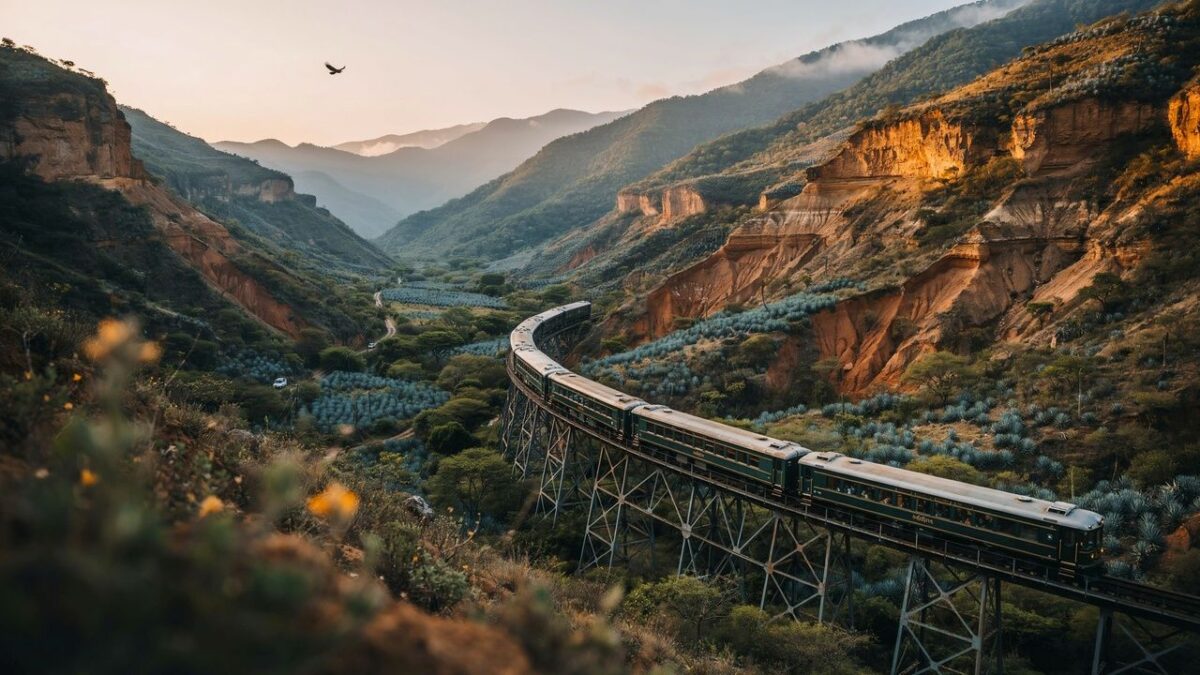
Image generated with Ai
Mexico is changing the way people plan holidays. Many travellers no longer begin by choosing a famous city, beach or landmark. They first choose an experience. They choose a train ride through giant canyons. They choose a road full of food and wine. They choose a mountain walk through cloud forests. They choose a cultural journey through agave fields. Then, the destination follows. This is called experience-first travel. It is turning the journey itself into the biggest part of the holiday.
For many years, travellers planned a trip in a simple way. They picked a place first. Then they looked for hotels, restaurants and things to do. Now, many people are doing the opposite. They ask a new question: what do I want to feel, taste, see or try?
A person may want to watch mountains pass from a train window. Another may want to taste local wine and food. Someone else may want to walk in a quiet forest and meet people from a mountain village. These wishes can shape the whole trip.
Mexico is perfect for this new kind of travel. It has long train routes, bright desert roads, rich food traditions, deep forests and living cultures. The country offers much more than a quick stop at one famous attraction. It gives visitors a reason to move slowly and enjoy every part of the journey.
Advertisement
Copper Canyon in northern Mexico gives travellers one of the strongest experience-first holidays. Here, the Chepe Express train is not only transport. It is the main event.
The train travels between Los Mochis in Sinaloa and Creel in Chihuahua. The journey covers more than 350 kilometres and takes over nine hours. It crosses bridges, enters tunnels and passes through the huge Copper Canyon landscape.
Travellers can look out at cliffs, rivers and mountain valleys. They can also stop at places such as El Fuerte, Bahuichivo, Divisadero and Creel. This makes the trip feel like a moving adventure.
People do not simply travel to Copper Canyon. They travel for the feeling of crossing it by rail. The train changes a normal holiday into a story. Each stop adds food, nature and local culture to the experience.
Visitors should plan with care. The Sierra Tarahumara is home to Rarámuri communities. Travellers should respect local people, use approved guides and avoid treating culture as a photo prop.
In Jalisco, the Tequila Express shows how one journey can bring together transport, music, food and history. The train links Guadalajara with Tequila, a Pueblo Mágico surrounded by blue agave fields.
The experience goes far beyond arriving in the town. Some journeys include a distillery visit, where visitors can learn how tequila is made. Full-day trips can include agave landscapes, food, cocktails, mariachi music, traditional dance and cultural shows.
This gives visitors a simple reason to travel: they want to understand tequila from the field to the glass. The train becomes part of that lesson. The route gives people views that they may not see from a road.
The journey also helps visitors understand that tequila is not just a drink. It comes from farming, knowledge, workers, families and the Jalisco landscape. That makes the experience deeper and more meaningful.
There is one important rule. Visitors should not drink and drive. The train, a driver or an organised tour gives people a safer way to enjoy the route.
Advertisement
Advertisement
The Tren Maya gives Mexico a new way to explore the southeast. Instead of staying in one beach resort, travellers can build a journey across parts of Chiapas, Tabasco, Campeche, Yucatán and Quintana Roo.
The train connects places known for Maya heritage, forests, towns, cenotes, beaches and food. A visitor can begin near Cancún and then add stops that match their interests. They may choose local cooking, archaeology, community tourism, lagoons or nature.
This is a major change for the Mexican Caribbean. It gives travellers a chance to think beyond a single hotel or one busy beach. The journey can become a chain of different moments.
The service between Cancún and Playa del Carmen returned to commercial operation in August 2026. It now gives travellers another way to move between key tourism areas.
However, this story needs balance. The Tren Maya has faced serious questions about its impact on nature and local communities. Reports have raised concerns about environmental damage, displacement and whether communities receive enough benefit. A train does not become sustainable simply because it carries passengers. Travellers should support local, community-approved businesses and treat the region with care.
Valle de Guadalupe in Baja California proves that a road can become a holiday. This famous wine area near Ensenada gives travellers the freedom to build a trip around taste.
There is no need to chase one landmark. Visitors can move from vineyards to small restaurants, local kitchens and wine spaces. They can learn about Mexican winemaking at the Museo de la Vid y el Vino. They can enjoy Baja flavours and spend time among the vines.
Each traveller can make a different route. One person may look for local cheese. Another may choose modern Mexican cooking. Another may want to discover small producers or beautiful vineyard stays.
The road is the experience. It invites people to slow down, stop often and enjoy each place. Visitors should use a driver or organised transport when tasting wine. They should also respect the valley’s limited water and avoid waste.
The Sierra Juárez in Oaxaca offers a softer and quieter kind of experience-first travel. This mountain route leads visitors through cloud forests, high roads and Zapotec communities.
The main reason to go is not one building or one famous sight. It is the feeling of being in the mountains. Visitors can walk, enjoy nature, try local food and learn about village life. They can stay longer and let the journey move at a slower pace.
This route shows that the biggest travel memory does not always come from a famous landmark. It can come from fresh air, forest sounds, a local meal or a simple walk.
Visitors must respect community rules. They should use local guides, ask before taking photos and remember that cultural traditions belong to the people who live there.
Experience-first travel does not mean places have lost their value. It means people now want a stronger reason to visit them. They want a train, a road, a flavour, a mountain or a special story to guide their holiday.
Mexico offers all of these. From Copper Canyon to Tequila, from the Maya southeast to Baja California and Oaxaca, travellers can choose the experience first. The destination will then reveal itself along the way.
Advertisement
Advertisement
Advertisement













Friday, September 4, 2026

Thursday, September 3, 2026
Friday, September 4, 2026

Friday, September 4, 2026

Thursday, September 3, 2026

Wednesday, September 2, 2026

Friday, September 4, 2026

Friday, September 4, 2026


