
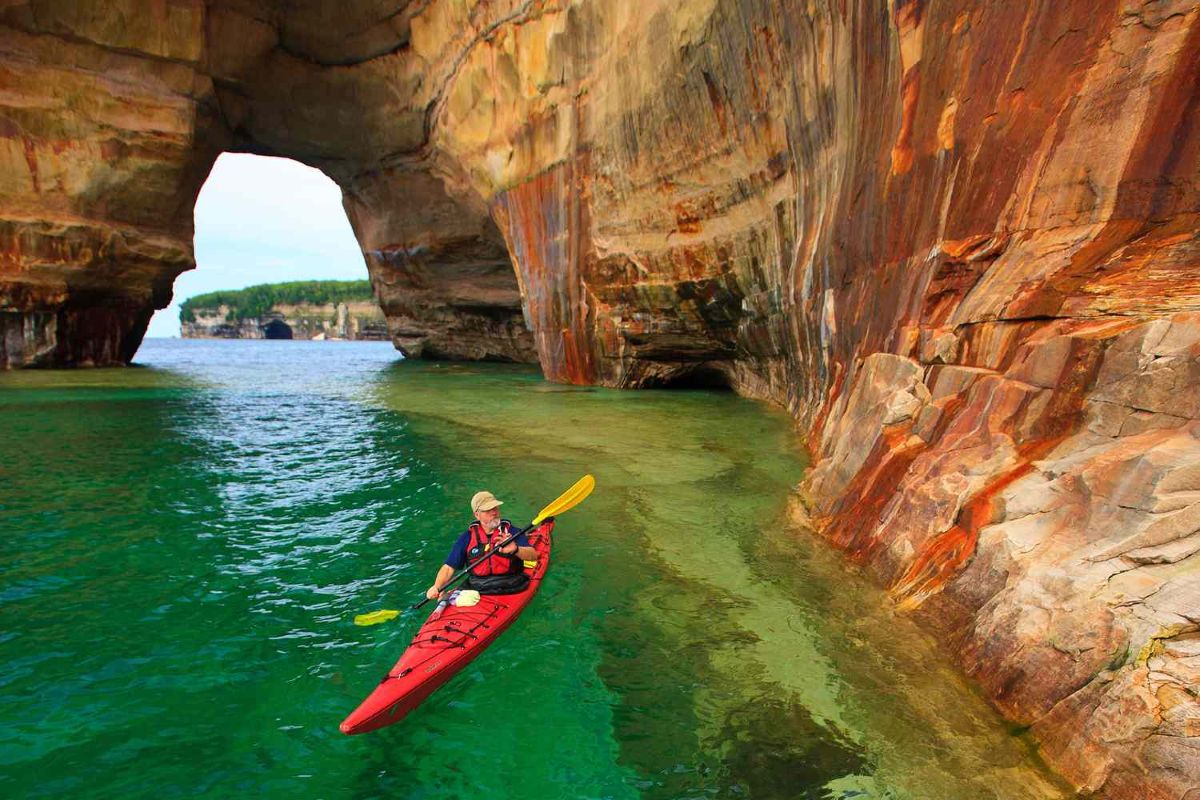
Four Michigan-Canada border islands are for sale together for $2.3 million. The unique package is made up of about 520 acres in the St. Mary’s River and is made up of Burnt, Wilson, Claw & Harris Islands. With the purchase, a renovated, three-bedroom home will be included, along with, two boats, a Kubota tractor and all the maintenance equipment.
The property is in the northwest corner of Michigan’s Lower Peninsula, making it one of the most remote maritime landscapes. However, from DeTour Village, you can access it easily by boat.
The residence is around 2,131 square feet of living space and has electricity, water, gas stove, and sauna. A large portion of the acreage is under a conservation easement.
The protection of the conservation easement limits most development of the property. Sellers can now provide something unique and scarcely available, large private property with a wild setting, to potential buyers in the Great Lakes real estate.
Advertisement
Advertisement
The four-island package offers a striking proposition for buyers seeking seclusion without abandoning practical comforts. The property sits within the St Marys River, close to the international boundary separating Michigan from Ontario.
According to the listing details published on September 4, the four islands collectively cover roughly 520 acres. The main residence occupies a peninsula positioned between two bays.
The setting provides broad views across surrounding waterways towards Canada. However, the property remains within the United States, despite its proximity to the international border.
The package also comes with considerable infrastructure. That includes the renovated residence, boats and equipment required for maintaining the extensive grounds.
Advertisement
Advertisement
The owners have used the compound primarily as a holiday retreat for around a decade. They are now selling as they grow older.
The listing has already attracted prospective buyers. Several showings have taken place, while further interest is expected.
For travel readers, the attraction extends beyond property ownership. The islands illustrate how Great Lakes tourism is increasingly intersecting with conservation, private recreation and ultra-secluded travel.Property Feature Details Asking price $2.3 million Total island acreage Approximately 520 acres Number of islands Four Islands included Burnt, Wilson, Claw and Harris Main residence Approximately 2,131 sq ft Bedrooms Three Bathrooms Two Access By boat from DeTour Village Typical boat journey About 20–30 minutes, weather permitting Boats included Two Featured vessel 32-foot World Cat catamaran Other equipment Kubota tractor and maintenance equipment Conservation status Most acreage under conservation easement Nearest major supply areas St Ignace and Sault Ste Marie
Island isolation sounds dramatic on a map. In practical terms, however, the crossing from Michigan’s mainland is relatively manageable.
The listing’s agent, Anna DeCamp of Gaslight Group, said the trip normally takes around 20 to 30 minutes. Weather conditions can alter the journey, however.
The owners maintain a boat slip in DeTour Village. From there, they travel across the St Marys River to the islands.
The route also passes through a working maritime environment. Freighters regularly use the St Marys River, creating an unusual contrast between wilderness and commercial shipping.
That maritime character adds another dimension for travellers exploring the region. The waterway is not simply a recreational playground. It forms part of a major Great Lakes navigation corridor.
Visitors should therefore treat crossings as genuine boat journeys. Weather, visibility, vessel capability and local navigation conditions matter.
The property also demonstrates an important distinction between remote tourism and inaccessible tourism. The islands feel secluded while remaining within practical boating distance of the mainland.
That combination has helped drive interest among buyers already familiar with northern Michigan.Travel Consideration What It Means Mainland departure DeTour Village Access method Private boat Approximate crossing 20–30 minutes Weather sensitivity High Commercial traffic Freighters operate on the St Marys River Major supplies Available farther inland Island transport Boats become essential Emergency planning Requires greater preparation than mainland stays
The property’s wild character does not mean primitive living.
The main house provides electricity and water, while its three bedrooms and two bathrooms offer conventional accommodation. A gas stove supports everyday cooking, while a wood-panelled sauna adds a distinctly northern retreat atmosphere.
The current owners undertook a substantial renovation around 2017 and 2018. The work reportedly involved gutting and rebuilding much of the residence.
Getting construction materials onto the property presented an obvious logistical challenge. Workers had to transport supplies by boat because the islands lack conventional road access.
For the next owner, that major project has already been completed. The result is a private retreat combining modern functionality with a remote waterfront setting.
The property’s equipment package further reduces the immediate burden of island ownership. Two boats accompany the sale, including a 2006 32-foot World Cat catamaran.
A Kubota tractor and other maintenance equipment also remain with the property.
That matters because 520 acres create a very different maintenance burden from a conventional holiday home. Island ownership involves shoreline management, transport planning, equipment upkeep and seasonal preparation.
The package therefore resembles a small private operating environment rather than a conventional second home.
The most important long-term consideration may not be the house or the boats. It is the property’s conservation status.
Most of the roughly 520 acres are protected by a conservation easement held by the Little Traverse Conservancy. About 100 acres remain outside the protected area, according to the listing.
That distinction matters for prospective buyers considering future development.
A conservation easement can restrict subdivision and development while allowing private ownership to continue. Michigan’s Department of Agriculture and Rural Development explains that conservation easements can permanently restrict development while the land remains privately owned.
The state’s guidance also stresses that such restrictions can continue to apply after ownership changes. In other words, purchasing protected land does not automatically remove the underlying restrictions.
The exact rights attached to this particular property depend on its recorded easement and applicable local rules. Buyers should therefore conduct legal and environmental due diligence before assuming additional construction is possible.
This is particularly relevant for luxury buyers. The headline acreage can appear enormous, but usable development acreage may be considerably smaller.Ownership Issue Practical Implication 520-acre total package Large private landholding Most land protected Development potential is constrained Approximately 100 acres outside easement More flexibility may exist there Easement restrictions Must be reviewed before development Future owners Existing restrictions can continue New construction Requires appropriate approvals and compliance Public access Conservation status does not automatically mean public access
The wider Drummond Island area provides important context for the sale.
Michigan’s Department of Natural Resources places Drummond Island at the mouth of the St Mary’s River in northern Lake Huron. The island covers approximately 135 square miles, with 57% in public ownership and 43% privately held.
Its landscape is heavily forested, with aspen, cedar and northern hardwoods among its dominant forest types. The wider area supports wildlife and outdoor recreation throughout the year.
The conservation story extends beyond state ownership.
The Little Traverse Conservancy protects numerous properties across northern Michigan. As of June 2026, it reported more than 345 private properties protected through conservation easements. It also manages almost 400 nature preserves and 40 working forest reserves.
The organisation’s work is especially visible around Drummond Island.
Its protected holdings include the Clyde and Martha Williams Preserve and the Forslund Dix Point Preserve. The latter includes shoreline along the St Marys River and supports hiking and shoreline viewing.
For travellers, that creates a wider ecosystem of protected landscapes surrounding private property.
However, visitors must not confuse private islands with public preserves. Conservation status alone does not necessarily create public access.
The property’s strongest tourism appeal may ultimately be its wildlife.
Foxes, otters, beavers and coyotes reportedly move through the islands. Sandhill cranes and other birds also frequent the landscape.
The surrounding waters add another layer. Loons can be heard calling across the bays, reinforcing the sense of remoteness.
That experience aligns closely with northern Michigan’s broader nature-tourism proposition. The region combines forests, freshwater, islands and wildlife within a relatively concentrated Great Lakes landscape.
The wider Drummond Island area also offers established outdoor recreation. Local visitor information highlights hiking areas and preserves, including the Williams Preserve and Forslund Dix Point.
The Little Traverse Conservancy similarly describes northern Michigan’s protected lands as places for public enjoyment while maintaining ecological protection.
For travellers, the lesson is straightforward. Wildlife-rich landscapes require low-impact behaviour.
Boaters should maintain appropriate distances from wildlife. Visitors should avoid disturbing nesting birds and should follow all restrictions on protected properties.
The private nature of the four islands also means prospective recreational visitors cannot assume they can land there.
The surrounding destination offers more than private-island real estate.
Drummond Island itself has a substantial recreational economy. Michigan DNR planning documents note that the area supports resorts, RV parks, campgrounds, outfitters and guiding services.
That infrastructure makes the wider region more accessible to ordinary travellers. Visitors can experience the landscape without owning an island.
The area also contains nature preserves, fishing opportunities, hunting areas and boating routes. The combination gives northern Michigan a strong position within Great Lakes outdoor tourism.
Drummond Island’s landscape also benefits from a relatively unusual ownership pattern. Large areas remain forested, while public and private ownership exist side by side.
That balance can create a different travel experience from heavily developed waterfront destinations.
For luxury travellers, the four-island listing represents the extreme end of that spectrum. For everyone else, nearby protected areas provide a more accessible way to experience the same ecological setting.
A private island can look effortless in a property photograph. The operational reality is more demanding.
Every trip begins with a water crossing. Weather can delay departures, while mechanical problems can become more consequential than they would on the mainland.
Groceries require additional planning. The listing indicates that larger shopping trips can involve travelling farther to St Ignace or Sault Ste Marie.
That creates a different rhythm of travel. Owners need to anticipate fuel, food, maintenance supplies and emergency requirements.
Seasonality matters too. Northern Michigan experiences substantial winter conditions, while the surrounding waters can become challenging during colder months.
Travellers considering similar remote stays should therefore assess transport arrangements before focusing on accommodation.
They should also verify docking arrangements, fuel availability, weather forecasts, navigation requirements and emergency procedures.Traveller Need Recommended Planning Food Carry sufficient supplies for weather delays Fuel Confirm availability before departure Boat Check vessel, engine and safety equipment Weather Review conditions before every crossing Wildlife Maintain distance and avoid disturbance Navigation Use appropriate marine charts and equipment Emergency Establish mainland emergency contacts Accommodation Confirm utilities and seasonal availability Conservation Check all property-specific restrictions
For official information about Michigan’s natural-resource rules and protected-land framework, travellers can consult the Michigan Department of Natural Resources.
Those considering the broader conservation landscape can also explore the Little Traverse Conservancy.
The listing captures a broader shift in luxury travel.
High-end travellers increasingly seek privacy, nature and experiential exclusivity, rather than simply larger hotels or busier resort destinations.
A four-island compound delivers all three.
Yet the property’s value comes from its limitations as much as its amenities. Development restrictions preserve much of the landscape, while boat-only access protects the feeling of isolation.
That creates a rare travel proposition: luxury based on space rather than infrastructure.
The trend also fits northern Michigan’s wider conservation strategy. Protected landscapes form a crucial part of the region’s recreational appeal and tourism identity.
Michigan recently highlighted another major conservation achievement with more than 73,000 acres protected in the Michigamme Highlands. The project includes extensive forests, wetlands, waterways and wildlife habitat.
The comparison is revealing. Public conservation projects create outdoor opportunities at landscape scale, while private easements can preserve individual properties without transferring ownership to the public.
Both approaches help maintain the natural character that attracts visitors to northern Michigan.
The headline price tells only part of the story.
At $2.3 million, the package combines land, accommodation, transport assets and considerable privacy. Buyers receive four islands rather than a single waterfront parcel.
They also inherit a landscape where development opportunities are constrained. That may appeal strongly to conservation-minded owners, but it could frustrate buyers seeking extensive construction rights.
The boats also matter. On a conventional property, a vehicle connects residents to the outside world. Here, boats perform that essential role.
The 32-foot World Cat therefore represents more than a recreational accessory. It forms part of the property’s basic transport infrastructure.
Likewise, the Kubota tractor is not merely an added luxury. Maintaining a large island estate requires appropriate machinery.
The package consequently makes the most sense for buyers who value seclusion, natural surroundings and an established retreat over development potential.
The four-island package offers a rare glimpse into an increasingly unusual form of Great Lakes travel.
It combines approximately 520 acres, a renovated home, two boats and extensive wilderness for a $2.3 million asking price. Its location near the US-Canada border adds geographic intrigue without making it a cross-border property.
For tourism, the bigger story lies beyond the sale itself. The surrounding Drummond Island region demonstrates how protected landscapes, private ownership and outdoor recreation can coexist.
Travellers do not need to purchase an island to experience that environment. Nearby preserves, waterways and recreational facilities already provide access to northern Michigan’s natural character.
For the eventual buyer, however, the proposition is considerably more exclusive. The result is not simply a holiday home.
It is a private Great Lakes landscape, complete with its own boats, wildlife and unusually powerful sense of escape.
| Category | Verified Detail |
|---|---|
| Location | St Marys River near Drummond Island, Michigan |
| Border context | Near the US-Canada international boundary |
| Asking price | $2.3 million |
| Land | Approximately 520 acres |
| Islands | Burnt, Wilson, Claw and Harris |
| Residence | 2,131 sq ft |
| Accommodation | Three bedrooms, two bathrooms |
| Amenities | Electricity, water, gas stove and sauna |
| Access | Boat from DeTour Village |
| Journey | Roughly 20–30 minutes, weather dependent |
| Boats | Two included |
| Main boat | 2006 32-foot World Cat |
| Equipment | Kubota tractor and maintenance equipment |
| Conservation | Most acreage under easement |
| Nearby major supply points | St Ignace and Sault Ste Marie |
| Wider destination | Drummond Island and northern Lake Huron |
| Tourism appeal | Boating, wildlife, nature, privacy and outdoor recreation |
Advertisement
Advertisement
Advertisement












Saturday, September 5, 2026

Saturday, September 5, 2026
Saturday, September 5, 2026

Saturday, September 5, 2026
Saturday, September 5, 2026

Saturday, September 5, 2026
Saturday, September 5, 2026

Saturday, September 5, 2026



