
Solar Eclipse 2026 Sold Out? Essential Travel Tips and Safe Viewing Guide

Published
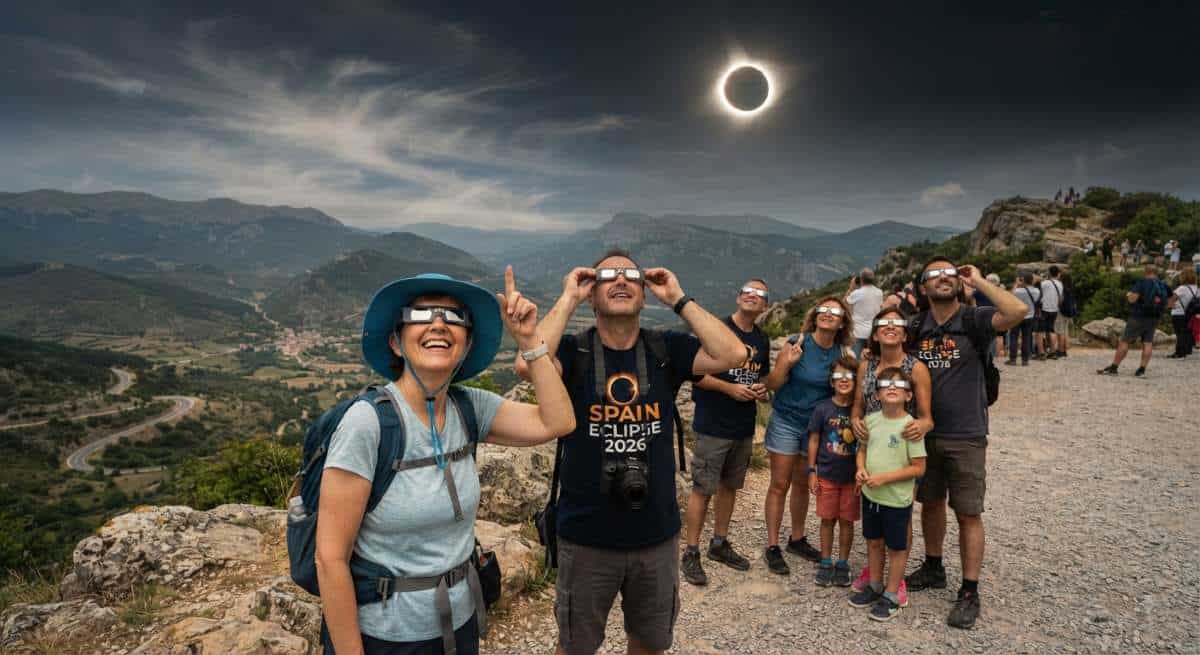
Image generated with Ai
The celestial horizon is currently dominated by an extraordinary wave of anticipation as science enthusiasts, global travelers, and researchers look toward the heavens. As a major Solar Eclipse approaches on August 12, 2026 marking the first total eclipse visible across mainland Europe since 1999 public interest has surged to unprecedented heights.
Consequently, specialized Solar Eclipse Glasses have completely sold out across numerous retail outlets and online distribution channels. This sudden, widespread scarcity has abruptly forced observers to rethink how they safely engage with rare Celestial Events. Therefore, early preparation, alternative projection strategies, and thoroughly informed logistical planning have become absolutely vital for every traveler and astronomy enthusiast hoping to witness this historic phenomenon without compromising their safety.
Practical Information for Safe Viewing
When protective gear is entirely unavailable, relying on indirect viewing methods is strongly recommended by scientific and astronomical organizations. Ensuring absolute Safe Viewing remains the top priority for all participants to prevent permanent eye damage:
- Construct a DIY projector: Build a simple pinhole projector using two pieces of sturdy cardboard or utilize a household kitchen colander to cast an image.
- Project onto a flat surface: Safely project the sun’s image onto a clean white sheet of paper or a flat ground surface, keeping your back turned directly to the sun while viewing.
- Avoid direct solar exposure: Never look directly at the sun without certified filters, especially during the partial phases of the eclipse when harmful rays are fully exposed.
- Prioritize traveler wellness: Pack adequate sun protection such as sunscreen and hats, stay properly hydrated throughout the day, and select open viewing locations clear of urban skylines and dense forests.
Venue, Tickets, and Commuter Guidelines for Public Safety
While public spaces require no formal tickets, municipalities are designating specific observation zones. Visitors should consult local maps for designated spots featuring strong infrastructure and Public Safety monitoring.
Advertisement
Advertisement
- Commuters must arrive well in advance.
- Road closures will affect prime viewing corridors.
- Utilize local trains or shuttle services over private vehicles.
By coordinating travel with local authorities, visitors ensure a secure and memorable experience.
Background and Context
This upcoming Solar Eclipse is a landmark occasion for Europe, serving as a defining moment for international science enthusiasts and travelers alike. Furthermore, it marks the first major phenomenon of its kind since 1999, creating a rare window for modern observers.
Advertisement
Advertisement
- Much of Spain sits directly under the path of totality, positioning the region as a primary global hub for spectators.
- The moon will completely obscure the sun during this window, creating a breathtaking moment of daytime darkness.
- Brief periods of daylight darkness will occur in specific regions, offering a dramatic visual spectacle for those positioned correctly.
- Global excitement remains high, extending far beyond the primary path as individuals worldwide tune in to digital broadcasts and reports.
Ultimately, the sudden depletion of protective eyewear has transformed casual viewing into an exercise in strategic planning, requiring travelers to adopt alternative methods and rigorous logistical preparation.
Impact on Travellers and Spain Tourism
For individuals traveling specifically to witness the event, the situation brings distinct challenges that require careful navigation. Moreover, severe overcrowding is expected in popular viewing zones across the country. Regional authorities are actively mapping out optimal locations to manage the massive influx of tourists and local spectators effectively.
Advertisement
Advertisement
Avoid peak crowds strategically: Proper preparation helps travelers bypass the worst of peak crowds, minimizes logistical stress, and ensures a smooth, uninterrupted journey to their designated destination.
Factor in heavy traffic congestion: Travelers must anticipate major delays on roadways leading to prime viewing areas, requiring early departures and flexible itineraries.
Prepare for infrastructure limits: Potential resource and facility limitations may arise in rural viewing spots where local amenities are unaccustomed to high visitor density.
Utilize sustainable transport: Public transit, carpooling, or cycling are strongly encouraged by local officials to reduce roadway strain and ease parking shortages.
Advertisement
Advertisement
Industry Insights in Modern Astronomy
Retailers and suppliers of Astronomy equipment have faced unprecedented demand. However, experts emphasize that a lack of glasses should never stop participation. Instead, public education has shifted toward indirect viewing alternatives.
- Conventional sunglasses do not substitute for ISO-certified filters.
- Optical devices like cameras need specialized solar filters.
- Proper equipment prevents permanent retinal damage.
Comparison with Previous Policies
Historically, authorities issued fewer public warnings regarding equipment shortages. However, contemporary protocols incorporate modern sustainability and traffic mitigation.
- Earlier policies focused strictly on basic eye protection.
- Current strategies integrate comprehensive waste management.
- Authorities balance enthusiast needs with landscape preservation.
Advertisement
