
Slovenia Changes Alpine Travel Access as Kluže Closure Diverts Traffic via Vršič for Autumn Adventure

Published
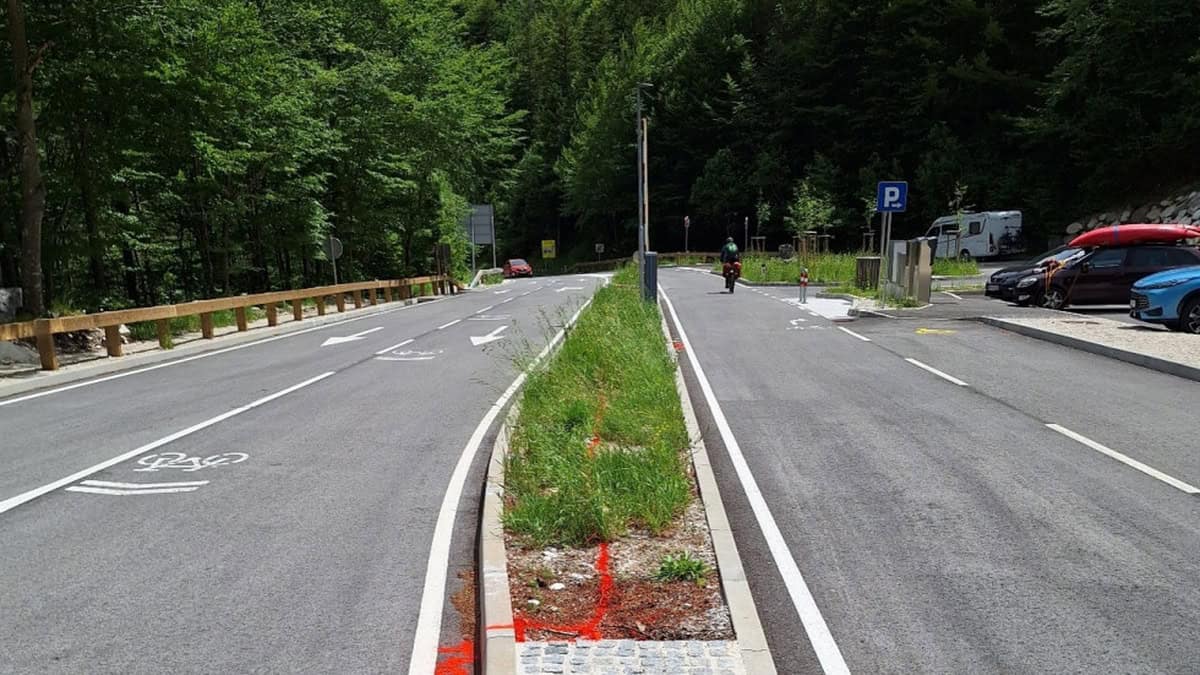
Slovenia enters a significant test of Alpine adventure-access management from 5 October as daytime closures near Kluže redirect road traffic through Vršič, where a new barrier-controlled parking system has operated only since 1 September. The timing matters for outdoor travellers. The free seasonal Vršič bus ended on 30 September, while the official autumn hiking and cycling festival continues until 11 October. Slovenia is therefore managing a safety-driven road closure, controlled mountain parking, altered public transport and active autumn adventure demand simultaneously across one sensitive Alpine corridor.
Slovenia Faces a Rare Alpine Adventure Access Test From 5 October
The most important travel story is not simply that roadworks have started.
Advertisement
Advertisement
It is that several independent pieces of Slovenia’s Alpine mobility system now intersect at precisely the same time.
According to the Slovenian Infrastructure Agency, full daytime closures on the R1-203 regional road near Kluže are scheduled from 5 October until 24 December 2026, between 08:00 and 14:30. Works also take place on Saturdays. After 14:30, and throughout Sundays, traffic can pass under a partial closure controlled by traffic lights.
Advertisement
Advertisement
During the full closure, the official diversion uses the Vršič corridor before reconnecting with the Predel route.
That detail changes the story for adventure tourism.
Advertisement
Advertisement
Vršič is not operating under its historic unrestricted parking model. A new access arrangement began during 2026, followed by controlled summit parking from 1 September. Cars seeking summit parking now enter through barriers according to available capacity, while through traffic uses a separate lane.
The closure therefore pushes additional journey planning towards a mountain corridor where Slovenia has deliberately started regulating how vehicles stop, park and move.
At the same time, the free seasonal public bus across Vršič ended on 30 September, only five days before the Kluže closure started. Slovenia’s official outdoor calendar remains active, with the Soča Valley Hiking and Biking Festival continuing until 11 October.
For adventure travellers, tour organisers and ground handlers, those overlapping dates are the story.
What Changes on Slovenia’s Kluže Corridor From 5 October
The road intervention covers the R1-203, section 1002, between kilometre points 12.600 and 12.750. That represents roughly 150 metres of road exposed to a technically difficult rock-slope environment.
According to the Slovenian Infrastructure Agency, stones have been falling from an unsecured slope extending to around 20 metres above the carriageway. The affected road also contains poor-visibility bends, constrictions and a narrow paved surface.
Advertisement
Advertisement
The planned remediation includes clearing unstable material and installing deeply anchored protective mesh designed to reduce falling-rock risk.
The agency has also explained why ordinary single-lane working is not considered sufficient during active construction. Moving construction machinery out of the work area can take more than 30 minutes, while falling stones, rocks or other material remain possible during slope works. The combination of a steep rock face and narrow carriageway prevents safe traffic operation beside active machinery.
Kluže Operational Schedule
| Operational factor | Official position as of 5 October 2026 | Adventure-travel significance |
|---|---|---|
| Works begin | 5 October 2026 | Immediate itinerary impact |
| Planned works end | 24 December 2026 | Disruption extends well beyond autumn |
| Full closure | 08:00–14:30 | Daytime touring schedules require adjustment |
| Full-closure days | Monday to Saturday | Most normal operating days affected |
| Sunday arrangement | No full works closure | More predictable leisure access |
| After 14:30 | Partial closure with traffic lights | Afternoon access remains possible |
| Affected road section | km 12.600–12.750 | Short section but strategically important |
| Primary hazard | Falling rock from slope up to about 20 metres above road | Safety, rather than tourism restriction, drives the works |
| Diversion | Via the Vršič corridor and Predel connection | Transfers traffic towards another managed Alpine access zone |
| Winter contingency | Kluže closure is not implemented if Vršič diversion becomes impossible because of conditions such as snow or avalanche | Weather now directly affects the closure operating model |
The last point is particularly significant.
According to the Infrastructure Agency, if the Vršič diversion cannot operate because of snow, avalanche conditions or similar circumstances, the full Kluže closure will not be implemented during that period.
That creates an unusual conditional relationship between two Alpine corridors.
For the travel industry, itinerary reliability now depends not only on scheduled construction but also on whether the designated mountain diversion remains operational.
Advertisement
Advertisement
Vršič Has Become More Than a Scenic Detour
Vršič is one of Slovenia’s most important Alpine adventure gateways.
Slovenia’s national tourism organisation identifies the pass at 1,611 metres above sea level as the highest mountain-road pass in the eastern Julian Alps. It is promoted as a demanding cycling route and an important starting point for mountain ascents.
That makes diverted traffic particularly relevant to adventure visitors.
Since 1 September 2026, the summit area has operated with newly organised parking infrastructure created as part of reconstruction of the Vršič road.
According to the Slovenian Infrastructure Agency, the system was designed to improve safety, organise visits, improve traffic flow and protect the sensitive natural environment.
New Vršič Parking Capacity
| Facility | Official capacity |
|---|---|
| Standard passenger-car spaces | 80 |
| Accessible passenger-car spaces | 3 |
| Motorcycle spaces | 24 |
| Bus spaces | 2 |
| Short-stay passenger-car spaces | 8 |
| Maximum short-stay duration | 15 minutes |
| Parking charge during remainder of 2026 | Free |
The importance lies not only in the number of spaces.
Advertisement
Advertisement
Drivers approaching the controlled area receive occupancy information before reaching the barriers. Vehicles seeking summit parking use the designated parking lane and receive access only while public parking capacity remains available.
Through traffic uses another lane.
If parking demand creates a queue extending towards the lane separation point, arriving vehicles cannot simply wait in the transit lane. Drivers must either turn around using the purpose-built turning area or continue across Vršič without summit parking.
For tour planners, this means road access and attraction access are no longer equivalent.
A vehicle may legally cross the pass while being unable to stop at the summit.
The Overlooked Mobility Gap Begins Five Days After Free Alpine Buses End
This is where the 5 October story becomes particularly relevant to adventure travellers.
Advertisement
Advertisement
Slovenia introduced a free seasonal public bus across Vršič for the 2026 summer season specifically to reduce private-vehicle pressure.
According to the Ministry of Infrastructure and Slovenian Infrastructure Agency, the free service operated from 1 June through 30 September 2026, with higher-frequency operation between 26 June and 31 August.
The Kluže full-closure regime starts on 5 October.
There is therefore only a five-day gap between the end of the free Vršič seasonal service and the beginning of a road closure whose official diversion uses Vršič.
That does not mean public transport disappears altogether. It does mean travellers should not assume the free summer mountain shuttle remains available during the October disruption.
The official Soča Valley destination organisation has separately announced changes to scheduled bus services because of the Kluže closure.
Advertisement
Advertisement
Certain cross-Alpine departures are suspended from Monday to Saturday during the daytime closure window, with the changes scheduled from 5 October until approximately 14 December 2026. Some alternative paid services towards the Soča Spring area are scheduled through 30 November, while Sunday services follow the regular timetable because the daytime full closure is not planned on Sundays.
The Critical Autumn Access Timeline
| Date | Development | Why it matters |
|---|---|---|
| 15 June 2026 | Renewed Vršič traffic regime takes effect | Start of more active access management |
| 1 September 2026 | New summit parking and barrier operation becomes available | Parking becomes capacity controlled |
| 30 September 2026 | Free seasonal Vršič bus programme ends | Summer car-reduction measure finishes |
| 5 October 2026 | Kluže daytime full closures begin | Traffic diversion shifts towards Vršič |
| 5 October 2026 | Associated bus changes begin | Public-transport planning changes |
| 11 October 2026 | Hiking and cycling festival ends | Closure begins during final outdoor festival week |
| Approximately 14 December 2026 | Current published period for affected bus arrangements ends | Public-transport disruption lasts deep into the shoulder season |
| 24 December 2026 | Planned end of Kluže roadworks | Road-access effects potentially extend to Christmas |
The timing deserves attention because it exposes a broader challenge facing mountain destinations: sustainable transport programmes often follow defined tourism seasons, while infrastructure works, weather events and shoulder-season adventure demand do not necessarily follow the same calendar.
Slovenia’s Adventure Season Is Still Active When Restrictions Begin
The closure does not begin after all outdoor tourism has stopped.
The official Soča Valley Hiking and Biking Festival runs from 4 September through 11 October 2026, meaning the new closure regime begins during its final week.
The programme is built around guided hiking, cycling and wider outdoor experiences.
Slovenia’s national tourism organisation describes the Soča Valley as the country’s leading outdoor destination and highlights rafting, kayaking, hiking, cycling, climbing, paragliding and fishing among its principal adventure products. It also states that more than 60 sports agencies with trained guides operate around the river and its tributaries.
Advertisement
Advertisement
This gives the road-management development clear tourism relevance.
The travellers most likely to use these Alpine roads are not limited to sightseeing motorists. They include hikers reaching trailheads, road cyclists tackling mountain climbs, guided activity customers, rafting and kayaking visitors transferring between bases, private touring groups and operators combining protected landscapes with multi-day outdoor itineraries.
Access reliability is consequently part of the adventure product itself.
Why This Is Really a Visitor-Flow Management Story
The most important information gain comes from examining the Kluže works together with Slovenia’s wider approach to Alpine transport.
Triglav National Park identified Vršič earlier in 2026 as one of the protected area’s most heavily visited locations and linked modern traffic-management systems with the need to reduce pressure from private vehicles, noise and disorderly parking.
The park’s institutional position is that managed regimes should keep individual motor vehicles within the capacity of formally organised parking areas while encouraging public transport during high tourism periods.
Advertisement
Advertisement
The new Vršič system translates that policy into physical infrastructure.
Barriers manage entry.
Real-time displays communicate parking availability.
Separate lanes distinguish parking demand from through traffic.
Turning areas prevent vehicles seeking unavailable spaces from obstructing the main corridor.
Defined parking capacity establishes a practical limit rather than allowing informal roadside demand to expand indefinitely.
Advertisement
Advertisement
Now the Kluže closure introduces another variable: diverted road demand.
That makes October an important operational test.
The test is not whether Vršič can technically carry vehicles. It already functions as a mountain road.
The real question is whether Slovenia’s newer managed-access architecture can preserve through movement while preventing additional road users from translating automatically into unmanaged parking demand at one of the country’s most sensitive and popular adventure gateways.
That distinction matters internationally.
Mountain destinations increasingly face a conflict between access and conservation. Restrict too much mobility and visitors struggle to reach trailheads or outdoor businesses. Allow unlimited vehicle penetration and congestion can degrade the natural experience that drives tourism demand in the first place.
Advertisement
Advertisement
Slovenia’s current model separates transit from parking capacity. The October diversion gives that model a practical resilience test beyond the summer peak for which many visitor-management measures were originally designed.
Adventure Tour Operators Need More Flexible Itineraries
For B2B operators, the immediate issue is schedule design.
A programme built around a fixed morning road transfer through the affected Kluže section may now encounter a complete closure between 08:00 and 14:30.
An operator can move outside that window, use the officially designated diversion while available, or redesign activity sequencing so guests spend the closure period on experiences that do not require crossing the affected section.
Coach operators face an additional constraint at Vršič.
The new summit parking area provides only two bus spaces. That figure does not restrict transit across the pass, but it means group planners should not confuse the ability to traverse the corridor with guaranteed summit coach parking.
Advertisement
Advertisement
Weather must also become part of operational planning.
Because the Kluže closure itself depends on the Vršič diversion remaining usable, snowfall or avalanche conditions could alter the day’s planned road regime. This makes same-day official traffic checking more important than relying on a static itinerary issued weeks earlier.
What Adventure Travellers Should Understand Before Setting Out
Parking at the Vršič summit remains free through the end of 2026, but free does not mean unlimited.
The new system controls access according to available public parking capacity.
Travellers who only need to cross the pass should use the transit lane rather than joining parking queues.
Those planning hikes from Vršič should allow for the possibility that summit spaces are full and should not build an itinerary around guaranteed roadside parking.
Advertisement
Advertisement
Travellers using public transport must also distinguish between the expired free summer Vršič bus and the revised paid services currently operating under the autumn timetable.
The safest planning approach is therefore dynamic rather than static.
Critical Operational Takeaways for Travel Agents and Tour Operators
- Recheck every Alpine transfer on the day of operation. The Kluže closure is scheduled, but weather can affect whether the Vršič diversion remains usable.
- Do not promise summit parking. Vršič parking is capacity controlled, even though parking remains free through 2026.
- Separate transit planning from activity-access planning. A vehicle may cross Vršič without being able to park at the summit.
- Avoid assuming the summer shuttle still operates. The official free Vršič service ended on 30 September.
- Build time buffers around 08:00–14:30. This is the principal Monday-to-Saturday full-closure window.
- Consider afternoon or Sunday movements where appropriate. Traffic is permitted under partial control after 14:30, while Sunday has no scheduled full works closure.
- Reconfirm public-transport itineraries. Certain autumn departures are suspended or modified because of the works.
- Prepare a weather contingency. Snow or avalanche conditions can remove Vršič as the diversion and change the closure arrangement.
- Treat coach stopping separately from coach transit. Only two summit bus spaces are provided in the new Vršič parking layout.
- Use official live traffic information rather than cached travel advice. Slovenia’s national traffic-information service lists the Kluže closure and Vršič diversion in its current road forecast.
Slovenia’s Alpine Strategy Could Influence How Adventure Destinations Manage Access
The 5 October change is temporary, but the system surrounding it points towards a longer-term transformation in mountain tourism.
Slovenia is moving away from a model in which Alpine access is understood simply as whether a road is open or closed.
The Vršič regime introduces another layer: the road can remain open for movement while parking is controlled according to available capacity.
The Kluže project adds a resilience component. One corridor can close for safety works only while another remains capable of supporting diversion traffic.
Advertisement
Advertisement
Public transport adds a third layer, although the October situation also demonstrates the difficulty created when seasonal mobility programmes end while adventure tourism continues.
Protected-area management forms the fourth element. Triglav National Park has already linked controlled motor access with conservation, visitor experience and reduced pressure from uncontrolled parking.
Together, these measures make Slovenia worth watching beyond the immediate roadworks.
For international adventure-tourism markets, the emerging lesson is that future access to celebrated mountain landscapes may increasingly depend on managed capacity rather than unrestricted vehicle entry.
That can affect transfer design, coach operations, hiking departures, cycling logistics, public-transport partnerships and how destinations communicate access before travellers arrive.
The immediate priority from 5 October is practical: check the road window, verify transport, monitor weather and never assume parking availability.
Advertisement
Advertisement
The longer-term story is more strategic.
Slovenia is showing how a protected Alpine adventure destination can attempt to keep visitors moving while simultaneously controlling where vehicles accumulate. The Kluže closure now places that model under an unusually visible real-world test precisely when autumn outdoor travel has not yet finished.
Advertisement
