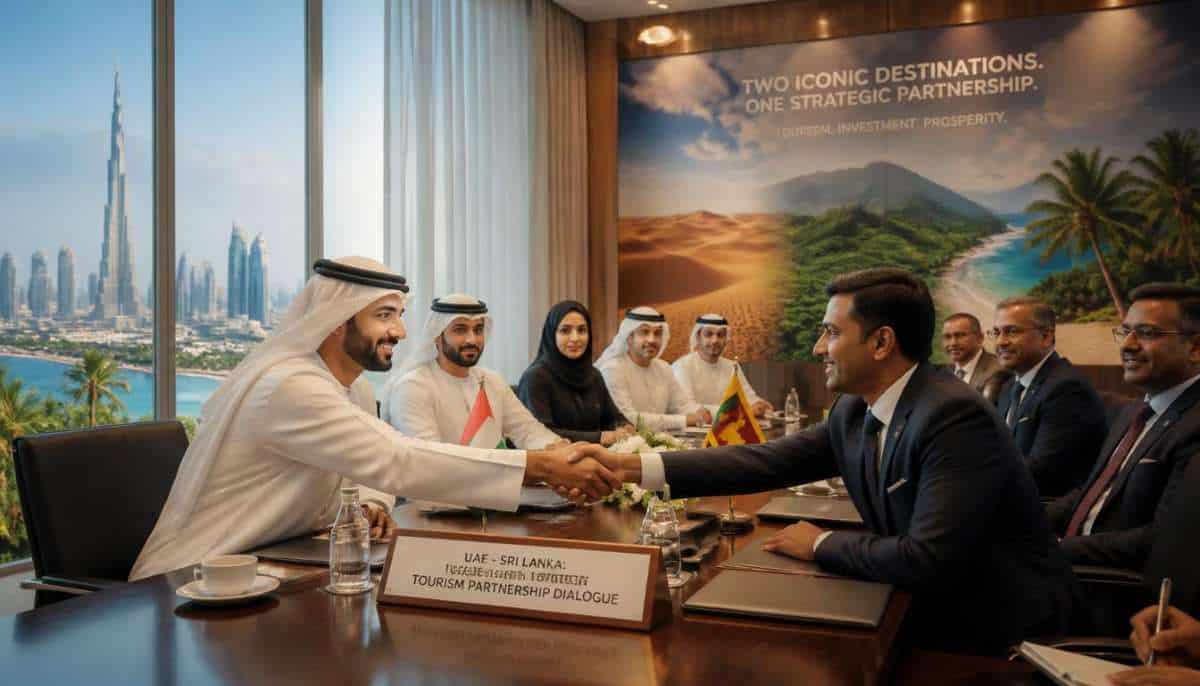
Image generated with Ai
The travel industry is changing at a pace never seen before, and smart globetrotters, industry players and cross-border investors are already noticing a new bilateral alliance. The landmark deal is set to reshape the hospitality markets of South Asia and the Middle East. For the contemporary traveller and institutional investor in search of high-value destinations, premium service standards and lucrative economic opportunities, understanding the intricacies of emerging international markets has never been more important. Recent high-level diplomatic engagements between the UAE and Sri Lanka have formally unlocked extraordinary opportunities for cooperative tourism development, streamlined travel facilitation, and large-scale luxury hotel investment. Understanding the deep economic mechanics and strategic implications of this partnership is vital for anyone looking to capitalize on upcoming luxury travel trends, expanded flight connectivity, and state-of-the-art hospitality standards across both dynamic regions.
The foundation of this expanded cooperation was established during formal bilateral discussions held at premier ministerial offices, bringing together key governmental figures, economic policymakers, and tourism board executives from both nations. The high-level dialogues focused heavily on expanding the existing bilateral investment framework, optimizing tourist mobility, and executing joint knowledge-exchange initiatives aimed at elevating hotel management practices, culinary standards, and guest experience delivery.
Official government reports and economic briefings underscore the robust momentum characterizing this vital trade and travel corridor. Bilateral visitor metrics highlight strong, sustained engagement, with the UAE recording hundreds of thousands of arrivals from international markets that include significant regional traffic following comprehensive tourism promotion campaigns. Furthermore, robust aviation connectivity anchored by more than 100 weekly direct flights continues to bridge the two nations seamlessly. This high-frequency transit network ensures frictionless movement for commercial executives, luxury leisure seekers, and digital nomads alike, cementing a powerful infrastructure backbone for future growth.
The partnership aims to expand bilateral tourism investments, facilitate seamless tourist flows, and foster the exchange of professional expertise in hospitality services and hotel operations. By aligning long-term strategic visions, both nations seek to elevate infrastructure standards, diversify economic revenue streams, and encourage sustainable, eco-conscious tourism growth across regional markets.
Advertisement
Advertisement
Aviation links serve as the primary economic and operational backbone of this relationship, with over 100 direct weekly flights operating between major UAE aviation hubs like Dubai and Abu Dhabi and Sri Lankan international gateways such as Bandaranaike International Airport. This high frequency of flights significantly reduces travel friction, supports robust passenger volumes, and directly aligns with the ambitious growth targets outlined in national tourism master plans.
Sri Lanka’s hospitality sector is experiencing a major structural resurgence, marked by rising international tourist arrivals, boutique property conversions, and large-scale integrated resort developments. The government’s active invitation for foreign capital—particularly from Middle Eastern sovereign wealth funds and private investors—targets sustainable eco-resorts, luxury coastal properties, wellness retreats, and high-end urban hotels designed to cater to premium global travelers.
Aligning with modern global travel demands and shifting consumer values, the strategic framework places heavy emphasis on sustainable development, green technology integration, and infrastructure modernization. The UAE’s visionary approach to smart tourism, green building certification, and digital guest experiences serves as an invaluable benchmark for collaborative projects. Sri Lanka, renowned globally for its rich biodiversity, UNESCO cultural heritage sites, and expanding eco-tourism circuits, is actively integrating these advanced hospitality frameworks to attract high-net-worth travelers who prioritize environmental stewardship.
Investments are increasingly directed toward upgrading regional transport networks, expanding port and airport capacities, and implementing advanced AI-driven guest management systems across independent and chain-operated hotels. These structural enhancements are designed to protect fragile ecosystems and local communities while simultaneously maximizing yield and operational efficiency for international hotel brands looking to establish or expand their commercial footprint across South Asia.
With implementation phases of this agreement to unfold fast, industry stakeholders are already bracing for a huge boost in joint-venture hospitality projects, specialised wellness tourism packages and cross-promotional marketing campaigns aimed at capturing global market share. This natural synergy between Emirati capital investment and Sri Lankan natural assets creates a highly resilient economic model which effectively buffers against regional market fluctuations and global economic uncertainties. For the average traveller, this private and public sector partnership means more of the best services, more luxury hotel options and more opportunities to visit multiple destinations in the colourful Arabian Gulf and the tranquil Indian Ocean – with much less hassle.
Advertisement
Tags: bilateral investment partnership, luxury hotels, Sri Lanka hospitality, travel facilitation, UAE tourism
Advertisement
Advertisement













Friday, September 4, 2026

Friday, September 4, 2026

Friday, September 4, 2026

Thursday, September 3, 2026

Wednesday, September 2, 2026

Friday, September 4, 2026

Friday, September 4, 2026