
Europe’s Rail Travel Surge: Family-Friendly Trains Challenge Flights With Discounts and Play Areas

Published
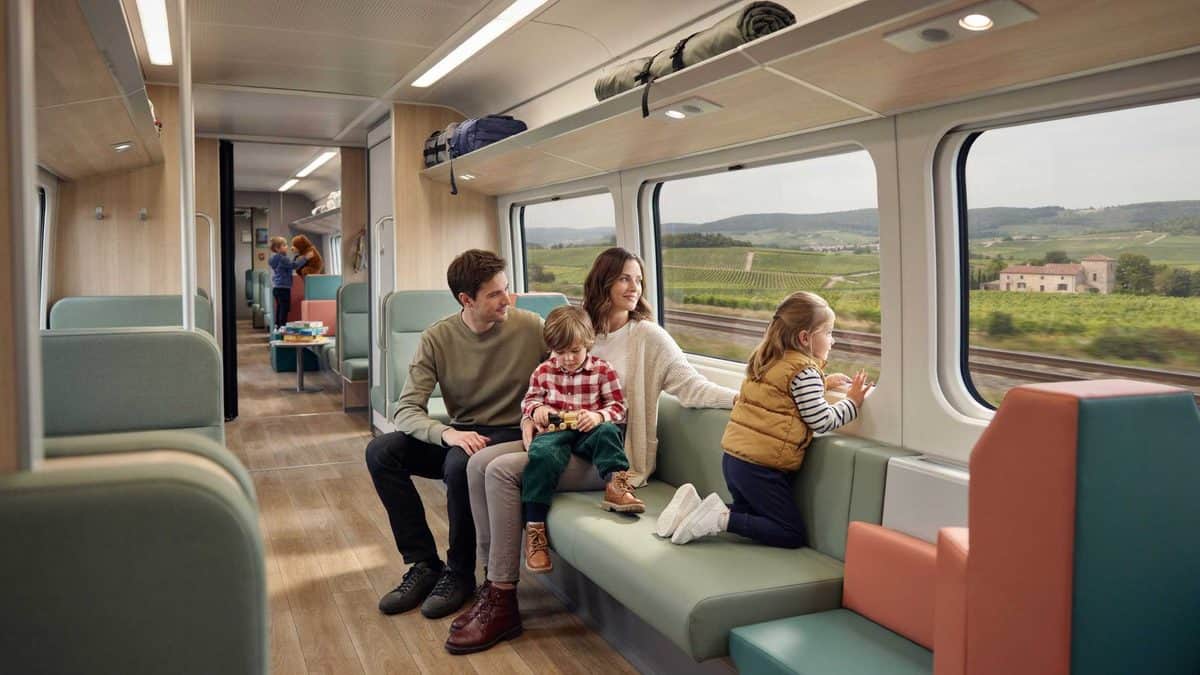
Image generated with Ai
More and more families are taking advantage of family-centered travel options on rail systems. Switzerland, Germany, Austria, France, and others are all investing in and expanding rail travel to include family-centered systems. Traveling via rail is the easier and less expensive option when considering family systems with children. Families can take advantage of the affordability of rail travel circuits and take travel over Europe’s family-centered systems. Ballooning family-centered systems begin offering travel-related services that accommodate kids, such as flexible rail seating and play areas for children.
Europe’s Hidden Family Rail Revolution Is Changing How Parents Plan Holidays
Across Europe, a quiet travel transformation is taking place on railway platforms. While airlines continue competing on prices and baggage rules, European rail operators are targeting a different travel priority: making journeys easier for families with children.
In 2026, destinations such as Switzerland, Germany, France and Austria are showing how trains can become part of the holiday experience itself rather than simply a way to reach a destination.
The biggest shift is not only about cheaper tickets. It is about removing the stress points that traditionally make family travel difficult.
Advertisement
Advertisement
Parents travelling with young children often face challenges including airport security queues, strict baggage limits, long boarding procedures and limited movement during flights. Rail operators are increasingly responding by offering larger spaces, easier boarding, family zones and discounts designed specifically around travelling groups.
The scale of this change is significant. Through Eurail and Interrail family options, up to two children aged four to 11 can travel free with each eligible adult pass holder, creating a major saving opportunity for families exploring multiple countries.
Advertisement
Advertisement
What others are missing is that Europe’s family rail strategy is becoming a powerful tourism tool. The competition is no longer only between train companies. It is between entire travel experiences.
The New Family Travel Battle Is Happening on Europe’s Railways
For decades, flying dominated European holiday planning because it appeared faster and often cheaper for international journeys. However, changing traveller priorities are pushing families towards rail.
Advertisement
Advertisement
Modern family travellers increasingly value:
- Less waiting time before departure
- More freedom to move around
- Easier access with pushchairs
- More luggage flexibility
- Direct arrival into city centres
- Entertainment options for children
Rail operators are responding by creating services that make children feel included rather than simply accommodated.
This represents a major change in travel psychology. Families are no longer asking only, “How quickly can we arrive?” They are asking, “How comfortable will the journey be?”
This new mindset is helping rail become part of the holiday memory.
Advertisement
Advertisement
A train journey through the Alps, a ride beside European lakes, or a high-speed connection between historic cities can become an attraction itself.
The result is a new form of slow family tourism where the journey becomes part of the adventure.
Switzerland Leads Europe’s Family-Friendly Rail Movement
Switzerland has become one of Europe’s strongest examples of how rail can support family tourism.
The country’s railway network is already famous for scenic routes, but its family benefits are making it even more attractive for parents.
Families using eligible Swiss travel products can access the Swiss Family Card, allowing children aged six to 15 to travel free when accompanied by a parent holding a valid Swiss Travel Pass, Swiss Travel Pass Flex or Swiss Half Fare Card.
For families exploring Switzerland, this changes the economics of a holiday. A country often considered expensive becomes more accessible because transport costs for children can be significantly reduced.
Advertisement
Advertisement
The family advantage extends beyond ticket prices.
Swiss double-deck InterCity trains include family coaches on selected routes, offering dedicated spaces where children can play while parents relax. These services also provide easier access for families carrying pushchairs.
The Swiss approach highlights a wider tourism lesson: transport infrastructure can directly influence destination choice.
When families know that moving around a country will be simple, comfortable and affordable, they are more likely to extend their stay and explore multiple regions.
Germany Turns Long-Distance Rail Into a Family Experience
Germany’s railway network is another major example of family-focused rail development.
Deutsche Bahn’s ICE services are among Europe’s most recognised high-speed trains, and many ICE trains include family areas designed for passengers travelling with children.
Advertisement
Advertisement
These areas are positioned close to facilities such as toilets and luggage storage, helping parents manage journeys more easily.
Germany also offers strong child travel benefits. Children under six generally travel free, while accompanied children aged six to 14 can often travel free when included in bookings under specific conditions.
The important tourism angle is that Germany is reducing one of the biggest barriers for family city breaks: internal transport costs.
A family visiting Berlin, Munich, Frankfurt or other cities can move between destinations without the complexity associated with flying.
This supports multi-destination holidays, where travellers combine several cities in one trip instead of staying in one location.
For tourism boards and local economies, this creates a larger visitor footprint.
Advertisement
Advertisement
France Builds Child-Friendly High-Speed Travel
France has positioned high-speed rail as one of Europe’s strongest alternatives to short-haul flights.
The country’s TGV INOUI services provide family-focused options, including dedicated family spaces on selected trains and seating arrangements designed for groups travelling together.
Families can select options such as:
- Espace Famille areas
- Seating arrangements with tables
- Baby-changing facilities
- Support for warming baby food on some services
Children under four can often travel free without their own seat on many French rail services, while child fares apply from the age of four.
The wider tourism impact is significant.
France is one of Europe’s largest international tourism destinations, and easier family rail connections allow visitors to combine famous destinations such as Paris, Lyon, Bordeaux and Marseille without relying on domestic flights.
Advertisement
Advertisement
The hidden opportunity is that family-friendly rail can encourage longer stays.
A family that can comfortably connect several regions may spend more on accommodation, attractions and local experiences.
Austria Creates Entertainment-Focused Rail Journeys
Austria has taken family rail travel beyond discounts by focusing on onboard experiences.
ÖBB Railjet services include family zones designed for passengers travelling with children. These areas provide additional comfort features, including space for prams, child-friendly facilities and entertainment options on selected services.
Austria also offers family savings through products such as the ÖBB Vorteilscard Family, which allows up to four children under 15 to travel free with an eligible adult cardholder.
For international travellers, Austria’s location makes this particularly valuable.
Advertisement
Advertisement
Families can combine Austria with neighbouring countries including Germany, Switzerland, Italy and the Czech Republic, creating multi-country rail holidays.
The travel trend is clear: family passengers are becoming a priority market for European rail operators.
European Family Rail Benefits at a Glance
| Country/Network | Family Benefit | Key Advantage |
|---|---|---|
| Switzerland | Swiss Family Card allows eligible children to travel free with parents | Major savings for family holidays |
| Germany | Family areas on ICE trains and child travel benefits | Comfortable long-distance journeys |
| France | Family spaces on selected TGV INOUI services | Easier high-speed family travel |
| Austria | Railjet Family Zones and family discounts | Entertainment-focused journeys |
| Interrail/Eurail | Children aged 4–11 can travel free with eligible adult passes | Ideal for multi-country trips |
| Belgium | Children under 12 can travel free with an adult ticket holder in certain conditions | Budget-friendly regional travel |
| Spain | Child discounts available across many services | Affordable domestic exploration |
| Italy | Free travel for younger children without seats on many services | Family-friendly sightseeing routes |
Why Europe’s Family Rail Network Could Replace Short-Haul Flights for Holidaymakers
The biggest opportunity for European rail is not simply attracting existing train passengers. It is convincing families who traditionally choose flights for holidays that rail can offer a better overall experience.
For many parents, the real cost of flying extends beyond the ticket price. Airport transfers, baggage charges, food expenses, waiting times and the challenge of keeping children entertained can quickly increase the total travel burden.
Rail travel changes that calculation.
A family boarding a train in a European city can often arrive directly in the centre of another destination without additional airport transfers. Children can move around more freely, parents can manage luggage more easily, and the journey itself becomes part of the holiday.
Advertisement
Advertisement
This is where Europe’s rail strategy has gained momentum.
What others are missing is that family-friendly rail is not only competing with airlines on price. It is competing on convenience, comfort and memories.
For tourism markets, this matters because families often influence longer-term travel decisions. A positive rail experience during childhood can create lifelong preferences for sustainable travel.
Eurostar Brings Family-Friendly International Rail Across Borders
International rail connections are also adapting to changing family expectations.
Eurostar, which connects the United Kingdom with mainland Europe, has introduced services designed to make cross-border journeys easier for families.
Children under four can travel free without their own seat on many Eurostar services, while reduced fares are available for children aged four to 11.
Advertisement
Advertisement
The operator also provides facilities including:
- Baby-changing areas
- Pushchair support
- Family seating options
- Table seats where available
The importance of Eurostar is its ability to connect major tourism markets without requiring flights.
A family can travel from London to Paris, Brussels or Amsterdam while avoiding airport procedures and arriving directly in central locations.
This creates a different holiday experience where transport becomes simpler and more flexible.
The growth of international family rail also supports European city-break tourism by making multi-country trips easier for parents.
Night Trains Create a New Family Adventure
One of the most interesting developments in European rail is the return of sleeper trains.
Advertisement
Advertisement
For families, overnight rail offers a unique advantage: combining transportation and accommodation in one journey.
ÖBB Nightjet services allow families to book private couchette or sleeper compartments on selected routes, including connections such as Vienna–Hamburg, Vienna–Amsterdam and Munich–Rome.
Private compartments provide parents with more control over the journey, especially when travelling with younger children.
Instead of losing an entire day travelling between destinations, families can sleep while moving across countries.
This is creating a new tourism opportunity for destinations connected by night rail.
The appeal is particularly strong among families seeking slower, more memorable travel experiences.
Advertisement
Advertisement
A night train through Europe can become an attraction itself, offering children an adventure that traditional flights cannot provide.
The Countries Leading Europe’s Family Rail Competition
Europe’s family rail landscape is becoming increasingly competitive. Different countries are focusing on different advantages, from free child travel to entertainment facilities.
| Country | Main Family Rail Advantage | Why Families Benefit |
|---|---|---|
| Switzerland | Free child travel options through Swiss Family Card | Reduces costs in an expensive destination |
| Germany | ICE family areas and child-friendly services | Makes long-distance journeys easier |
| France | TGV family spaces and flexible seating | Supports family city breaks |
| Austria | Railjet Family Zones and entertainment features | Turns journeys into experiences |
| United Kingdom | Family & Friends Railcard savings | Helps reduce domestic travel costs |
| Belgium | Child travel benefits on national services | Supports affordable regional trips |
| Italy | Child discounts and family offers | Helps explore multiple destinations |
| Spain | Reduced child fares on many services | Encourages domestic family tourism |
| Czech Republic | Child compartments and family coaches | Provides dedicated spaces for young travellers |
The competition shows a wider shift in European mobility.
Rail companies are recognising that families are not simply passengers. They are a valuable tourism segment with unique needs.
Family Rail Is Supporting Europe’s Sustainable Tourism Goals
The growth of family-friendly rail also connects with Europe’s wider sustainability ambitions.
Transport is one of the largest contributors to tourism-related emissions, and replacing some short-haul flights with rail journeys can support lower-carbon travel choices.
Advertisement
Advertisement
However, sustainability alone is rarely enough to convince families.
Parents want practical benefits.
The success of family rail depends on combining environmental advantages with real improvements:
- Lower travel costs
- More comfort
- Easier boarding
- Better facilities
- Greater flexibility
This combination creates a stronger reason for families to change behaviour.
Travel analysts increasingly see family rail as part of a wider movement towards responsible tourism, where travellers consider not only where they go but also how they reach destinations.
What Others Get Wrong About Family Train Travel
A common misconception is that train travel across Europe is complicated or expensive for families.
Advertisement
Advertisement
The reality is more complex.
While some high-speed routes can cost more than budget flights when booked late, advance planning and family discounts can significantly change the price comparison.
Families who use rail passes, child discounts and regional offers can often reduce transport expenses while gaining additional convenience.
Another misunderstanding is that children will become bored on trains.
European rail operators are directly addressing this concern.
Family zones, children’s areas, cinema spaces and larger seating arrangements are changing the onboard experience.
Advertisement
Advertisement
The modern European train is no longer simply a vehicle moving between destinations.
It is becoming a family-friendly environment designed around the needs of younger travellers.
Travel Analytics Perspective: Why Family Rail Could Shape Future Tourism
From a travel industry perspective, family rail represents a strategic opportunity.
Families typically plan trips differently from solo travellers or couples. They prioritise reliability, safety, comfort and predictable costs.
Rail networks that successfully meet these expectations can influence destination decisions.
The strongest opportunity lies in multi-destination travel.
Advertisement
Advertisement
A family visiting Europe may previously have chosen one city because managing multiple flights was difficult. Improved rail connections now allow travellers to combine several destinations in one holiday.
For example:
- Switzerland can connect with Germany and Austria.
- France can connect with Belgium and the UK.
- Italy can connect with Austria and Germany.
This creates wider economic benefits because spending is distributed across more regions.
Travel analytics suggests that family-friendly rail could become one of Europe’s strongest tourism growth drivers as travellers increasingly seek affordable, flexible and experience-focused holidays.
Europe’s Family Rail Revolution Is More Than a Transport Trend
The transformation of European rail is changing the meaning of family travel.
The biggest development is not simply that children can receive discounts or that trains provide play areas.
Advertisement
Advertisement
The real change is that rail operators are designing journeys around families from the beginning.
Switzerland’s free child travel options, Germany’s ICE family areas, France’s TGV family spaces and Austria’s Railjet entertainment zones all demonstrate the same message: families are becoming a priority market.
What others are missing is that this is not just about trains.
It is about the future of European tourism.
Families want holidays that are easier, more affordable and less stressful. Rail is increasingly providing exactly that combination.
As Europe continues investing in connected transport networks, the family train journey could become one of the continent’s most powerful travel experiences.
Advertisement
Advertisement
Editorial Conclusion
European family rail travel is bringing a new perspective to travel around Europe. Travel is no longer about getting to the destination as quickly as possible. Now travel includes the comfort of the journey and the cost effectiveness of the journey.
Family travelers are some of the most important travelers to an economy. This is based on family traveler statistics. They make choices that influence where an economy builds its accommodations and where families travel to as attractions. Railways that ease family travel have a better opportunity to penetrate this market.
The way traveling around Europe will be shaped won’t mean fast travel will be the only dominant travel type. Intelligent and creative travel will be the dominant travel type.
European rail companies try to make family travel more holistic and more family centered over the travel offerings of the low-cost airlines. They are able to bring families together on a holiday, starting from the moment families board one of their trains.
Advertisement
