
Oman Broadens Heritage Tourism With Bookable October Stays Built Around Forts Museums and Cultural Experiences

Published
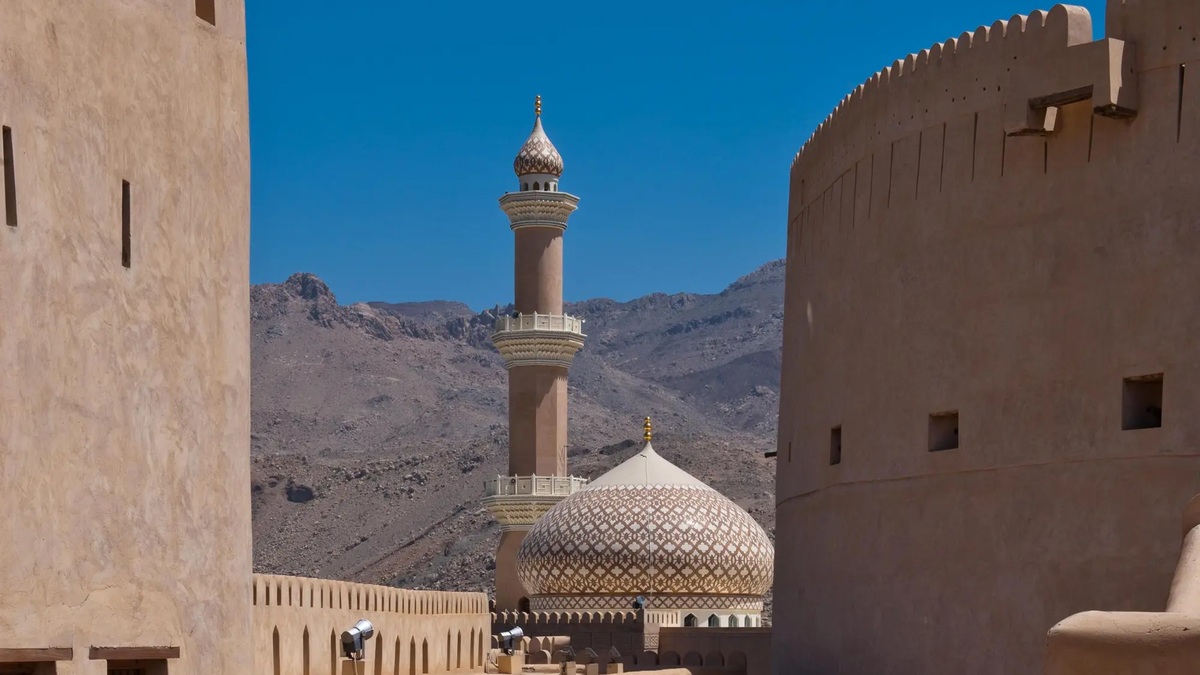
Oman has entered October with a growing portfolio of compact, digitally bookable inland heritage products built around Nizwa. Visit Oman currently shows a two-night heritage package from OMR57 per person and a one-night heritage itinerary with a car from OMR77 per person, both available daily from October 2026. Separately, a private Nizwa–Al Hoota Cave experience created on 11 September 2026 carries an October departure. The significant tourism story is not a new launch of every package, but the increasingly modular way Oman is turning heritage attractions, traditional accommodation, transport and guided experiences into short, purchasable journeys.
Oman’s New Tourism Angle Is Heritage Productisation Rather Than Another Package Launch
The crucial distinction for travellers and the tourism trade is that Oman has not suddenly launched all these Nizwa products in October. The Timeless Nizwa Heritage Cart Journey was created on 3 November 2025, while the Journey to the Heart of History: A Timeless Escape to Nizwa dates from 6 September 2025. Their significance on 3 October 2026 is their current daily availability from October, not an October creation date.
Advertisement
Advertisement
That distinction produces a more important B2B tourism story. Visit Oman is presenting inland cultural assets as products that can be bought in one-, two- and three-night configurations, complemented by self-drive transport, historic accommodation, guided walks, electric-cart interpretation, museums and forts. It changes the commercial proposition from simply promoting heritage locations to selling heritage as a structured short break.
There is also genuinely new inventory. A Visit Oman listing for a private Nizwa and Al Hoota Cave heritage-and-cave tour was created on 11 September 2026, with a departure dated 1 October 2026. The eight-hour experience is listed from OMR61 per person and combines inland cultural and natural attractions with private 4WD transport and an English-speaking guide.
Advertisement
Advertisement
What Travellers Can Actually Book Through Visit Oman This October
Visit Oman’s live holiday availability is particularly relevant because it shows the product in a transaction-ready environment rather than merely as destination inspiration. The platform lists 81 holiday packages, with Nizwa appearing alongside Muscat, Salalah, Jabal Akhdar, A’Sharqiyah Sands and other established Omani destinations.
| Current Oman heritage product | Original creation | October 2026 position | Duration and components | Listed entry price |
|---|---|---|---|---|
| Timeless Nizwa Heritage Cart Journey | 3 November 2025 | Daily departures from October 2026 | 2 nights, 1 accommodation, 3 activities | OMR57 per person |
| Journey to the Heart of History | 6 September 2025 | Daily departures from October 2026 | 1 night, 1 accommodation, 2 activities, 1 car | OMR77 per person |
| Nizwa and Al Hoota Cave heritage-and-cave tour | 11 September 2026 | Listing carries 1 October 2026 departure | 8-hour private tour with 4WD transport | From OMR61 per person |
The two-night product is particularly dense for a short stay. Its current composition includes accommodation at Ihyaa Inn, Nizwa Fort, the Oman Across Ages Museum and an Al Aqur Village cultural-cart experience. Visit Oman lists three activities within the two-night itinerary.
Advertisement
Advertisement
The shorter one-night product links Muscat with Nizwa. Its itinerary combines accommodation with the Al Aqur Village Cultural Cart Tour and a private guided walking experience covering Nizwa Fort and the souq. A car is built into the package structure, which is important for travellers who want the organisational simplicity of packaging without joining a longer escorted circuit.
Why October Is More Than an Arbitrary Booking Date for Oman Heritage Tourism
October has a destination-specific advantage. Experience Oman, the Sultanate’s official tourism portal, identifies October through April as the recommended period for visiting Nizwa Fort. The same official source describes the fort as one of Oman’s leading tourism landmarks and places Nizwa Souq immediately alongside it as part of the wider cultural experience.
Advertisement
Advertisement
That creates a natural commercial alignment. Visit Oman’s daily October availability begins as the official best-visit window for one of the package’s anchor attractions opens. This does not establish that the products were deliberately scheduled because of that seasonal guidance, but it does mean agents selling Oman from October can combine a favourable sightseeing period with ready-made short-stay inventory.
Nizwa also sits within a broader Al Dakhiliyah tourism cluster. Experience Oman identifies nearby heritage and cultural assets including Bahla Fort, Jabreen Fort, Bayt Ar-Ridaydah and the Oman Across Ages Museum. The museum is located at Manah, while the wider region adds mountains, wadis, villages and outdoor experiences.
Latest Oman Tourism Data Make the Short-Stay Strategy More Significant
The strongest new analytical angle emerges when Visit Oman’s October inventory is read against Oman’s latest official tourism statistics.
According to the National Centre for Statistics and Information, Oman received approximately 2.16 million arriving visitors through July 2026, against about 2.15 million over the corresponding 2025 period. The preliminary increase was only around 0.5 per cent.
Advertisement
Advertisement
More recent accommodation data show a softer picture in the upper hotel segment. According to NCSI’s September 2026 Monthly Statistical Bulletin, three- to five-star hotels recorded approximately 1.353 million guests through August 2026, compared with around 1.515 million during the equivalent 2025 period, a decline of 10.7 per cent. Revenue for that hotel segment fell 11 per cent, while occupancy dropped from 52.9 per cent to 46.5 per cent.
| Official Oman tourism indicator | 2025 comparator | 2026 result | Change | Why it matters |
|---|---|---|---|---|
| Arriving visitors through July | 2.15 million | 2.16 million | +0.5% | Inbound volume remained broadly stable rather than accelerating sharply |
| Three- to five-star hotel guests through August | 1,515,472 | 1,352,830 | -10.7% | Upper-category accommodation faced softer guest demand |
| Three- to five-star hotel revenue through August | OMR175.841m | OMR156.544m | -11.0% | Revenue pressure increases the relevance of demand diversification |
| Three- to five-star occupancy through August | 52.9% | 46.5% | -12.0% reported change | More distributed tourism demand could become commercially important |
| Direct tourism GDP, Q1 | OMR276.011m | OMR293.835m | +6.5% | The sector was still expanding economically earlier in 2026 |
| Travel agency and booking-service value added, Q1 | OMR52.099m | OMR56.353m | +8.2% | Booking and distribution activity was growing |
| Cultural-service value added, Q1 | OMR4.014m | OMR4.397m | +9.5% | Cultural tourism-related activity showed measurable expansion |
The periods and hotel populations in these statistics differ, so they should not be treated as evidence that one development caused another. They nevertheless create an important market context. Oman entered 2026 with growth in tourism’s economic contribution, but later hotel indicators show that demand was not strengthening uniformly across every segment.
That makes low-friction cultural products commercially relevant. Rather than requiring every international traveller to purchase a long national circuit or build an inland itinerary from individual suppliers, short packages provide another mechanism for converting interest in Omani culture into actual accommodation nights, transport purchases and paid experiences.
Digital Distribution Is Becoming Part of Oman’s Heritage Tourism Infrastructure
Visit Oman operates as the Sultanate’s digitally native travel-booking gateway, connecting international travellers and travel companies with local tourism suppliers. Its current consumer platform brings together accommodation, activities, transport, transfers, car rental and packaged holidays.
The scale of that distribution layer matters for B2B sellers. Visit Oman reported in 2026 that its ecosystem connects users with more than 200 local tourism providers and experiences, around 80 per cent of them SMEs, alongside more than 80 international airlines and over 100 accommodation options.
That infrastructure makes heritage tourism more distributable. A restored neighbourhood inn, electric-cart experience or privately guided heritage walk has limited international reach when sold independently. Once bundled with accommodation and mobility on a national booking platform, the same components become easier for overseas travel agents, tour operators and independent visitors to discover and transact.
Advertisement
Advertisement
This is the deeper information gain in the October story: Oman is not merely presenting heritage; its distribution infrastructure is making heritage inventory commercially composable.
Oman’s Wider Tourism Economy Supports the Shift Towards Higher-Value Experiences
According to NCSI, tourism’s contribution to Oman’s GDP at current prices reached 2.9 per cent in the first quarter of 2026, compared with 2.6 per cent during the first quarter of 2025. Direct tourism GDP increased 6.5 per cent to OMR293.835 million, while direct tourism gross value added rose 6.6 per cent to OMR286.418 million.
Within that total, accommodation services generated OMR71.094 million in direct value added, transport OMR53.421 million, travel-agency and booking services OMR56.353 million and cultural services OMR4.397 million. All four were higher year on year at current prices.
The same NCSI framework places the tourism contribution target at 3.5 per cent of GDP by 2030 and 5.3 per cent by 2040. Separately, Oman’s Ministry of Heritage and Tourism states that Vision 2040 tourism development is working towards 12 million visitors by 2040, alongside greater emphasis on distinctive experiences and sustainable sector development.
Short heritage stays therefore matter beyond Nizwa. They provide a model for converting historic districts, forts, museums, villages and local businesses into bookable visitor economies while spreading tourism expenditure away from the largest resort and city clusters.
What This Means for Travellers Planning Oman From October
For travellers, the most significant change is choice. Nizwa can now be approached as a compact heritage break, a self-drive extension from Muscat, part of a longer Oman itinerary, or a base for wider exploration across Al Dakhiliyah.
Advertisement
Advertisement
The two-night heritage-cart package compresses accommodation and three cultural activities into a short visit. The one-night option adds road mobility. The newly listed private cave-and-heritage tour demonstrates another model in which Nizwa can be paired with a natural attraction within a single full-day product.
This modularity is particularly relevant to travellers who want greater independence but still need structured access to guides, tickets, locally operated experiences and transport.
Critical Operational Takeaways for Travel Agents and Tour Operators
- Do not market the principal October packages as newly launched. Their original Visit Oman creation dates are in 2025; what is current is their October 2026 availability.
- Treat the September 2026 cave-and-heritage listing separately. It is genuinely newer inventory, created on 11 September with a 1 October departure shown on the platform.
- Reconfirm live pricing before ticketing. Visit Oman uses from-pricing, while accommodation selection, traveller numbers, dates and inventory can affect the final total.
- Check cancellation conditions at component level. Several activities displayed inside the heritage packages are marked non-refundable on the product pages.
- Verify operating hours when building Friday programmes. Experience Oman lists split Friday opening hours for Nizwa Fort, unlike the continuous Saturday-to-Thursday schedule.
- Position Nizwa as an overnight product, not automatically as a Muscat day excursion. The live inventory demonstrates one- and two-night commercial formats that can retain visitor expenditure within Al Dakhiliyah.
- Avoid implying causation from national hotel data. The decline in three- to five-star metrics provides market context, but official sources do not state that the Nizwa packages were introduced in response to those figures.
Oman’s Heritage Strategy Is Moving From Places to Purchasable Experiences
Oman’s October tourism story is therefore more consequential than a simple announcement of another heritage package. The products show how the Sultanate can use digital distribution to transform established cultural assets into shorter, easier-to-book journeys while giving travellers greater control over duration, transport and activity intensity.
That becomes particularly relevant as the country works towards substantially higher tourism contribution and visitor targets while current 2026 indicators reveal uneven performance across the market. Heritage-led micro-itineraries can help widen geographic expenditure, connect international distribution with Omani SMEs and create overnight demand around inland cultural centres rather than concentrating tourism activity in a handful of gateways.
For the global travel trade, the development makes Oman easier to sell in smaller pieces. For travellers, it lowers the planning burden associated with an inland cultural extension. And for Oman’s long-term tourism economy, it illustrates a broader strategic shift: heritage is increasingly being treated not simply as something visitors are encouraged to see, but as an integrated, bookable tourism product capable of generating accommodation, mobility, guiding and cultural-experience revenue.
Advertisement
