
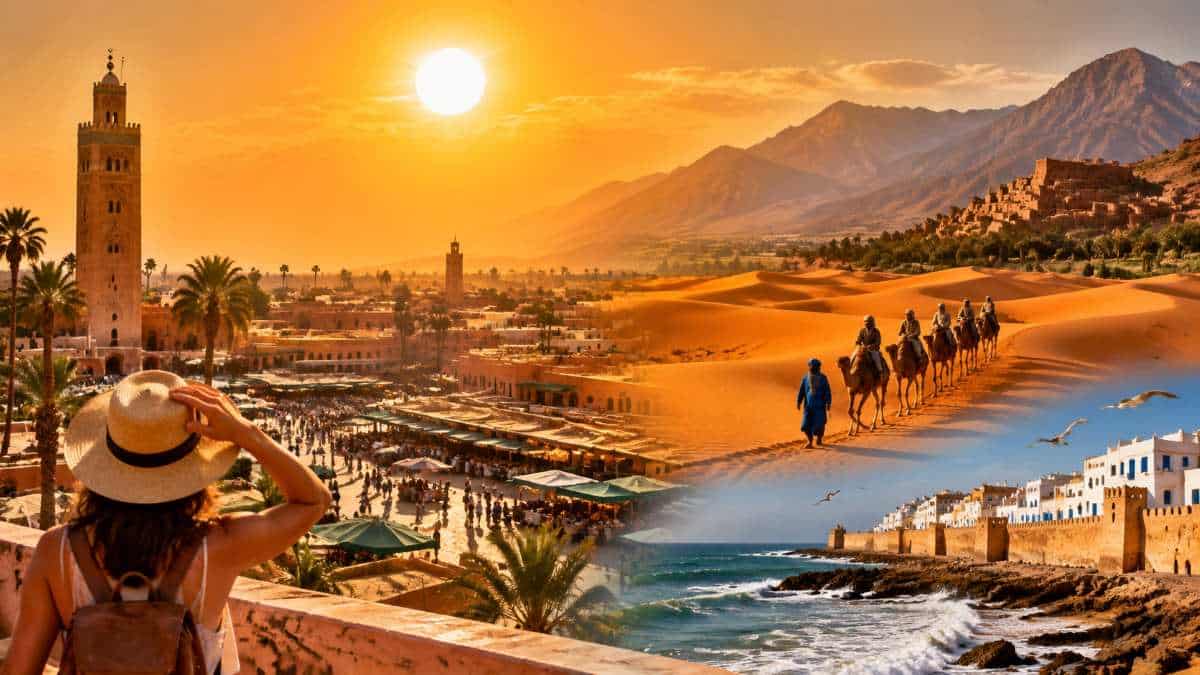
Image generated with Ai
On September 3, 2026, Morocco dealt with another example of the September heatwave caused by the strong, chergui, weather pattern across its major tourist regions. This event shattered records and created difficulty for travelers visiting Marrakech, Fes, Rabat, Meknes and all the Sahara Gateways and inner cultural sites. The Direction Générale de la Météorologie (DGM) confirmed that some locations recorded September temperatures that had never been observed before and that the temperature in Sidi Slimane was the highest recorded temperature in this heat bloom at 47.1°C.
Morocco’s tourism sector is currently experiencing a unique challenge given the nature of the extreme weather event during their normally temperate and safe shoulder season travel months. Visitors hiking through the desert, mountain valleys, and medinas are currently facing the uncomfortable heat and potential moisture in the evenings as the weather changes quickly. The heat was caused by an extremely hot and dry desert air mass, called chergui, which flowed north and into central Morocco. This caused temperatures to be as high as 12°C above normal inland temperatures, negatively affecting some of Morocco’s main tourist destinations.
The most extraordinary temperature reading came from Sidi Slimane, located in Morocco’s Gharb plain, where temperatures reached 47.1°C on September 3. This reading surpassed the previous September record of 45.8°C, recorded on September 6, 1988, marking a rise of more than one degree Celsius above a record that remained unbroken for decades. The temperature was particularly significant because such extreme heat is normally associated with Morocco’s hottest summer months, especially late July and August, rather than the beginning of autumn.
Other major record-breaking locations included:
Advertisement
| Destination | Temperature Recorded | Previous September Record | Impact |
|---|---|---|---|
| Sidi Slimane | 47.1°C | 45.8°C (1988) | New September record |
| Kénitra | 45.1°C | 44.6°C (2006) | New September record |
| Salé / Rabat-Salé | 44.3°C | 43.6°C (2021) | New September record |
Kénitra’s temperature of 45.1°C exceeded its previous September benchmark, while Salé reached 44.3°C, breaking its earlier record. The event demonstrated the strength of the chergui wind system. Unlike Atlantic airflows that normally moderate Morocco’s coastal climate, chergui carries dry desert air that heats further as it descends from higher terrain, producing sudden and severe temperature increases.
Morocco’s famous imperial cities have become some of the most affected tourism zones during the heatwave. Marrakech, Fès and Meknès, three of the country’s most visited cultural destinations, experienced temperatures ranging from 42°C to 45°C, creating difficult conditions for sightseeing, walking tours and outdoor activities.
Marrakech remains one of Morocco’s strongest international tourism destinations, famous for its historic medina, traditional souks, luxury riads and Jemaa el-Fnaa square. During the heatwave, daytime temperatures reached around 42°C to 44°C, with the hottest period occurring between late morning and late afternoon.
Outdoor attractions became significantly more demanding during peak hours:
Advertisement
Advertisement
Traditional Moroccan architecture provides natural temperature control through thick walls and shaded courtyards. However, prolonged extreme heat combined with warm nights reduced the ability of buildings to cool naturally.
Fès and Meknès, located in inland basins, also faced severe conditions. Fès el-Bali, one of the world’s largest medieval urban areas, contains dense stone structures and narrow streets that retain heat long after sunset. For travellers, the traditional experience of exploring markets, monuments and heritage sites has required major schedule adjustments.
Tour operators have increasingly shifted activities towards:
The DGM had already placed several provinces, including Marrakech, Fès, Meknès, Kénitra, Sidi Slimane and surrounding areas, under orange-level weather alerts as temperatures were forecast to rise significantly.
Morocco’s Sahara tourism industry is experiencing some of the toughest conditions of the heatwave. Desert destinations including Zagora, Tata, Errachidia and the Merzouga region have faced temperatures reaching between 42°C and 47°C, while some southern provinces approached even higher levels.
The southern provinces of:
remained under orange weather alerts because of prolonged extreme heat conditions.
The Sahara remains a major attraction for international visitors seeking:
However, extreme afternoon temperatures have forced tourism operators to modify schedules.
The most affected activities include:
Travel activity is increasingly concentrated around cooler periods:Activity Recommended Period During Heatwave Camel trekking Sunrise and sunset Desert photography Early morning and evening 4×4 excursions Morning hours Outdoor exploration Avoid midday
Luxury desert camps equipped with air-conditioning and shaded facilities are becoming more important for travellers visiting during extreme weather periods.
While Morocco’s mountain regions generally provide cooler temperatures, the current weather pattern has created a complex situation across the High Atlas and Middle Atlas.
Areas including:
have experienced unstable atmospheric conditions caused by intense surface heating combined with cooler air at higher levels.
The result has been the possibility of:
The DGM warned that some mountain provinces could experience thunderstorms with rainfall ranging between 15 and 25 mm, accompanied by hail and strong winds. Popular mountain tourism routes, including valleys near Marrakech and Atlas hiking areas, require increased caution because dry river channels (oueds) can quickly fill with water following sudden storms.
The heatwave has transformed daily travel patterns across Morocco.
Traditional sightseeing schedules based around daytime exploration are being replaced by heat-adapted itineraries.
Major changes include:
Visitors are avoiding the hottest period between approximately 11:30 AM and 5:00 PM when temperatures and solar exposure reach their highest levels.
Restaurants, cultural performances and night markets are becoming more important as travellers shift activities into cooler hours.
Hotels, riads and resorts with:
are becoming more attractive during extreme weather events.
Extreme temperatures also affect travel logistics across Morocco.
Long-distance road journeys through desert areas and mountain routes require additional preparation because high heat increases pressure on vehicles.
Key travel considerations include:
Mountain routes such as the Tizi n’Tichka pass between Marrakech and Ouarzazate can become particularly demanding because steep climbs place additional stress on vehicles. Rail services, including Morocco’s ONCF network and the Al Boraq high-speed train connecting Tangier, Kénitra, Rabat and Casablanca, continue operating, although extreme temperatures remain an important factor for infrastructure management.
While inland Morocco experienced record-breaking temperatures, Atlantic coastal destinations offered significantly cooler conditions.
Places such as:
benefited from ocean influence, with temperatures remaining far lower than inland areas.
The Atlantic coast became increasingly attractive because of:
Essaouira, known for its wind conditions and coastal atmosphere, remained one of the strongest alternatives for travellers seeking relief from inland heat.
The September 2026 heatwave highlights the growing importance of climate adaptation within Morocco’s tourism industry. The country’s tourism appeal depends heavily on outdoor experiences, historic landscapes, desert adventures and mountain exploration. However, extreme weather events are changing how visitors plan and experience destinations.
Future tourism strategies are increasingly expected to focus on:
Morocco continues to attract millions of visitors through its unique combination of ancient cities, Sahara landscapes, Atlantic beaches and mountain environments. However, the record September heatwave demonstrates that weather conditions are becoming a crucial factor in travel planning, especially for destinations dependent on outdoor experiences. As cooler Atlantic air gradually replaces the strongest continental heat, conditions are expected to moderate, although southern and inland regions may continue experiencing elevated temperatures in the short term. The event marks another significant moment for Morocco’s tourism sector, reinforcing the need for travellers, operators and destinations to adapt to a changing climate landscape.
Morocco’s September 2026 heatwave, a snapshot of the extreme weather events expected to transform North Africa’s tourism industry, have already begun to affect important hubs of historic travel like Marrakech, Fès, Rabat and the Sahara gateways. Both visitors and operators have been affected and were forced to change their plans. Stress from extreme heat is affecting the inland regions of Morocco the worst. The visitable confrontational regions (coastal) of Morocco have been another alternative for travelers. With temperatures slowly falling, Morocco’s attractiveness to travelers as a destination is expected to remain largely unchanged, even though the climate has forced adaptations to travel and strategies for managing tourism.
Advertisement
Tags: Fès tourism, Marrakech travel conditions, Morocco heatwave 2026, Morocco tourism weather, Morocco travel advisory
Advertisement
Advertisement













Friday, September 4, 2026

Friday, September 4, 2026

Friday, September 4, 2026

Thursday, September 3, 2026

Wednesday, September 2, 2026

Friday, September 4, 2026

Friday, September 4, 2026