
Why Are Off-Grid Modular Luxury Pods Rapidly Taking Over The Future Of Wilderness Travel Across South America?

Published
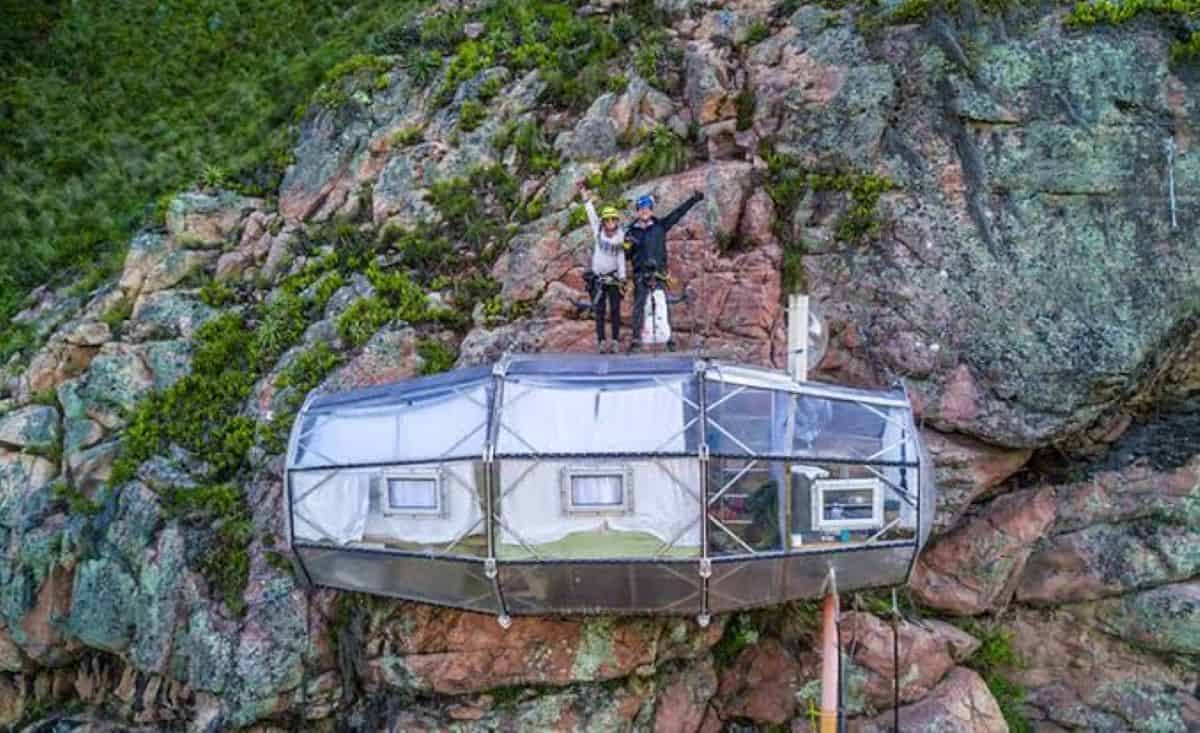
Image Credit naturavive
Wanderlust drives people to travel the world, and traditional key card collections have been completely redefined. We’re after something that cannot be ordered online. Luxury elevates every travel experience, from waking up in the Alps to the serenity of the wilderness and listening to the rain fall. Bringing experiences to people in places that remote does a great service to tourism, but the process of building in those places is hard on both the places and the wallet. Modular pods are shaking up the luxury hospitality sector with their remote building capability and ease of transport. For travelers and developers alike, this is a game-changing technology due to the ease and luxury of traveling to remote destinations without the hassle of trade offs and pain.
Scaling Sustainable Growth: Commercial and Operational Flexibility
The underlying report detailed how factory-crafted structural pods present property investors with unparalleled operational agility along with enhanced financial risk control measures. Conventional brick-and-mortar hotel developments force asset managers to allocate tremendous capital budgets years before welcoming their initial room guests. Conversely, off-site construction models allow operational teams to open facilities progressively by deploying small suites of units initially and expanding inventory as room demand surges. This gradual phase-based investment framework mitigates commercial exposure while dramatically boosting long-term capital efficiency across remote hospitality portfolios.
Advertisement
Advertisement
Furthermore, prefabricated modular systems accelerate deployment timelines, drastically shorting the time required to introduce new boutique hospitality concepts to active markets. Because fabrication occurs within precision-controlled plant environments simultaneously alongside preliminary earthworks on location, total site setup timelines contract drastically. The writer pointed out that accelerated installation schedules allow resort managers to launch booking engines and capture operational cash flows far earlier than standard building methods permit. Additionally, should regional tourism preferences or climate conditions shift, these portable structures can be easily reconfigured or relocated without incurring heavy demolition losses.
Driving Global Recognition: Strategic Marketing and Branding Asset
Advertisement
Advertisement
The writer observed that architecturally striking living spaces function as powerful organic marketing assets for forward-thinking hospitality ventures worldwide. In today’s highly visual digital culture, distinctive structural design instantly attracts international attention and consumer curiosity. The original narrative emphasized that sleek futuristic cabins provide breathtaking backdrop aesthetics, encouraging staying guests to capture and share content across social channels naturally. Consequently, destination operators secure continuous global market reach without allocating massive budgets toward conventional promotional advertising campaigns.
Moreover, establishing a unique architectural signature allows emerging vacation spots to stand out within a highly competitive international travel market. When a resort features innovative units integrated seamlessly into rugged natural settings, the distinctive design becomes synonymous with the destination’s overarching identity. The source document noted that this elevated visual branding continuously pulls in affluent travelers, media highlights, and lifestyle content creators. Ultimately, strong architectural identities build lasting brand equity, elevate average daily room rates, and secure sustainable market positioning.
Advertisement
Advertisement
Elevating Guest Experiences: Shift Toward Experience-Driven Travel
The underlying source text highlighted that today’s discerning travelers prioritize architectural uniqueness, personal solitude, and unobstructed panoramic scenery over conventional cookie-cutter hotel layouts. Modern vacationers actively seek immersive physical environments that connect them deeply with surrounding natural landscapes without compromising personal safety or high-end living amenities. The original text explained that specialized pod structures achieve this balance through floor-to-ceiling glass paneling, tailored view orientations, and refined minimalist interior design elements. These intentional architectural choices grant visitors absolute immersion in nature while preserving supreme climate control and luxury.
Additionally, secluded personal space has emerged as one of the most coveted luxuries across the global premium accommodation sector. Traditional hotel properties force guests through shared hallways and common reception spaces, frequently degrading acoustic privacy and personal intimacy. Conversely, standalone prefabricated units can be positioned strategically across expansive terrain to preserve complete physical isolation. The author noted that this spatial independence transforms standard overnight accommodations into deeply personal, highly memorable private sanctuaries for global travelers seeking total relaxation.
Overcoming Logistics in Pristine Terrains: Solving the Remote Construction Challenge
Advertisement
Advertisement
The reporter detailed how executing standard real estate development across isolated environments throughout South America creates immense logistical bottlenecks and severe ecological disruptions. Constructing traditional hotels within fragile ecosystems like the soaring Andes mountains, the windswept wilderness of Patagonia, or dense tracts of the Amazon rainforest demands heavy machinery transport, extended supply chains, and extensive on-site labor crews. Consequently, project timelines suffer frequent delays while surrounding environments experience irreversible land degradation. The author pointed out that off-site structural manufacturing solves these challenges by completing assembly in controlled factories, enabling fully built units to arrive on site with minimal land disruption.
Furthermore, modular deployment drastically reduces structural installation schedules and eliminates heavy field labor overhead. Standard masonry and concrete pouring techniques frequently disturb delicate native wildlife habitats while generating tremendous physical building waste on location. Conversely, fully outfitted pod units require only light site clearance and non-invasive foundation anchors. The original report confirmed that this streamlined installation strategy protects local vegetation, prevents soil erosion, and dramatically compresses the timeline required to achieve operational status and revenue generation.
A Transformative Overview of Why Luxury Pods Are Becoming a New Opportunity for Tourism Projects in South America
Today, international travelers actively search for authentic, highly immersive journeys that completely transcend standard hotel visits. However, hospitality investors face significant structural hurdles when developing pristine, remote environments across South America Furthermore, integrating luxury pods offers an innovative path forward for high-end eco-tourism throughout the Andes mountains, Patagonia, and the Amazon rainforest. Why luxury pods are becoming a new opportunity for tourism projects in South America lies in their unique ability to combine panoramic aesthetics with rapid deployment. In addition, these modular structures allow operators to capture high-value market segments without causing environmental harm. Consequently, global travelers now gain unprecedented access to untouched landscapes with premium comforts.
The global travel sector is undergoing a massive paradigm shift toward sustainable luxury and experiential lodging. Travelers no longer wish to remain passive observers behind standard concrete walls. Instead, they demand immersive spaces that frame nature as the main attraction. As a result, prefabricated units are redefining real estate investments across diverse geographical zones worldwide. Ultimately, this approach balances environmental stewardship, operational efficiency, and guest satisfaction into one cohesive framework.
Financial Metrics and Capital Investment Efficiency: Evaluating ROI in Modular Pod Hospitality
Advertisement
Advertisement
The rapid rise of modular pod accommodations rests on solid economic principles that address long-standing challenges in traditional resort development. Constructing conventional lodging in isolated or fragile environments carries substantial financial risk, with initial costs often ranging from $350,000 to $500,000 per room. These figures routinely exclude the massive capital required for civil works, such as laying access roads and connecting to regional electrical grids.
Modular pod manufacturing transforms this economic outlook. Off-site factory construction lowers initial capital expenditure by 30% to 45%, bringing per-unit costs down to between $60,000 and $120,000. Additionally, off-site fabrication reduces site preparation timelines by 40% to 60%. This speed allows developers to launch operations and generate revenue within 3 to 6 months, compared to the 18 to 36 months typical of traditional builds. By shortening the pre-opening phase, investors achieve significantly higher Internal Rates of Return (IRR) while minimizing upfront exposure.
Surging Market Demand for Eco-Luxe Accommodations: Global Growth Trends in Outdoor Tourism
The adoption of prefabricated luxury pods aligns with expanding global demand for experiential travel. Valued at $3.46 billion in 2024, the global glamping and luxury pod industry is projected to reach $7.31 billion by 2032, expanding at a Compound Annual Growth Rate (CAGR) of 9.8%. Cabins and modular pods make up 41% of this market, largely because their durable construction supports year-round operations across varying weather conditions.
Regional indicators point to robust expansion in destinations like South America, where inbound international tourism is projected to grow at a 4.40% CAGR, driven primarily by leisure travel, which accounts for 84.50% of market demand. High-earning travelers aged 33 to 50 command a 38% market share in this segment. These guests frequently demonstrate a willingness to pay daily room rates between $400 and $900 for private, high-end stays set in nature.
Engineering for Extremes: Climate Adaptation and Thermal Resilience Across Diverse Landscapes
Advertisement
Advertisement
Deploying high-end accommodations across demanding terrain requires sophisticated engineering. In high-altitude settings like the Andes, units must withstand sub-zero temperatures dropping to -20°C (-4°F) alongside gale-force winds exceeding 120 km/h (75 mph). Conversely, installations in tropical rainforests face continuous relative humidity above 90% alongside high ultraviolet radiation.
Modern pods address these environmental stressors through advanced material selection and structural planning. Standard unit specifications incorporate triple-glazed low-emissivity glass facades to minimize thermal transfer, aviation-grade aluminum exterior shells resistant to weather corrosion, and high-density polyurethane insulation panels offering up to R-30 thermal resistance. These engineered systems decrease HVAC energy demand by 35% to 50%, maintaining stable indoor climate conditions around 21°C (70°F) despite ambient external extremes.
Micro-Grid Integration and Off-Grid Autonomy: Powering Lodging in Earth’s Remote Frontiers
A core operational advantage of modular pods is their capacity for total utility independence. In remote wilderness areas, running municipal electricity, water, and sewage lines can add $50,000 to $150,000 per kilometer in infrastructure overhead. Prefabricated pods bypass these expenses by integrating self-contained micro-grids directly into their physical architecture.
Roof-mounted monocrystalline solar arrays paired with 15 kWh to 30 kWh lithium iron phosphate battery systems provide up to 72 hours of continuous off-grid power autonomy. On the water management side, closed-loop systems utilize multi-stage reverse osmosis filtration and graywater treatment. This integrated technology cuts daily freshwater consumption by 60% while completely preventing liquid waste discharge into delicate local ecosystems.
Demographic Shifts and High-Value Travelers: Key Drivers of Premium Experiential Travel
Advertisement
Advertisement
Identifying guest priorities helps operators optimize design and marketing strategies effectively. Data shows that 55.5% of solo luxury travelers and 74.6% of eco-conscious family groups prefer nature-integrated lodgings over standard urban luxury hotels. Modern high-value consumers increasingly seek privacy, with 68% preferring stand-alone accommodations equipped with contactless features like digital self-check-in, mobile entry, and automated climate controls.
Furthermore, digital channels dominate booking behaviors, with over 52% of regional travel bookings in markets like South America completed via mobile devices. Properties featuring distinctive modular architecture record direct booking conversion rates 2.5 times higher than traditional boutique hotels, driven largely by digital-native international travelers looking for unique retreats.
Minimizing Carbon Footprints: Life-Cycle Assessment and Ecological Construction Standards
Environmental metrics now play a key role in securing building permits and operating concessions in ecologically sensitive locations. Traditional on-site construction generates 100 kg to 150 kg of waste per square meter, alongside significant emissions from transporting raw materials and heavy equipment to remote sites. Off-site modular fabrication cuts construction waste by 80% to 90% through factory precision and structured material recycling programs.
Site installation uses low-impact helical screw foundations or elevated steel piles, avoiding the need for continuous concrete foundation pours. This non-invasive approach preserves roughly 95% of native topsoil and natural surface drainage patterns. A comprehensive Life-Cycle Assessment indicates that modular pods generate 40% lower embodied carbon emissions over a 20-year operational life compared to traditional masonry structures.
Social Media Dynamics and Organic Brand Growth: Quantifying the ROI of Visual Architecture
Advertisement
Advertisement
Distinctive architectural design functions as a direct driver of organic marketing in modern tourism. High-end pods featuring broad panoramic windows or cantilevered frames generate an average of 3.8 times more social media shares and user tags than conventional hotel rooms. This visual presence builds strong worldwide brand advocacy directly through authentic guest experiences.
Properties with visually striking designs capture up to 45% of their total bookings directly through visual digital platforms. By attracting guests directly, operators reduce their reliance on Online Travel Agencies, avoiding standard commission fees of 15% to 25%. This direct engagement lowers overall Customer Acquisition Costs by up to 30%, making architectural design an ongoing driver of organic marketing value.
Portfolio Scalability and Asset Relocation Strategies: Managing Concession and Land Risks
Operating resorts on leased land, private reserves, or temporary park concessions introduces long-term real estate exposure. Modular pod architecture offers a structural hedge against this uncertainty through complete physical mobility. Built on heavy-duty structural chassis, a collection of 10 to 20 pods can be decommissioned, loaded onto transport, and relocated to a new site within 14 to 21 days without leaving permanent site damage.
This operational mobility protects capital investments against shifting regulatory conditions or land lease terminations. It also gives operators the flexibility to adjust geographically based on seasonal demand such as moving units between winter mountain zones and summer coastal areas helping maintain average year-round occupancy rates above 75%.
The Final Verdict
Advertisement
Advertisement
Like futuristic beehives, luxury pods enable us to see a more sustainable way to follow our curiosity when it comes to interaction with the natural world. With this new technology, we can maintain the rugged beauty of nature, and reduce some of the negative impact caused by traveling on a massive scale. Travel doesn’t necessarily need to bring about negative experiences to be thought provoking.
Luxury pods make up for the ecological trade-off we make just by traveling. By blending modern design and sustainability, luxury pods effectively allow us to build within natural settings while causing minimal impact on the natural environment. Luxury pods create an opportunity to sit back and enjoy the view. Traditional travel accommodations break up travel flows with the focus on business. Luxury pods will encourage travel and offer a sustainable way to reflect on nature’s beauty in ways we have forgotten.
Advertisement
