
US Researchers Develop AI Medical Device for Health Tourism That Lets Patients Chat With Brain Monitors and Cuts False Seizure Alarms by 81%

Published
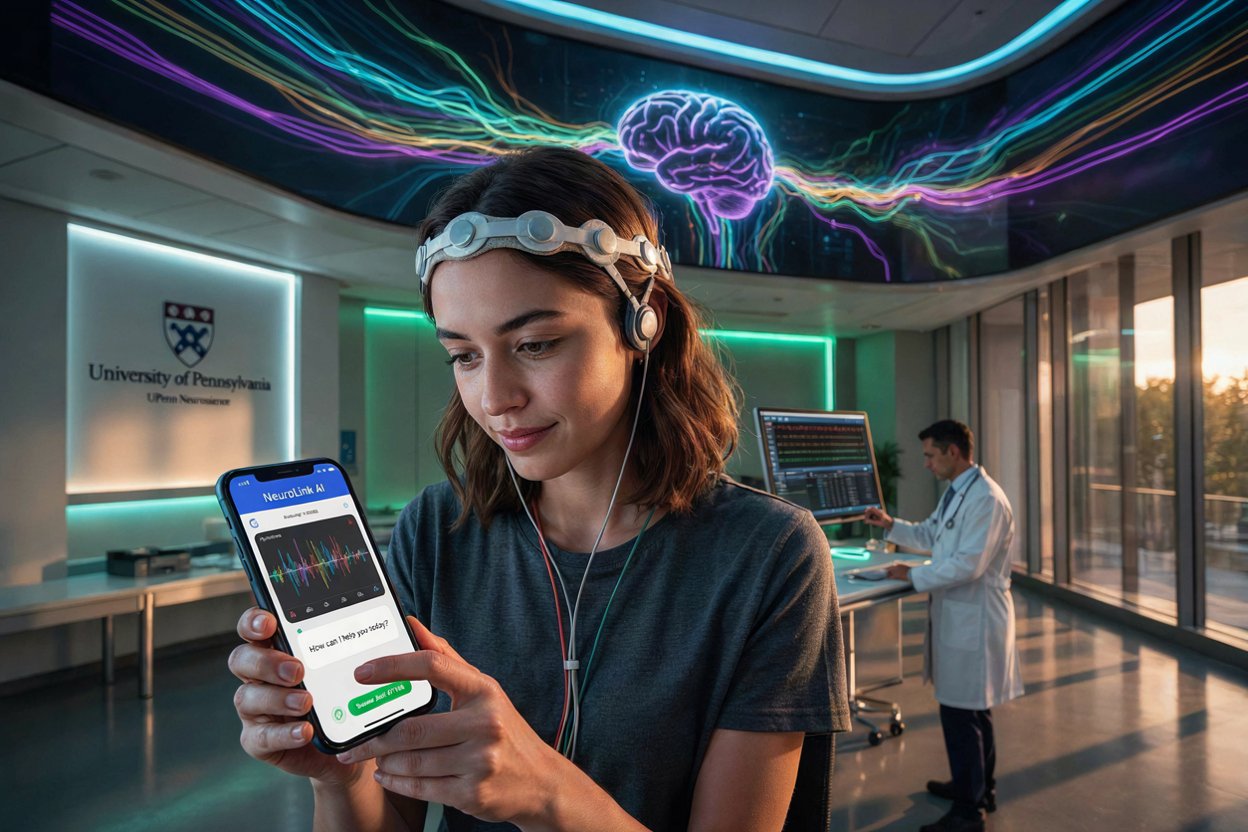
A pioneering AI medical device platform developed by researchers at the University of Pennsylvania in the United States could transform how patients monitor epilepsy, allowing them to communicate directly with brain-monitoring technology through a smartphone application. Published in Nature Medicine on 13 October 2026, the research demonstrated that patients could receive personalised information about their brain activity, report symptoms and help improve seizure-detection algorithms. In a small hospital-based study involving 13 adults, feedback-driven model adjustments reduced false seizure alarms by approximately 81%. The findings represent an important advance in interactive healthcare technology, although larger clinical trials are needed before the system can become part of routine patient care.
What Is the New AI Medical Device Platform Developed by University of Pennsylvania Researchers?
The newly developed platform brings conversational artificial intelligence into medical monitoring, creating a two-way connection between patients and the technology recording their physiological activity.
Advertisement
Advertisement
Conventional epilepsy-monitoring devices primarily collect information for medical professionals to review. Patients may receive clinical advice after healthcare teams have analysed the recordings, but they generally cannot hold an immediate conversation with their monitoring equipment.
The Pennsylvania researchers set out to change that relationship.
Advertisement
Advertisement
Their system combines continuous electroencephalography (EEG) monitoring, automated data analysis, secure cloud computing and a conversational AI interface accessible through a smartphone.
Rather than simply storing information, the platform interprets selected brain activity measurements and presents them in a format patients can understand.
Advertisement
Advertisement
A patient might ask whether unusual neurological activity occurred overnight, request a summary of sleep patterns or respond to an alert about a possible seizure.
The application can also initiate conversations by sending notifications, requesting symptom updates or inviting patients to verify unusual readings.
This creates an interactive process in which the patient contributes information that monitoring equipment cannot always determine independently.
Researchers from the University of Pennsylvania’s Perelman School of Medicine and Center for Neuroengineering and Therapeutics developed the system.
The project is particularly significant because it introduces patient feedback into the continuous improvement of medical-device algorithms, rather than treating patients solely as recipients of information.
How Does the AI Technology Allow Patients to Communicate With Medical Devices?
The system works by connecting neurological monitoring equipment to a secure computational environment that processes incoming signals and makes selected information available through a conversational interface.
Advertisement
Advertisement
EEG monitoring records electrical activity in the brain. Clinicians use these recordings to investigate seizures, assess neurological patterns and support epilepsy diagnosis and treatment decisions.
Traditionally, interpreting this information requires specialist expertise.
The research platform introduces software that converts selected technical measurements into understandable responses, supported by graphs and other visual information.
The Five Stages Behind the Technology
- Brain monitoring: EEG equipment continuously collects electrical activity from the patient.
- Secure data processing: Information is transferred to a protected cloud environment for analysis.
- AI interpretation: Specialist algorithms identify seizure-related patterns, sleep characteristics and other physiological measurements.
- Patient conversation: A smartphone interface lets patients ask questions, view information and receive alerts.
- Feedback-driven refinement: Patient responses provide additional labels that can help improve seizure-detection models.
The research used a health-data environment designed to comply with the United States Health Insurance Portability and Accountability Act (HIPAA).
Importantly, the conversational AI did not independently make treatment decisions. Its primary function was to retrieve, organise and communicate information generated by clinical monitoring and specialist analytical models.
The researchers used a secured deployment of GPT-4o-mini for conversational functions. The underlying seizure-detection algorithms were separate from the language model.
Advertisement
Advertisement
This distinction is essential. A chatbot can explain or retrieve medical information, but it does not automatically acquire the clinical reliability required to diagnose disease or change treatment.
The research therefore concentrated on establishing whether meaningful patient-device communication could work safely and effectively within a supervised clinical environment.
What Did the 2026 Clinical Study Discover About AI-Assisted Epilepsy Monitoring?
Researchers evaluated the platform with 13 adult patients admitted to the Hospital of the University of Pennsylvania’s epilepsy monitoring unit.
Eleven participants underwent scalp EEG monitoring, while two received intracranial EEG monitoring.
The observational study took place in a controlled hospital environment where participants already needed continuous neurological assessment.
Their ordinary clinical care was not replaced by the experimental application.
Advertisement
Advertisement
Patients could communicate with the system during their hospital stays, respond to automated notifications and contribute information about their symptoms.
The researchers subsequently examined engagement, response accuracy, technical performance, usability and the impact of patient feedback on seizure-detection algorithms.
Key Findings From the Published Research
| Study measurement | Reported result |
|---|---|
| Publication date | 13 October 2026 |
| Research institution | University of Pennsylvania, Philadelphia |
| Scientific journal | Nature Medicine |
| Study design | Prospective, single-centre observational study |
| Total participants | 13 adults |
| Scalp EEG participants | 11 |
| Intracranial EEG participants | 2 |
| Median participation | 4.87 days |
| Total patient–AI messages | 1,307 |
| Patient-initiated messages | 407 |
| System-initiated messages | 900 |
| Response rate to seizure alerts | 67.2% |
| Accurate data-retrieval tasks | 35 of 38 (92.1%) |
| Median general-chat response time | 1.95 seconds |
| Median data-query response time | 8.69 seconds |
| Reduction in false alarms after patient-feedback fine-tuning | 80.9% |
| Mean usability score | 83 out of 100, based on five respondents |
Source: Goldblum and colleagues, Nature Medicine, 13 October 2026. Results concern a small experimental study and should not be interpreted as proven benefits in everyday outpatient use.
The findings indicate that patients were willing to interact with the platform and could contribute useful information to the algorithms.
However, the small number of participants and short observation period limit conclusions about long-term performance.
The study demonstrated technical feasibility and promising algorithmic improvements. It did not establish that using the platform prevents seizures, reduces hospital admissions or improves survival.
Advertisement
Advertisement
How Did Patient Feedback Reduce False Seizure Alarms by Nearly 81%?
One of the study’s most important findings concerns the reliability of automated seizure detection.
EEG monitoring systems can identify unusual electrical activity in the brain, but not every suspicious signal represents an actual seizure. Normal physiological variations, movement-related interference and other patterns may lead algorithms to generate incorrect alerts.
False alarms create practical challenges. They can interrupt patients, increase anxiety and add to the volume of information requiring clinical review.
The Pennsylvania research explored whether patients could help monitoring software distinguish meaningful neurological events from misleading signals.
When the application detected a possible seizure, it sent a notification to the participant. The patient could then indicate whether the event appeared genuine, incorrect or uncertain.
Researchers used these annotations to refine the seizure-detection models.
Advertisement
Advertisement
The results were encouraging.
Across the study, participants responded to 67.2% of real-time seizure alerts. In subsequent simulated model updates, patient feedback reduced the false-alarm rate by 80.9%, while maintaining baseline sensitivity in the reported evaluation.
The improvement was achieved without requiring clinicians to provide every training label.
However, this result needs careful interpretation.
The 80.9% reduction refers to false alarms in a specific model-fine-tuning analysis, not an 80.9% reduction in seizures experienced by patients.
Nor does it mean the experimental system correctly recognised every seizure.
Advertisement
Advertisement
The researchers documented substantial limitations in the raw alerts, including low sensitivity and precision in one evaluation against clinician-confirmed seizures. For the 11 participants with access to the annotation feature, clinicians confirmed 59 seizures. The platform issued 58 alerts, but only eight of those alerts corresponded to confirmed seizures under the reported assessment.
Patient confirmation provided useful training information, yet it could not compensate for every missed detection.
The distinction matters because a medical monitoring system must minimise both false positives and false negatives.
Reducing unnecessary warnings is valuable, but missing genuine neurological events can also carry serious consequences.
The study therefore provides evidence that patient feedback can improve an algorithm under experimental conditions. It does not establish that the prototype is sufficiently reliable for unsupervised clinical decision-making.
Why Could Real-Time Brain Monitoring Change Epilepsy Care Worldwide?
Epilepsy is a chronic neurological condition associated with recurrent seizures caused by abnormal electrical activity in the brain.
Advertisement
Advertisement
Its effects vary considerably. Some people experience brief interruptions in awareness, while others have seizures involving involuntary movements or loss of consciousness.
For many patients, medication provides effective seizure control. Others continue experiencing seizures despite treatment.
The World Health Organization’s epilepsy fact sheet estimates that around 50 million people worldwide live with epilepsy.
WHO also estimates that up to 70% of people with epilepsy could become seizure-free with appropriate diagnosis and treatment.
Nevertheless, access to effective care remains uneven, particularly in low- and middle-income countries.
The Global Epilepsy Burden
| WHO indicator | Published estimate |
|---|---|
| People living with epilepsy worldwide | Approximately 50 million |
| New diagnoses annually | Around 5 million |
| Patients potentially able to become seizure-free with appropriate care | Up to 70% |
| People with epilepsy living in low- and middle-income countries | Nearly 80% |
| Relative risk of premature death | Up to three times higher than the general population |
Source: WHO epilepsy fact sheet, published 7 February 2024. These are historical published global estimates, not newly measured figures for October 2026.
Advertisement
Advertisement
Against this background, technologies that make monitoring information more accessible could have considerable long-term relevance.
Epilepsy management often involves recognising patterns associated with sleep, medication adherence, stress and other circumstances.
Yet patients do not always have immediate access to the physiological information collected by clinical monitoring equipment.
Interactive devices could potentially narrow this information gap.
For example, a patient might recognise that certain symptoms tend to follow poor sleep. A monitoring system capable of presenting relevant EEG and sleep information could help the patient discuss those observations with a clinician.
The important change is not simply faster data collection. It is the possibility of presenting information in a way that supports informed participation in healthcare.
Advertisement
Advertisement
Still, the global availability of such technology would depend on affordability, infrastructure, specialist access and reliable evidence of effectiveness.
Can the AI Platform Help Patients Understand Sleep, Medication and Seizure Patterns?
The research incorporated several physiological and patient-reported measurements relevant to epilepsy.
These included seizure probability, sleep stages, abnormal electrical discharges between seizures and medication-related information.
Participants also received surveys asking about their mood, anxiety, sleep, energy and general well-being.
These measurements were not intended to produce independent medical diagnoses.
Instead, the system brought different sources of information together so patients could explore possible relationships between their experiences and their neurological recordings.
Advertisement
Advertisement
What Information Could Patients Access?
| Information category | Platform function | Possible patient value |
|---|---|---|
| Seizure-related activity | Display detected events and associated probabilities | Help patients review suspected neurological episodes |
| Sleep patterns | Present EEG-derived sleep information | Support understanding of sleep-related trends |
| Interictal spikes | Report selected abnormal electrical signals between seizures | Make monitoring findings more accessible |
| Medication information | Incorporate available medication records and derived measurements | Support discussions about treatment-related patterns |
| Mood and anxiety | Record patient-reported experiences | Add context not directly captured by sensors |
| Daily symptoms | Allow free-text reporting | Help document changes between clinical assessments |
Functions demonstrated or described in the research prototype. They do not represent validated diagnostic or treatment capabilities for home use.
The researchers observed that patients used the system for more than technical questions.
Many interactions involved ordinary conversation, personal observations and responses to surveys.
This behaviour suggests that an approachable interface may encourage patients to share information that would otherwise remain outside the monitoring record.
The system’s ability to combine objective measurements with subjective experience is especially relevant.
A brain monitor can record electrical signals, but it cannot necessarily determine how an individual feels, whether a symptom was distressing or how an episode affected daily activities.
Advertisement
Advertisement
Patients possess contextual information that sensors alone cannot provide.
Capturing both forms of evidence could help clinicians build a more complete understanding of disease patterns.
However, showing an association between symptoms and physiological measurements is not the same as establishing causation.
For example, a change in sleep patterns alongside increased neurological activity would require clinical interpretation before drawing conclusions about its significance.
How Quickly Did the AI Respond to Patient Questions?
Speed is another important consideration in medical-device communication.
An interactive monitoring tool must be responsive enough for patients to use comfortably without implying that every response provides immediate clinical certainty.
Advertisement
Advertisement
The Pennsylvania team evaluated the performance of two AI functions.
The first handled general conversation and symptom logging.
The second retrieved and synthesised physiological information from the study database.
General-chat responses had a median latency of 1.95 seconds.
More complex data queries required a median of 8.69 seconds.
The difference reflects the additional processing involved in locating and interpreting structured medical information.
Advertisement
Advertisement
The data-retrieval function completed 35 of 38 evaluated tasks accurately, corresponding to 92.1% accuracy.
Meanwhile, the message-routing system, which decided whether a question required ordinary conversation or a clinical data query, achieved 89.7% accuracy across 78 evaluated messages.
These figures demonstrate promising functionality, but they also reveal why careful system design is necessary.
An incorrect query classification might prevent patients from receiving the information they intended to request.
A delayed response could undermine confidence in time-sensitive situations.
More importantly, a fluent answer must not be mistaken for a clinically verified conclusion.
Advertisement
Advertisement
The research team addressed these concerns by limiting the conversational model’s role and introducing moderation and review procedures.
The researchers reported no unsafe or clinically inappropriate messages during daily audits of the study interactions.
Because the sample was small, that finding cannot guarantee the same safety performance during prolonged deployment among thousands of patients.
Could Artificial Intelligence Make Medical Devices More Personalised?
Personalisation is central to the research.
Many existing medical-device algorithms rely on predefined detection criteria or settings configured through clinical appointments.
Yet patients differ in their physiology, symptoms, experiences and treatment responses.
Advertisement
Advertisement
An algorithm that performs well for one person may generate more false alerts or miss important patterns in another.
The Pennsylvania platform explored a mechanism for continuous refinement based on individual feedback.
Instead of relying exclusively on pre-existing training data, a seizure-detection model could incorporate patient annotations collected during use.
In the study, the researchers simulated repeated model updates at three-hour intervals when predefined conditions were satisfied.
This produced a system that could adapt its detection behaviour as additional information became available.
Such an approach has implications beyond epilepsy.
Advertisement
Advertisement
Future medical systems could potentially combine sensor measurements with direct patient feedback to produce more individually relevant monitoring.
However, personalisation also raises questions about algorithmic stability.
An adaptive model must avoid learning incorrect patterns from inaccurate feedback.
Patients may be unaware that a seizure occurred, particularly when it affects memory or consciousness. They may also misinterpret symptoms or respond after an event has ended.
For that reason, the researchers examined ways to incorporate expert review alongside patient-generated annotations.
This combination offers a more balanced model of collaboration.
Advertisement
Advertisement
Patients contribute observations from their lived experience, while clinicians provide specialised interpretation when necessary.
The objective is not to remove healthcare professionals from treatment, but to make their involvement more targeted and informed.
What Role Could the Technology Play in Parkinson’s Disease, Diabetes and Heart Conditions?
Although the published study focused on epilepsy, researchers believe the underlying communication system may eventually support other conditions managed with medical devices.
Penn Medicine has identified several possible applications, including Parkinson’s disease, cardiac monitoring, insulin delivery and neuropsychiatric treatment.
These applications remain prospective. They were not validated by the 13-person epilepsy study.
Medical Fields That Could Benefit From Interactive AI Devices
| Medical field | Potential application | Current evidence status |
|---|---|---|
| Epilepsy | Conversational brain monitoring and feedback-driven seizure detection | Initial hospital-based proof of concept |
| Parkinson’s disease | Patient feedback to support deep brain stimulation adjustments | Further research being prepared |
| Diabetes | Conversational access to glucose and insulin-delivery information | Proposed future application |
| Cardiac conditions | More accessible information from monitoring or implanted cardiac devices | Potential application |
| Depression and other neuropsychiatric conditions | Combining patient-reported symptoms with physiological information | Exploratory research direction |
| Insomnia and sleep monitoring | Integration of wearable and physiological measurements | Further development described by researchers |
Prospective applications identified by Penn Medicine. The published study does not establish effectiveness for these additional conditions.
Advertisement
Advertisement
Parkinson’s disease is one of the most immediate areas of planned research.
Deep brain stimulation involves implanted equipment that delivers electrical stimulation to selected brain regions.
Adjusting treatment settings can require specialist evaluation and repeated clinical appointments.
The researchers are preparing studies examining whether conversational interfaces and patient feedback could help optimise stimulation settings.
For example, a person might report changes in symptoms during routine activities, providing information relevant to treatment adjustments.
The device could potentially combine those observations with measurable neurological signals.
Advertisement
Advertisement
Yet automatically changing stimulation parameters introduces considerably greater clinical risk than displaying information.
Any such system would require appropriate safeguards, clinical validation and regulatory consideration.
For diabetes, an interactive insulin-delivery device could theoretically explain relevant glucose trends or help patients understand how recorded measurements relate to everyday activities.
That possibility does not establish that a conversational AI system can safely calculate or administer insulin.
Similarly, cardiac applications would need to demonstrate accuracy, reliability and clinical benefit before becoming dependable tools for patient management.
Why This Matters
The research addresses a longstanding limitation of medical technology: equipment can collect highly detailed information without making that information immediately useful or understandable to patients.
Advertisement
Advertisement
The potential benefit lies in transforming monitoring from a largely one-directional process into a collaborative activity.
Patients could receive more accessible explanations, contribute observations and communicate concerns while relevant physiological measurements are available.
For healthcare professionals, better contextual information could support more informed consultations.
If future research confirms that adaptive algorithms reduce unnecessary alerts without compromising detection, they may also help reduce the burden of reviewing monitoring data.
The technology could eventually influence remote monitoring, specialist follow-up and chronic disease management.
However, these benefits remain possible future outcomes rather than established clinical results.
Advertisement
Advertisement
The current evidence shows that a conversational interface can operate within supervised epilepsy monitoring and that patient feedback can improve a detection algorithm in a limited experimental analysis.
Whether those improvements translate into fewer seizures, better quality of life or lower healthcare costs remains unproven.
The broader significance is therefore a new approach to designing medical-device interaction, rather than evidence that artificial intelligence has already transformed epilepsy treatment.
What Are the Main Safety, Privacy and Regulatory Challenges?
Medical-device conversations involve information that may be sensitive, clinically significant and vulnerable to misinterpretation.
The Pennsylvania team built its experimental platform within a secure environment and incorporated institutional oversight.
According to the published methodology, patient information was processed within Penn’s HIPAA-compliant infrastructure rather than being exposed to public consumer chatbot services.
Advertisement
Advertisement
The system also incorporated moderation procedures and daily review of patient–AI exchanges.
These controls were especially important because large language models can generate incorrect or misleading statements.
Even when a model has access to accurate physiological data, it may misunderstand a question, retrieve inappropriate information or describe a result inaccurately.
A clinically useful platform therefore requires more than fluent conversational capabilities.
Essential Safeguards for Future Medical AI Systems
- Clinical validation: Demonstrate reliable performance across diverse patients and real-world conditions.
- Human oversight: Define when qualified clinicians must review findings or intervene.
- Privacy protection: Prevent inappropriate disclosure of sensitive health information.
- Algorithm monitoring: Detect deterioration in performance as models adapt.
- Clear responsibility: Establish accountability for alerts, advice and automated actions.
- Accessible design: Ensure patients can understand information without specialist technical knowledge.
- Regulatory compliance: Meet applicable requirements according to the software’s intended medical function.
The US Food and Drug Administration regulates qualifying AI-enabled medical devices through a risk-based framework.
According to the FDA’s official overview of AI-enabled medical devices, more than 1,600 AI-enabled medical devices had been authorised for marketing in the United States as of September 2026.
Advertisement
Advertisement
That figure covers a broad range of technologies. It does not indicate that the Pennsylvania conversational epilepsy platform itself has FDA marketing authorisation.
The FDA also recognises that adaptive medical software can require ongoing attention to changes in performance, validation and safety.
This is particularly relevant to systems that update their algorithms using incoming information.
A model that improves after receiving patient feedback must still be evaluated for potential unintended consequences.
The regulatory pathway for any eventual commercial version would depend on its intended use, functions and associated risks.
What Are the Most Important Limitations of the Research?
The study represents an early demonstration rather than definitive evidence of clinical effectiveness.
Advertisement
Advertisement
Only 13 patients participated, all within a single hospital’s specialist epilepsy monitoring unit.
The median participation period was less than five days.
This setting allowed researchers to access high-quality EEG recordings and provide close supervision, but it differs substantially from ordinary life.
Patients undergoing epilepsy monitoring may have medications adjusted or temporarily reduced to help clinicians characterise seizures.
Consequently, their neurological patterns and experiences may not reflect everyday outpatient conditions.
The study also lacked the scale required to evaluate important outcomes such as seizure reduction, emergency department attendance or sustained improvements in quality of life.
Advertisement
Advertisement
Usability findings were similarly preliminary.
Although the average usability score reached 83 out of 100, that result came from just five respondents.
Five of the 13 participants spontaneously requested outpatient access, indicating interest in the technology. Nevertheless, expressed interest does not demonstrate long-term adherence or effectiveness.
Patient feedback also has limitations.
A person may not recognise every seizure. Memory disturbance, delayed responses and uncertainty can affect the reliability of annotations.
These issues become particularly important when algorithms use feedback to modify future detection.
Advertisement
Advertisement
The study’s improvements must therefore be interpreted within the context of its design, rather than treated as evidence of established clinical performance.
Larger trials involving home-based monitoring, different patient populations and longer observation periods are necessary.
What Travellers Should Know
Although the research is primarily a medical technology development, it has potential relevance for people managing chronic neurological conditions while travelling.
Journeys can involve unfamiliar routines, disrupted sleep schedules, changes in daily activities and periods away from established healthcare services.
For travellers with epilepsy, access to accurate health information and personalised clinical guidance can be particularly important.
A future validated monitoring platform might make it easier to review neurological patterns or share relevant information with healthcare professionals while away from home.
Advertisement
Advertisement
However, the Pennsylvania prototype is not currently an established travel-health service.
Before Travelling
People with epilepsy should continue following advice from their treating healthcare professionals rather than relying on an experimental AI application.
Practical considerations may include carrying prescribed medication, planning for changes in time zones, maintaining access to medical documentation and understanding how to obtain appropriate care at the destination.
Any wearable or implanted medical equipment should be used according to its approved instructions.
A future conversational platform could potentially make health monitoring more convenient, but it would not eliminate the need for travel preparation or professional medical guidance.
For international travellers, issues such as connectivity, cross-border health-data processing and local regulatory requirements would also need consideration before such systems could be deployed widely.
Advertisement
Advertisement
What Happens Next for the University of Pennsylvania AI Research Programme?
Researchers are preparing additional investigations to evaluate the technology beyond the supervised hospital environment.
According to Penn Medicine, future work will examine whether the platform can reduce seizure frequency and severity, improve quality of life and decrease emergency department visits.
These are planned research objectives, not outcomes demonstrated in the October 2026 publication.
The team also intends to explore outpatient monitoring using minimally invasive EEG devices and wearable technologies.
Such research would allow investigators to assess performance during ordinary daily activities, where patients experience substantially different circumstances from those encountered during hospital admission.
Further development is also being directed towards deep brain stimulation in Parkinson’s disease.
Advertisement
Advertisement
The research builds on broader work involving brain-computer interfaces, adaptive monitoring and patient-responsive treatment systems.
Penn Medicine reports that the programme has received support through a $5.6 million National Institutes of Health Pioneer Award.
Federal research funding provides an important foundation for experimentation, but it does not guarantee that a particular device will become commercially available or achieve regulatory approval.
The next phase will need to answer questions about clinical benefit, safety, scalability, patient engagement and the appropriate balance between automation and professional oversight.
Frequently Asked Questions
1. What is the new AI medical device platform?
It is an experimental system developed at the University of Pennsylvania that connects EEG monitoring data with a smartphone-based conversational AI interface. Patients can ask questions about selected physiological measurements, receive notifications and provide feedback to improve seizure-detection algorithms.
2. Did the AI platform really reduce false seizure alarms by 81%?
Yes. Researchers reported an 80.9% reduction in false alarms after fine-tuning seizure-detection models using patient annotations in a pseudoprospective analysis. The result does not mean seizures themselves decreased by that percentage, and it has not been validated in large outpatient trials.
Advertisement
Advertisement
3. Can patients download the application and use it at home?
The October 2026 study examined a research prototype used during supervised hospital monitoring. The publication does not establish general public availability. Researchers are planning further outpatient investigations.
4. Could the technology eventually work with insulin pumps or Parkinson’s devices?
Potentially. Researchers have identified insulin delivery, cardiac monitoring and Parkinson’s deep brain stimulation as areas for further exploration. The published clinical evidence concerns epilepsy monitoring and does not establish safety or effectiveness for these other applications.
5. Will AI-powered medical devices replace doctors?
The study does not support that conclusion. The system was designed to communicate monitoring information and incorporate patient feedback, with safeguards and clinical oversight. Medical diagnosis, treatment decisions and safety evaluation continue to require appropriately qualified professionals.
Conclusion: A Promising New Direction for Patient-Centred Healthcare
The University of Pennsylvania’s October 2026 research represents a meaningful development in conversational medical technology. By connecting brain-monitoring equipment with a secure AI-powered smartphone interface, investigators demonstrated how patients could participate more actively in interpreting and improving the information generated by their devices.
The study’s most notable result was an approximately 81% reduction in false seizure alarms through feedback-driven algorithm refinement. The platform also achieved encouraging engagement and technical performance during supervised testing.
However, these findings come from a small, short-term study, and the reported improvements have not yet translated into proven long-term clinical benefits.
The next challenge is determining whether this approach can function reliably and safely outside hospital walls, across different medical conditions and among larger patient populations.
Advertisement
