
Cancun Stands With Tulum and More Destinations as Mexico Looks Beyond US Travellers After Witnessing a Drop From Its Largest Source Market in 2026

Published
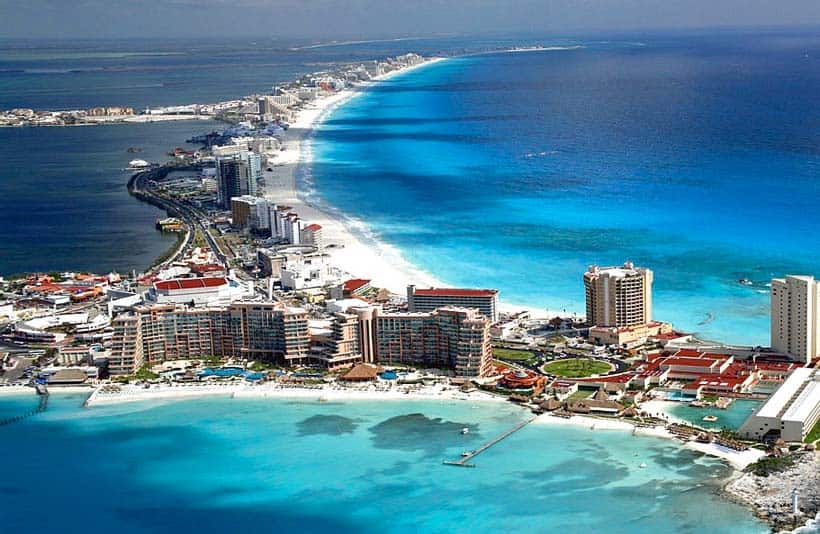
Cancún stands with Tulum and more destinations as Mexico looks beyond US travellers after witnessing a drop from its largest source market in 2026, with declining US arrivals pushing the country to diversify through stronger Canadian, Latin American and Asian visitor markets.
Mexico Searches for New Visitors as US Arrivals Weaken and Tourism Markets Shift in 2026
Mexico is entering a new phase in its tourism strategy. The country continues to receive millions of international travellers, but the composition of that demand is changing. Data supplied for 2026 shows weaker international air traffic at major tourism gateways, falling arrivals from the United States and several established markets, and stronger growth from Canada, Colombia, Brazil, Japan and other emerging sources.
The challenge is particularly visible in Cancún. Total international air traffic through Cancún reached 12,930,607 passenger movements between January and August 2026, compared with 13,776,321 during the corresponding period in 2025. That represents a decline of 6.1%, or roughly 845,714 fewer passenger movements.
Tulum has also struggled. Visitor numbers in the supplied data fell 5.1% on a year-to-date basis, while international arrivals by country of residence across the wider dataset were down 5.7% through July.
Advertisement
Advertisement
The result is forcing Mexico to look beyond its traditional tourism formula. The search for new visitors increasingly means attracting higher-spending Asian travellers, strengthening Latin American markets, developing regional tourism and reducing dependence on the enormous US market.
Advertisement
Advertisement
Cancún Records a Sharp International Air Traffic Slowdown
Cancún illustrates the scale of the challenge. International air traffic initially remained positive in 2026, increasing 2.2% in January and 3.3% in February. The direction changed in March, when traffic fell 4.1%.
The contraction then became progressively more pronounced. April declined 3.7%, May fell 11.1%, June dropped 13.1%, July decreased 12.7%, and August recorded the largest decline of the period at 15.0%.
Cancún International Air Traffic
| Month | 2026 | 2025 | YoY Change |
|---|---|---|---|
| January | 1,988,889 | 1,945,595 | +2.2% |
| February | 1,868,343 | 1,809,498 | +3.3% |
| March | 2,054,234 | 2,142,355 | −4.1% |
| April | 1,674,788 | 1,739,253 | −3.7% |
| May | 1,305,796 | 1,468,569 | −11.1% |
| June | 1,353,772 | 1,558,510 | −13.1% |
| July | 1,492,358 | 1,709,759 | −12.7% |
| August | 1,192,427 | 1,402,782 | −15.0% |
| YTD | 12,930,607 | 13,776,321 | −6.1% |
The figures show that Cancún is not experiencing a sudden disappearance of tourism. It remains a huge international destination. Instead, the problem is a sustained weakening against a very strong previous-year base.
Advertisement
Advertisement
That distinction matters. A destination handling almost 13 million international passenger movements in eight months still possesses enormous tourism scale. But five consecutive months of decline from April through August, including double-digit contractions from May onwards, signal a market that can no longer depend on automatic growth.
US Market Weakness Creates the Biggest Challenge
The United States remains overwhelmingly Mexico’s most important international air-arrival market in the supplied country-of-residence data. However, US arrivals fell to 8,061,646 through July 2026 from 8,961,027 during the corresponding period in 2025.
Advertisement
Advertisement
That represents a decline of 10.0%, equivalent to approximately 899,381 fewer arrivals.
Despite the decline, US travellers still accounted for 65.0% of international air arrivals. That enormous share explains why even a moderate percentage fall from the United States can have a disproportionately large impact on Mexican destinations, hotels, airports, restaurants and tourism businesses.
Mexico therefore faces a difficult balancing act. It cannot replace the United States overnight, nor would abandoning such a large source market make commercial sense. Instead, diversification offers a way to reduce the impact when US demand weakens.
Canada Emerges as an Important Counterweight
Canada provides one of the clearest positive signals.
Canadian arrivals increased from 1,791,025 to 1,924,109, representing growth of 7.4%. Canada’s share of international arrivals consequently increased from 13.6% to 15.5%.
Advertisement
Advertisement
That is strategically important. The increase means Canada is not merely remaining a major market; it is becoming more important within Mexico’s international visitor mix while US traffic declines.
Canadian travellers are particularly valuable for Mexico’s winter-sun destinations. Cancún, Riviera Maya, Los Cabos, Puerto Vallarta and other resort markets offer warm weather, beaches, resorts and direct air connections when Canadian cities are experiencing winter.
Mexico’s challenge will be converting this strength into a broader year-round market rather than relying predominantly on seasonal demand.
Colombia Surges Nearly 30%
Colombia stands out as one of the fastest-growing substantial markets in the supplied data.
Arrivals reached 280,607, compared with 216,872 in 2025. That represents extraordinary growth of 29.4%.
Advertisement
Advertisement
Colombia’s share increased from 1.6% to 2.3%, giving Mexico another potentially important Latin American growth market.
This matters for diversification because regional travellers can support destinations beyond traditional beach resorts. Mexico City, Guadalajara, Monterrey, Mérida and cultural destinations can appeal to travellers seeking shopping, gastronomy, events, family trips, entertainment and heritage.
Strong Colombian growth demonstrates that Mexico’s next phase does not have to depend entirely on finding replacement visitors thousands of kilometres away.
Brazil Becomes Another Latin American Bright Spot
Brazil also recorded substantial growth.
Brazilian arrivals increased from 101,966 to 125,248, representing growth of 22.8%. Its share of international arrivals rose from 0.8% to 1.0%.
Advertisement
Advertisement
The absolute volume remains far smaller than the United States or Canada, but the growth rate matters.
Brazil has a huge population and a sizeable outbound travel market. Mexico can offer Brazilian travellers Caribbean beaches, archaeological sites, Mexican cuisine, nightlife, luxury resorts and major cities while providing an experience substantially different from South American destinations.
Combined with Colombia, Brazil gives Mexico a stronger foundation for building a more diversified Latin American tourism portfolio.
Japan Delivers One of the Strongest Asian Growth Rates
Japan provides another important signal in Mexico’s search for new visitors.
Japanese arrivals increased from 34,602 to 39,853, representing growth of 15.2%.
Advertisement
Advertisement
The total remains comparatively small, accounting for around 0.3% of international arrivals, but the direction is strategically significant.
Japan is a long-haul market where travellers may be drawn to Mexico’s archaeological heritage, UNESCO sites, gastronomy, arts, luxury experiences and distinctive culture. Mexico City, Cancún and wider cultural circuits can all form part of longer itineraries.
Growth from Japan also demonstrates why Mexico is increasingly interested in Asia. Even relatively small markets can become meaningful when several begin expanding simultaneously.
China Represents the Bigger Long-Term Opportunity
China remains a comparatively small market in the supplied table. Arrivals reached 57,674, down 2.1% from 58,917.
Yet China’s importance cannot be judged solely by current volume.
Advertisement
Advertisement
Mexico has been working to position itself for greater Chinese demand through tourism promotion, cultural adaptation and stronger relationships with the Chinese travel industry. Initiatives aimed at making Mexican tourism businesses more familiar with Chinese traveller expectations reflect a longer-term strategy rather than a response to one year’s arrival numbers.
Chinese travellers can be particularly attractive because long-haul visitors often combine accommodation, shopping, dining, attractions and multi-destination itineraries.
Mexico’s opportunity lies in turning awareness into bookings while addressing practical barriers such as connectivity, language, payment preferences, culturally familiar services and travel planning.
Several Traditional Markets Are Moving in the Wrong Direction
Diversification has become more urgent because the United States is not the only market contracting.
Argentina recorded one of the largest declines, falling 17.5% to 187,889 arrivals. Peru dropped 15.7% to 35,431, while Chile declined 9.3% to 103,374.
Advertisement
Advertisement
Italy was down 6.2%, Costa Rica 6.6%, Portugal 3.4%, Poland 3.3%, the Netherlands 2.9%, China 2.1% and Germany 1.4%.
The UK, France and Spain were broadly stable, increasing 0.3%, 0.4% and 0.3%, respectively.
This mixed performance demonstrates why Mexico needs a portfolio approach. Growth from Canada, Colombia, Brazil and Japan can cushion weakness elsewhere, but no single emerging market is currently large enough to replace lost US volume.
International Arrivals Fall 5.7% Overall
The country-of-residence table captures the wider shift.
International Air Arrivals by Country of Residence
| Market | 2026 | Share | 2025 | YoY Change |
|---|---|---|---|---|
| United States | 8,061,646 | 65.0% | 8,961,027 | −10.0% |
| Canada | 1,924,109 | 15.5% | 1,791,025 | +7.4% |
| Colombia | 280,607 | 2.3% | 216,872 | +29.4% |
| United Kingdom | 254,839 | 2.1% | 254,149 | +0.3% |
| Argentina | 187,889 | 1.5% | 227,832 | −17.5% |
| Spain | 165,878 | 1.3% | 165,399 | +0.3% |
| France | 153,934 | 1.2% | 153,296 | +0.4% |
| Germany | 126,607 | 1.0% | 128,450 | −1.4% |
| Brazil | 125,248 | 1.0% | 101,966 | +22.8% |
| Chile | 103,374 | 0.8% | 114,001 | −9.3% |
| Costa Rica | 98,840 | 0.8% | 105,778 | −6.6% |
| Guatemala | 71,125 | 0.6% | 65,662 | +8.3% |
| Italy | 63,396 | 0.5% | 67,621 | −6.2% |
| China | 57,674 | 0.5% | 58,917 | −2.1% |
| Netherlands | 42,069 | 0.3% | 43,347 | −2.9% |
| South Korea | 40,952 | 0.3% | 40,454 | +1.2% |
| Japan | 39,853 | 0.3% | 34,602 | +15.2% |
| Panama | 39,026 | 0.3% | 38,650 | +1.0% |
| Peru | 35,431 | 0.3% | 42,007 | −15.7% |
| Poland | 31,372 | 0.3% | 32,449 | −3.3% |
| Portugal | 30,521 | 0.2% | 31,586 | −3.4% |
| Australia | 25,970 | 0.2% | 24,556 | +5.8% |
| Switzerland | 25,868 | 0.2% | 24,818 | +4.2% |
| Cuba | 25,365 | 0.2% | 25,378 | −0.1% |
| El Salvador | 22,698 | 0.2% | 22,395 | +1.4% |
| Other markets | 374,579 | 3.0% | 386,333 | −3.0% |
| Total | 12,408,870 | 100% | 13,158,570 | −5.7% |
The total declined by approximately 749,700 arrivals. Crucially, the US market alone lost roughly 899,381 arrivals. Growth elsewhere therefore absorbed part of the US contraction, preventing the overall decline from becoming even deeper.
Advertisement
Advertisement
That is perhaps the strongest statistical argument for Mexico’s diversification strategy.
Tulum Shows That New Infrastructure Does Not Guarantee Immediate Growth
Tulum presents another warning.
The supplied visitor data shows 649,013 visitors on a year-to-date basis in 2026 compared with 683,690 in 2025, representing a decline of 5.1%.
January was down 2.4%, April declined 8.9%, and May fell 9.3%.
Tulum Visitor Performance
| Month | 2026 | 2025 | YoY Change |
|---|---|---|---|
| January | 137,524 | 140,889 | −2.4% |
| February | N/A | N/A | N/A |
| March | N/A | N/A | N/A |
| April | 134,011 | 147,106 | −8.9% |
| May | 126,308 | 139,267 | −9.3% |
| YTD | 649,013 | 683,690 | −5.1% |
Tulum remains one of Mexico’s most recognisable tourism brands. Its Caribbean beaches, archaeological site, cenotes, boutique accommodation and wellness tourism give it enormous international visibility.
Advertisement
Advertisement
But visibility alone does not guarantee continuous growth. The numbers reinforce the need to match infrastructure development with competitive pricing, reliable connectivity, destination management and a broad mix of source markets.
Mexico Needs Visitors Beyond the Traditional Beach Holiday
Mexico’s search for new visitors is also a search for a different type of visitor.
Cancún, Riviera Maya, Los Cabos and Puerto Vallarta remain central to the country’s tourism economy, but Mexico has much more to sell.
Mexico City can compete for gastronomy, museums, culture, entertainment and major events. Guadalajara offers tequila heritage, food, business travel and urban culture. Mérida provides access to Yucatán heritage and Maya attractions. Oaxaca combines gastronomy, Indigenous culture and historic architecture.
This wider destination portfolio gives Mexico an opportunity to spread international tourism spending geographically rather than concentrating growth almost entirely in major resort corridors.
Advertisement
Advertisement
Border and Regional Tourism Add Another Layer
Mexico can also reduce its exposure to long-haul aviation through stronger regional and border tourism.
Cross-border travel behaves differently from resort aviation. Travellers may enter for shopping, family visits, medical services, food, events, short holidays or business.
That creates a second tourism economy alongside international resort travel.
The distinction becomes particularly valuable when aviation demand weakens. A country with strong land-border, regional, domestic and long-haul tourism markets has more ways to absorb disruption than a destination dependent on one transport mode or source country.
Mexico Is Not Abandoning the US Market
Diversification should not be confused with replacement.
Advertisement
Advertisement
The United States still supplied 65.0% of international air arrivals in the supplied July YTD data. Canada added another 15.5%. Together, the two North American markets represented more than four-fifths of the total.
That concentration explains both Mexico’s strength and its vulnerability.
Geography, extensive airline networks, established tourism infrastructure and decades of traveller familiarity make the US market extraordinarily valuable. Mexico therefore needs to protect that relationship while simultaneously ensuring that a downturn in one country does not determine the performance of the entire tourism sector.
The Search for New Visitors Is Already Visible in the Numbers
Mexico’s changing tourism map can be seen clearly in the growth rates.
Colombia is up 29.4%.
Advertisement
Advertisement
Brazil is up 22.8%.
Japan is up 15.2%.
Guatemala is up 8.3%.
Canada is up 7.4%.
Australia is up 5.8%.
Advertisement
Advertisement
Switzerland is up 4.2%.
Meanwhile, the United States is down 10.0%.
These markets remain vastly different in size, meaning their percentage growth should not be interpreted as an immediate replacement for American demand. But collectively they show why diversification matters.
Mexico does not need one country to replace the United States. It needs many markets to contribute more.
What Comes Next for Mexico Tourism
The central challenge for Mexico in the remainder of 2026 is to turn diversification from a promotional ambition into measurable visitor growth.
Advertisement
Advertisement
Cancún’s 6.1% YTD international passenger decline and the nationwide 5.7% fall in international air arrivals through July show that the pressure is real. Tulum’s 5.1% contraction adds another warning from one of the country’s newest major tourism gateways.
At the same time, Canada, Colombia, Brazil, Japan, Guatemala and Australia demonstrate that new growth is possible.
The next stage therefore depends on connectivity, competitive pricing, destination marketing, cultural adaptation, travel-trade partnerships and developing experiences beyond the traditional resort model.
Mexico still possesses extraordinary advantages: Caribbean and Pacific beaches, Maya and Aztec heritage, UNESCO sites, world-renowned cuisine, major cities, archaeological landscapes, luxury resorts, nature, wellness tourism and one of the strongest tourism identities in the Americas.
The question in 2026 is no longer whether travellers know Mexico.
Advertisement
Advertisement
It is where Mexico will find the next wave of visitors — and whether those new markets can grow quickly enough to offset weakness in its traditional tourism base.
Cancún stands with Tulum and more destinations as Mexico looks beyond US travellers after witnessing a drop from its largest source market in 2026, driven by a 10% decline in US arrivals and rising demand from Canada, Colombia, Brazil and Japan.
In conclusion, Cancún stands with Tulum and more destinations as Mexico looks beyond US travellers after witnessing a drop from its largest source market in 2026. The decline in US arrivals has encouraged Mexico to strengthen tourism diversification by attracting more visitors from Canada, Colombia, Brazil, Japan and other emerging markets. While the United States remains the country’s most important international source market, expanding global connections, new travel segments and broader destination promotion are helping create a more balanced tourism strategy. Mexico’s future growth will depend on maintaining US demand while building stronger international markets beyond its traditional visitor base.
Advertisement
