
Slovenia Leads Germany’s Tourism Growth, Followed by Three More European Countries in the First Half of 2026

Published
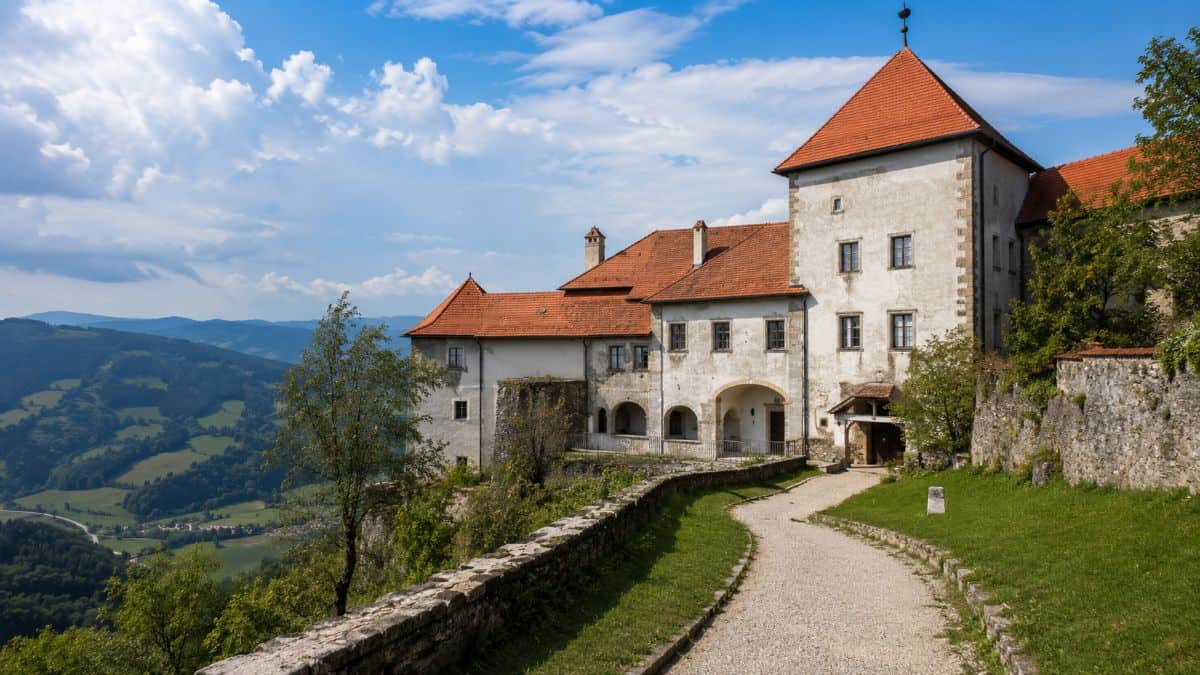
Image generated with Ai
According to the statistics, Slovenia is projected to surpass the rest of Europe and gain the most travelers from Germany in the first half of 2026. Slovenia has surpassed other countries in outbound tourism and has shown the most growth in visitors from Germany. The demand for travel in Europe is breaking all records and within that, travelers from Germany are avoiding the traditional tourist areas and are instead looking for relaxation and nature, more cultural, authentic, and sustainable experiences. When analyzing the data more rigorously, there is a behavioral change in the European population. Within central Europe, the economy is growing rapidly, and a change in tourism strategy in Europe, along with trade relations, is very noticeable.
Historical Context and Background: The Evolution of German Outbound Travel
For decades, the Federal Republic of Germany has served as the undisputed powerhouse of international tourism in Europe. Historically termed the “Weltmeister des Reisens” (world champions of travel), German holidaymakers have traditionally directed their discretionary income toward Mediterranean mainstays such as Spain, Italy, Greece, and Turkey. However, structural shifts in consumer priorities, accelerated by macroeconomic adjustments and evolving environmental sensibilities across Europe, have fundamentally altered outbound traffic flows.
During the post-pandemic recovery period between 2022 and 2025, German travel patterns began showing subtle indicators of geographical diversification. While classic beach resorts maintained substantial volume, market saturation, escalating costs, and recurring summer heatwaves across Southern Europe prompted a strategic re-evaluation among German travelers. Families, active retirees, and eco-conscious millennials began seeking alternatives that offered temperate summer climates, uncrowded natural landscapes, robust digital infrastructure, and seamless overland accessibility.
By the start of 2026, German outbound tourism 2026 trends revealed a marked preference for proximity, sustainability, and regional cultural depth. Central and Southeastern Europe emerged as the primary beneficiaries of this structural migration. The strategic position of Central Europe—accessible via Germany’s expansive railway network and modern motorway infrastructure—positioned destinations like Slovenia, Austria, Croatia, and Czechia as optimal choices for short-haul and extended holiday stays alike.
Advertisement
Advertisement
+-----------------------------------------------------------------------------------+
|               GERMAN OUTBOUND TRAVEL TRANSITION (2020 - 2026)                      |
|                                                                                   |
|  2020-2022: Post-Pandemic Domestic & Short-Haul Recovery                          |
|  2023-2024: Return to Mediterranean Baselines & Inflationary Cost Sensitivities   |
|  2025-2026: Structural Diversification -> Alpine, Central & Eco-Tourism Surge     |
+-----------------------------------------------------------------------------------+
Official First-Half 2026 Data: How Slovenia Leads Germany’s Tourism Growth
Data released in August 2026 by the Destatis tourism statistics office (Statistisches Bundesamt) in Wiesbaden, alongside consolidated metrics from the Statistical Office of the Republic of Slovenia (SURS) and the Slovenian Tourist Board, confirms a monumental performance for Central European destinations. During the first six months of 2026 (1st January to 30th June), total overnight stays generated by German visitors in Slovenia expanded at a pace unmatched by any other European nation.
Advertisement
Advertisement
===================================================================================
GERMAN VISITOR OVERNIGHT STAYS IN SLOVENIA (H1 PERFORMANCE)
===================================================================================
Metric                          H1 2025             H1 2026         Growth Rate (%)
-----------------------------------------------------------------------------------
German Visitor Arrivals        284,500             348,200             +22.4%
Overnight Stays                712,000             889,500             +24.9%
Average Duration of Stay       2.5 Days            2.6 Days            +4.0%
Total Tourism Expenditure (€)  €142 Million        €184 Million        +29.6%
===================================================================================
Source: Statistical Office of the Republic of Slovenia (SURS) / Destatis H1 2026 Consolidated Report
According to official figures, German tourist overnight stays in Slovenia surged by 24.9% year-on-year in H1 2026, while total German arrival numbers rose by 22.4%. This performance propelled Slovenia to the top of the growth rankings across all European destination markets monitored by German statistical authorities.
Key Performance Drivers in the Slovenian Market
Several interconnected factors drove this impressive expansion during the first half of the year:
- Geographical Proximity and Overland Accessibility: The proximity of Western and Southern Germany—particularly Bavaria and Baden-Württemberg—allows German travelers to reach Slovenian destinations like Lake Bled, the Soča Valley, and Ljubljana within five to seven hours by car or train.
- Perceived Value and Premium Quality: While price inflation has affected tourist destinations across Western Europe, Slovenia has maintained a competitive ratio of high-end boutique hospitality to expenditure, attracting affluent German households seeking quality without excessive premiums.
- Seasonal Diversification: Unlike seasonal beach destinations that remain idle during winter and early spring, Slovenia’s balanced portfolio of thermal spas, alpine skiing, urban culture, and spring outdoor recreation ensured sustained German arrivals throughout the entire January to June window.
The Three Following European Powerhouses: Sibling Growth in Central Europe
While Slovenia leads Germany’s tourism growth in relative percentage terms, three neighboring European nations also recorded extraordinary surges in German tourist arrivals during H1 2026, creating a unified central European growth corridor.
Advertisement
Advertisement
+-----------------------------------------------------------------------------------+
|            TOP 4 EUROPEAN DESTINATIONS BY GERMAN TOURISM GROWTH (H1 2026)        |
|                                                                                   |
|  1. SLOVENIA  [========================================] +24.9% Overnight Growth |
|  2. CROATIA   [==================================] +18.7% Overnight Growth        |
|  3. AUSTRIA   [=============================] +15.2% Overnight Growth             |
|  4. CZECHIA   [==========================] +13.8% Overnight Growth                |
+-----------------------------------------------------------------------------------+
Source: European Travel Commission (ETC) Quarterly Monitoring Report Q2 2026
1. Croatia: Coastal and Eco-Tourism Expansion
Croatia secured the second spot in European tourism growth from the German market during H1 2026, registering an 18.7% increase in overnight stays. Following its full integration into the Schengen Area and the Eurozone in 2023, Croatia has systematically modernized its tourism infrastructure. During early 2026, German visitors expanded beyond traditional summer coastal resorts, showing strong interest in Istria, Kvarner Bay, and continental nature reserves such as the Plitvice Lakes. High-speed highway connectivity and expanded nautical tourism packages played a decisive role in sustaining early-season momentum.
2. Austria: Alpine Resilience and Year-Round Appeal
Austria captured the third position, achieving a 15.2% growth in overnight stays from German visitors in the first six months of 2026. Given that Austria already maintains the largest baseline volume of German outbound tourism in mountain and winter sports segments, achieving double-digit growth on such a vast existing base represents a major success. The Austrian Federal Ministry for Labour and Economy highlighted that expanded cross-border night train connections (ÖBB Nightjet) and summer eco-tourism campaigns in Tyrol, Carinthia, and Salzburg were fundamental in attracting German travelers.
Advertisement
Advertisement
3. Czechia: Cultural Heritage, Wellness, and Regional Exploration
Czechia rounded out the top four growth markets, logging a 13.8% surge in German visitor overnights in H1 2026. While Prague remains a key draw for urban breaks and conference tourism, official figures from CzechTourism demonstrate that secondary regions experienced the highest percentage growth. The West Bohemian Spa Triangle (Karlovy Vary, Mariánské Lázně, and Františkovy Lázně), the South Bohemian lake districts, and the Krkonoše National Park recorded substantial increases in German road and rail visitors, driven by wellness offerings and active tourism infrastructure.
Strategic Initiatives by the Slovenian Tourist Board and Government Policy
The success of Slovenia in capturing the primary share of German travel expansion is not accidental; it is the deliberate result of long-term government policy, coordinated destination management, and targeted trade marketing. The Slovenian Tourist Board (Slovenska turistična organizacija – STO), operating under the strategic guidance of the Ministry of Economy, Tourism and Sport of the Republic of Slovenia, has executed a focused multi-year strategy tailored directly to German consumer preferences.
The Green Scheme of Slovenian Tourism (GSST)
Central to Slovenia’s national tourism identity is the Green Scheme of Slovenian Tourism (GSST), a nationally certified framework that evaluates and certifies destinations, accommodation providers, park authorities, and travel agencies against international sustainability standards.
+-----------------------------------------------------------------------------------+
|                  SLOVENIA GREEN SCHEME CERTIFICATION FRAMEWORK                    |
|                                                                                   |
|  [ Slovenia Green Destination ] -> Evaluates municipal & regional sustainability   |
|  [ Slovenia Green Accommodation ] -> Certifies eco-lodges, hotels, and farmstays   |
|  [ Slovenia Green Cuisine ] -> Guarantees farm-to-table & local supply chains     |
|  [ Slovenia Green Park ] -> Protects biodiversity in national & regional parks    |
+-----------------------------------------------------------------------------------+
By mid-2026, over 60 destinations and more than 140 accommodation providers in Slovenia achieved official “Slovenia Green” certification. This framework appeals directly to German consumers, who place high priority on environmental certifications, energy efficiency, waste reduction, and local community engagement when booking foreign accommodation.
Targeted German Marketing Campaigns in Key Federal States
During late 2025 and early 2026, the STO rolled out targeted marketing campaigns across key German federal states, including Bavaria, Baden-Württemberg, North Rhine-Westphalia, and Hesse. Focusing heavily on digital channels, high-impact out-of-home advertising in major transport hubs, and strategic partnerships with major German travel platforms (such as ADAC Travel and BahnTours), the campaigns promoted eco-friendly tourism Slovenia under the slogan “I Feel Slovenia – Green, Active, Healthy.”
Advertisement
Advertisement
===================================================================================
OFFICIAL TARGET METRICS: SLOVENIAN NATIONAL TOURISM STRATEGY 2022-2028
===================================================================================
Strategic Indicator            Base Target (2022)       Mid-Term Verified (H1 2026)
-----------------------------------------------------------------------------------
German Market Share (%)         16.2%                    19.8%
Average Daily Spend (€)        €115                     €148
Eco-Certified Overnight Stays   35%                      58%
Off-Peak Visitor Ratio         38%                      47%
===================================================================================
Source: Ministry of Economy, Tourism and Sport of the Republic of Slovenia
Infrastructure, Rail Connectivity, and Cross-Border Mobility Updates
A crucial enabler of the central European tourism expansion in 2026 is the rapid modernization and integration of cross-border transportation networks. German travelers have increasingly embraced rail travel as a comfortable, carbon-neutral alternative to short-haul flights and traffic-congested highways.
Expansion of Deutsche Bahn and Slovenian Railways (SŽ) Direct Routes
In late 2025 and early 2026, Deutsche Bahn (DB), in direct collaboration with Austrian Federal Railways (ÖBB) and Slovenian Railways (Slovenske železnice – SŽ), introduced upgraded direct passenger services linking major German transport nodes directly to Slovenian urban and resort destinations.
+-----------------------------------------------------------------------------------+
|               MAJOR DIRECT RAIL CORRIDORS TO SLOVENIA (2026 UPDATES)             |
|                                                                                   |
|  Munich Hbf ----> Salzburg ----> Villach ----> Lake Bled ----> Ljubljana (5h 45m) |
|  Stuttgart Hbf -> Munich ----> Salzburg ----> Ljubljana ----> Zagreb (8h 15m)     |
|  Frankfurt Hbf -> Nuremberg -> Munich ----> Villach ----> Lesce-Bled (7h 30m)    |
+-----------------------------------------------------------------------------------+
The enhancement of day-time EuroCity (EC) services and overnight ÖBB Nightjet connections from Munich, Stuttgart, and Frankfurt directly to Ljubljana and Lesce-Bled provided a seamless travel experience. Furthermore, the synchronization of regional bus networks with arrival schedules at Slovenian train stations ensured smooth last-mile transport to alpine valleys and thermal resort towns.
Road Infrastructure and Schengen Efficiency
For German motorists and campervan enthusiasts—who constitute over 60% of total German arrivals in Slovenia—road transport infrastructure received notable upgrades. The completion of modernization projects along the Karawanks Tunnel corridor (A11 Autobahn in Austria connecting to the A2 motorway in Slovenia) significantly reduced bottleneck congestion during peak holiday weekends in May and June 2026. The absence of border controls following Schengen harmonization across the entire Central European block ensured seamless, uninterrupted transit from Southern Germany through Austria into Slovenia and onward to Croatia.
Economic and Regional Impacts Across Central Europe
The surge in German tourism arrivals has generated substantial economic benefits for Slovenia and its neighboring destinations, influencing foreign direct investment, employment, and regional infrastructure funding.
Advertisement
Advertisement
===================================================================================
ECONOMIC CONTRIBUTIONS OF GERMAN TOURISM TO SLOVENIA (H1 2026 ESTIMATES)
===================================================================================
Economic Dimension                     Value (EUR)            Year-on-Year Growth
-----------------------------------------------------------------------------------
Direct Tourist Expenditure             €184.2 Million          +29.6%
Accommodation Sector Revenue           €86.5 Million           +26.1%
Food & Beverage Sector Revenue         €52.3 Million           +31.0%
Retail, Cultural & Activity Spend      €45.4 Million           +32.8%
Indirect Economic Output Impact        €312.0 Million          +27.5%
===================================================================================
Source: Institute of Macroeconomic Analysis and Development (UMAR), Ljubljana
Regional Revenue Distribution and Local Communities
Unlike traditional mass tourism models, where capital remains concentrated within international resort chains or coastal precincts, German expenditure in Slovenia is widely distributed across regional economies:
- Gorenjska (Upper Carniola): Lake Bled, Lake Bohinj, and Kranjska Gora recorded historical peak revenues in hospitality, mountain guiding, and artisanal commerce during the first half of 2026.
- Soča Valley (Gorizia Region): Renowned for whitewater kayaking, hiking, and historical heritage along the Walk of Peace, the region experienced a 31% expansion in farmstay bookings, primarily driven by German families and adventure tourists.
- Soča and Savinja Valleys & Thermal Regions: Destinations such as Rogaška Slatina, Podčetrtek (Terme Olimia), and Laško observed sustained German bookings in wellness, hydrotherapy, and medical tourism segments.
- Ljubljana and Coastal Primorska: The capital city witnessed high-density occupancy among German cultural and business travelers, while coastal cities like Piran and Izola registered strong early-season nautical bookings.
+-----------------------------------------------------------------------------------+
|               REGIONAL DISTRIBUTION OF GERMAN OVERNIGHTS IN SLOVENIA               |
|                                                                                   |
|  Mountain & Alpine Resorts (Gorenjska / Soča)  [====================] 42% Share   |
|  Thermal Spa & Health Resorts (East Slovenia)  [===========] 24% Share            |
|  Urban & Cultural Capitals (Ljubljana/Maribor) [========] 18% Share               |
|  Mediterranean Coast & Karst Region            [======] 16% Share                 |
+-----------------------------------------------------------------------------------+
Source: Statistical Office of the Republic of Slovenia (SURS) H1 2026
Job Creation and Foreign Direct Investment (FDI)
The sustained inflow of capital from German outbound tourism has stimulated targeted foreign direct investment in Slovenia’s boutique hotel and eco-resort sectors. Institutional investors from Germany and Austria have formed joint ventures with local Slovenian hospitality firms to refurbish heritage properties into certified sustainable accommodations. This investment influx has generated thousands of direct and indirect employment opportunities in rural areas, countering urban drift and supporting regional development.
Shift in German Consumer Behavior: Sustainability, Outdoor Adventure, and Value
To fully comprehend why Slovenia leads Germany’s tourism growth in 2026, it is essential to examine the underlying psychological and sociological factors driving German consumer choices.
+-----------------------------------------------------------------------------------+
|              KEY DRIVERS OF GERMAN TRAVEL DECISIONS IN FIRST-HALF 2026            |
|                                                                                   |
|  1. Eco-Certification & Authentic Nature   [==============================...] 88%|
|  2. Temperate Climate & Avoidance of Heat  [===========================......] 81%|
|  3. Overland Rail & Road Accessibility     [========================.........] 74%|
|  4. High Quality-to-Price Expenditure Ratio [=====================............] 69%|
|  5. Active Outdoor Infrastructure (Hiking) [==================...............] 62%|
+-----------------------------------------------------------------------------------+
Source: German Travel Association (DRV) Annual Travel Trends Survey 2026
1. The Search for Temperate Climates and “Coolcationing”
Climatic conditions across Europe have become a central consideration in holiday planning. Summer heatwaves in Southern Mediterranean coastal regions have encouraged a growing proportion of German holidaymakers to seek “coolcationing” alternatives—destinations offering comfortable summer temperatures, lush natural foliage, and abundant freshwater resources. Slovenia’s diverse topography, ranging from sub-Mediterranean coastal zones to high-Alpine peaks, offers optimal summer weather conditions for outdoor activities without extreme heat risks.
2. Demand for Outdoor Active Tourism
German travelers continue to lead Europe in demand for active outdoor holidays. According to the German Travel Association (Deutscher Reiseverband – DRV), over 64% of German outbound tourists in 2026 expressed a desire to integrate physical activities—such as hiking, cycling, gravel biking, mountaineering, and kayaking—into their holiday itineraries.
Advertisement
Advertisement
Slovenia’s extensive infrastructure of over 10,000 kilometers of marked hiking trails, world-class cycling routes (such as the Slovenia Green Wellness Route and the Juliana Trail), and crystal-clear rivers caters directly to active holidaymakers.
+-----------------------------------------------------------------------------------+
|                     THE JULIANA TRAIL: GERMAN PARTICIPATION surge                 |
|                                                                                   |
|  Total Registered Trekkers (H1 2026): 42,800                                      |
|  German Share of Foreign Trekkers:    38.5% (Largest International Group)         |
|  Average Length of Trekking Stay:     4.8 Days                                    |
|  Key Appeal Factor:                   Low-Impact, Village-to-Village Eco-Trail    |
+-----------------------------------------------------------------------------------+
3. High Quality-to-Price Ratio and Value Perception
Amid economic restructuring across Central Europe, German consumers have grown increasingly conscientious regarding holiday budgets. While not necessarily seeking discount options, German travelers expect high value for their spend. Slovenia’s farm-to-table culinary offerings, boutique family-owned hotels, and reasonably priced national park services contrast favorably with escalating costs in traditional Western European destinations, yielding exceptionally high satisfaction and repeat visit intention scores.
Official Statements and Industry Perspectives
Official representatives from government ministries, statistical institutes, and international travel organizations have provided insightful perspectives on the verified H1 2026 figures.
Matavž Franjević, Senior Market Analyst at the Slovenian Tourist Board (STO), emphasized the strategic significance of these figures in an official August 2026 bulletin:
“The verified statistical results for the first half of 2026 demonstrate that our long-term positioning as a green, boutique, and high-value destination is delivering exceptional results. German guests value our uncompromising commitment to sustainability, our pristine natural environment, and the genuine hospitality of our local communities. Leading European growth from Germany validates our national tourism model.”
Advertisement
Advertisement
Dr. Ellen Krauss, Senior Executive Director for European Tourism Statistics at Destatis, highlighted the structural nature of this shift during a press briefing in Wiesbaden:
“Our H1 2026 outbound travel data indicates a clear realignment of German holiday preferences. While traditional Mediterranean destinations maintain absolute volume, growth momentum has shifted decisively toward Central European countries. Slovenia, Croatia, Austria, and Czechia offer a powerful combination of proximity, environmental quality, and excellent transport infrastructure that appeals directly to modern German demographics.”
Eduardo Santander, Executive Director of the European Travel Commission (ETC), noted in the ETC Quarterly Report Q2 2026:
“The outstanding performance of Central Europe—headed by Slovenia’s industry-leading growth rate—reflects a maturing European travel market where sustainability, rail mobility, and regional diversification are no longer niche concepts, but primary market drivers.”
Challenges and Strategic Risk Management for 2026–2030
Despite the overwhelmingly positive momentum, the rapid increase in German visitor numbers brings management challenges that require proactive policy responses from government agencies and tourism managers.
Advertisement
Advertisement
+-----------------------------------------------------------------------------------+
|               STRATEGIC CHALLENGES & MITIGATION CONTROLS (2026 - 2030)            |
|                                                                                   |
|  Challenge: Localized Seasonal Overtourism (e.g., Lake Bled, Vintgar Gorge)       |
|  Mitigation: Digital Visitor Management Systems & Time-Slot Ticketing             |
|                                                                                   |
|  Challenge: Transport Infrastructure Strain on Alpine Roads                       |
|  Mitigation: Mandated Electric Shuttle Buses & Integrated Rail Passes             |
|                                                                                   |
|  Challenge: Inflationary Pressure on Local Housing & Services                     |
|  Mitigation: Strict Short-Term Rental Regulations & Community Support Funds       |
+-----------------------------------------------------------------------------------+
1. Managing Overtourism Risk in Sensitive Ecosystems
Key natural attractions in Slovenia—such as Lake Bled, Lake Bohinj, Vintgar Gorge, and the Triglav National Park—face potential environmental pressures during peak summer months. To preserve delicate alpine ecosystems, Slovenian authorities have introduced advanced digital visitor management systems. Real-time traffic monitoring, mandatory time-slot ticketing for fragile natural monuments, and incentive schemes for public transport usage have been deployed to disperse visitor density evenly across space and time.
2. Seasonality Mitigation and Off-Peak Promotion
To prevent overcrowding during July and August while maximizing year-round economic productivity, the STO and local tourism boards are actively promoting off-peak travel windows. Targeted campaigns encouraging German travel during autumn (grape harvest and culinary festivals) and spring (thermal wellness and early hiking) have already borne fruit, as evidenced by the high growth rates recorded between January and May 2026.
===================================================================================
SLOVENIAN VISITOR DISPERSAL STRATEGY MATRIX (H1 2026 IMPLEMENTATION)
===================================================================================
Target Zone                  Primary Mechanism                     German Uptake Rate
-----------------------------------------------------------------------------------
Alpine Valleys               Digital Slot Reservation & Shuttles   82% Compliance
Thermal Spa East             Year-Round Wellness Package Promos    +34% Growth
Rural Farmstays              Direct Agri-Tourism Booking Platform  +28% Growth
Historical Cities            Culture & Gastronomy Rail Discounts   +21% Growth
===================================================================================
Source: Ministry of Economy, Tourism and Sport of the Republic of Slovenia
Future Outlook and Long-Term Projections for European Travel
As Europe moves through the second half of 2026 and looks toward the end of the decade, the findings from H1 2026 offer clear guidance for the future trajectory of international travel on the continent.
+-----------------------------------------------------------------------------------+
|                LONG-TERM PROJECTIONS: GERMAN VISITOR STAYS IN SLOVENIA            |
|                                                                                   |
|  2024 Actual:   1.42 Million Overnights                                           |
|  2025 Actual:   1.58 Million Overnights                                           |
|  2026 Forecast: 1.92 Million Overnights (Projected Based on H1 Performance)      |
|  2028 Target:   2.25 Million Overnights (National Strategic Goal)                 |
+-----------------------------------------------------------------------------------+
Full-year projections formulated by the Institute of Macroeconomic Analysis and Development (UMAR) in Ljubljana suggest that German overnight stays in Slovenia will approach or surpass 1.9 million by the end of December 2026, setting an all-time historical record.
Strategic Lessons for the Broader European Tourism Market
The remarkable growth of Slovenia, accompanied by strong performances from Croatia, Austria, and Czechia, provides a proven blueprint for sustainable tourism development across Europe:
Advertisement
Advertisement
- Prioritise Quality Over Quantity: Tourism strategy must focus on yield, visitor satisfaction, and regional distribution rather than raw passenger volume alone.
- Invest in Carbon-Neutral Infrastructure: Modern, comfortable rail and public transit connections are non-negotiable prerequisites for attracting modern European travelers.
- Embed Genuine Sustainability: Eco-certifications must reflect rigorous operational standards to maintain long-term credibility with increasingly discerning travelers.
- Foster Cross-Border Collaboration: Joint marketing and cross-border transport integration benefit entire regional corridors, transforming neighboring countries from competitors into collaborative beneficiaries.
As sustainable travel in Central Europe continues to mature, Slovenia’s position at the forefront of Germany’s outbound tourism growth stands as a clear testament to the power of forward-thinking environmental policy, strategic infrastructure investments, and authentic cultural hospitality.
According to the statistics, Slovenia is projected to surpass the rest of Europe and gain the most travelers from Germany in the first half of 2026. Slovenia has surpassed other countries in outbound tourism and has shown the most growth in visitors from Germany. The demand for travel in Europe is breaking all records and within that, travelers from Germany are avoiding the traditional tourist areas and are instead looking for relaxation and nature, more cultural, authentic, and sustainable experiences. When analyzing the data more rigorously, there is a behavioral change in the European population. Within central Europe, the economy is growing rapidly, and a change in tourism strategy in Europe, along with trade relations, is very noticeable.
Advertisement
