
Southwest Airlines Operated Flight WN4624, a Boeing 737-700 (N567WN) from Nashville to Jacksonville Diverts to Orlando International Airport, United States on 31 July: Travel Update & What You Need To Know

Published
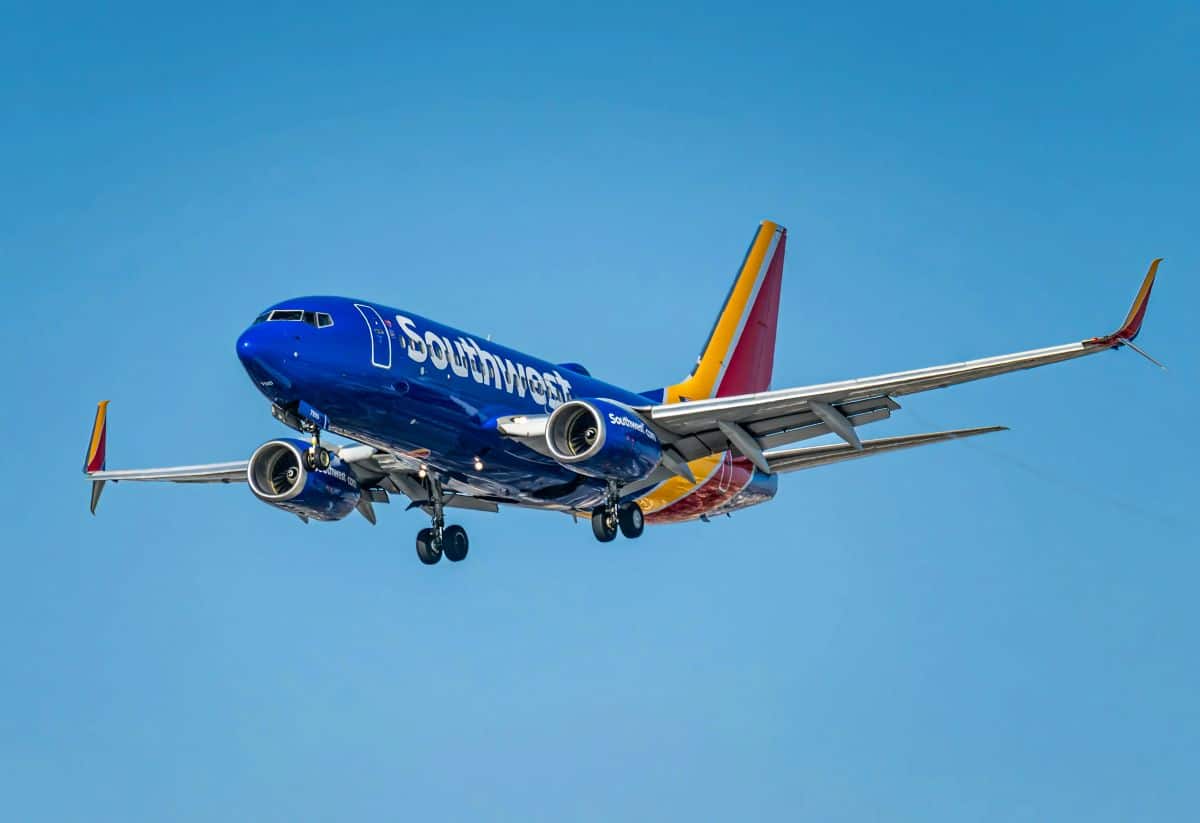
Image generated with Ai
Southwest Airlines Flight WN4624 operated by Boeing 737-700 (N567WN) was originally scheduled to depart from Nashville to Jacksonville with a stop in Orlando, United States. This is what happened on 31 July, including the flight’s unexpected diversion.
Southwest Airlines flight WN4624, operated by Boeing 737-700 (N567WN), was scheduled to depart Nashville for Jacksonville on 31 July. However, the aircraft was diverted to Orlando, United States. This unfortunate development caused disruptions to the travel plans of those who had booked tickets for the flight. The aircraft departed Nashville as scheduled but then encountered circumstances that required it to change course. Such diversions are closely monitored by aviation authorities since they could entail potential safety hazards. For those affected by the diversion, you may want to read our travel advisory below to understand what happened during the diversion and the steps taken once the plane landed in Orlando.
Advertisement
Advertisement
On 31 July 2026, Southwest Airlines flight WN4624, operating from Nashville International Airport (BNA) to Jacksonville International Airport (JAX) using a Boeing 737-700 (registration N567WN), was diverted to Orlando International Airport (MCO). The aircraft departed Nashville at 19:09 CDT but altered its flight path due to operational and atmospheric factors along the North Florida arrival corridor.
Southwest Airlines flight WN4624 departing from Nashville International Airport towards Jacksonville International Airport on 31 July 2026 experienced a standard operational diversion to Orlando International Airport. Flight tracking records confirm that the service was operated by a Boeing 737-700 registered under tail number N567WN, taking off at 19:09 CDT prior to changing its scheduled path over the southeastern flight corridor.
Advertisement
Advertisement
Aviation diversions of this nature represent routine precautionary protocols executed by flight crews to safeguard passenger welfare whenever unexpected weather patterns or operational bottlenecks present themselves. While initial travel itineraries were interrupted for passengers expecting a direct arrival in Jacksonville, standard commercial aviation procedures dictated a controlled rerouting towards an established regional hub.
Why Did Southwest Flight WN4624 Divert To Orlando International Airport?
Commercial flight diversions along the busy air routes connecting Tennessee and Florida frequently stem from severe convective weather developments or sudden air traffic congestion around destination airports. During late afternoon and evening hours in midsummer, heavy electrical storms routinely build across northern Florida, creating intense localized turbulence and reduced visibility that force air traffic control to institute holding patterns.
Advertisement
Advertisement
When an aircraft approaches its scheduled arrival zone under adverse atmospheric conditions, flight crews must continually evaluate remaining fuel against expected holding delays before reaching safety reserve limits. If holding delays exceed acceptable margins or weather radar indicates deteriorating conditions over Jacksonville, pilots execute a planned diversion to maintain total control over safety parameters.
How Do Commercial Aircraft Operational Limits Trigger In-Flight Diversions?
Every commercial flight plan legally mandates a minimum diversion fuel threshold that guarantees the aircraft can reach a designated secondary airfield with required safety reserves intact. If air traffic controllers issue extended holding instructions over a primary destination, the captain monitors fuel consumption metrics to ensure the airframe never consumes fuel allocated for alternate routing.
Furthermore, strict civil aviation regulations govern daily flight crew duty hours, meaning unexpected airborne delays can potentially push pilots beyond their legal operational limits before reaching the original destination. Diverting to a major operational facility enables the airline to address technical checks, refuel efficiently, or arrange fresh flight crews if mandatory rest thresholds are reached during unexpected journey extensions.
Why Was Orlando Selected Over Other Regional Alternate Airports?
Orlando International Airport serves as a major operational base for Southwest Airlines, offering comprehensive ground support infrastructure including dedicated maintenance facilities, passenger service teams, and multiple parallel runways. Choosing a primary network hub over smaller regional airfields ensures that incoming diverted aircraft can be handled rapidly without causing severe terminal congestion or ground handling delays.
Additionally, Orlando’s geographical proximity—located roughly 140 miles south of Jacksonville—allows flight crews to execute a quick transition while remaining well within standard fuel reserve requirements. The airport’s high airfield capacity and extensive ground logistics allow diverted flights to refuel swiftly and evaluate options for resuming their journey once destination conditions clear.
What Impact Does An Aircraft Diversion Have On Passengers And Ground Operations?
When an unexpected diversion occurs, airline ground staff at the alternate hub work in coordination with network operations dispatchers to manage passenger logistics, bag transfers, and onward flight connections. Depending on the duration of the delay and air traffic clearances, the airline may choose to refuel the Boeing 737 and complete the short leg to Jacksonville or organise ground transport for affected travellers.
Advertisement
Advertisement
For airline dispatchers and flight planning divisions, managing diverted airframes requires constant re-evaluations to minimise cascading schedule disruptions across the carrier’s broader regional network. By prioritising safety protocols and utilising major hub facilities like Orlando, commercial carriers effectively mitigate operational bottlenecks while maintaining high standards of passenger care.
What is the reason for this unexpected change of flight? The reason for this unexpected change of flight 4624 was that due to convection summer weather was creating a large number of holding delays near Jacksonville. Thus, upon encountering such severe weather, the pilot had to consider the amount of remaining fuel and the safety factor. The Jacksonville Air Traffic Control placed the flight on an extended hold. As a result, the pilot decided to land at Orlando, since this airfield was the most suitable for emergency landing. It is a major maintenance and operating base for Southwest Airlines located within the United States and provides the crew with spares and the required equipment. In addition, several runways are available at this airport, which makes it possible to ensure the safe landing of the airplane.
To summarize, the flight operated by Southwest Airlines, WN4624, a Boeing 737-700 (N567WN), left Nashville for Jacksonville but ultimately landed at Orlando on July 31. Although such unplanned events as emergency landing create many inconveniences for the travelers, numerous restrictions and limitations set by airline companies and airport authorities to ensure the safety of passengers and crew members demonstrate the importance of this aspect for commercial aviation flights. Thus, those passengers who had to change their flights will be able to receive the necessary help from the staff, such as refueling or transportation to the required destination after the weather clears. In addition, in understanding what happened to the flight WN4624, one can understand how airline companies care about the safety of passengers. Hence, this knowledge will help avoid similar situations and provide a safe journey even in case of emergency.
Advertisement
