
New Zealand Joins UK at the Border-Fee Frontier as New Travel Fees Add Fresh Costs to International Trips

Published
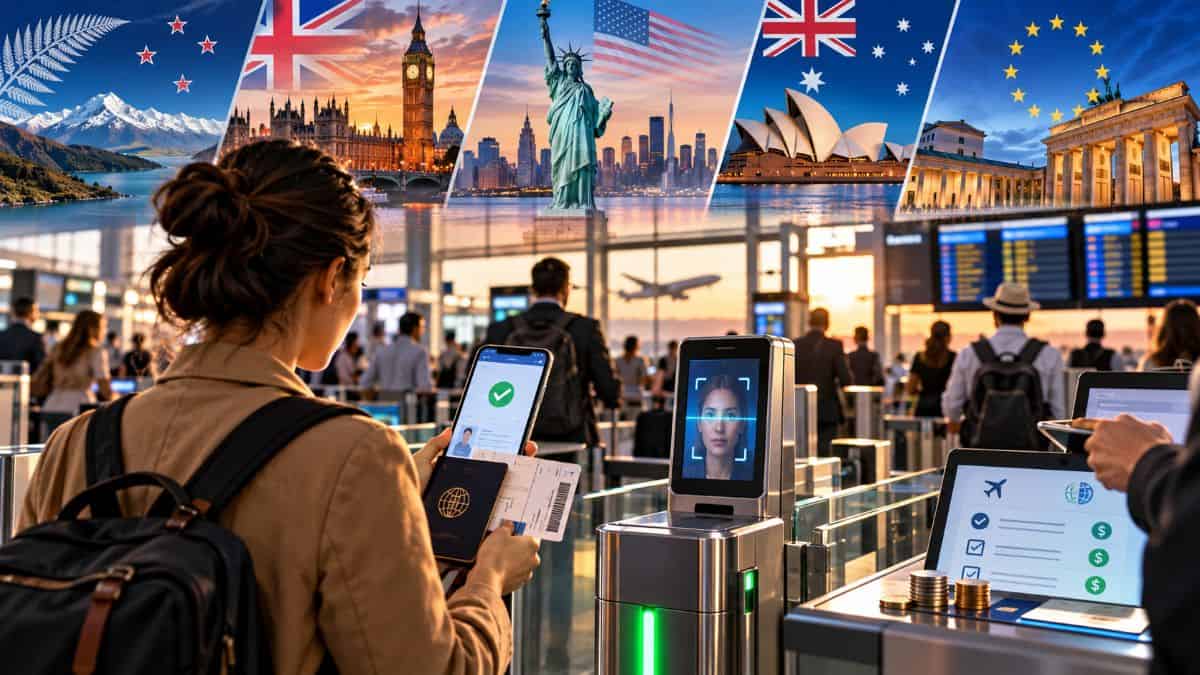
Image generated with Ai
International travel is entering a more expensive administrative era, with entry fees, digital permits and border charges increasingly appearing before departure. New Zealand now combines a NZ$100 visitor levy with its NZeTA for most eligible travellers, while the UK charges £20 for its Electronic Travel Authorisation. The US has raised ESTA charges to $40, while Australia applies a A$20 ETA service charge to eligible applicants. Meanwhile, Europe is preparing ETIAS at €20, although applications are not yet open. These costs sit alongside airline ticket taxes, tourist levies and visa charges. For travellers, the result is a growing pre-departure bill that can be easy to overlook when comparing fares.
The Border Is Becoming a Pre-Departure Cost
The cost of international travel is no longer confined to airfares, accommodation and insurance. Governments are increasingly collecting money before travellers reach an airport, often through digital travel authorisations or visitor levies.
New Zealand provides one of the clearest examples. Most international visitors who require an NZeTA also pay an International Visitor Conservation and Tourism Levy of NZ$100. The levy is collected when travellers request their NZeTA or apply for a qualifying visa.
For travellers using the NZeTA website, the authorisation costs NZ$23, while the mobile application costs NZ$17. The NZ$100 IVL is added to that amount for most eligible visitors.
Advertisement
Advertisement
That means a visitor using the website can face NZ$123 in government charges before considering flights, hotels, transport or travel insurance.
The policy also has a specific tourism rationale. New Zealand says the levy contributes towards maintaining infrastructure and the natural environment used by visitors.
Advertisement
Advertisement
The wider trend is equally significant. Governments are building digital borders that combine security screening with new administrative charges. Consequently, travellers must now treat border permissions as part of the real cost of a trip.
What Travellers Pay Before Flying
The differences between major destinations are substantial. Some countries charge a direct authorisation fee, while others combine an authorisation with a tourism or conservation levy.
| Destination | Requirement | Current Charge | Validity / Coverage | Key Traveller Point |
|---|---|---|---|---|
| New Zealand | NZeTA + IVL for most eligible visitors | NZ$17 app / NZ$23 website + NZ$100 IVL | NZeTA generally valid for two years | The levy can make the pre-departure cost substantial |
| United Kingdom | ETA | £20 | Up to six months per visit under ETA rules | Most eligible visa-exempt visitors need authorisation |
| United States | ESTA | $40 plus applicable adjustments | Generally two years, subject to passport validity and eligibility | Required under the Visa Waiver Program |
| Australia | ETA subclass 601 | A$20 app service charge | Multiple visits over 12 months | Eligible passport holders apply through the official app |
| European Union | ETIAS, when operational | €20 | Up to three years or passport expiry | Applications are not currently being accepted |
The UK has now set its ETA charge at £20. The government says the authorisation permits eligible visitors to travel to the UK, Jersey, Guernsey and the Isle of Man for qualifying visits of up to six months.
The Australian model is different. The Department of Home Affairs says the ETA has no visa application charge, but applicants pay an A$20 service charge for using the ETA application. European passport holders may instead qualify for the free eVisitor route.
The US has also moved sharply upwards. Customs and Border Protection says the ESTA fee increased from $21 to $40. The higher charge followed changes introduced through US legislation in 2025.
These differences matter because the same traveller profile can face very different border costs depending on destination and nationality.
Advertisement
Advertisement
New Zealand Shows How Costs Can Stack Up
New Zealand’s system demonstrates why travellers need to examine border costs separately from airfare.
The country’s IVL rose from NZ$35 to NZ$100 on 1 October 2024. The government said the increase would ensure visitors contributed more towards tourism and conservation infrastructure.
The levy applies to most international visitors requesting an NZeTA. However, exemptions exist, including for Australian and New Zealand passport holders and certain Pacific nationals. Transit passengers meeting specific conditions can also be exempt.
For a family of four, the IVL alone can therefore reach NZ$400. If all four travellers also require website-based NZeTAs, the combined government-authorisation cost can reach NZ$492.
That is before an airline ticket has been purchased.
The distinction matters for travel businesses too. Tour operators and travel advisers need to incorporate these mandatory charges into package calculations. Otherwise, advertised headline prices can understate the actual cost of an international journey.
Advertisement
Advertisement
Britain Has Made Digital Permission Mandatory
The UK’s ETA has become another major example of the changing border model.
The government currently charges £20 per ETA. The authorisation can cover multiple qualifying journeys, subject to the rules and validity of the traveller’s passport.
The system applies to most visitors who do not require a visa. The precise requirement depends on nationality, purpose and immigration status.
Importantly, the ETA is not merely a recommended registration. Travellers need the required authorisation before travelling when the rules apply.
The UK has also warned travellers about unofficial websites. Government guidance specifically cautions that other websites may charge more for submitting ETA applications.
That warning reflects a broader problem created by digital borders. Search engines can surface commercial intermediaries that resemble government websites. Travellers may consequently pay unnecessary service charges on top of legitimate government fees.
Advertisement
Advertisement
For consumers, the safest approach is straightforward: start with the immigration authority of the destination country.
Europe Adds Another Layer to Border Planning
Europe’s border transformation is more complicated because two different systems are involved.
The Entry/Exit System, or EES, is already fully operational across the Schengen external border. Since 10 April 2026, it has replaced traditional passport stamping for eligible non-EU short-stay travellers.
EES does not represent an additional travel authorisation fee. Instead, it digitally records travellers’ entry and exit information, including facial images and fingerprints.
The European Commission reported that the system had registered more than 150 million entries and exits by August 2026.
ETIAS is separate.
Advertisement
Advertisement
The European Union’s official ETIAS portal currently states that the system is not yet operational and that no applications are being accepted. The EU says it will announce the specific launch date several months beforehand.
Once operational, ETIAS will cost €20 for most applicants. The authorisation will normally remain valid for up to three years or until passport expiry.
EES and ETIAS Are Not the Same
| System | Status in October 2026 | Cost | Main Function | Traveller Action |
|---|---|---|---|---|
| EES | Fully operational | No application fee | Records entries, exits and biometrics | Complete border registration |
| ETIAS | Not yet operational | €20 when launched | Pre-travel authorisation | Apply when the official system opens |
| Schengen visa | Existing requirement where applicable | Separate visa fee | Entry permission for visa-required travellers | Apply through the relevant process |
This distinction is crucial because fraudulent websites are already exploiting confusion surrounding ETIAS.
The official EU system specifically warns that ETIAS applications are not currently being collected. Any website claiming to process an application before the official launch should therefore be treated with extreme caution.
Airline Taxes Already Add Billions
The rise in border charges is occurring against a much larger taxation backdrop.
According to the International Air Transport Association, governments collected an estimated US$60.4 billion in specific taxes on air passenger tickets in 2024. The average burden reached about US$29.50 per round trip.
Advertisement
Advertisement
North America accounted for US$34.1 billion, representing 57% of global specific ticket-tax revenue. Yet the region represented 24% of global passenger traffic in the same analysis.
These figures exclude many destination-specific visitor charges.
That distinction is important. A traveller may see airport taxes incorporated into an airline fare, while an ETA or visitor levy appears separately during trip preparation.
Consequently, the real cost of travel increasingly comes from several different layers.
| Cost Layer | Typical Example | Usually Paid When |
|---|---|---|
| Airfare | Base ticket price | Booking |
| Airline taxes | Passenger or airport charges | Booking |
| Digital authorisation | UK ETA or US ESTA | Before departure |
| Visitor levy | New Zealand IVL | Visa or NZeTA application |
| Tourist tax | Destination accommodation levy | Hotel stay |
| Visa | Where applicable | Application |
| Border processing | Certain land-border charges | Entry |
This fragmented structure makes price comparison harder for consumers.
When Border Costs Begin Influencing Where Travellers Go
For travellers comparing destinations with similar airfares, pre-arrival charges can become a meaningful part of the decision. A single £20 or €20 authorisation may have little effect on a short trip, but several mandatory charges can materially change the economics of family holidays and multi-country itineraries.
Advertisement
Advertisement
The effect becomes clearer when travellers compare destinations on their total entry cost rather than airfare alone. New Zealand, for example, can require most eligible visitors to pay both an NZeTA fee and a NZ$100 visitor levy. For a family of four, that can create several hundred New Zealand dollars in mandatory pre-arrival costs before accommodation, transport or activities are considered.
Travel businesses therefore have an opportunity to make total destination cost more transparent. Tour operators, airlines and travel advisers can distinguish between airfare, government authorisation, visitor levies and accommodation taxes. This would give travellers a more realistic basis for comparing destinations.
| Traveller Scenario | Potential Cost Pressure | Why It Matters |
|---|---|---|
| Solo traveller | Usually modest | A small additional charge may have limited influence |
| Couple | Costs multiply by two | Entry fees become more visible in short-break budgets |
| Family of four | Charges multiply across each traveller | Mandatory fees can become a significant pre-trip expense |
| Multi-country holiday | Several authorisations may apply | Different border systems can create cumulative costs |
| Frequent international traveller | Repeated authorisation payments | Annual travel budgets can absorb several separate charges |
| Budget traveller | Every mandatory fee matters | Additional border costs can affect destination comparisons |
There is also a psychological pricing effect. Travellers often focus on the advertised airfare or hotel rate first, while mandatory government charges appear later in the booking process. When destinations compete for the same long-haul visitor, greater upfront costs can therefore become part of the perceived value equation.
However, the impact should not be overstated. Travellers do not choose destinations on entry fees alone. Air connectivity, visa accessibility, accommodation prices, exchange rates, attractions and travel time can carry far greater weight. The more important development is that border costs are becoming another variable in destination comparison, particularly as digital travel authorisations become more widespread.
Digital Borders Bring Security Benefits Too
The financial dimension should not obscure the policy rationale behind these systems.
Governments are using digital authorisations to assess travellers before departure. Border authorities can consequently identify potential problems before passengers reach immigration counters.
Advertisement
Advertisement
The EU’s EES, for example, records biometric information and entry-exit data. The European Commission says the system helps identify overstayers and detect identity or document fraud.
The system also changes the traveller experience. Traditional passport stamps have been replaced by digital records for eligible short-stay non-EU travellers.
That creates an important operational consideration for frequent travellers. People can no longer rely solely on physical passport stamps to calculate their previous Schengen stays.
Digital records will increasingly determine whether travellers have complied with permitted stay periods.
Scam Websites Are Becoming a Travel Risk
The expansion of electronic travel permissions has created a parallel market for unofficial application services.
Government websites in New Zealand, Britain and Europe all warn travellers to use official application channels. New Zealand explicitly advises applicants to use its official website or app and warns against unauthorised third-party services.
Advertisement
Advertisement
The UK similarly warns that other websites can charge more for ETA applications.
ETIAS presents an even clearer warning because the EU system is not currently accepting applications. The official portal states that travellers do not need to submit an application at present.
For travellers, a simple verification rule can prevent unnecessary spending. Check the destination’s official immigration website before entering passport information or making a payment.
The domain should also match the government’s recognised website. Search advertisements and sponsored results should not automatically be treated as official government channels.
Travellers Need a New Pre-Trip Checklist
The changing border environment makes pre-departure research increasingly important.
Travellers should check passport eligibility, visa requirements, digital authorisations and destination levies before booking non-refundable arrangements. They should also verify whether a requirement applies to every member of the travelling party.
Advertisement
Advertisement
Children cannot automatically be assumed to be exempt. ETIAS, for example, has specific rules concerning age-based fee exemptions, while application requirements can still apply.
Travellers should also check passport validity carefully. Several authorisation systems link permission to the passport used during application.
The timing of applications matters as well. New Zealand advises travellers to apply ahead of travel because an NZeTA can take up to 72 hours in some circumstances.
Australia generally processes eligible ETA applications immediately, although the government warns that some applications can take longer.
For Europe, travellers should not attempt to obtain ETIAS until the official system opens.
The Real Cost Is Moving Beyond The Ticket
The international travel industry is moving towards a model where border administration forms part of the traveller’s financial planning.
Advertisement
Advertisement
New Zealand’s NZ$100 IVL shows how a destination can attach a substantial conservation and tourism levy to an electronic travel process. Britain demonstrates how a relatively small digital authorisation can become a mandatory pre-departure requirement. The US and Australia show other approaches, while Europe is adding another layer through ETIAS.
The policy purposes differ, and not every charge funds the same activity. Yet the practical message for travellers is consistent: the airfare is no longer the complete price of reaching a destination.
As digital border systems expand, travellers will need to budget for permissions as carefully as flights and hotels. Travel companies will also need greater transparency around these charges. For consumers, checking official government portals before paying remains the most effective safeguard against both unexpected costs and application scams.
Advertisement
