
Malaysia Tourism Faces Hidden Haze Costs as Outdoor Traders Risk Losing Visitor Spending

Published
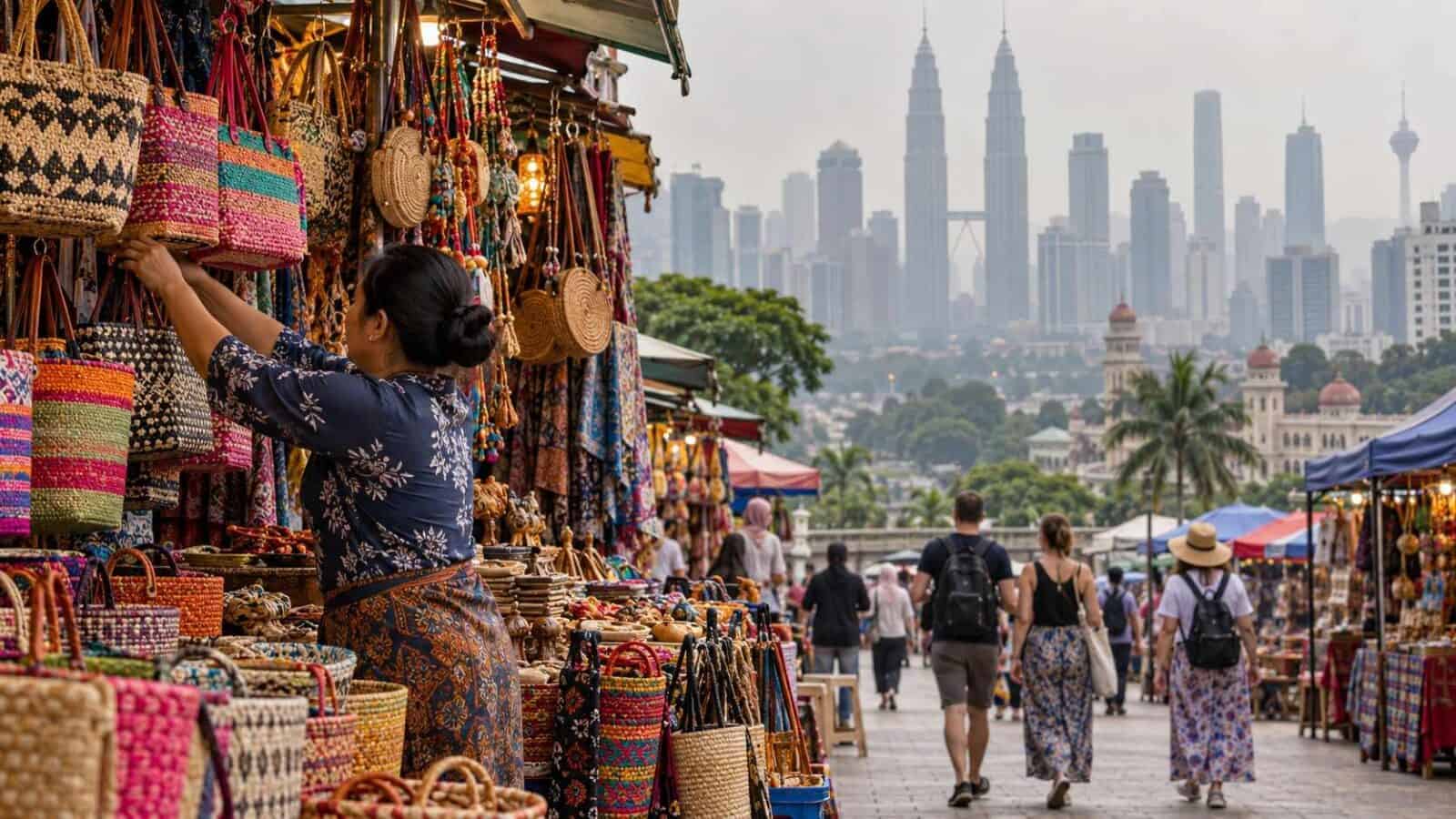
Malaysia tourism faces a less visible haze risk as travellers reconsider outdoor activities, potentially reducing spending at street stalls, markets and independent businesses without cancelling their holidays. In October 2026, the challenge extends beyond obscured skylines to how visitor money reaches local communities. Official environmental monitoring establishes the regional pollution problem, while government tourism accounts show why retail and food businesses matter economically. However, the official sources reviewed do not quantify current losses among outdoor traders. The central issue is therefore exposure: a holiday can continue while the businesses depending on sightseeing, browsing and spontaneous purchases face fewer earning opportunities.
Malaysia tourism faces a spending test beyond arrivals
A border crossing records a visitor. It does not reveal whether that person books a walking tour, browses a market or spends the afternoon inside a hotel.
Advertisement
Advertisement
That distinction matters when assessing the economic consequences of transboundary haze. Reduced outdoor activity could affect businesses even when flights, accommodation bookings and the overall trip remain intact.
This is an analysis of that exposure, rather than a measured estimate of October losses. The primary sources reviewed do not establish how much spending has disappeared, moved indoors or been postponed.
Advertisement
Advertisement
Official monitoring establishes the environmental background
The ASEAN Specialised Meteorological Centre, in its August 2026 regional review published on 14 September, documented escalating fire and smoke activity across the southern ASEAN region.
It recorded higher regional alert levels during August and observed transboundary smoke affecting parts of Malaysian Borneo. Its assessment also identified smoke over western Peninsular Malaysia.
Advertisement
Advertisement
These findings establish the environmental background. They do not establish the conditions at every Malaysian destination on 21 October, nor demonstrate a particular business’s revenue loss. ASMC
Malaysia’s Department of Environment describes its monitoring programme as an early warning mechanism for pollution incidents, including haze. Destination decisions should therefore use current local information rather than a single regional description. Department of Environment
Retail and food businesses explain the economic exposure
The Department of Statistics Malaysia’s Tourism Satellite Account 2025, released on 15 September 2026, shows the scale of the sector before the current assessment.
| Official indicator | 2025 result |
|---|---|
| Tourism industries’ gross value added | RM323 billion |
| Share of national GDP | 15.9% |
| Inbound tourism expenditure | RM124.8 billion |
| Domestic tourism expenditure | RM112.1 billion |
| Employment in tourism-related industries | 3.7 million people |
| Share of national employment | 22.1% |
Retail accounted for 50.6% of tourism industries’ value added, while food and beverage activities represented 16.4%.
These are broad national accounting measures. They are neither October trading figures nor estimates of employment dependent exclusively on overseas holidaymakers.
Nevertheless, their composition explains why evaluating the disruption solely through airlines and hotels would provide an incomplete picture. dosm.gov.my
Advertisement
Advertisement
A changed itinerary can change who earns
Consider an illustrative itinerary change: a visitor replaces an outdoor shopping afternoon with an enclosed attraction and a hotel meal.
Some expenditure may remain within the destination. However, the original market seller, independent guide or food stall may receive none of it.
That would represent a redistribution of visitor spending, rather than necessarily an equivalent loss across the whole economy. Establishing whether this is happening requires sales records, booking data and interviews across different business types.
An indoor venue should not automatically be described as a beneficiary. Visitors might spend less overall, choose free alternatives or remain in their rooms.
Street experiences are part of the destination
Tourism Malaysia’s official Kuala Lumpur guide describes Petaling Street as a shopping area with shops, restaurants and hawker stalls. That makes street commerce part of the visitor experience, rather than simply an optional retail stop. Kuala Lumpur
The commercial risk follows a straightforward mechanism. Less time spent browsing means fewer opportunities for an unplanned purchase.
Advertisement
Advertisement
However, the size of that effect remains unmeasured in the sources reviewed. Lower footfall cannot responsibly be attributed entirely to haze without considering weather, seasonality, events and changes in visitor numbers.
Hotels and airlines cannot measure the whole impact
An occupied hotel room demonstrates accommodation demand. It does not demonstrate that surrounding businesses enjoy normal trading.
Likewise, an operating flight confirms transport availability, not the quality or spending value of the holiday that follows.
For operators assessing disruption, useful measures would include excursion participation, purchases per customer and the number of activities removed from itineraries. These would complement arrivals and occupancy figures.
No airline cancellation total or airport closure claim is included here because a current primary announcement establishing those developments was not verified for this article.
Local businesses need visibility in the assessment
The most informative comparison would track similar businesses over comparable periods with different air-quality conditions.
Advertisement
Advertisement
Sales, opening hours, visitor footfall and cancelled bookings would help distinguish an actual fall in demand from spending that simply moved elsewhere.
Employment consequences also require evidence. National tourism employment figures cannot establish that particular traders have reduced staffing, wages or working hours.
The same caution applies to investment. Existing economic data do not prove that haze has delayed a hotel project or changed an investor’s decision.
What travellers can do before committing money
Travellers should check current environmental information for their destination and ask operators whether an activity remains available.
For prepaid outdoor experiences, clarify the arrangements before departure:
- Can the booking move to another day?
- What happens if the operator cancels?
- Does a substitute activity change the price?
- Which cancellation conditions apply?
These questions help visitors make informed purchases without assuming that haze automatically creates a refund entitlement.
Advertisement
Advertisement
Recovery needs evidence at business level
A credible assessment of recovery would examine whether spending returns to affected trading areas alongside improvements in environmental conditions.
Marketing activity alone cannot demonstrate that independent sellers have recovered their income. Neither can a rise in national arrivals establish that every neighbourhood benefits equally.
The outstanding question is measurable: how much money continues reaching local businesses when visitors change the way they experience a destination?
Traveller FAQs
Where should I check local air-quality information?
Use Malaysia’s Department of Environment and its official monitoring services. Check the location and observation time.
Does haze automatically mean my flight is cancelled?
No. Confirm your flight’s status directly with the airline and departure airport.
Will an outdoor attraction refund my ticket?
Check its booking conditions and any specific cancellation announcement. Do not assume every operator follows the same policy.
The spending that matters locally
Malaysia’s haze challenge reaches beyond whether tourists arrive. It also concerns what they do after checking in, how much they spend and which businesses receive that money. Official statistics establish the importance of retail, food and tourism employment, but they do not yet measure current losses among outdoor traders. Any claim of a nationwide spending collapse would therefore go beyond the evidence reviewed. The practical priority is accurate local information, clear booking conditions and business data that capture changing itineraries. Protecting the visitor experience also means understanding whether independent sellers remain connected to the economic benefits of each continuing holiday.
Official Sources
- Department of Statistics Malaysia — Tourism Satellite Account 2025
- Department of Environment Malaysia — Environmental Data Center
- ASEAN Specialised Meteorological Centre — 2026 regional haze reviews
Advertisement
