
UK Connects With Spain, Germany and More as New EU Baggage Rules Promise Free Personal Bags but Leave Travellers Facing a Costly Catch

Published
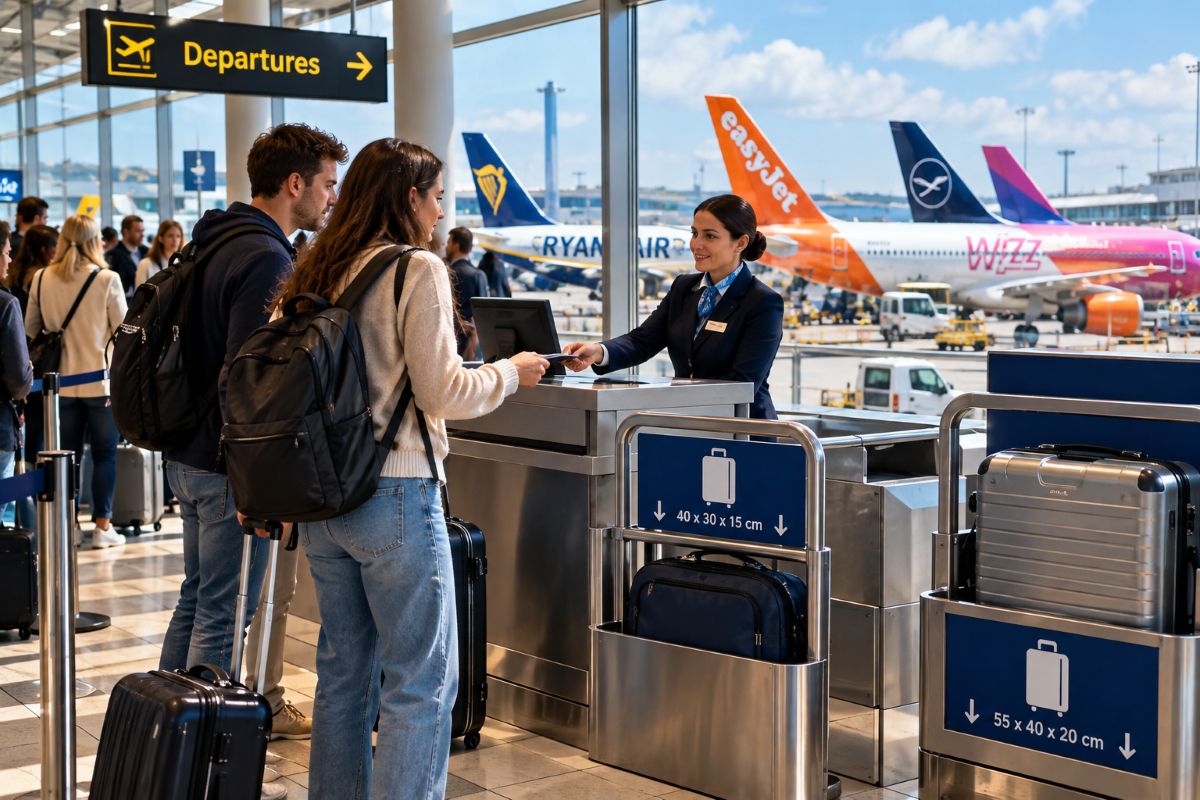
UK connects with Spain, Germany and more European destinations as new EU baggage rules promise free bags but reveal a costly catch for international travellers. The European Union has adopted revised passenger rights legislation scheduled to apply from 23 October 2027, affecting Ryanair, easyJet, Wizz Air, Vueling, Lufthansa, KLM and other airlines operating eligible routes. The changes protect qualifying personal items from additional charges while requiring clearer pricing for larger cabin baggage. However, passengers may still pay extra for overhead suitcases. Furthermore, flights departing from the United Kingdom face different legal conditions depending on the operating airline, making advance baggage planning essential.
What Are the New EU Baggage Rules and Why Do They Matter?
The European Union has introduced changes designed to strengthen passenger protection and improve transparency in airline baggage pricing.
Regulation (EU) 2026/2202 is scheduled to apply from 23 October 2027, giving airlines time to adjust their booking systems and baggage policies.
Under the new framework, passengers can carry a qualifying personal item without an additional fee. This may include a small backpack, handbag or laptop bag.
Advertisement
Advertisement
The rules also require airlines to display baggage-inclusive fares more clearly during booking.
However, travellers should distinguish between a personal item and a larger cabin suitcase.
Advertisement
Advertisement
| Baggage provision | New EU requirement |
|---|---|
| Small personal item | No additional fee |
| Size benchmark | 40 × 30 × 15 cm, or fitting under the seat |
| Larger cabin baggage | Baggage-inclusive fare displayed by default |
| Cheaper fares without larger baggage | Still permitted |
| Application date | 23 October 2027 |
The changes aim to help passengers compare total ticket prices before purchasing flights.
Which Airlines Face Changes Under the New European Baggage Regulations?
The revised baggage framework extends beyond Ryanair and easyJet to numerous airlines operating flights covered by EU passenger rights legislation.
Wizz Air, Vueling, Eurowings, Transavia, Lufthansa and KLM are particularly relevant because their cheapest fares may exclude larger overhead cabin baggage.
Air France, Iberia and TAP Air Portugal may also need to comply on eligible routes.
| Airline | Country | Current free personal item |
|---|---|---|
| Ryanair | Ireland | 40 × 30 × 20 cm |
| easyJet | United Kingdom | 45 × 36 × 20 cm |
| Wizz Air | Hungary | 40 × 30 × 20 cm |
| Vueling | Spain | 40 × 30 × 20 cm |
| Eurowings | Germany | 40 × 30 × 25 cm |
| Transavia | Netherlands / France | 40 × 30 × 20 cm |
| Lufthansa | Germany | 40 × 30 × 15 cm |
| KLM | Netherlands | 40 × 30 × 15 cm |
These are the airlines’ published allowances in the supplied research, rather than newly standardised EU limits.
Importantly, the legislation does not require every airline to provide identical baggage dimensions.
Advertisement
Advertisement
Why Could UK Holidaymakers Face a Catch Despite the Free Bag Rules?
The biggest complication concerns the territorial scope of EU passenger rights.
Flights departing from EU airports generally fall within the framework, regardless of the operating airline.
Certain flights arriving in the EU from outside the bloc also qualify when operated by an EU carrier.
However, UK departures operated by non-EU airlines may not automatically receive the same protection.
| Flight route | General EU coverage |
|---|---|
| Spain to UK on Ryanair | Covered |
| Germany to Spain on Lufthansa | Covered |
| France to Italy on easyJet | Covered |
| Netherlands to Portugal on Transavia | Covered |
| UK to Spain on Ryanair | Generally covered |
| UK to France on easyJet UK | Not automatically covered |
| UK domestic flight | Outside EU coverage |
Consequently, British holidaymakers must check their departure location and operating airline.
The regulations also do not guarantee free overhead luggage, meaning passengers could continue paying additional baggage charges.
Advertisement
Advertisement
How Much Could Passengers Pay for Larger Cabin Bags?
Although the revised rules protect qualifying personal items, larger cabin baggage may remain an additional expense.
easyJet currently advertises larger cabin bags from £5.99, while Eurowings lists overhead baggage from €18 on certain BASIC fares.
Meanwhile, Wizz Air requires passengers to purchase an eligible service, such as WIZZ Priority, to carry a larger trolley bag.
| Airline | Published baggage charge or restriction |
|---|---|
| easyJet | Large cabin bag from £5.99 |
| easyJet | Non-compliant gate bag fee of £48 |
| Eurowings | Larger cabin bag from €18 |
| Eurowings | Excess baggage gate fee of €60 |
| Transavia | Gate surcharge of €70 or more |
| Wizz Air | Larger trolley bag through WIZZ Priority |
| Lufthansa | Economy Basic excludes larger cabin baggage on selected routes |
| KLM | Economy Basic excludes larger overhead baggage |
Prices vary by route, booking date and fare conditions.
The legislation does not establish a guaranteed saving for every traveller. Instead, it aims to make baggage costs easier to identify before booking.
How Will the Changes Influence European Tourism and Flight Bookings?
The new rules could improve the booking experience for tourists travelling between the UK and European destinations.
Advertisement
Advertisement
Clearer baggage-inclusive fares may help families compare airlines more accurately, particularly when several passengers need overhead luggage.
For example, a family travelling with four cabin suitcases could compare the total baggage-inclusive cost rather than relying on headline ticket prices.
The reform may also reduce confusion over which bags passengers can bring without paying extra.
However, airlines can continue offering cheaper tickets without larger hand luggage.
Therefore, the changes do not guarantee lower holiday costs or identical baggage allowances across European carriers.
Their principal benefit is improved transparency, allowing travellers to make more informed decisions when purchasing flights.
Advertisement
Advertisement
What Should Travellers Do Before the New Rules Take Effect?
Passengers should continue following existing airline baggage policies until the revised EU provisions become applicable.
Before booking, travellers should compare ticket prices alongside baggage allowances, seating charges and other optional services.
Small backpacks may qualify for free carriage, but larger suitcases often require an additional purchase.
Passengers should also measure their luggage before travelling to avoid unexpected airport charges.
For UK–EU journeys, checking the operating carrier is particularly important because legal coverage may differ.
Travellers planning multi-airline itineraries should review each carrier’s baggage policy separately.
Advertisement
Advertisement
Ultimately, advance preparation remains the most effective way to avoid unnecessary charges and reduce uncertainty during international journeys.
Conclusion: Will the New EU Baggage Rules Make European Travel Cheaper?
The new EU baggage rules promise stronger protection for passengers travelling between the UK, Spain, Germany and other European destinations. From October 2027, qualifying personal items will receive additional legal protection, while airlines must present baggage-inclusive fares more transparently. However, Ryanair, easyJet, Wizz Air, Lufthansa, KLM and other carriers may continue charging for larger cabin suitcases. British holidaymakers must also consider route eligibility and operating airline restrictions. Although the reform does not guarantee cheaper flights, it could improve price comparisons and reduce unexpected booking costs. Ultimately, informed baggage planning remains essential for affordable European travel.
Comment by Anup Keshan, Founder and Editor-in-Chief of Travel And Tour World
“The introduction of clearer EU baggage regulations represents a positive development for international travellers seeking greater transparency when booking flights. As European destinations remain popular among British holidaymakers, understanding baggage allowances and additional charges is essential for affordable travel planning. The new framework can encourage airlines to communicate ticket inclusions more clearly, helping passengers compare fares with greater confidence. However, travellers must recognise that free personal items and larger cabin suitcases remain different categories. Continued cooperation between regulators, airlines and travel organisations can strengthen consumer awareness, improve booking experiences and support more convenient journeys across Europe’s interconnected aviation network.”
Advertisement
