

Middle East Travel Impacted as Istanbul, Jeddah and More Airports Face 1,041 Cancelled Flights and 1,637 Delays

Published
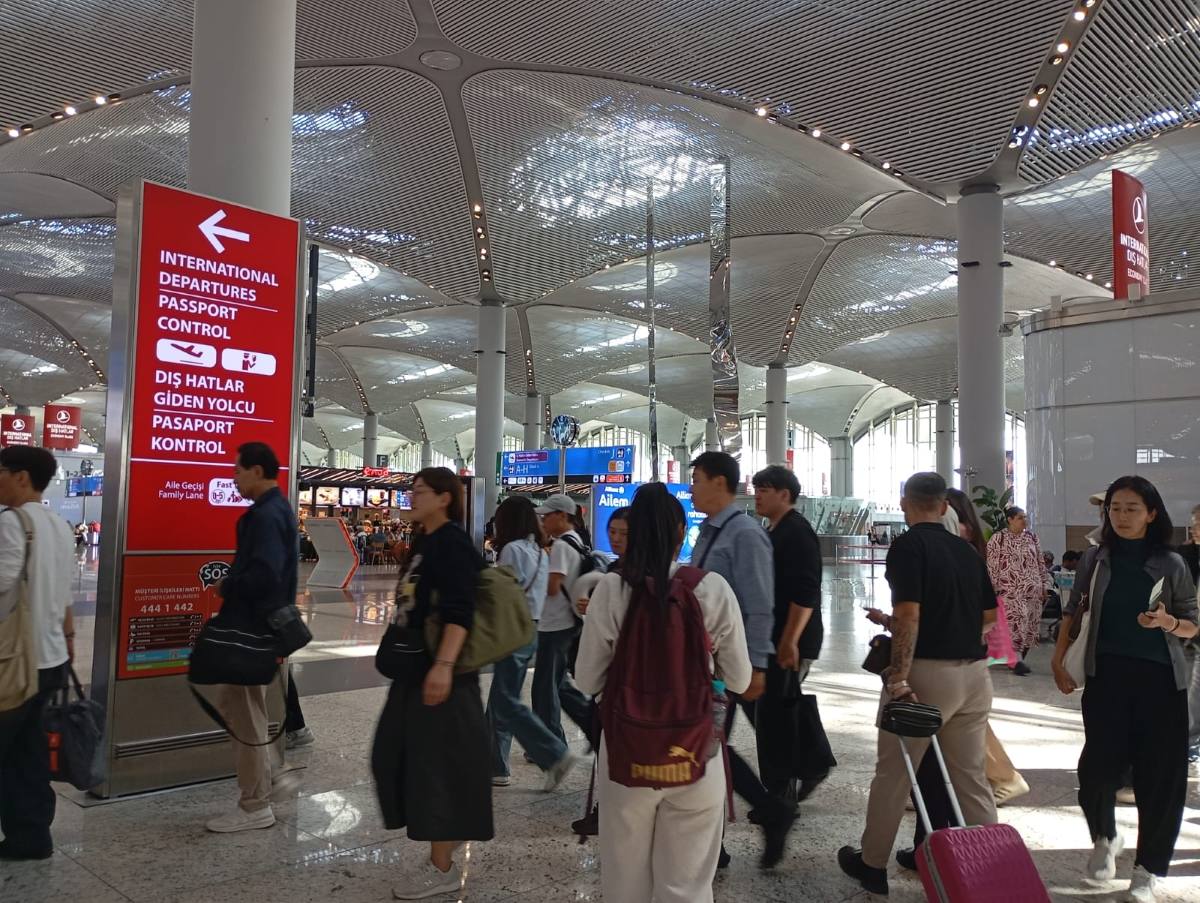
Travel in the Middle East has been badly hampered by extensive flight disruptions at Istanbul, Jeddah, and other major airports; 1,637 delays and 1,041 canceled flights have been recorded around the area. Airlines have been forced to modify timetables and cancel services due to the worsening security situation in Saudi Arabia, which includes reports of drone and missile assaults. In the meantime, already congested international routes are under further strain due to regional airspace limitations and increased airline safety procedures. Significant interruptions have been reported in Istanbul, Dubai, Riyadh, and Jeddah, leaving thousands of travelers concerned about their travel plans. Additionally, airline operations have been made more difficult by aircraft diversions, operational changes, and interrupted flight connections. As a result, travelers in the Middle East and other aviation hubs need to be ready for potential schedule modifications and longer wait times.
Why Are Flights Being Cancelled Across Middle East?
Reuters reported that an attack on Saturday killed 13 people and injured more than 300. Another projectile struck Terminal 4 on Sunday, causing a fire and further injuries. Saudi authorities also confirmed an attack at King Fahd International Airport in Dammam, where safety inspections and damage assessments were under way. The Houthi movement in Yemen claimed responsibility for attacks on Saudi aviation and energy infrastructure. Saudi air defences intercepted additional aerial threats, according to the Saudi-led coalition.
Advertisement
Advertisement
According to The National, Etihad cancelled six Abu Dhabi–Riyadh flights on Sunday, with further cancellations affecting Monday and Tuesday. Emirates, flydubai and Air Arabia also experienced disruptions on routes connecting the UAE with Saudi Arabia.
The European Union Aviation Safety Agency (EASA) has identified continuing security risks affecting the airspace of Saudi Arabia, Bahrain, Kuwait, Qatar, the UAE and parts of Oman.
Advertisement
Advertisement
Its official advisories highlight several threats, including missile and drone activity, air-defence interceptions and falling debris. EASA recommends avoiding specified high-risk airspace and conducting additional safety assessments for flights in surrounding areas.
These restrictions can affect airlines in several ways. Aircraft may need to take longer routes, obtain alternative air traffic clearances or adjust departure times. Such changes can also disrupt aircraft rotations and onward connections.
Advertisement
Advertisement
Which Middle East Airports Are Experiencing the Most Disruptions?
Saudi Arabia dominates the cancellation figures. King Khalid International Airport in Riyadh recorded 538 cancellations and eight delays, while King Abdulaziz International Airport in Jeddah reported 138 cancellations and 213 delays. King Fahd International Airport in Dammam registered 51 cancellations and 79 delays.
Other Saudi airports were also affected. Medina recorded 31 cancellations and 34 delays, Abha 25 cancellations and 15 delays, and Ta’if and Tabuk each reported 14 cancellations, alongside four and 11 delays respectively.
Ha’il registered eight cancellations and seven delays. Bisha and Arar each recorded seven cancellations, with two and one delay respectively. Al-Baha and Al-Jouf each reported six cancellations, with one and two delays. Qaisumah registered six cancellations without delays, while Yanbu reported four cancellations, Najran three and Gizan one, all without delays.
How Are the UAE, Qatar and Other Middle East Countries Affected?
Dubai International Airport recorded 61 cancellations and 248 delays, making it one of the busiest disruption points in the UAE. Sharjah reported six cancellations and 85 delays, while Abu Dhabi registered four cancellations and 106 delays. Al Maktoum International Airport recorded two cancellations and 15 delays.
Elsewhere, Hamad International Airport in Doha reported 18 cancellations and 117 delays. Cairo International Airport registered 27 cancellations and 112 delays, while Muscat’s Seeb International Airport recorded nine cancellations and 24 delays.
Bahrain International Airport reported 10 cancellations and 29 delays, Kuwait International Airport recorded five cancellations and 13 delays, and Queen Alia International Airport in Amman registered 14 cancellations and 40 delays.
Advertisement
Advertisement
Why Are Istanbul and Turkish Airports Important to the Disruption Picture?
Türkiye recorded particularly high delay figures. Istanbul Airport reported 321 delays and 24 cancellations, while Istanbul Sabiha Gökçen International Airport registered 150 delays and two cancellations.
Together, the two Istanbul airports accounted for 471 delays and 26 cancellations. Their figures underline the disruption affecting air connections between Türkiye, the Middle East and wider international destinations.
Which Airlines Are Facing the Highest Cancellation and Delay Rates?
Saudi Arabian carriers recorded the largest cancellation figures. Saudia reported 260 cancellations (51%) and 93 delays (18%). Flynas followed with 100 cancellations (39%) and 53 delays (21%), while flyadeal recorded 75 cancellations (41%) and 26 delays (14%). Riyadh Air registered 18 cancellations (60%) and no delays (0%).
Among UAE airlines, Emirates reported 22 cancellations (4%) and 136 delays (25%). flydubai recorded six cancellations (2%) and 103 delays (37%), while Air Arabia reported six cancellations (2%) and 92 delays (39%). Etihad Airways registered two cancellations (0%, rounded) and 88 delays (25%).
Qatar Airways recorded 14 cancellations (2%) and 111 delays (17%). Oman Air reported nine cancellations (8%) and 11 delays (10%), while SalamAir registered two cancellations (2%) and five delays (6%).
EgyptAir recorded eight cancellations (3%) and 47 delays (18%). Royal Jordanian reported seven cancellations (4%) and 17 delays (11%), while Gulf Air registered six cancellations (4%) and 23 delays (17%).
Advertisement
Advertisement
Middle East Airlines recorded three cancellations (4%) and 13 delays (20%). Yemenia Airways reported three cancellations (18%) and two delays (12%), while Jazeera Airways registered two cancellations (3%) and two delays (3%).
Turkish Airlines recorded 10 cancellations (0%, rounded) and 343 delays (20%). Pegasus Airlines reported four cancellations (0%, rounded) and 169 delays (23%).
What Should Affected Passengers Do Now?
Passengers travelling through affected Middle East airports should check their flight status directly with their airlines before departure. Travellers facing cancellations should contact their carriers about alternative flights, refunds or rebooking arrangements.
Those with connecting flights should verify their entire itinerary, particularly when travelling through Riyadh, Jeddah, Dubai, Doha or Istanbul. Passengers should also retain booking confirmations and receipts for additional expenses, as reimbursement eligibility depends on airline policies and applicable passenger rights.
What Do the Disruption Figures Mean for Regional Travel?
The reported 1,041 cancellations and 1,637 delays reveal two distinct challenges. Saudi Arabia faces the heaviest cancellation burden, while Türkiye and the UAE account for substantial delay volumes.
For travellers, the immediate priority is confirming flight arrangements and allowing additional time for connections. The figures demonstrate the scale of disruption across Middle Eastern aviation, although the supplied data does not establish the specific operational cause of every affected flight.
Advertisement
Advertisement
Data Verification Notice
The data presented in this report has been carefully compiled and reviewed by our editorial team using real-time aviation statistics recorded on 11 October 2026 at 5:34 pm ET (USA), corresponding to 12 October 2026 at 1:34 am GST.
Primary Sources: FlightAware and local correspondents.
Editorial Verification: All reported figures have undergone independent assessment and cross-verification by our human editorial team. Timestamped aviation records, operational data logs and flight-tracking snapshots have been securely archived to maintain historical accuracy, accountability and editorial transparency.
Important Note: Real-time flight-tracking information reflects continuously changing airline operations and airspace conditions. Consequently, minor differences may arise between the figures published in this report and those displayed by individual airports, airlines or departure gates.
For more information on flight disruptions across the Middle East, read our earlier report here.
Advertisement
Verified by Rana Pratap
