

Hundreds of Passengers Affected Throughout Middle East with 840 Cancelled Flights and 1,645 Delays at Dammam, Doha and Other Airports

Updated
Published
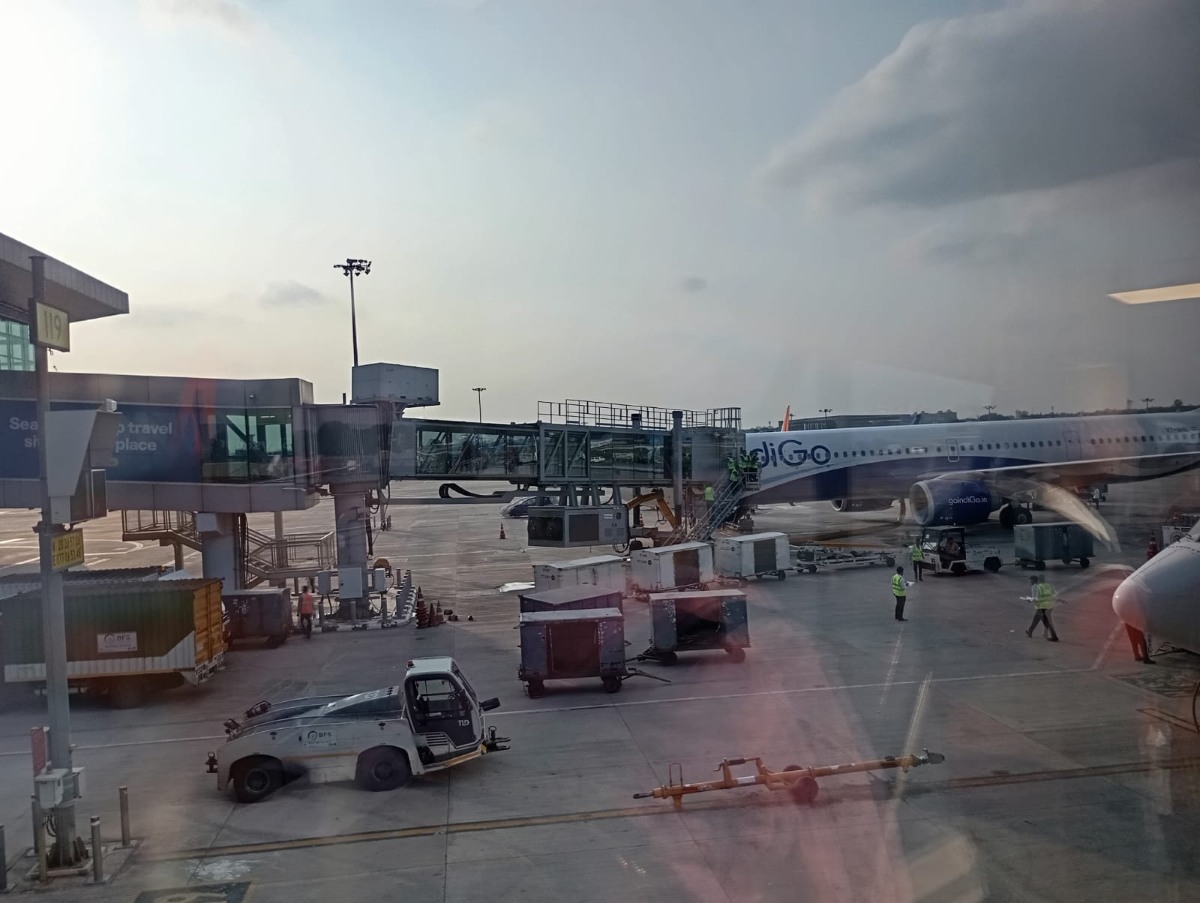
Widespread flight disruptions across the Middle East have impacted hundreds of travelers; at major airports including Dammam and Doha, 1,645 delays and 840 cancelled flights have been recorded. Travel plans in Saudi Arabia, Qatar, the United Arab Emirates, Turkey, and neighboring nations have been affected by the growing aviation crisis. Recent reports state that security threats on King Khalid International Airport in Riyadh have raised safety concerns, temporarily suspended operations, and altered airline schedules. Additionally, a number of airlines have been compelled to suspend services or reevaluate fly itineraries due to regional airspace safety alerts. As a result, travelers must deal with delayed connections, long waits, and erratic departure times.
Which Airports and Cities Recorded the Highest Flight Disruptions?
Saudi Arabia recorded some of the most substantial disruption figures across Middle east. King Khalid International Airport in Riyadh registered 455 cancellations and 150 delays, while King Abdulaziz International Airport in Jeddah reported 119 cancellations and 269 delays.
Advertisement
Advertisement
King Fahd International Airport in Dammam experienced 34 cancellations and 82 delays. Prince Mohammad Bin Abdulaziz International Airport in Medina reported 25 cancellations and 48 delays.
Elsewhere, Abha Regional Airport recorded 16 cancellations and 36 delays, while Tabuk Regional Airport experienced 16 cancellations and 15 delays. Ta’if Regional Airport registered 11 cancellations and 12 delays.
Advertisement
Advertisement
Smaller Saudi airports were also affected. Yanbu reported six cancellations and two delays, Al-Baha six cancellations and four delays, Arar nine cancellations and two delays, Gurayat eight cancellations and two delays, Ha’il seven cancellations and ten delays, and Al-Jouf eight cancellations and four delays.
How Did Disruptions Affect Other Middle East Aviation Hubs?
Dubai, Sharjah, Doha and Muscat Face Flight Interruptions
Dubai International Airport reported 37 cancellations and 220 delays, while Sharjah International Airport recorded nine cancellations and 89 delays.
Advertisement
Advertisement
Hamad International Airport in Doha registered 13 cancellations and 100 delays. Muscat International Airport in Oman experienced six cancellations and 20 delays.
These figures highlight the disruption affecting major Gulf aviation hubs and their regional connections.
Istanbul, Amman and Cairo Experience Additional Disruptions
Istanbul Airport in Türkiye reported 22 cancellations and 362 delays, making it the airport with the highest delay count in the supplied dataset.
Queen Alia International Airport in Amman, Jordan, recorded nine cancellations and 43 delays.
Meanwhile, Cairo International Airport in Egypt registered 24 cancellations and 175 delays, demonstrating that disruption extended beyond Asian destinations into neighbouring North Africa.
Which Airlines of Middle East Recorded the Most Cancellations and Delays?
Saudi Airlines Report Significant Flight Disruptions
Saudia recorded 234 cancellations, representing 43%, and 162 delays, representing 30%.
Advertisement
Advertisement
flyadeal reported 68 cancellations (34%) and 50 delays (25%), while flynas registered 52 cancellations (17%) and 104 delays (35%).
Riyadh Air reported 20 cancellations (71%) and nine delays (32%), the highest reported cancellation percentage among the listed airlines.
Turkish and Gulf Carriers Face Widespread Delays
Turkish Airlines recorded 14 cancellations (0%, as rounded in the supplied data) and 324 delays (19%). Pegasus Airlines registered four cancellations (0%) and 244 delays (32%).
Qatar Airways reported 13 cancellations (2%) and 88 delays (14%).
Among UAE carriers, flydubai recorded 12 cancellations (3%) and 89 delays (28%). Emirates registered 11 cancellations (2%) and 95 delays (17%), while Air Arabia experienced nine cancellations (3%) and 90 delays (37%).
Jordanian, Egyptian, Omani and Lebanese Airlines Also Affected
Royal Jordanian reported eight cancellations (5%) and 19 delays (12%). EgyptAir recorded six cancellations (2%) and 75 delays (27%).
Advertisement
Advertisement
Oman Air registered four cancellations (3%) and 13 delays (12%), while SalamAir reported two cancellations (2%) and five delays (6%).
Middle East Airlines (MEA) in Lebanon recorded three cancellations (4%) and eight delays (12%).
What Does the Airport and Airline Data Reveal About Regional Travel?
The disruption figures highlight Saudi Arabia as the most severely affected country in the airport dataset, particularly Riyadh and Jeddah. Istanbul recorded the highest number of delays at an individual airport, while Dubai, Doha and Cairo also experienced considerable interruptions.
The airline figures reveal different operational patterns. Saudia recorded the largest cancellation count among the listed carriers, while Turkish Airlines and Pegasus Airlines reported particularly high delay volumes.
However, airport and airline figures measure different categories of activity and should not be added together. The supplied figures also do not establish the specific causes of individual disruptions.
What Should Affected Passengers in Middle East Do Now?
Passengers travelling across Asia and the Middle East should take immediate steps to minimise further inconvenience.
Advertisement
Advertisement
- Check flight status: Confirm departures and arrivals directly through airline websites or mobile applications.
- Request rebooking: Contact the operating airline about alternative flights following cancellations.
- Review refund options: Check applicable ticket conditions and passenger rights before accepting travel credits.
- Allow additional connection time: Consider longer transfer windows at airports reporting substantial delays.
- Monitor airline notifications: Follow SMS, email and application alerts for gate changes and revised schedules.
- Keep essential documents accessible: Carry passports, visas, booking confirmations and any documentation required for rerouting.
Data Verification Notice
The flight disruption data presented in this report has been carefully compiled and reviewed by our editorial team using real-time aviation statistics recorded on 10 October 2026 at 5:08 pm US Eastern Time (11 October 2026 at 1:08 am Gulf Standard Time).
Primary Source: FlightAware, Local Correspondent
Verification Protocol: All reported figures have undergone independent verification and cross-checking by our human editorial team to ensure accuracy and reliability. Timestamped flight records, operational data logs and original tracking-feed snapshots are securely maintained in our internal archives to uphold editorial accountability, historical accuracy and transparency.
Important Note: Flight-tracking statistics reflect real-time airline schedules, airport operations and airspace activity at the time of collection. As aviation conditions evolve, minor differences may arise between the reported figures and the latest information published by individual airlines, airport authorities or departure gates.
Yesterday, air travel across the Middle East faced major disruptions, with 326 flight cancellations and 2,272 delays reported at regional airports. Click here to read the full report.
Advertisement
Verified by Paramita Sarkar
