
Romania Advances With Greece and Others as TOURAL Expands Digital Tourism Validation in Tulcea and Pineto

Published
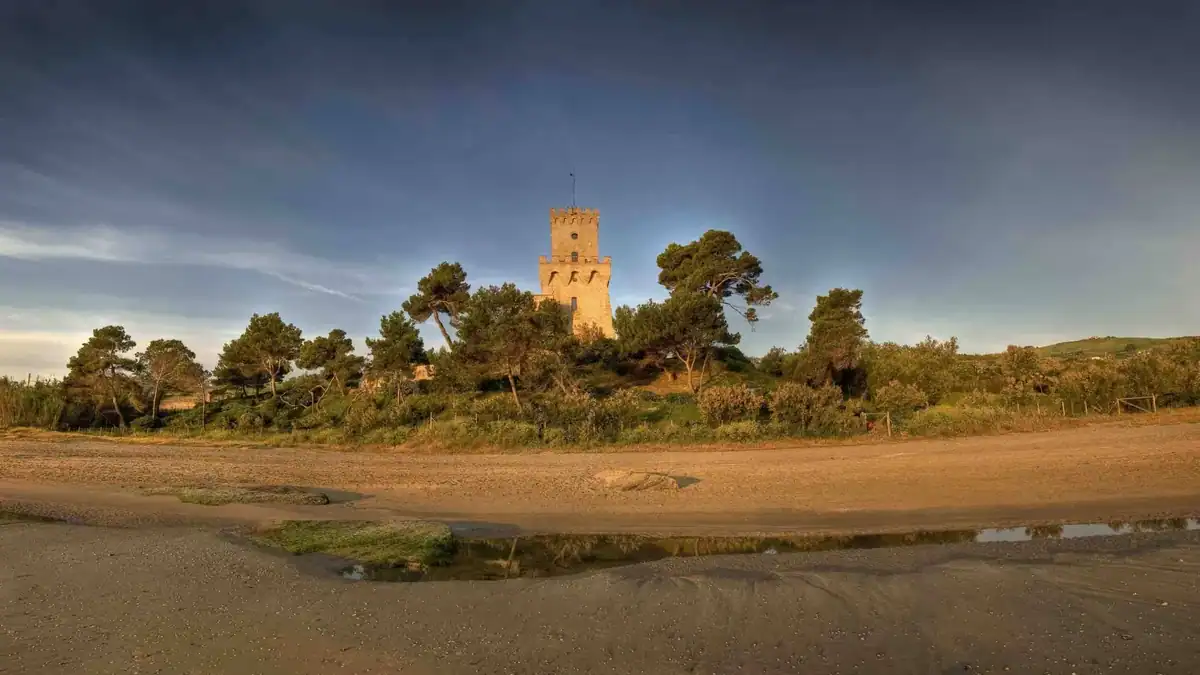
The EU-funded TOURAL programme has entered its decisive final implementation period, with six tourism pilot regions spanning Romania, Greece, Italy, Croatia, Bulgaria and Ukraine progressing beyond heritage research towards digitally supported visitor experiences, tourism-flow management, regional Knowledge Awareness Centres and small-scale service validation. The programme ends on 31 December 2026, while its Final General Assembly was officially listed for Tulcea from 16 to 18 September. Newly released project deliverables show that VR, predictive destination tools and cross-border tourism products have become central to the final phase.
TOURAL Is Moving Beyond Underwater Tourism Into Destination Management
The most important tourism development inside TOURAL is no longer simply the promotion of underwater archaeology. The programme is evolving into a broader experiment in how smaller rural, island and coastal destinations can develop, distribute and manage tourism without concentrating demand in already crowded locations.
Advertisement
Advertisement
According to European Commission CORDIS, TOURAL began on 1 January 2024 and is scheduled to end on 31 December 2026. Its total project cost and EU contribution are both €2,999,927.50. CORDIS identifies 40 per cent of the project within its Digital Agenda policy-priority tracker, strengthening the relevance of the digital-tourism dimension now becoming visible in the final implementation period.
The six intervention areas are split between two macro-regions. Greece, Italy and Croatia represent the Adriatic-Ionian region. Bulgaria, Romania and Ukraine form the Black Sea group. Their common objective is to use cultural, natural, scientific and community assets to create tourism activity beyond established urban and seasonal hotspots.
Advertisement
Advertisement
Six Countries Are Testing Different Parts of One Tourism Model
| Country | TOURAL pilot destination | Tourism proposition being developed | Importance for travel trade |
|---|---|---|---|
| Romania | Danube Delta and Tulcea area | Ecotourism, slow tourism, wetland experiences, local gastronomy, citizen science and digital visitor tools | Tests how environmentally sensitive destinations can combine tourism growth with capacity management and digital interpretation. |
| Greece | North Sporades and Alonissos | Underwater archaeology, marine biodiversity, VR access, trekking, cultural activity and off-season silver tourism | Creates a model where physical diving experiences can be supplemented by virtual access and year-round heritage products. |
| Italy | Teramo Province and Pineto | Coastal-to-mountain tourism, protected nature, gastronomy, cultural routes, senior travel and a regional KAC | Tests whether coastal demand can be channelled inland while supporting SMEs and less-visited communities. |
| Croatia | Pag Island and Šimuni | Nautical tourism, underwater archaeology, gastronomy, cultural heritage, VR and off-season packages | Provides a potential bridge between diving, maritime heritage and non-diver interpretation while reducing reliance on summer peaks. |
| Bulgaria | Nessebar | UNESCO heritage, submerged archaeology, VR, visitor-flow management, ecological monitoring and rural-hinterland diversification | Tests technology that could disperse visitors beyond established coastal concentrations and extend the active season. |
| Ukraine | Kutsurub rural region | Ancient Olbia heritage, community tourism, virtual tours, educational games and digital-first interpretation | Provides a recovery-oriented digital model, although physical leisure sales remain constrained by the security situation. |
Digital Tourism Is Now the Most Important TOURAL Story
One of the clearest developments for tourism businesses appears in TOURAL Deliverable D5.2. The project has developed an augmented Rural Heritage platform, immersive VR applications and interactive game-based environments covering the pilot regions.
The visitor-facing platform brings together destination information, points of interest, multimedia material and region-specific content. The VR element includes virtual diving designed to improve access to underwater cultural and natural heritage. Crucially, these tools sit within a common TOURAL digital environment rather than functioning as isolated destination experiments.
Advertisement
Advertisement
The second layer is more significant for destination managers. TOURAL has created a Flow Capacity Tool and Predictive Advisor intended to analyse tourism demand, destination capacity and sustainability pressure. The system is designed to compare scenarios across environmental, socio-cultural and economic dimensions.
Its underlying framework can consider differences between visitor segments, including expenditure, length of stay, carbon footprint and water consumption. That creates a potential shift from counting tourists towards analysing what different visitor mixes actually mean for fragile destinations.
Advertisement
Advertisement
There is, however, an important qualification for the travel trade. The March 2026 technical document identifies the present implementation as a minimum viable product. It does not yet incorporate automated feedback learning, continuous model updating or self-adaptive optimisation. These technologies should therefore be understood as pilot decision-support systems rather than mature commercial destination platforms.
Tulcea and Pineto Show How Research Is Becoming Local Tourism Infrastructure
Tulcea has emerged as a strategically important Romanian anchor because the CPMR Balkan and Black Sea Commission officially listed the TOURAL Final General Assembly there from 16 to 18 September 2026. As of 20 September, that official event page still carries no detailed post-event results release, making it important not to attribute unannounced outcomes to the meeting.
The Danube Delta pilot itself goes considerably further than conventional destination promotion. Its implementation plan combines wetland experiences, ecotourism, cultural and gastronomy activities, citizen-science participation, applications and virtual-tour solutions.
Pineto, meanwhile, illustrates how TOURAL intends to leave physical infrastructure behind at destination level. According to the Abruzzo regional government, the May 2026 project assembly centred on the Teramo pilot and a Knowledge Awareness Centre at the Pineto tourist information office.
Advertisement
Advertisement
The regional authority defines these centres as operating nodes designed to implement innovative tourism services, support local enterprises and validate small-scale sustainable-tourism models in real destination conditions.
That makes Tulcea and Pineto useful markers of the project’s transition: one is the venue identified for the final consortium assembly, while the other already demonstrates how the KAC concept can be embedded into an established visitor-information structure.
Bulgaria Adds Visitor Flow Forecasting and VR to the Tourism Test
According to the Municipality of Nessebar, its 2026 action plan includes a Knowledge Awareness Centre and a digital toolkit containing simulation and forecasting systems, tourism-flow management tools, an ecological-footprint calculator, VR applications and a specialised tourism data space.
That matters because Nessebar represents precisely the type of destination TOURAL is trying to address: a major established coastal visitor economy sitting beside underused natural and rural assets.
The strategy is not simply to attract more tourists. Its more sophisticated objective is to extend tourism beyond the strongest seasonal period, redirect some demand towards less-visited areas and use technology to understand the environmental consequences of different tourism patterns.
Greece Italy Croatia and the Black Sea Pilots Are Being Connected Rather Than Marketed Separately
TOURAL’s June 2026 implementation plan identifies four shared commercial and destination-management problems: making off-season products economically viable, unlocking rural assets, controlling visitor flows and achieving economies of scale through joint promotion.
Advertisement
Advertisement
The project documents more than 30 regional assets, over 20 concrete tourism offerings, more than 24 implementation milestones and at least 10 joint-promotion actions across the six pilots.
Cross-border links are already built into that framework. Teramo and the Croatian pilot have a silver-tourism connection. Croatia and the North Sporades share underwater-heritage and non-diver interpretation concepts. Kutsurub contributes virtual material associated with ancient Olbia, while the Danube Delta supports Black Sea macro-regional cooperation.
This is the point of commonality binding all six countries. They are not simply European coastal destinations with heritage assets. They are being used to test whether small destinations can collectively create themed tourism products, extend seasons, distribute visitor spending and share digital infrastructure without eroding the heritage that generates demand.
Why This Tourism Experiment Matters More in 2026
The timing has become especially significant following the European Commission’s first dedicated strategies for EU islands and coastal communities, presented on 10 June 2026.
According to the Commission, around 17 million people live on approximately 4,000 EU islands, while about 95 million people live along EU coastlines in 22 EU countries. The Commission identifies connectivity, economic sustainability, climate pressures and overtourism among the challenges and highlights sustainable tourism, digitalisation and economic diversification among the responses.
TOURAL is not formally presented as an implementation mechanism for that June strategy, and Ukraine is not an EU member state. However, the policy overlap is substantial. TOURAL is already experimenting with precisely the combination now receiving wider attention: digital destination management, seasonal diversification, rural economic participation and better control of tourism pressure.
Advertisement
Advertisement
For travel companies, this makes the project more relevant than a conventional EU research exercise. If the final validation proves transferable, destination managers could gain tools for identifying which visitors, which seasons and which tourism products create sustainable value, rather than simply maximising arrivals.
That would have implications for itinerary design, specialist tour operating, heritage tourism, diving, ecotourism and senior travel across lesser-known European destinations.
Ukraine Requires a Completely Different Commercial Approach
Kutsurub remains part of the six-region TOURAL architecture, but it cannot currently be treated like the other five destinations for normal international leisure sales.
The UK’s Foreign, Commonwealth and Development Office advice, current on 20 September 2026, advises against all travel to most Ukrainian regions outside specified western areas. Ukraine’s airspace also remains closed. Kutsurub is in the Mykolaiv region and therefore falls outside the western exceptions.
TOURAL accordingly places greater emphasis there on digital-first heritage interpretation, virtual access, education, community capacity building and future recovery. Its implementation plan explicitly links the sequencing of physical tourism activity to the evolving security situation.
What Travel Agents and Tour Operators Should Do Now
- Treat TOURAL services as pilots where appropriate. Existing attractions may already receive visitors, but project-developed services have different maturity levels and should not automatically be treated as fully commercial products.
- Watch off-season product development. Greece, Italy, Croatia, Bulgaria and Romania are testing products specifically intended to broaden tourism beyond traditional peaks.
- Use the Rural Heritage platform for destination discovery, not as proof of guaranteed bookability. Verify operating dates, access arrangements and local suppliers independently.
- Monitor visitor-capacity rules. Danube Delta, North Sporades and Nessebar particularly involve sensitive natural or heritage environments where access management could influence future itineraries.
- Keep Ukraine outside routine leisure packaging under current conditions. Follow official travel advice, insurance restrictions, airspace status and local security conditions.
- Track TOURAL’s final 2026 outputs. The crucial commercial questions concern post-project ownership, continued maintenance of digital tools, KAC operations, distribution channels and whether pilot products remain active after EU funding ends.
The Longer-Term Tourism Impact
TOURAL’s strategic significance will ultimately depend less on whether individual VR experiences attract visitors and more on whether six very different destinations can turn experimental services into durable tourism businesses.
Advertisement
Advertisement
The programme has reached the stage where digital interpretation, visitor-flow modelling, regional tourism hubs and cross-border products are being brought together. Yet the project itself cautions against treating all pilot destinations as equally mature, and its business-model work was designed to progress from generic foundations towards individual regional models.
If that transition survives beyond December 2026, TOURAL could provide a replicable template for destinations seeking higher-value, lower-pressure and less seasonal tourism. For Europe’s rural, island and coastal economies, that is a substantially bigger story than underwater tourism alone.
Frequently Asked Questions
What is the TOURAL tourism project?
TOURAL is a Horizon Europe research and innovation project running from January 2024 to December 2026. It develops sustainable tourism models for rural and remote regions using cultural heritage, nature, creative experiences, science tourism, silver tourism and underwater heritage.
Which countries are included in the six TOURAL pilot regions?
The six intervention countries are Greece, Italy, Croatia, Bulgaria, Romania and Ukraine. Greece, Italy and Croatia form the Adriatic-Ionian group, while Bulgaria, Romania and Ukraine form the Black Sea group.
Is TOURAL only an underwater tourism project?
No. Underwater cultural and nature heritage is one component. The model also covers cultural and creative tourism, cultural science tourism and silver tourism, supported by digital technology and destination-management tools.
Can travellers already book every TOURAL tourism experience?
No. The six pilots are at different stages of maturity. Some attractions and experiences already operate independently, while project-developed services include prototypes, proof-of-concept experiences and validation-stage products. The TOURAL digital system should not be assumed to be a universal commercial booking platform.
Can tour operators currently sell Kutsurub Ukraine as a normal holiday destination?
It should not be treated as a routine leisure product under present conditions. Current UK government advice warns against all travel to most Ukrainian regions, and Ukrainian airspace remains closed. The Kutsurub pilot therefore has a strong digital and future-recovery dimension.
Advertisement
