
John F. Kennedy Alongside LaGuardia, Newark Liberty and More Airports Across US Put Costume-Carrying Travellers on Security Alert

Updated
Published
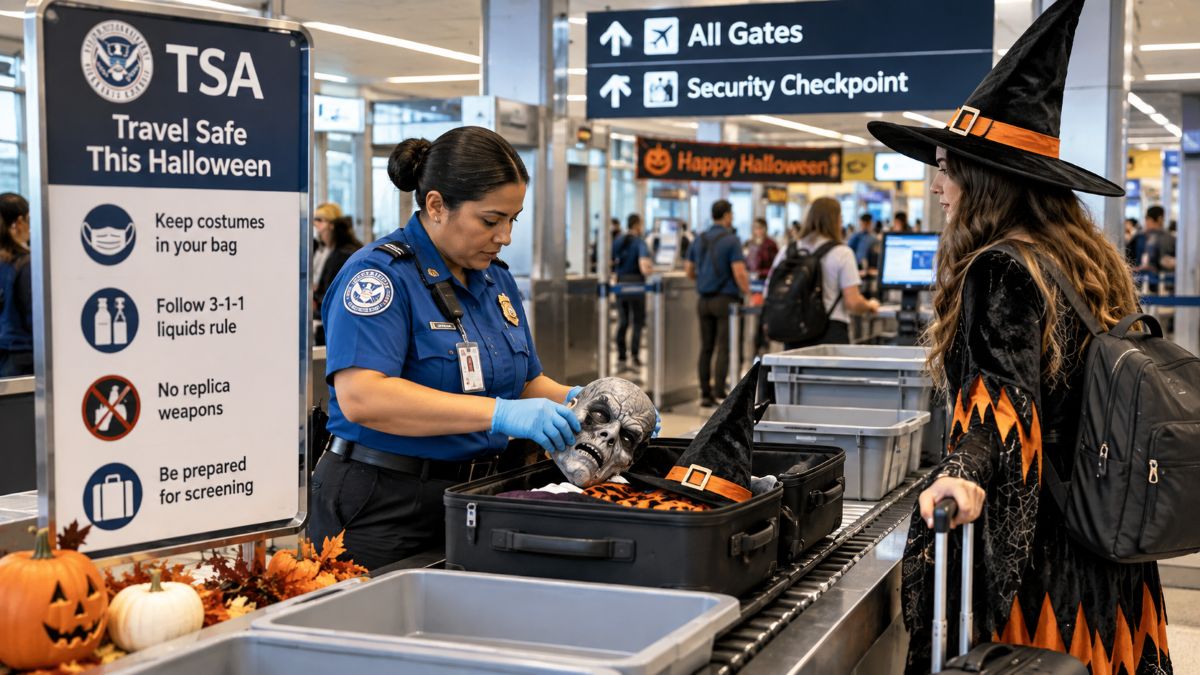
John F. Kennedy Alongside LaGuardia, Newark Liberty and More Airports Across US Put Costume-Carrying Travellers on Security Alert because TSA screening rules can turn masks, realistic props, metal-heavy outfits and oversized liquid make-up into airport delays. At John F. Kennedy, LaGuardia, Newark Liberty and More Airports Across the US, Costume-Carrying Travellers must follow the same national checkpoint requirements. The Security Alert matters because realistic firearm replicas are prohibited in carry-on baggage, explosive replicas are barred from both carry-on and checked luggage, and liquids must generally stay within the 3.4-ounce or 100 ml limit. For travellers, packing elaborate costumes rather than wearing them through security can reduce additional screening and help keep journeys moving smoothly.
Why Can Halloween Costumes Trigger Extra TSA Screening?
The issue is not that costumes are automatically banned. The problem begins when a costume interferes with normal airport security procedures.
Full-face masks, prosthetics, heavy make-up and bulky accessories can complicate identity verification. TSA increasingly uses biometric facial comparison at checkpoints, and its published testing has shown more than 99% positive matches, with an incorrect-match rate of about 0.03% in the cited testing. Travellers who do not receive a biometric match can still complete standard identity verification.
Metal-heavy costumes can create a second problem. Large buckles, chains, armour pieces, studs and extensive jewellery can trigger screening equipment, requiring officers to resolve the alarm before the traveller continues.
Advertisement
Advertisement
For passengers trying to catch a flight during a busy seasonal period, even a technically permitted costume can therefore add extra time at security.
Which airports are covered by the warning?
Because the guidance comes from TSA, it applies at TSA security checkpoints nationwide. That includes major airports such as:
Advertisement
Advertisement
- John F. Kennedy International Airport, New York
- LaGuardia Airport, New York
- Newark Liberty International Airport, New Jersey
- Los Angeles International Airport
- Chicago O’Hare International Airport
- Hartsfield-Jackson Atlanta International Airport
- Dallas/Fort Worth International Airport
- Denver International Airport
- Miami International Airport
- Orlando International Airport
- Harry Reid International Airport, Las Vegas
- Boston Logan International Airport
- Seattle-Tacoma International Airport
- Ronald Reagan Washington National Airport
- Washington Dulles International Airport
- Philadelphia International Airport
- Charlotte Douglas International Airport
- San Francisco International Airport
- Phoenix Sky Harbor International Airport
- Salt Lake City International Airport
Which Halloween Props Are Most Likely to Cause Problems?
Realistic weapon props carry the greatest risk.
TSA’s official “What Can I Bring?” rules state that realistic firearm replicas are prohibited in carry-on baggage, although they may generally be transported in checked baggage. Swords, sabres and utility knives are also prohibited from cabin baggage and must be checked where permitted.
Advertisement
Advertisement
The rules become stricter for explosive-looking props.
| Halloween item | Carry-on | Checked baggage |
|---|---|---|
| Realistic firearm replica | No | Generally yes |
| Sword | No | Yes |
| Sabre | No | Yes |
| Utility knife | No | Yes |
| Toy weapon | Restrictions apply | Generally yes |
| Realistic explosive replica | No | No |
| Realistic incendiary replica | No | No |
A fake grenade or realistic explosive device should therefore not be taken to the airport at all.
This distinction is important because travellers may assume all costume props are harmless. TSA officers, however, cannot initially assume a weapon-looking object is fake.
Could a Costume Prop Lead to a Civil Penalty?
Yes. Certain prohibited items can lead to much more than a brief delay.
Advertisement
Advertisement
TSA enforcement guidance lists civil penalties of $450 to $2,570 for some realistic firearm replicas, BB guns, pellet guns and similar prohibited devices. Certain sharp weapons, including swords, sabres, machetes and throwing knives, may also fall within the same penalty range.
For actual firearms, penalties are substantially higher.
| TSA violation | Published sanction range |
|---|---|
| Realistic firearm replica | $450–$2,570 |
| Sword, sabre or machete | $450–$2,570 |
| Unloaded firearm | $1,500–$6,130 + possible criminal referral |
| Loaded firearm | $3,000–$12,210 + possible criminal referral |
The final penalty depends on the item, circumstances and any aggravating factors.
For holiday travellers, the practical lesson is straightforward: do not bring a prop to the checkpoint simply because it is part of a costume.
How Do TSA Liquid Rules Affect Halloween Make-Up?
The familiar 3-1-1 liquids rule still applies to Halloween cosmetics.
TSA limits liquids, aerosols, gels, creams and pastes in carry-on baggage to containers of no more than 3.4 US fluid ounces, or 100 millilitres. Those items must fit inside one clear, quart-sized, resealable bag per passenger.
Advertisement
Advertisement
That can include:
- fake blood;
- liquid foundation;
- theatrical face paint;
- prosthetic adhesives;
- gels;
- creams;
- liquid eyeliner.
Large containers should generally travel in checked baggage unless they qualify for a specific exemption.
Travellers preparing elaborate costumes may easily overlook these limits because they think of these products as costume supplies rather than conventional toiletries. TSA, however, applies the same liquid rules regardless of how the product will be used.
Why Do Masks and Heavy Make-Up Matter at Identity Checks?
Identity verification is a central part of airport security.
Masks, facial prosthetics and heavy theatrical make-up can make that process more difficult because officers and biometric systems need to compare the traveller with the identification document presented.
TSA says biometric screening is voluntary, but passengers still need to complete identity verification by an accepted method.
Advertisement
Advertisement
That makes elaborate face coverings particularly inconvenient at the checkpoint.
For a traveller, wearing a costume through security may save only a few minutes of changing time later, while creating the possibility of additional checks before departure.
The simplest solution is to travel in ordinary clothing, keep masks and wigs packed, and put on the costume only after clearing security or reaching the destination.
How Busy Are TSA Checkpoints During Major Travel Periods?
TSA normally screens more than two million passengers every day across roughly 440 US airports.
Official checkpoint data also demonstrates how quickly volumes can approach three million passengers.
Examples from 2025 included:
Advertisement
Advertisement
| Date | Passengers screened |
|---|---|
| 23 May 2025 | 3,009,812 |
| 22 May 2025 | 2,959,287 |
| 18 May 2025 | 2,929,439 |
| 15 June 2025 | 2,885,745 |
| 12 June 2025 | 2,887,807 |
At that scale, additional screening does not affect only the passenger involved. Officers may need to inspect a bag, resolve an alarm or determine whether a prop is permitted, all while large numbers of travellers continue arriving behind them.
This is why TSA repeatedly urges passengers to organise bags and remove questionable items before reaching the airport.
Why Are Firearm Statistics Relevant to Halloween Travellers?
TSA intercepted 6,678 firearms at airport security checkpoints in 2024, after detecting 6,737 in 2023. The agency reported that 93% of the firearms intercepted in 2023 were loaded.
Those figures help explain why officers treat realistic weapon props seriously.
A passenger may know that a Halloween pistol is plastic, but the officer screening the bag cannot make that assumption until the item is examined.
Security procedures are designed around the object’s appearance and potential threat, not the traveller’s intended use.
Advertisement
Advertisement
For tourists travelling to conventions, theme parks, parties or Halloween events, realistic accessories are therefore best packed according to TSA rules or avoided entirely.
What Should Halloween Travellers Do Before Going to the Airport?
TSA’s official guidance supports a simple approach: separate travel clothing from costume clothing.
Passengers should wear uncomplicated clothes through security, keep elaborate accessories packed and verify unusual items through the TSA “What Can I Bring?” database before leaving home.
Travellers should also:
- remove full-face masks before identity checks;
- keep carry-on liquids to 100 ml or less per container;
- check swords, knives and permitted weapon-like props where required;
- leave realistic explosive replicas at home;
- avoid excessive metal accessories through screening;
- allow extra time during busy travel periods.
TSA also makes clear that the final decision about whether an item can pass through the checkpoint rests with the security officer.
Comment From Anup Keshan, Founder and Editor-in-Chief of Travel And Tour World
“Seasonal travel should remain enjoyable, but Halloween costumes can create unnecessary complications when passengers bring realistic props, oversized liquids or elaborate face coverings into airport security. Travellers should remember that TSA officers must assess every item based on security rules, not on whether it is intended for entertainment. A little preparation can make a major difference. Packing costumes instead of wearing them, checking unusual props before departure and keeping liquid make-up within permitted limits can help travellers avoid delays. With millions of passengers moving through US airports every day, simple planning can protect both individual journeys and smoother checkpoint operations.”
Advertisement
Advertisement
What Is the Most Important Takeaway for Travellers?
The key point is that TSA does not generally ban Halloween costumes, but some costume components can interfere with security screening or violate prohibited-item rules.
Masks can complicate identity checks. Metal-heavy accessories can trigger alarms. Liquid make-up must meet the 3.4-ounce/100 ml carry-on limit. Realistic firearms and sharp props cannot travel in cabin baggage, while realistic explosive replicas are prohibited from both carry-on and checked luggage.
With airport checkpoints regularly processing millions of passengers per day, travellers can save time by treating Halloween costumes as packed entertainment rather than airport attire.
The safest approach is simple: wear normal clothes through security, pack the costume carefully and check every unusual item before leaving home.
Advertisement
