
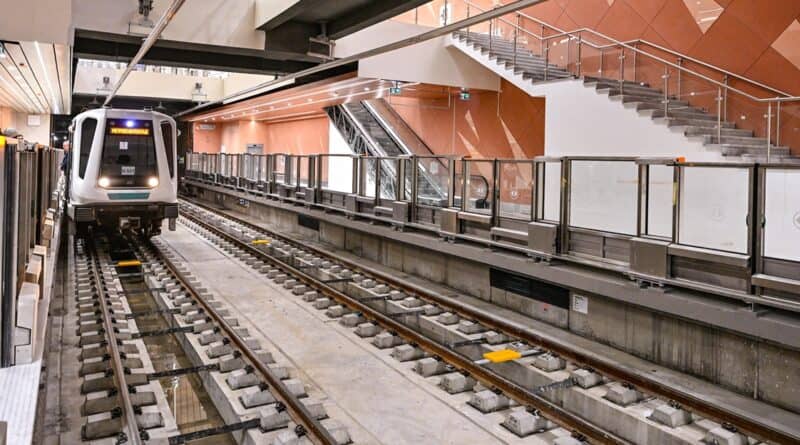
Sofia has built a new section of its Metro Line 3 consisting of three additional stations to provide faster travel to the Bulgarian capital’s southern part. The service began on August 14 and is designed to speed up travel between sections of Vladimir Vazov Boulevard. New station GA also honors Bulgarian football legend Georgi Asparuhov.
Three new stations – General Vladimir Vazov, Bessarabia, and Georgi Asparuhov Stadium – give a three kilometer section of the Metro a direct transport connection to the football stadium, local businesses, and other facilities. The new section of the Metro will help to catalyze transportation improvements throughout the city.
A city’s transport network plays a major role in shaping the visitor experience. Reliable metro connections allow tourists to explore more areas, reach attractions more efficiently and avoid depending on private transport.
The latest Sofia Metro expansion improves connections in areas that previously had fewer rapid transport options, giving visitors more flexibility when planning their journeys.
Advertisement
Advertisement
The extension shows how urban transport investment can influence not only daily commuting but also how visitors experience a destination.
The latest development extends Sofia Metro Line 3 from Hadzhi Dimitar towards the Levski area. The new section includes three underground stations designed to improve connections between residential districts and the wider city transport network.
The extension adds new mobility options along Vladimir Vazov Boulevard, an important route in Sofia’s urban landscape.
Each station serves a different role in improving access, supporting local communities and strengthening Sofia’s metro coverage.
Advertisement
Advertisement
The expansion allows passengers to travel more efficiently while reducing pressure on busy road networks.
The Georgi Asparuhov Stadium Station is the most distinctive addition to the new metro extension because it connects public transport with Bulgaria’s sporting identity.
Located near the famous Georgi Asparuhov Stadium, the station reflects the cultural importance of football in the surrounding area. Its design incorporates elements inspired by the stadium and the legacy of Bulgarian football figure Georgi Asparuhov.
For visitors, the station creates a unique travel experience by turning a regular transport stop into a local landmark.
The station demonstrates how transport infrastructure can combine functionality with local identity, giving visitors a stronger connection to the places they explore.
The Bessarabia Station strengthens metro connectivity in an area where passengers previously relied more heavily on road transport.
By adding another rapid transit point, the station improves movement between local neighbourhoods and the wider Sofia Metro network.
For travellers staying outside the central districts, improved metro access can make exploring the city more convenient.
The station contributes to a more connected Sofia by expanding metro access beyond the traditional city centre.
The General Vladimir Vazov Station serves as another important addition to Line 3, improving access along one of Sofia’s key urban corridors.
Located near Vladimir Vazov Boulevard, the station helps connect the Levski area with the broader metro system, giving passengers a faster alternative to road journeys.
The station highlights how metro expansion can bring previously less-connected areas closer to the city’s main transport system.
Sofia attracts visitors with its historic landmarks, cultural attractions, museums, parks and growing business travel sector. A stronger metro system helps tourists explore the capital more easily while reducing dependence on taxis and private vehicles.
Improved public transport also encourages visitors to discover neighbourhoods beyond the main tourist areas.
The expansion supports Sofia’s ambition to become a more connected and visitor-friendly European capital.
European cities are increasingly investing in metro systems to reduce congestion, improve mobility and encourage cleaner transport choices. Sofia’s Line 3 expansion follows this wider trend.
By providing more reliable public transport options, the city can encourage more passengers to choose metro travel over private vehicles.
For travellers, this means a simpler and more environmentally friendly way to experience Bulgaria’s capital.
Visitors using Sofia Metro can now include the three new Line 3 stations when planning routes across the city. The expanded network provides additional options, but travellers should still check routes before starting their journeys.
The metro expansion makes Sofia easier to navigate, especially for first-time visitors.
The new stations are Georgi Asparuhov Stadium, Bessarabia and General Vladimir Vazov.
The station connects Sofia’s metro network with Bulgarian football heritage and the nearby stadium.
Sofia Metro is located in Bulgaria.
It provides easier access to more areas of Sofia, allowing visitors to explore the city using public transport.
Yes. Expanding metro services encourages public transport use and provides an alternative to private vehicles.
The Sofia Metro Line 3 extension will have a positive long-term impact on ways to accommodate urban mobility within Bulgaria’s capital. Three new stations (Georgi Asparuhov Stadium, Bessarabia and General Vladimir Vazov) will help improve access, stimulate more sustainable types of travel, and give travelers more opportunities to explore Sofia. Along the lines of modern transport development and cultural identity, with the football-inspired station, Sofia is building a metro system that will accommodate both commuters who travel daily and international travelers.
Advertisement
Advertisement
Advertisement













Friday, September 4, 2026

Friday, September 4, 2026
Friday, September 4, 2026

Thursday, September 3, 2026

Wednesday, September 2, 2026
Friday, September 4, 2026

Friday, September 4, 2026