
Bahamas Cruise Tourism Surges as Nassau Cruise Port Welcomes More than Thirty Thousand Passengers in Record-Breaking Day, Strengthening Caribbean Cruise Growth Outlook

Published
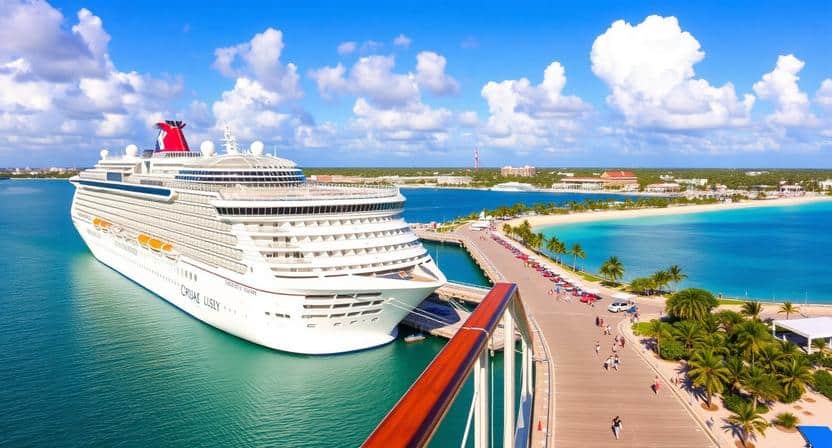
Nassau Cruise Port has provided an enormous boost to Bahamas cruise tourism by receiving 33,254 cruise passengers on June 8, 2026. The record has taken the number of cruise passengers received at the port above the critical level of 33,000 and has proven that Nassau is becoming one of the strongest ports in the Caribbean.
The cruise passengers have boarded six major cruise ships, namely Oasis of the Seas, Allure of the Seas, Mardi Gras, Carnival Celebration, Caribbean Princess and Disney Fantasy. The record of The Bahamas does not mean only large figures but also reflects increased demand of cruises, improved port facilities and economic opportunities for business in downtown Nassau.
Six Ships Turned One Day Into A Landmark Arrival
The record-breaking day was driven by a strong cruise line mix and the simultaneous presence of six high-capacity vessels. Oasis of the Seas and Allure of the Seas brought major Royal Caribbean volume. Mardi Gras and Carnival Celebration added strong Carnival Cruise Line capacity. Caribbean Princess and Disney Fantasy widened the visitor profile through family, premium and multigenerational cruise demand. This combination matters because it shows that Nassau remains highly relevant across different cruise brands and passenger segments. A destination that can attract mega-ships, family-focused vessels and mainstream cruise itineraries on the same day holds clear strategic value in the regional cruise market.
A Sharp Jump Over The Previous Passenger Record
The new total of 33,254 passengers exceeded Nassau’s previous single-day record of 30,538 passengers, achieved on March 11, 2025. That represents an increase of about 8.9 per cent, a strong rise within just over a year. This growth shows how quickly the port’s cruise traffic has continued to climb after major waterfront investment and operational upgrades. It also proves that Nassau is not only recovering or stabilising. It is expanding its cruise capacity and testing the upper limits of its redesigned port infrastructure. For tourism stakeholders, such a jump reinforces confidence in Nassau’s ability to handle large-scale cruise arrivals while supporting local visitor experiences.
Advertisement
Advertisement
Port Capacity Now Matches Nassau’s Cruise Ambition
The milestone is closely linked to the port’s expanded capacity. Nassau Cruise Port has been developed to handle more than 33,000 passengers daily, making this record a practical demonstration of the port’s ability to operate at that level. This is important for future cruise growth because modern ships are larger, itineraries are more competitive, and ports must prove they can manage high passenger volumes efficiently. Capacity is not only about berths. It also involves passenger movement, ground transport, safety, retail flow, excursion coordination and downtown access. By reaching this new daily record, Nassau has shown that its cruise infrastructure can support the next phase of high-volume Caribbean cruising.
Economic Impact Reaches Far Beyond The Pier
The strongest impact of the record day was felt beyond the cruise terminal. High-performing cruise days can support retailers, restaurants, tour operators, transportation providers, attractions, artisans, entertainers and downtown businesses. Every passenger does not spend the same amount, but large arrival days create powerful opportunities for visitor-facing enterprises. Some guests book tours. Others buy souvenirs, dine locally, take taxis, visit beaches, explore heritage attractions or enjoy entertainment near the harbour. This creates a ripple effect across the local economy. For Nassau, the challenge and opportunity are the same: convert passenger volume into meaningful local spending that benefits Bahamian businesses.
Advertisement
Advertisement
Downtown Nassau Stands To Gain From Bigger Cruise Days
Downtown Nassau remains one of the biggest beneficiaries of strong cruise arrivals. The port sits close to shops, restaurants, cultural stops, tour departure points and waterfront businesses, allowing passengers to move quickly from ship to city. When more than 33,000 guests arrive in one day, downtown operators gain a rare concentration of potential customers. This can support sales for local vendors, food outlets, guides, transport companies, straw-market traders, artists and entertainment providers. However, the destination must also manage visitor flow carefully. Smooth mobility, clear signage, safe pedestrian areas, reliable transport and high-quality guest service become essential when passenger numbers reach record levels.
Cruise Growth Strengthens The Bahamas Visitor Economy
Cruise tourism remains one of the key pillars of The Bahamas’ visitor economy. Nassau’s record day supports a wider national tourism story in which sea arrivals continue to drive high visitor volumes. The Bahamas has long benefited from its proximity to major cruise homeports in Florida and its strong position within short Caribbean itineraries. Nassau’s advantage lies in scale, location and brand recognition. Cruise lines can include the port on three-night, four-night, seven-night and longer itineraries, making it highly flexible for deployment planning. As cruise capacity grows globally, Nassau is well positioned to capture additional calls if it continues to deliver efficient operations and attractive guest experiences.
Advertisement
Advertisement
Future Tourism Growth Depends On Better Passenger Conversion
The next stage for Nassau is not only attracting more passengers. It is converting more of them into higher-value destination activity. A record day is valuable, but its long-term impact depends on how many visitors spend meaningfully ashore. This makes tour quality, retail variety, cultural programming, food experiences and transport reliability crucial. Cruise passengers who enjoy a strong day in Nassau may return for another cruise, recommend the destination, or even consider a longer land-based stay in The Bahamas. That conversion potential is important. Cruise tourism can become a gateway to wider travel demand when visitors leave with a strong impression of local culture, beaches, hospitality and heritage.
Bahamian Culture Can Create Stronger Cruise Experiences
Nassau’s future cruise competitiveness will depend heavily on how well it showcases Bahamian culture. Large ports risk becoming only transit points if the visitor experience feels generic. Nassau has an opportunity to avoid that by highlighting local food, music, art, crafts, Junkanoo traditions, storytelling, heritage and authentic waterfront experiences. When passengers feel they have experienced something distinctly Bahamian, their visit becomes more memorable. This also helps local entrepreneurs. Artisans, entertainers, guides and food businesses can benefit when the port experience reflects the country’s identity. The stronger the cultural offer, the more Nassau can differentiate itself from other Caribbean cruise ports.
Operational Efficiency Will Shape Future Cruise Confidence
Cruise lines value destinations that can handle passenger flow reliably. A record day involving six ships tests every part of the visitor system, from gangway movement and terminal services to taxis, tours, security and return boarding. If Nassau can manage peak days smoothly, it strengthens trust among cruise line partners. This matters for future deployment decisions. Cruise companies plan itineraries around port reliability, berth availability, guest satisfaction and commercial performance. Nassau’s new record therefore becomes an operational signal. It shows that the destination can support high-volume calls while continuing to work with multiple major cruise brands. That confidence can influence future schedules and ship deployments.
Local Businesses Need More Access To Cruise Spending
As cruise passenger numbers rise, inclusive tourism growth becomes essential. The benefits of record arrivals should reach more Bahamian-owned businesses, not only large operators. Local retailers, food vendors, cultural performers, transport providers and small tour companies need clear pathways to participate in the visitor economy.
Advertisement
Advertisement
Training, product development, digital booking access and stronger downtown coordination can help more entrepreneurs capture cruise spending. This is especially important on high-volume days, when demand exists but competition is intense. A successful cruise destination is not measured only by how many passengers arrive. It is also measured by how widely the economic benefits are shared.
Nassau’s Record Day Signals A Stronger Caribbean Cruise Position
The 33,254-passenger achievement strengthens Nassau’s position within the competitive Caribbean cruise landscape. Cruise destinations across the region are investing in terminals, private islands, beach clubs, shopping districts, cultural experiences and transport upgrades. Nassau must compete not only on location but also on quality and capacity.
This record shows that the port can handle scale. The next priority will be deepening the guest experience so that volume translates into satisfaction and spending. If Nassau continues improving its waterfront, downtown links and cultural offer, it can remain one of the most important cruise calls in the region.
A New Growth Chapter For Bahamas Cruise Tourism
Breaking the daily attendance record at the Nassau Cruise Port represents a benchmark event for Bahamas cruise tourism. Attendance of 33,254 tourists on one day by six ships shows the high level of confidence in the cruise lines, increasing popularity and the importance of investing in the port capacity.
On the other hand, this event proves that cruise tourism plays an important role in the economy of downtown Nassau as local merchants, restaurateurs, transportation companies, tour operators, artists, and entertainers depend on a regular flow of tourists. The task before the local authorities is evident: to convert larger cruise ship days into improved experience for visitors and economic benefits for the locals.
Advertisement
