
Vietnam Drives Mekong River Cruise Rise to Unlock Luxury Travel Experiences in 2026

Published
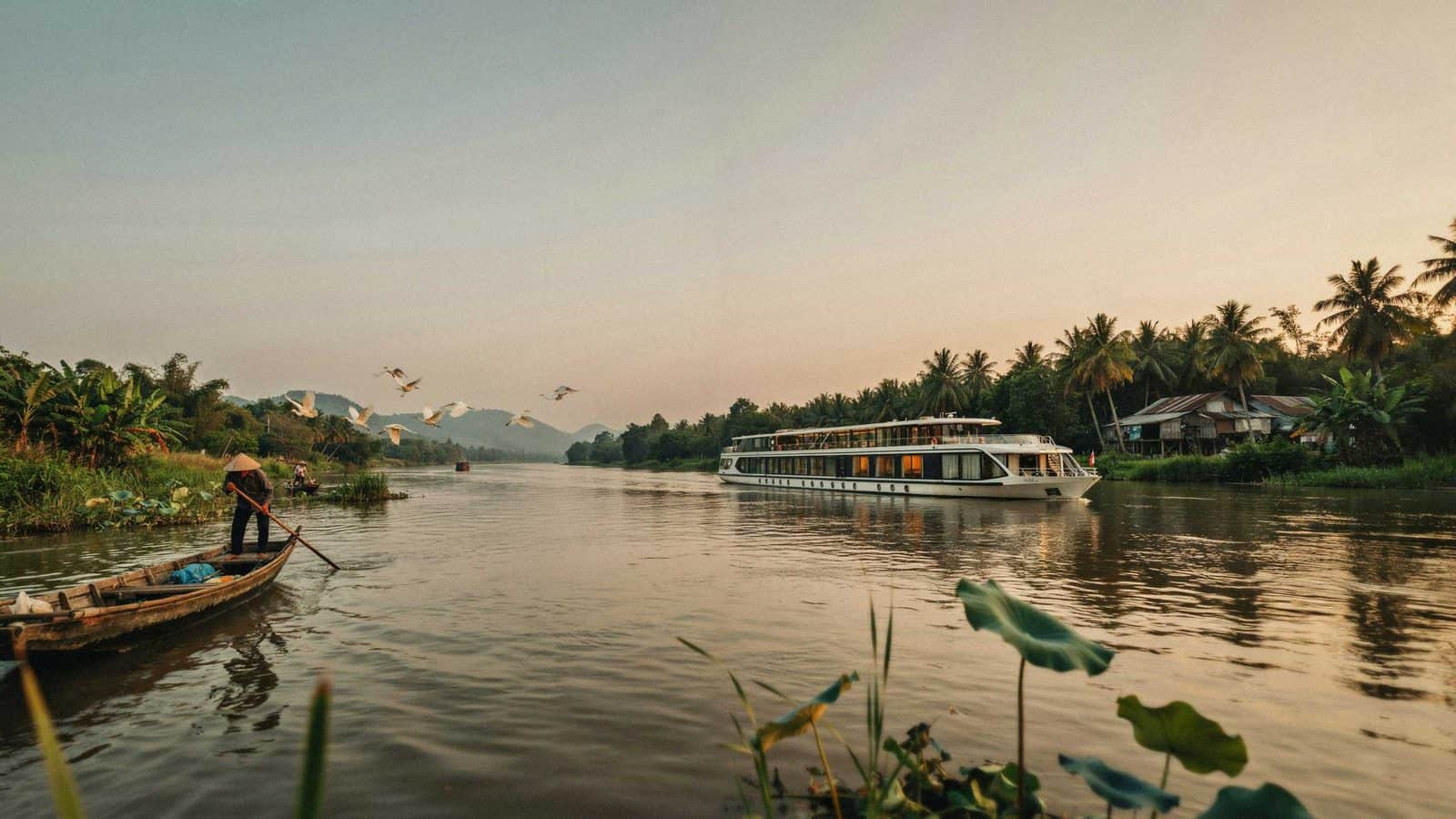
This is the first time we have the opportunity to book this early for a cruise to see pristine and unspoiled 2,700 miles of tropical Southeast Asia waters. There are limitations to land-based holidays. Now travelers can visit remote islands, historic places, and conclude their trip by staying on a community that is built on and only accessible by water.
While most tourists prefer to spend their holidays in either Ho Chi Minh City or Angkor Wat, the numerous travelers on the Mekong River and its tributaries appreciate the opportunity to visit the unspoiled and undisturbed areas and ecosystems. They also appreciate the opportunity to visit the river people and ancient communities.
Advertisement
Advertisement
As a testament to the current trend of travel, the Mekong River cruises exemplify the concept of slow travel. Six newly added slow travel cruises combine adventure, luxury, and wellness travel.
The Mekong River Is Becoming Southeast Asia’s Ultimate Slow Travel Route
The Mekong River has long been considered the lifeline of mainland Southeast Asia, connecting communities across China, Myanmar, Laos, Thailand, Cambodia and Vietnam. However, modern travellers are increasingly discovering that the river itself is becoming the destination.
Advertisement
Advertisement
Unlike traditional holidays built around crowded tourist attractions, Mekong cruises allow visitors to experience the rhythm of local life from the water. Passengers wake up to changing landscapes, pass through rural villages and explore destinations that are often inaccessible through standard tourism routes.
The river stretches approximately 2,700 miles, making it one of Asia’s longest and most influential waterways. Cruise itineraries usually concentrate on the lower Mekong region, particularly Vietnam, Cambodia and Laos, where travellers encounter:
Advertisement
Advertisement
- Ancient Buddhist temples
- Floating villages
- Traditional craft communities
- Local food markets
- Historic cities
- Rural landscapes shaped by river culture
This combination of nature, heritage and personalised exploration has positioned Mekong cruises as a major opportunity for Southeast Asia’s tourism industry.
The biggest attraction is not simply reaching destinations. It is experiencing how millions of people live alongside one of the world’s most important rivers.
What Others Are Missing About Mekong River Cruises
Many travellers associate Southeast Asia with busy cities, beaches and famous monuments. However, the Mekong reveals a quieter and more authentic side of the region.
What others get wrong is assuming river cruises only appeal to older luxury travellers. The latest Mekong cruise programmes are attracting a broader audience, including solo explorers, wellness travellers, cultural tourists and adventure seekers.
Modern operators are adapting their experiences by adding:
- Wellness activities
- Sustainable tourism experiences
- Local village visits
- Culinary programmes
- Cycling excursions
- Temple discoveries
- Exclusive cultural encounters
The result is a travel experience that combines comfort with authenticity.
Advertisement
Advertisement
For example, some cruises allow visitors to explore silk workshops, pottery villages and traditional markets, while others provide rare access to communities living on floating settlements.
The Mekong is no longer simply a route between destinations. It is becoming a destination in itself.
Why Six Mekong Cruises Stand Out for Different Types of Travellers
Choosing a Mekong River cruise depends heavily on what type of experience travellers want. Some visitors seek wellness and relaxation, while others prefer cultural immersion or luxury services.
The six highlighted cruises demonstrate how the river tourism market is becoming increasingly specialised.
| Cruise Experience | Cruise Operator | Main Attraction | Duration | Starting Price |
|---|---|---|---|---|
| Wellness and cultural balance | AmaWaterways | Fitness, healthy dining and local experiences | 7 nights | From £3,558 per person |
| Solo traveller adventure | Pandaw | Small ship authenticity and community visits | 7 nights | From £3,162 per person |
| Local life discovery | CroisiEurope | Floating villages and Mekong Delta experiences | 8 nights | From £3,589 per person |
| All-inclusive luxury | Scenic | Premium suites, excursions and temple experiences | 10 nights | From £5,295 per person |
| Contemporary comfort | Viking | Scandinavian design and extended itinerary | 14 nights | From £8,395 per person |
| Ultra-luxury expedition | Aqua Expeditions | Private experiences and high crew attention | 7 nights | From £5,779 per person |
These cruises demonstrate that Mekong travel is no longer a single style of holiday. It now offers multiple experiences designed around different traveller expectations.
AmaWaterways Brings Wellness and Culture Together Along the Mekong
For travellers seeking a balanced combination of relaxation, wellness and discovery, AmaWaterways’ Mekong itinerary provides one of the most complete experiences.
Advertisement
Advertisement
The seven-night journey aboard AmaDara focuses on destinations including Angkor Ban, Phnom Penh, Tan Chau and Sa Dec.
The 124-passenger ship combines traditional Southeast Asian design with modern comfort. Wellness has become a central part of the experience, with activities such as:
- Morning yoga sessions
- Stretching classes
- Fitness activities
- Healthy dining options
The ship’s Chef’s Table restaurant adds a premium culinary experience, offering a six-course dining experience overlooking the river.
Beyond the ship, passengers explore local communities, including silk workshops filled with colourful fabrics and traditional markets offering handmade products.
The experience appeals to travellers who want more than sightseeing. It connects relaxation with cultural discovery.
The itinerary also includes a pre-cruise stay in Siem Reap, allowing passengers to explore one of Cambodia’s most important tourism destinations before beginning their river journey.
Advertisement
Advertisement
Why Wellness Tourism Is Driving Mekong Cruise Growth
The rise of wellness-focused travel is changing how visitors explore destinations. Travellers increasingly want holidays that improve wellbeing while providing meaningful cultural experiences.
The Mekong fits this trend because the river environment naturally encourages slower travel. Unlike fast-paced city tourism, river cruising creates opportunities for:
- Mindful experiences
- Nature observation
- Cultural interaction
- Reduced travel stress
The popularity of wellness cruises shows how Southeast Asia is adapting to changing traveller expectations.
The region is no longer competing only on attractions. It is competing on experiences.
Pandaw Creates a More Authentic Mekong Experience for Solo Travellers
Solo travel has become one of the fastest-growing segments in global tourism, and the Mekong River is increasingly attracting independent travellers searching for deeper cultural connections rather than conventional sightseeing.
Pandaw’s Classic Mekong itinerary has positioned itself as one of the strongest options for solo travellers by combining small-ship intimacy with authentic community encounters.
Advertisement
Advertisement
The seven-night journey operates aboard the RV Bassac Pandaw, a vessel designed to recreate the elegance of historic colonial-era river ships while maintaining modern passenger comfort.
The ship carries only 60 guests, creating a more personal atmosphere compared with larger cruise experiences. This smaller capacity allows passengers to access less-visited locations that larger vessels cannot easily reach.
Key stops include:
- Oudong in Cambodia
- Phnom Penh
- Chau Doc in Vietnam
- Ben Tre
- Peam Chi Korng pottery village
- Park Russei market
The cruise focuses heavily on local interaction. Instead of simply observing destinations from a distance, passengers are encouraged to connect with communities, artisans and local traditions.
This approach reflects a major shift in modern travel. Tourists are increasingly searching for experiences that feel genuine, responsible and connected to local people.
Why Solo Travellers Are Choosing Mekong River Cruises
Solo travellers often face challenges when booking luxury holidays, particularly concerns about additional costs and limited opportunities for social interaction.
Advertisement
Advertisement
Pandaw addresses this trend by offering selected departures without a single supplement, making premium river travel more accessible.
The appeal comes from several factors:
- Small group atmosphere
- Strong cultural focus
- Organised excursions
- Opportunities to meet fellow travellers
- Access to remote communities
The Mekong’s slower pace also creates an ideal environment for solo exploration.
Unlike fast-moving itineraries where travellers rush between attractions, river cruises allow passengers to spend more time understanding destinations.
This is becoming one of the strongest reasons behind the growth of experiential river tourism across Southeast Asia.
CroisiEurope Reveals the Hidden World of Floating Communities
While luxury and comfort remain important, many travellers are increasingly interested in understanding how local communities live.
Advertisement
Advertisement
CroisiEurope’s From the Mekong Delta to Siem Reap itinerary provides one of the most immersive views of river-based lifestyles.
The eight-night journey begins in Ho Chi Minh City and explores destinations including:
- My Tho
- Cai Be
- Phnom Penh
- Kampong Chhnang
The highlight of the itinerary is the opportunity to experience Tonle Sap, Southeast Asia’s largest freshwater lake.
The lake represents one of the most unique ecosystems in the region. During different seasons, water levels dramatically change, influencing the lives of communities that depend on the lake.
Passengers aboard the RV Indochine can observe floating villages where homes, schools and businesses operate directly on the water.
The 62-passenger ship provides an intimate viewing platform, allowing travellers to witness daily life along one of Southeast Asia’s most fascinating waterways.
Advertisement
Advertisement
The Floating Village Experience Offers a Different View of Cambodia
One of the strongest attractions of Mekong tourism is the ability to witness communities that have adapted entirely around water.
Floating markets, fishing villages and river-based trading networks provide travellers with a perspective that cannot be experienced through traditional land tours.
Visitors can see:
- Wooden boats transporting goods
- Floating homes connected by waterways
- Local traders selling fresh produce
- Traditional fishing methods
These experiences are becoming increasingly valuable as travellers seek meaningful encounters rather than simply collecting photographs.
The Mekong cruise trend demonstrates that cultural tourism is moving towards deeper engagement with communities and environments.
Scenic Brings Ultra-Inclusive Luxury to the Mekong
For travellers seeking a premium experience with extensive inclusions, Scenic’s Luxury Mekong and Temple Discovery Cruise represents one of the most comprehensive options.
Advertisement
Advertisement
The 10-night journey aboard the Scenic Spirit combines river cruising with land-based exploration across Cambodia and Vietnam.
The itinerary includes important destinations such as:
- Kampong Cham
- Angkor Ban
- Phnom Penh
- Tan Chau
- Sa Dec
- Cai Be
The 68-passenger ship focuses on personalised service, with every cabin featuring butler service.
Luxury features include:
- Multiple dining venues
- Room service
- Premium suites
- Included excursions
- Special cultural experiences
The cruise is particularly attractive because it combines river exploration with extensive access to Cambodia’s heritage attractions.
Passengers can experience Angkor temples through specially arranged activities, including exclusive dining experiences and unique viewing opportunities.
Advertisement
Advertisement
Why Luxury Travellers Are Looking Beyond Traditional Destinations
The luxury travel market is changing rapidly.
High-value travellers are increasingly searching for destinations that combine exclusivity with authenticity. Instead of only visiting famous luxury resorts, many are choosing journeys that provide rare access to history, culture and nature.
The Mekong benefits from this trend because it offers:
- Limited-capacity ships
- Private excursions
- Local encounters
- Heritage experiences
- Remote landscapes
This has created a new category of luxury travel where the value comes from access rather than simply accommodation.
Viking Introduces Scandinavian Design Along Southeast Asia’s Historic River
Viking has brought a different style to the Mekong cruise market by combining Scandinavian design principles with Southeast Asian exploration.
The Magnificent Mekong itinerary is one of the longest options available, lasting 14 nights.
Advertisement
Advertisement
The journey aboard the Viking Saigon explores:
- Kampong Cham
- Phnom Penh
- Tan Chau
- Sa Dec
- Cai Be
The ship carries 80 passengers and follows Viking’s established approach of combining comfortable accommodation with destination-focused experiences.
Unlike traditional-style Mekong vessels, Viking ships feature contemporary interiors inspired by the company’s European longships.
The itinerary also includes extended land stays in:
- Hanoi
- Siem Reap
- Ho Chi Minh City
This allows travellers to experience Vietnam’s historic cities alongside Cambodia’s ancient heritage.
Viking’s Longer Itinerary Appeals to Experience-Hungry Travellers
The rise of extended travel is another important trend shaping tourism.
Advertisement
Advertisement
Many travellers are moving away from short holidays and choosing longer journeys that allow deeper exploration.
Viking’s 14-night itinerary responds to this demand by combining:
- River cruising
- City exploration
- Heritage tourism
- Culinary experiences
Included excursions provide access to cultural highlights, while additional experiences allow travellers to explore attractions such as Angkor Wat and historic underground sites.
The cruise reflects a wider movement towards “slow tourism”, where quality and depth matter more than the number of destinations visited.
Aqua Mekong Delivers the Ultimate Luxury Expedition
At the highest end of the Mekong cruise market, Aqua Expeditions offers one of the most exclusive river journeys.
The Aqua Mekong Expedition Cruise focuses on personalised service, premium dining and rare cultural access.
Advertisement
Advertisement
The seven-night journey begins in Ho Chi Minh City and visits:
- Sa Dec
- Chau Doc
- Koh Chen
- Kampong Chhnang
The vessel carries only 40 guests, creating an exceptional crew-to-passenger ratio.
Luxury features include:
- Private tender boats
- Kayaks
- Bicycles
- Cinema room
- Designer suites
- Premium culinary experiences
The ship’s dining programme includes menus created by renowned chef David Thompson, adding a high-end gastronomic element to the journey.
Why Aqua Mekong Represents the Future of Luxury River Travel
Luxury tourism is increasingly moving towards exclusivity and personalisation.
Aqua Mekong represents this evolution by offering experiences that cannot easily be replicated.
Advertisement
Advertisement
Passengers can explore remote villages, visit artisan communities and travel beyond standard tourist routes.
The focus is not simply on comfort but on access.
This represents a major opportunity for Southeast Asian tourism, where unique cultural landscapes are becoming more valuable among premium travellers.
The Mekong Cruise Market Reflects a New Era of Southeast Asia Tourism
The six featured cruises highlight a broader transformation taking place across Southeast Asian travel.
The region is moving beyond traditional tourism models built around famous landmarks and beach destinations.
Instead, travellers are looking for:
Advertisement
Advertisement
- Authentic communities
- Sustainable experiences
- Smaller groups
- Cultural immersion
- Nature-based journeys
The Mekong River has become a symbol of this transformation.
Its combination of history, biodiversity and human stories provides exactly the type of experience modern travellers increasingly demand.
The river’s future as a tourism destination will depend on maintaining a balance between visitor growth and environmental protection.
Responsible cruise development, community involvement and sustainable operations will become increasingly important as demand rises.
Mekong Cruises Signal Southeast Asia’s Shift Towards Experiential Tourism
The rise of Mekong River cruises reflects a much larger transformation taking place across Southeast Asia’s tourism industry. Travellers are increasingly moving away from traditional sightseeing models and choosing experiences that combine culture, nature, comfort and meaningful connections.
The modern traveller is no longer satisfied with simply visiting famous destinations. Instead, visitors want to understand how communities live, discover hidden landscapes and experience traditions that cannot be replicated elsewhere.
Advertisement
Advertisement
The Mekong River provides exactly this opportunity.
Stretching approximately 2,700 miles, the river connects some of Asia’s most culturally significant regions. Its lower sections through Cambodia and Vietnam offer a rare combination of ancient heritage, rural communities, biodiversity and historic trading routes.
The growing popularity of Mekong cruises demonstrates how river tourism is becoming a major contributor to Southeast Asia’s travel economy.
Travel Analytics: Why the Mekong Is Attracting High-Value Travellers
The Mekong cruise market is benefiting from several global tourism trends that are reshaping traveller behaviour.
1. Demand for Authentic Experiences Is Rising
Modern travellers increasingly prefer experiences that provide cultural understanding rather than conventional entertainment.
Mekong cruises respond to this demand by offering:
Advertisement
Advertisement
- Village visits
- Artisan workshops
- Traditional markets
- Temple exploration
- Culinary experiences
- Wildlife and nature encounters
The journey itself becomes the attraction.
2. Luxury Tourism Is Moving Towards Personalisation
High-end travellers are increasingly prioritising exclusivity over traditional luxury indicators.
Large resorts and crowded attractions are facing stronger competition from smaller, personalised experiences.
Mekong cruise operators are benefiting because many vessels offer:
- Limited passenger capacity
- Private excursions
- Personalised service
- Exclusive cultural access
The difference between standard tourism and premium travel is becoming access rather than simply accommodation.
3. Slow Travel Is Becoming a Global Movement
Slow travel has gained momentum as travellers seek less rushed holidays.
Advertisement
Advertisement
River cruises naturally support this movement because passengers can explore multiple destinations without repeatedly changing hotels or managing complex transport arrangements.
A Mekong cruise allows visitors to:
- Wake up in a new destination
- Travel comfortably between countries
- Experience local communities
- Reduce travel stress
This combination makes river tourism particularly attractive for longer holidays.
Mekong River Cruise Comparison: Which Journey Fits Which Traveller?
| Cruise Name | Operator | Ideal Traveller | Main Experience | Duration | Approximate Cost |
|---|---|---|---|---|---|
| Riches of the Mekong | AmaWaterways | Wellness and culture seekers | Fitness, cuisine and heritage | 7 nights | From £3,558pp |
| Classic Mekong | Pandaw | Solo travellers and explorers | Authentic communities and small-ship travel | 7 nights | From £3,162pp |
| Mekong Delta to Siem Reap | CroisiEurope | Cultural travellers | Floating villages and local life | 8 nights | From £3,589pp |
| Luxury Mekong and Temple Discovery | Scenic | Luxury travellers | Premium service and temple experiences | 10 nights | From £5,295pp |
| Magnificent Mekong | Viking | Long-stay travellers | Extended cultural exploration | 14 nights | From £8,395pp |
| Aqua Mekong Expedition | Aqua Expeditions | Ultra-luxury travellers | Exclusive exploration and private experiences | 7 nights | From £5,779pp |
What Travellers Should Know Before Booking a Mekong Cruise
Although Mekong cruises offer extraordinary experiences, travellers should carefully consider several factors before choosing an itinerary.
1. Travel Season Matters
The Mekong region experiences different seasonal conditions that influence river levels, weather and landscapes.
The dry season generally provides comfortable travel conditions, while the rainy season transforms the river environment with higher water levels and greener scenery.
Advertisement
Advertisement
Travellers should select dates based on their preferred experience.
Those interested in floating villages may find changing water levels particularly fascinating, while visitors seeking outdoor activities may prefer cooler months.
2. Cruise Style Determines the Experience
Not every Mekong cruise delivers the same type of journey.
Travellers should decide whether they prefer:
Luxury-focused cruises
Ideal for visitors seeking premium dining, spacious suites and personalised service.
Advertisement
Advertisement
Cultural immersion cruises
Better suited for travellers who want deeper connections with local communities.
Small-ship expedition cruises
Designed for visitors interested in remote destinations and authentic experiences.
Longer combination journeys
Suitable for travellers who want to explore major cities alongside river landscapes.
Advertisement
Advertisement
Selecting the right cruise style is essential because the Mekong offers very different experiences depending on the operator.
3. Extensions Add More Value
Many Mekong cruise itineraries include additional stays before or after the cruise.
Popular extensions include:
- Siem Reap and Angkor Wat
- Ho Chi Minh City
- Hanoi
- Vietnamese cultural destinations
These extensions allow travellers to combine river exploration with major Southeast Asian attractions.
The result is a more complete regional holiday rather than a standalone cruise.
Sustainability Will Shape the Future of Mekong River Tourism
As visitor numbers increase, sustainability will become one of the most important issues for the Mekong cruise industry.
Advertisement
Advertisement
The river supports millions of people and provides essential resources for communities across Southeast Asia.
Future tourism growth will depend on responsible practices, including:
- Protecting river ecosystems
- Supporting local communities
- Reducing environmental impact
- Encouraging responsible visitor behaviour
The strongest cruise operators are increasingly focusing on meaningful local partnerships and lower-impact travel experiences.
This approach will determine whether the Mekong can continue attracting travellers while preserving its unique cultural and natural heritage.
Southeast Asia’s Hidden Tourism Advantage Lies Beyond Famous Landmarks
The Mekong River reveals an important lesson about the future of tourism.
For decades, Southeast Asia’s tourism image has been shaped by famous beaches, historic temples and major cities.
Advertisement
Advertisement
However, the next stage of tourism growth may come from destinations and experiences between those famous locations.
The Mekong represents this opportunity.
It connects travellers with:
- Rural communities
- Traditional industries
- Historic waterways
- Cultural landscapes
- Everyday life
What others are missing is that the river itself has become one of Southeast Asia’s greatest attractions.
The journey is no longer simply about reaching Angkor Wat, Phnom Penh or Ho Chi Minh City.
The journey has become the destination.
Advertisement
Advertisement
Editorial Perspective: Why Mekong Cruises Could Define the Next Decade of Asian Travel
From an editorial travel perspective, the Mekong River represents one of the strongest examples of how global tourism is evolving.
The future of travel will not be determined only by the number of visitors arriving at destinations. It will be shaped by the quality of experiences those visitors seek.
Mekong cruises demonstrate this shift clearly.
A traveller spending seven to fourteen nights on the river is not only purchasing accommodation and transportation. They are investing in cultural discovery, personal enrichment and a deeper understanding of Southeast Asia.
Travel analytics indicate that high-value experiential tourism is becoming increasingly important. Destinations that provide authentic stories, exclusive access and meaningful interactions are better positioned to attract premium travellers.
The Mekong’s advantage is its ability to combine all three.
Advertisement
Advertisement
It offers history without isolation, luxury without losing authenticity and adventure without sacrificing comfort.
Final Verdict: The Mekong River Is Becoming Southeast Asia’s Next Iconic Travel Experience
The Mekong River will have a positive impact by providing an abundance of international tourism.
Mekong Cruises provide travelers with many options to include solo, wellness, luxury, and even adventure cruising.
At over 2,700 miles, the Mekong River spans prime Asia property. Thus, travelers have an opportunity to see the different landscapes and numerous ethnic groups across Southeast Asia on a single tour.
For many, the Mekong is best realized by the journey of connecting all the locations the river joins and not visiting the more commercialized locations.
When it comes to tourism throughout Southeast Asia, the Mekong helps sustain and develop multiple locations by giving travelers a new and comfortable way to engage culturally.
Advertisement
Advertisement
Mekong boats offer travelers the threat of slow travel throughout Southeast Asia.
Advertisement
