
Netherlands Mirrors Switzerland and More as Europe’s Premium Airport Lounges Take Centre Stage for Luxury Travel

Published
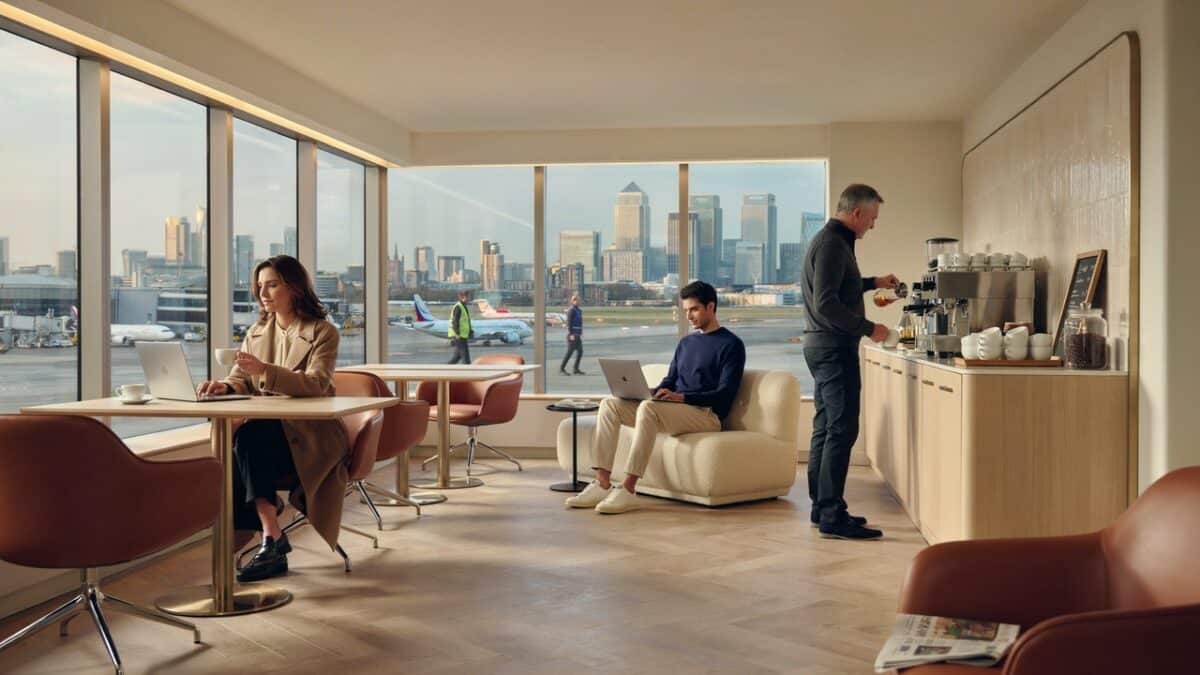
Image generated with Ai
Netherlands mirrors Switzerland and more as Europe’s premium airport lounges take centre stage for luxury travel. Across Europe, premium airport lounges are creating more comfortable journeys for travellers seeking luxury travel experiences. From the Netherlands and Switzerland to Germany, France, Spain and the United Kingdom, these airport lounges add new dimensions to international travel. Moreover, Europe’s premium airport lounges combine relaxation, dining, workspaces and destination-inspired design. For global travellers, these facilities can transform waiting time into part of the journey. Travel And Tour World explores how the Netherlands mirrors Switzerland and more, while Europe’s premium airport lounges take centre stage and reshape luxury travel experiences.
European Premium Airport Lounges: Six Alternatives for Travellers Beyond Amsterdam Schiphol
The opening of the Amsterdam Schiphol Centurion Lounge adds a new premium airport experience to Europe’s major aviation network. However, travellers crossing Europe have several other high-end lounge options at major international hubs.
Advertisement
Advertisement
These lounges differ in access rules, design, dining concepts and terminal locations. Some are operated by airlines, while others belong to independent airport-lounge networks.
For travellers planning long-haul journeys, the lounge can become an important part of the airport experience. A comfortable lounge may provide food, work areas, showers, Wi-Fi and quieter seating before a flight.
Advertisement
Advertisement
The six locations below provide useful alternatives for travellers moving through London, Paris, Frankfurt, Madrid, Munich and Zurich.
Advertisement
Advertisement
Importantly, airport passenger statistics should not be interpreted as lounge visitor numbers. Airports publish annual passenger traffic, while individual lounges generally do not publish comparable five-year attendance data.
European Airport Traffic at a Glance
| Airport | 2021 passengers | 2022 passengers | 2023 passengers | 2024 passengers | 2025 passengers |
|---|---|---|---|---|---|
| Amsterdam Schiphol | 25.5m | 52.5m | 61.9m | 66.8m | 68.8m |
| London Heathrow | 19.4m | 61.6m | 79.2m | 83.9m | 84.5m |
| Paris Charles de Gaulle | 26.2m | 57.5m | 67.4m | 70.3m | 72.0m* |
| Frankfurt | 24.8m | 48.9m | 59.4m | 61.6m | 63.2m |
| Madrid-Barajas | ~24.1m | 50.6m | 60.2m | 66.2m | 68.2m |
| Munich | ~12.5m | 31.7m | 37.0m | 41.6m | 43.4m |
| Zurich | 10.2m | 22.6m | 28.9m | 31.2m | 32.6m |
*The 2025 Paris Charles de Gaulle figure is reported at approximately 72.0 million by airport-statistics reporting based on Groupe ADP data. The other figures in the table are drawn from airport operators or their annual reports. Passenger totals represent airport traffic and do not represent lounge attendance.
Schiphol itself handled 68.8 million passengers in 2025, compared with 66.8 million in 2024 and 61.9 million in 2023. The airport handled 52.5 million in 2022 and 25.5 million in 2021.
The five-year sequence shows how dramatically European aviation recovered after the pandemic disruption. That recovery also explains why premium airport facilities have become increasingly relevant to international travellers.
Six Premium European Lounge Experiences Travellers Can Consider
1. London Heathrow: British Airways Galleries and Premium Airline Lounge Experience
London Heathrow provides one of Europe’s largest premium-airport ecosystems, with several airline-operated lounges across its terminals. British Airways operates premium lounges for eligible passengers, while other international airlines also maintain dedicated facilities at the airport. Travellers should check their airline, cabin class, frequent-flyer status and terminal before selecting a lounge because access is not uniform across Heathrow. The airport handled 19.4 million passengers in 2021, when international travel restrictions were still heavily affecting the UK aviation market. Traffic then reached 61.6 million in 2022 and 79.2 million in 2023. Heathrow welcomed 83.9 million passengers in 2024 and more than 84.5 million in 2025. Heathrow’s own statistics show that aircraft movements increased from 190,032 in 2021 to 477,894 in 2025. For travellers, the key issue is terminal planning. Heathrow has four operational passenger terminals, and lounge availability depends heavily on where the flight departs. Passengers connecting between flights should therefore confirm the terminal before committing time to a lounge. Heathrow also reports that it remained a major global hub in 2025, serving direct and transfer passengers across long-haul and short-haul markets. Its large international network makes the airport particularly relevant for travellers connecting between Europe, North America, Asia, the Middle East and Africa. The lounge experience can therefore be useful during longer connections, but travellers should allow sufficient time for security and terminal procedures.
Advertisement
Advertisement
2. Paris Charles de Gaulle: Air France Premium Lounge Options
Paris Charles de Gaulle provides another major European lounge ecosystem, particularly for passengers using Air France and its partner network. Air France operates lounges across several CDG terminals, with facilities varying according to terminal, route and passenger eligibility. The airport handled approximately 26.2 million passengers in 2021 and 57.5 million in 2022. Traffic increased to approximately 67.4 million in 2023 and 70.3 million in 2024. Airport-traffic reporting puts 2025 passenger traffic at roughly 72 million. These figures illustrate the continuing recovery of one of Europe’s principal international gateways. Travellers using CDG should pay particular attention to the terminal shown on the boarding pass. Charles de Gaulle is a large airport complex, and a lounge in one terminal is not automatically convenient for a departure from another. Premium facilities can include dining, seating, work areas and shower facilities, depending on the individual lounge. Air France also operates its La Première experience for eligible first-class travellers, although access is substantially more restricted than standard premium-lounge access. For tourists flying into Paris, the airport’s scale makes pre-flight planning particularly important. Passengers should check their terminal, connection arrangements and lounge eligibility before arriving. CDG also serves as a significant transfer point for travellers continuing beyond France, making lounge access particularly relevant for long international connections.
3. Frankfurt Airport: Lufthansa Senator and Business Lounge Network
Frankfurt Airport is another important comparison for travellers considering premium lounge facilities in Europe. Lufthansa and its Star Alliance partners operate multiple lounges across the airport, including Lufthansa Business and Senator facilities. Eligibility varies according to travel class, frequent-flyer status and airline programme. Frankfurt handled approximately 24.8 million passengers in 2021. Passenger traffic almost doubled to 48.9 million in 2022, then climbed to 59.4 million in 2023 and 61.6 million in 2024. In 2025, Frankfurt welcomed approximately 63.2 million passengers. Fraport reported that 99 airlines served Frankfurt with flights to 311 destinations in 98 countries during 2024, demonstrating the airport’s extensive international connectivity. For travellers, Frankfurt’s lounge system can be especially relevant when connecting between Lufthansa Group flights or other Star Alliance services. The airport’s size means passengers should verify the precise lounge and gate area before settling in. The difference between Schengen and non-Schengen travel can also influence the most practical lounge location. Travellers changing from European flights to intercontinental services should allow adequate time for border controls and walking between areas. The lounge should therefore be treated as part of the connection plan rather than as a destination within the airport itself.
4. Madrid-Barajas: Iberia Premium Lounge Experience
Madrid-Barajas is particularly important for travellers connecting between Europe and Latin America. Iberia operates premium lounges at Madrid-Barajas for eligible passengers, giving travellers another major European alternative to the new Amsterdam Centurion Lounge. Madrid handled approximately 24.1 million passengers in 2021 before traffic recovered to 50.63 million in 2022. Passenger numbers reached 60.22 million in 2023, 66.2 million in 2024 and 68.18 million in 2025. Aena reported that international passengers accounted for 51.39 million of Madrid’s 2025 commercial passenger total, while domestic travellers accounted for 16.67 million. Aena also identifies Madrid-Barajas as a major gateway for Spain and a hub connecting Latin American, European and domestic markets. This makes Madrid especially relevant for long-haul tourists travelling between Spain and the Americas. Lounge users should check the departure terminal because Madrid-Barajas operates multiple terminal buildings. The appropriate lounge can depend on the airline, route and passenger eligibility. Travellers making an international connection should also check whether they need to pass through additional security or passport procedures. For visitors using Madrid only as a connection point, a lounge can offer a place to eat, work or rest without leaving the airport. For passengers beginning their Spanish holiday, the airport also provides direct access to Madrid’s wider transport network.
5. Munich Airport: Lufthansa and Star Alliance Premium Facilities
Munich Airport offers another significant premium-lounge environment, particularly for Lufthansa and Star Alliance passengers. The airport’s traffic increased substantially after the pandemic, moving from roughly 12.5 million passengers in 2021 to 31.7 million in 2022. Munich handled 37.0 million passengers in 2023 and 41.6 million in 2024. Traffic reached approximately 43.4 million passengers in 2025. Munich Airport’s official reporting says 2024 passenger numbers represented approximately 87% of its 2019 level, while 2025 continued the recovery with another 1.8 million passengers compared with 2024. The airport’s network is important for both leisure and business travellers, with long-haul and connecting traffic forming an important part of its aviation strategy. Premium passengers can therefore encounter lounge facilities designed around different travel classes and loyalty levels. Travellers should check whether their flight operates from Terminal 1 or Terminal 2 before selecting a lounge. Lufthansa’s relationship with Munich also makes the airport particularly relevant to passengers using the airline’s European and intercontinental network. For travellers with longer connections, lounge access can provide a practical break between flights. However, passengers should still monitor gate information because walking distances can be considerable and gates can change.
6. Zurich Airport: Swiss and Star Alliance Lounge Experience
Zurich Airport provides a further premium alternative for international travellers moving through Switzerland. Swiss and Star Alliance passengers can access several lounge facilities depending on their cabin class, status and itinerary. Zurich handled 10.23 million passengers in 2021 and 22.56 million in 2022. Passenger traffic increased to 28.89 million in 2023 and 31.20 million in 2024. In 2025, Zurich reached 32.6 million passengers, its highest annual total at the time. Zurich Airport also reported 205 destinations served by 68 airlines in 2024, with Air India returning to Zurich with direct New Delhi services during that year. In 2025, Zurich recorded 270,116 aircraft movements and an average seat occupancy rate of 79.8%. These figures underline the airport’s role as an international gateway rather than simply a local Swiss airport. Lounge users should verify their terminal and departure area because lounge access is connected to the relevant passenger zone. Zurich can be particularly useful for travellers making connections between Europe and long-haul destinations. Passengers with time before departure can use eligible lounges for meals, drinks, work or rest. However, lounge access rules vary according to the specific Swiss or Star Alliance itinerary.
Advertisement
Advertisement
Five-Year Passenger Recovery Comparison
| Airport | 2021 | 2022 | Change 2021–22 | 2023 | Change 2022–23 | 2024 | Change 2023–24 | 2025 | Change 2024–25 |
|---|---|---|---|---|---|---|---|---|---|
| Amsterdam | 25.5m | 52.5m | +106% | 61.9m | +17.9% | 66.8m | +7.9% | 68.8m | +2.9% |
| Heathrow | 19.4m | 61.6m | +217% | 79.2m | +28.6% | 83.9m | +5.9% | 84.5m | +0.7% |
| Frankfurt | 24.8m | 48.9m | +97.2% | 59.4m | +21.3% | 61.6m | +3.7% | 63.2m | +2.6% |
| Madrid | ~24.1m | 50.6m | ~+110% | 60.2m | +18.9% | 66.2m | +9.9% | 68.2m | +3.0% |
| Munich | ~12.5m | 31.7m | — | 37.0m | +17.0% | 41.6m | +12.2% | 43.4m | +4.4% |
| Zurich | 10.2m | 22.6m | +120% | 28.9m | +28.0% | 31.2m | +8.0% | 32.6m | +4.5% |
Sources: Schiphol Group, Heathrow, Fraport, Aena, Munich Airport and Zurich Airport annual traffic reporting.
Which Airport Has the Largest Five-Year Passenger Footprint?
The figures show considerable differences between Europe’s major hubs.
Heathrow recorded the highest 2025 passenger volume among the airports compared here, with approximately 84.5 million passengers. Schiphol and Madrid followed at approximately 68.8 million and 68.2 million respectively.
Frankfurt recorded about 63.2 million, while Munich and Zurich handled approximately 43.4 million and 32.6 million.
These numbers measure total airport passengers rather than lounge users. They should therefore be used to understand the scale of each aviation gateway, not to estimate lounge popularity.
Advertisement
Advertisement
| 2025 measure | Amsterdam | Heathrow | Frankfurt | Madrid | Munich | Zurich |
|---|---|---|---|---|---|---|
| Passengers | 68.8m | 84.5m | 63.2m | 68.2m | 43.4m | 32.6m |
| Airport traffic context | Major European hub | Major UK hub | Major German hub | Spain–Europe–Latin America hub | Major German hub | Major Swiss hub |
| International connectivity | Extensive | Extensive | Extensive | Strong Latin America links | Extensive | Extensive |
| Premium lounge ecosystem | Centurion + other lounges | Multiple airline lounges | Lufthansa/Star Alliance network | Iberia and other airline lounges | Lufthansa/Star Alliance network | Swiss/Star Alliance network |
What Travellers Should Check Before Choosing a Lounge
Confirm Eligibility
Premium airport lounges do not follow one universal access system.
Some accept passengers according to airline status. Others depend on travel class, credit-card benefits or lounge memberships.
Travellers should check the exact access conditions before travelling.
Check the Terminal
Terminal location can be more important than the lounge brand.
A traveller may have access to a premium lounge but still need substantial time to reach the departure gate.
Advertisement
Advertisement
This is particularly relevant at Heathrow, CDG, Frankfurt, Madrid and Munich.
Consider the Connection Time
Short connections may not justify a long lounge visit.
Travellers with several hours between flights can potentially make greater practical use of dining, shower and work facilities.
Passengers should always monitor boarding information.
Check Schengen and Non-Schengen Requirements
European hub airports can divide passengers into different security and border-control zones.
Advertisement
Advertisement
A lounge located in one zone may not be convenient or accessible after a passenger moves into another area.
This is especially important for travellers connecting between Schengen and non-Schengen destinations.
Verify Facilities Before Departure
Amenities can change because of renovation, operational restrictions or temporary closures.
Travellers should check the airport or lounge operator shortly before departure.
This is particularly important when a lounge is being newly opened or refurbished.
Advertisement
Advertisement
Amsterdam Compared With Europe’s Other Premium Airport Options
The Amsterdam Schiphol Centurion Lounge brings a different model to Europe’s premium-lounge market.
Its identity is built around American Express membership, while many established European alternatives are closely connected to airlines and airline alliances.
The new Amsterdam facility is approximately 6,000 square feet and sits between Concourses E and F. The official Centurion Lounge listing states that it is located in an area primarily used for non-Schengen and international departures and opened at 6 a.m. on September 17, 2026.
American Express announced the Amsterdam project in 2025 as part of an expansion of its Centurion Lounge network. At the time, the company said its broader lounge network included 29 Centurion locations and more than 1,550 lounges through its wider lounge-access programme across 140 countries and territories.
That makes Amsterdam different from a traditional airline lounge model.
Advertisement
Advertisement
For travellers, the important question is therefore not simply which lounge is available. It is whether the lounge matches the passenger’s card, airline, terminal, itinerary and available connection time.
European Premium Lounge Comparison for Travellers
| Lounge environment | Main access basis | Particularly relevant travellers | Key planning consideration |
|---|---|---|---|
| Amsterdam Centurion Lounge | Eligible American Express cards | Premium cardholders | E/F concourse location and international departures |
| Heathrow airline lounges | Airline status, cabin or eligible programme | British Airways, Oneworld and other premium passengers | Terminal-specific access |
| Paris CDG airline lounges | Airline, cabin and status | Air France/SkyTeam and eligible premium passengers | Terminal and Schengen status |
| Frankfurt Lufthansa lounges | Cabin, status and alliance eligibility | Lufthansa/Star Alliance passengers | Terminal and Schengen zone |
| Madrid Iberia lounges | Cabin, status and programme eligibility | Iberia/IAG and eligible premium passengers | Departure terminal |
| Munich Lufthansa lounges | Cabin, status and alliance eligibility | Lufthansa/Star Alliance passengers | Terminal 2 and connection timing |
| Zurich Swiss lounges | Cabin, status and alliance eligibility | Swiss/Star Alliance passengers | Departure zone and connection time |
The Bigger Travel Picture
The arrival of the Amsterdam Schiphol Centurion Lounge comes as European airports handle passenger volumes far above their pandemic-era lows.
Schiphol increased from 25.5 million passengers in 2021 to 68.8 million in 2025. Heathrow moved from 19.4 million to 84.5 million during the same period. Frankfurt increased from 24.8 million to 63.2 million.
Madrid also moved from the pandemic-era traffic levels of 2021 to 68.18 million passengers in 2025. Munich reached 43.4 million, while Zurich reached a record 32.6 million.
For global travellers, the practical lesson is straightforward.
Advertisement
Advertisement
Airport lounges should be considered as part of the complete journey rather than as an isolated luxury facility.
Before travelling, passengers should confirm access eligibility, terminal location, security arrangements, connection time and operating hours.
The Amsterdam Schiphol Centurion Lounge now gives eligible American Express travellers another option. At the same time, established airline lounges across Europe’s major hubs continue to provide alternatives for passengers whose itineraries and loyalty programmes qualify.
As European aviation continues to handle large passenger volumes, understanding the airport experience before departure can help travellers plan connections with greater clarity and make better use of the time between flights.
Conclusion
The Netherlands mirrors Switzerland and more as Europe’s premium airport lounges take centre stage for luxury travel. From Amsterdam and Zurich to London, Paris, Frankfurt, Madrid and Munich, travellers can find distinctive spaces designed around comfort, dining and relaxation. Moreover, each airport offers a different lounge experience shaped by its airline networks, locations and access rules. For international tourists, these premium facilities can make long connections more comfortable and organised. Travel And Tour World highlights how Europe’s premium airport lounges are becoming an important part of modern journeys. As luxury travel evolves, these lounges give travellers another reason to enjoy every stage of their European adventure.
Advertisement
