
Saudi Arabia Steps Up with UAE And Other Nations to Drive GCC Wellness Tourism with Sustainable Travel Experiences
Published
The hospitality industry is undergoing significant changes. There is increased focus on regenerative practices as opposed to mass production. Wellness and sustainable travel are merged and have gained significance in recent years. Nations have incorporated them in their economic policies. Travelers wish to engage with destinations that have the potential to restore their psychological and physical wellbeing and have a positive impact on the environment. Awareness on conservation of ecosystems and biodiversity has increased. Beautiful mangroves and the resurgent Saudi Arabian Red Sea have become places of high end tourism. Several countries have launched strategies to integrate tourism and wellness to create a positive impact and achieve sustainable development. Effective integration of wellness and tourism helps in achieving biodiversity conservation and other Sustainable Development goals.
The Evolution of Travel: A Background on Conscious Journeys
Over the past decade, the international tourism industry has witnessed a dramatic shift in consumer behaviour and governmental policy. Historically, luxury travel was often categorised by opulence that occasionally came at the expense of local habitats and cultural authenticity. However, as global awareness regarding climate change and personal well-being has escalated, so too has the demand for Wellness Tourism With Sustainable Travel Experiences. This modern iteration of travel transcends the superficial, pushing boundaries to harmonise the pursuit of physical and mental health with rigorous environmental conservation.
Advertisement
Advertisement
This evolution is rooted in the fundamental realisation that human health and planetary health are intrinsically linked. Leading governmental bodies and international health organisations have verified that prolonged exposure to natural, unpolluted environments drastically reduces stress markers, enhances cognitive function, and promotes holistic healing. Consequently, developers and national tourism boards have collaboratively pivoted towards regenerative tourism—a framework wherein the act of travelling actively repairs and revitalises the destination rather than merely sustaining its current state. By implementing stringent conservation metrics, heavily investing in renewable energy, and promoting authentic cultural integration, modern eco-retreats are setting unprecedented benchmarks. The Middle East, traditionally known for its rapid urbanisation and fossil fuel exports, is now pioneering this exact transition, embedding green policies into long-term national visions to create an industry that thrives on preservation rather than extraction.
Latest Official Developments Reshaping the GCC Travel Landscape
The Gulf Cooperation Council (GCC) nations have emerged as the absolute vanguard of this sustainable transition, officially redefining what it means to experience luxury. Moving decisively away from carbon-intensive hospitality models, national tourism boards in Saudi Arabia, Qatar, and the United Arab Emirates have announced multi-billion-dollar frameworks dedicated exclusively to eco-friendly wellness retreats. These developments are not isolated commercial ventures; they are state-sponsored mega-projects designed to fundamentally alter the economic trajectory of the region by 2030 and beyond.
Advertisement
Advertisement
Recent official developments highlight a strict adherence to international environmental standards, verified by independent climate watchdogs. By weaving together traditional heritage, cutting-edge green technology, and bespoke medical wellness, these nations are cultivating an entirely new demographic of mindful travellers. The integration of zero-waste operations, advanced water desalination powered purely by solar energy, and comprehensive wildlife rehabilitation programmes demonstrates that the region is executing on its promises. As we observe the latest milestones verified as of August 2026, three flagship destinations stand out as the definitive pioneers of this global movement, each showcasing unique applications of environmental stewardship and holistic health.
Advertisement
Advertisement
Saudi Arabia’s Bold Vision: Six Senses Southern Dunes, The Red Sea
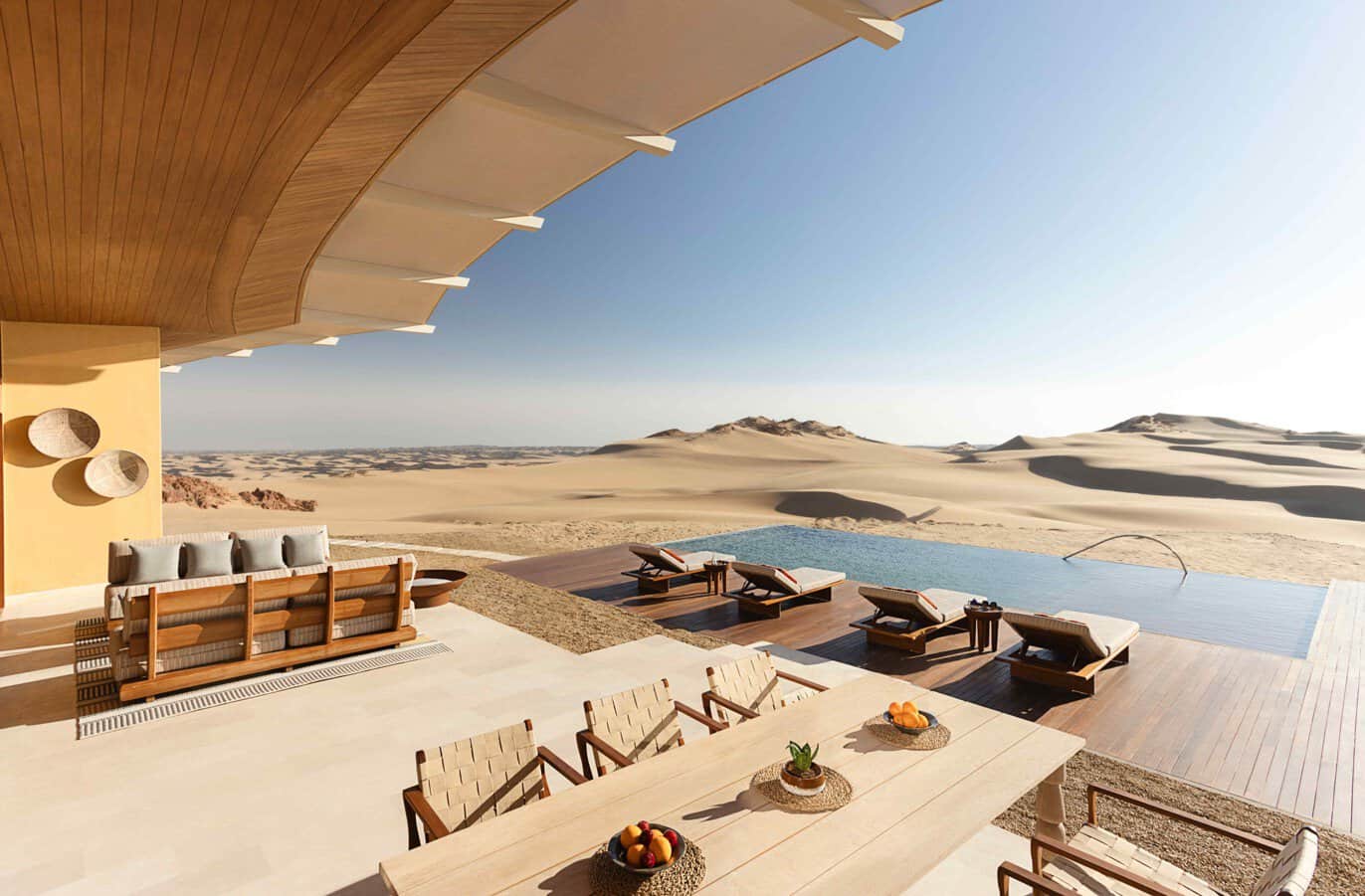
Saudi Arabia’s Red Sea Global (RSG) represents arguably the most ambitious regenerative tourism project in modern history, anchoring the Kingdom’s Vision 2030 objective to diversify its economy. Situated along the pristine west coast, the destination spans a staggering 28,000 square kilometres and includes over 90 untouched islands. Red Sea Global opened its first property, the Six Senses Southern Dunes, in 2023, setting a new global standard for sustainable luxury hospitality. Designed to integrate flawlessly into the rolling desert landscape, this property champions the ethos of mindful travel.
The scope of The Red Sea’s environmental commitment is monumental. Development has been strictly limited to less than 1% of the destination’s total area, and visitor numbers are legally capped at one million per year to fiercely protect the region’s delicate biodiversity. Instead of relying on the national power grid, the entire destination is powered completely by 100% clean, renewable energy day and night, supported by an array of over 760,000 solar panels and the world’s largest battery storage facility. In a landmark announcement verified in June 2026 by the Saudi Press Agency, Red Sea Global confirmed that its total reliance on renewable energy helped the company successfully avoid 117,879 tonnes of carbon dioxide equivalent (tCO₂e) emissions during the 2024 operational year. This massive reduction was independently audited and officially certified by DNV, equivalent to removing approximately 27,500 cars from the roads for an entire year.
Beyond mere sustainability, the Six Senses Southern Dunes and the wider Red Sea properties—including the newly launched Shebara, Desert Rock, and the Adrena adventure district in 2026—are targeting a 30% net conservation gain by 2040. Through expansive mangrove restoration, coral reef regeneration, and the complete elimination of single-use plastics, this destination proves that elite hospitality can actively restore the planet.
Qatar’s Health-Driven Strategy: Zulal Wellness Resort by Chiva-Som
In alignment with the Qatar National Vision 2030, which places a heavy emphasis on public health and environmental sustainability, the Zulal Wellness Resort by Chiva-Som has rapidly become the Middle East’s preeminent health retreat. Developed by Msheireb Properties, Qatar’s premier master developers, Zulal is officially recognised as the largest wellness destination in the region and the world’s first contemporary showcase of Traditional Arabic and Islamic Medicine (TAIM).
Located on the private, serene northern coastal enclave of Khasooma, Zulal distinguishes itself by offering a deeply culturally rooted approach to well-being. The resort is ingeniously divided into two distinct venues: Zulal Serenity, which caters to adults seeking intensive therapeutic and lifestyle enhancement treatments, and Zulal Discovery, a pioneering concept that enables families to engage in positive wellness experiences together. This dual-approach effectively broadens the demographic of Wellness Tourism With Sustainable Travel Experiences, teaching young children the vital importance of a healthy, active lifestyle alongside environmental respect.
Advertisement
Advertisement
The resort’s dedication to sustainability was formally celebrated at the highly prestigious Qatar Tourism Awards in late 2025, an event evaluated through criteria established by UN Tourism. General Manager Ammar Samad was awarded the Community Leadership – Hotelier of the Year accolade, a testament to the resort’s operational philosophy. Zulal fiercely champions environmental stewardship through rigorous energy conservation programmes, mindful resource management, and a leading role in sustainable gastronomy, ensuring that the healing of the human body runs parallel to the protection of the local Qatari coastline.
The UAE’s Ecosystem Conservation: Pura Eco Retreat – Jubail Island
In the United Arab Emirates, the Department of Culture and Tourism Abu Dhabi has aggressively pursued an ecotourism mandate, culminating in properties like the Pura Eco Retreat on Jubail Island. Taking its name from the Costa Rican phrase “Pura Vida”—meaning pure life—this unique sanctuary is situated mere minutes from the bustling metropolis of Abu Dhabi yet feels entirely removed from the urban sprawl. The retreat is nestled deep within the Jubail Mangrove Park, an environmentally protected area crucial for the nation’s blue carbon sequestration efforts.
Pura Eco Retreat operates on a philosophy of absolute minimalism combined with high-end comfort. Accommodation is strictly limited to a handful of eco-friendly domes and bespoke tents constructed from sustainably and locally sourced materials. This extreme limitation ensures an incredibly low environmental footprint, allowing the native flora and fauna to thrive unbothered. The island is a documented haven for diverse wildlife, including migratory birdlife, marine species, and an abundance of free-roaming Arabian gazelles.
The retreat actively contributes to the local ecosystem by facilitating mangrove conservation education and implementing robust waste reduction systems. By giving guests a front-row seat to the beauty of the mangrove forests—whether through guided kayaking excursions or silent observation—Pura perfectly encapsulates the essence of green tourism initiatives. It demonstrates that travellers do not need to sacrifice luxury to achieve environmental harmony; rather, authentic luxury is found in the untouched purity of the natural world.
Government Announcements Propelling Green Tourism Initiatives
To ensure that the transition toward mindful travel is permanent, governments across the Middle East have codified these practices into law. In Saudi Arabia, the Circular Carbon Economy Framework directly supports the Kingdom’s overarching ambition to achieve net-zero carbon emissions by 2060. The Ministry of Tourism has subsequently integrated stringent environmental impact assessments into all future hospitality licensing, meaning new developments must definitively prove their ecological viability before breaking ground.
Advertisement
Advertisement
Similarly, the Qatari Ministry of Public Health and Qatar Tourism have synergised their efforts to position the country as a global medical and wellness hub. Government mandates now stipulate that large-scale resort developments must incorporate sustainable energy practices and contribute tangibly to the local community’s well-being, directly resulting in the creation of master-planned eco-resorts like Zulal. Meanwhile, the UAE’s Net Zero 2050 strategic initiative has prompted the Environment Agency Abu Dhabi (EAD) to rigorously protect coastal ecosystems, turning previous development zones into legally protected national parks where only ultra-low-impact ecotourism, such as Pura Eco Retreat, is permitted. These official announcements collectively guarantee that the regulatory environment heavily favours sustainability.
Verified Statistics: A Data-Driven Look at Sector Growth
The financial and demographic statistics underpinning this shift are staggering, proving that carbon-neutral travel is exceptionally lucrative. According to official figures released by the Saudi Ministry of Tourism in early 2026, the Kingdom welcomed a monumental 122 million total visitors in 2025 (combining domestic and international arrivals), representing a 5% year-on-year growth. Of this figure, 30.4 million were international arrivals, a massive 18.2% increase from the previous year.
This massive influx of tourists heavily participating in regenerative initiatives generated SAR 300 billion in tourism spending. Most impressively, tourism’s total contribution to Saudi Arabia’s Gross Domestic Product (GDP) reached approximately SAR 318 billion in 2025, accounting for 7.1% of the national GDP, up from 5.8% in 2024 and just 3.5% in 2019. This trajectory represents one of the fastest GDP-share increases of any major tourism market globally, comprehensively validating the financial viability of high-value, sustainable tourism models.
Furthermore, data reflects that travellers are staying longer at wellness and eco-destinations. The average length of stay for international visitors in Saudi Arabia increased to 6.1 nights, pushing the average tourism spend per arrival to USD 1,840. These metrics indicate that guests are highly willing to invest premium capital into holidays that align with their personal ethics and wellness goals, providing a robust economic rationale for continued investment in sustainable luxury.
Policy Implications for Sustainable Luxury Hospitality
The profound success of these early eco-resorts is actively rewriting the policy landscape for international tourism. Policymakers have realised that volumetric tourism—focusing purely on the highest number of arrivals—frequently leads to environmental degradation and infrastructure fatigue. Instead, the current policy framework is heavily weighted toward high-yield, low-impact tourism.
Advertisement
Advertisement
By capping visitor numbers, as seen at The Red Sea where arrivals are strictly limited to one million annually, governments can accurately manage the ecological load on vulnerable habitats. This scarcity inherently drives up the prestige and economic yield of the destination, creating a self-sustaining cycle where high revenues seamlessly fund ongoing conservation research. Furthermore, employment policies have been drastically overhauled to prioritise local community integration. Modern policies mandate comprehensive training programmes for domestic populations, ensuring that the economic benefits of environmental conservation in tourism remain within the local economy rather than being entirely exported by foreign hospitality conglomerates.
Broad Industry Impact: Transitioning to Eco-Friendly Operations
The hospitality industry at large is experiencing a massive supply chain restructuring as a direct result of the demand for Wellness Tourism With Sustainable Travel Experiences. Global hotel brands are rapidly abandoning traditional, wasteful operational models in favour of circular economies.
From the architectural phase through to daily operations, the industry is transforming. Construction firms are increasingly utilising 3D-printing technologies, ethically sourced timber, and modular building techniques to drastically reduce site disruption. In the culinary sector, the concept of sustainable gastronomy is becoming the default standard. Resorts like Zulal Wellness Resort and Six Senses Southern Dunes are pioneering hyper-local sourcing, partnering with regional organic farmers, and heavily implementing plant-based, medically tailored menus that reduce agricultural carbon footprints while enhancing guest health.
Additionally, the spa and wellness industry has moved away from chemical-heavy products, leaning entirely into organic, locally indigenous ingredients—such as Qatari sea salt, Arabian muds, and desert botanicals. This operational pivot heavily mitigates the chemical runoff that traditionally threatened coastal and marine ecosystems adjacent to large resort developments.
Far-Reaching Economic Implications of Regenerative Tourism
The economic implications of this transition extend far beyond the immediate revenue generated by hotel bookings. The regenerative tourism sector acts as a massive economic multiplier. In Saudi Arabia alone, the tourism sector employed approximately 1.07 million people in 2025, marking a remarkable 13.5% increase year-on-year. These are high-quality, future-proof jobs spanning renewable energy management, marine biology, wellness therapy, and sustainable agriculture.
Advertisement
Advertisement
Moreover, the capital expenditure (CAPEX) committed to sustainable hospitality is unprecedented. Official projections indicate that the total hospitality CAPEX committed through 2030 in Saudi Arabia is estimated at a staggering USD 45 billion. With 30% of this investment concentrated in the Red Sea and NEOM strategic development corridors, foreign direct investment is flowing heavily into green technologies. Financial institutions and sovereign wealth funds are increasingly tying their investment criteria to Environmental, Social, and Governance (ESG) metrics, meaning that traditional, non-sustainable resorts will soon find it exceptionally difficult to secure capital. The economic future of hospitality relies entirely on a verified commitment to the planet.
The Profound Tourism, Business, and Public Impact
For the general public and the modern business traveller, this evolution brings profound psychological and physiological benefits. In a hyper-connected, high-stress digital era, the public is suffering from unprecedented levels of burnout and anxiety. Mindful travel offers a crucial antidote.
By immersing guests in environments that operate in harmony with nature, these resorts lower blood pressure, improve sleep architecture, and foster intense mental clarity. The business travel sector is also taking note, with corporate retreats shifting away from sterile urban conference centres toward eco-resorts that promote team well-being and creative thinking in natural settings. This public impact goes beyond the duration of the holiday; facilities like Zulal Discovery are actively educating the next generation on sustainable living, ensuring that children return home with a deeply ingrained respect for environmental stewardship. Ultimately, these resorts are acting as global educators, fundamentally altering the long-term consumption habits of their guests.
Official Statements and Expert Insights on Sustainable Growth
The commitment to this green revolution is continually echoed by the foremost leaders in the region’s hospitality and environmental sectors. Speaking on the monumental achievement of Red Sea Global’s carbon avoidance, Raed Albasseet, Group Chief Environment and Sustainability Officer, stated in June 2026: “Avoiding nearly 118,000 tonnes of emissions at this advanced stage of development demonstrates the powerful impact of embedding sustainability into operations from day one. As our destinations continue to expand, this positive impact will grow further, proving to the world that luxury tourism can be a leading force in protecting and regenerating nature”.
This sentiment of profound responsibility is shared across the GCC. Upon receiving his prestigious accolade at the Qatar Tourism Awards, Ammar Samad, General Manager of Zulal Wellness Resort, passionately reinforced this philosophy: “Wellness is not a trend – it is a way of life and an essential pillar of the future of hospitality. I am incredibly proud of our team for their passion and commitment. Together, we will continue to create positive impact, sustain transformative wellbeing, and support our guests, our community, and Qatar’s expanding tourism sector”.
Advertisement
Advertisement
Similarly, highlighting the necessity for minimal interference with nature, Ibrahim Al Mannaee, the Emirati owner of Pura Eco Retreat, previously noted that the development was designed to act in complete harmony with its surroundings, aiming to complement the vision for ecotourism while leaving a minimal footprint on Jubail Island’s delicate mangrove networks. These official statements verify that the upper echelons of industry leadership are completely unified in their dedication to regenerative practices.
Future Outlook: The Global Blueprint for 2030 and Beyond
As we look towards the end of the decade, the trajectory for Wellness Tourism With Sustainable Travel Experiences is exceptionally robust. The current pipeline of sustainable hotel keys across the Middle East is staggering, with Saudi Arabia alone planning to introduce an additional 320,000 keys to the market by 2030. However, the true measure of success will not simply be the volume of rooms available, but the measurable environmental gains achieved.
The next phase of regenerative tourism will likely see the widespread adoption of AI-driven energy management systems, completely autonomous electric transport networks within destinations, and closed-loop water systems that achieve zero waste. As the Red Sea continues to roll out its expansive master plan—including cutting-edge marine research facilities—and as properties like Pura Eco Retreat continue to refine the blueprint for micro-impact luxury, the Middle East is providing a masterclass for the rest of the world.
Other nations heavily reliant on tourism are closely monitoring the success of the GCC’s holistic approach. The integration of advanced healthcare frameworks like Traditional Arabic and Islamic Medicine with uncompromising climate action proves that economic diversification need not sacrifice ecological integrity. Ultimately, the future of global travel has been fundamentally rewritten; by 2030, destinations that fail to actively heal both their guests and their geography will simply cease to remain competitive in the luxury marketplace.
Advertisement
